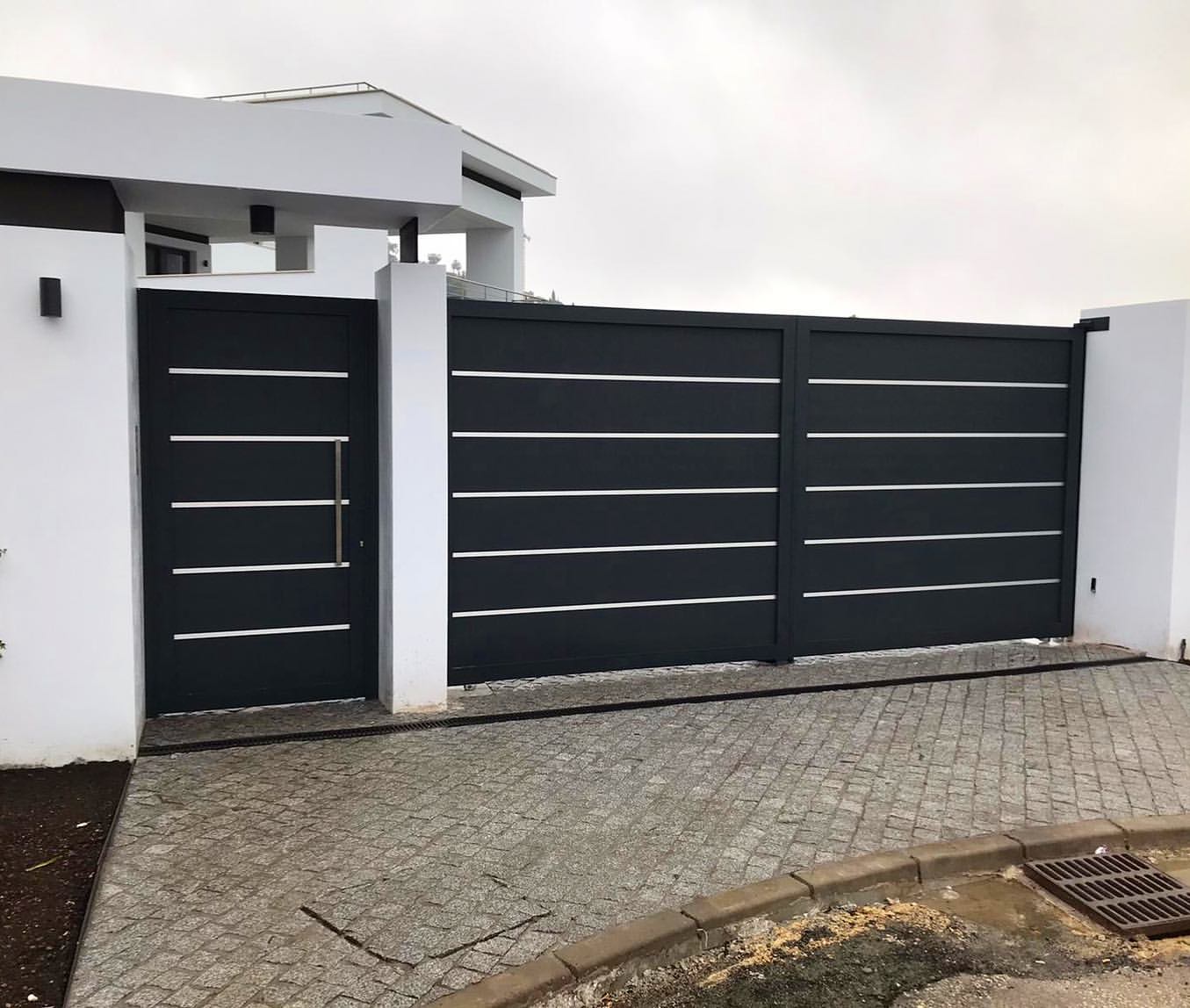

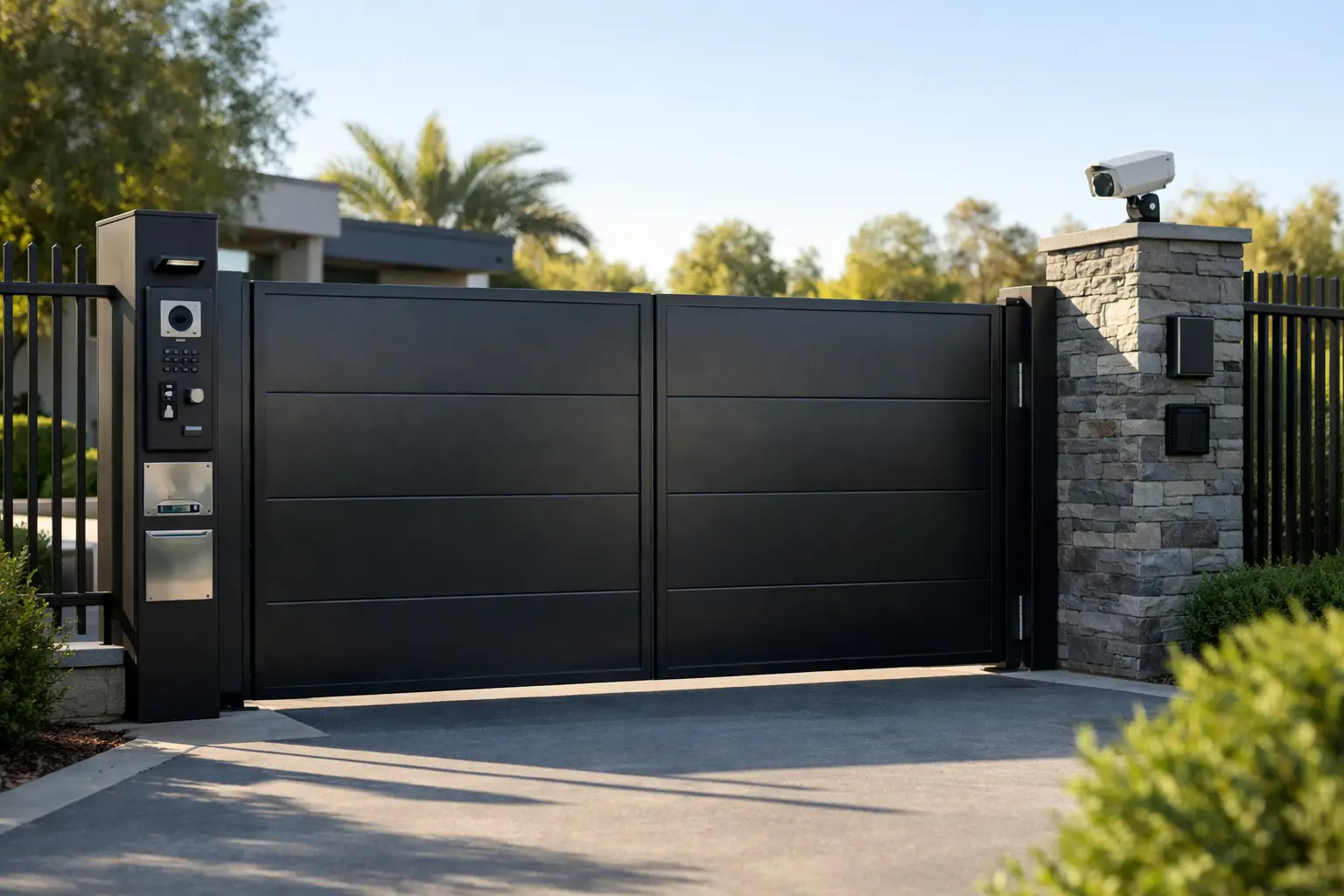
A front entrance gate has to do more than mark a boundary. It needs to control access, complement the property and keep performing year after year in all weathers. That is why secure front entrance gate solutions are rarely about a single product choice. They are about getting the format, material, fabrication and access control right for the way the entrance is actually used.
For many UK property owners, the starting point is frustration. Timber has started to twist, steel is showing corrosion, the gate no longer closes properly, or the entrance simply looks tired compared with the rest of the property. In commercial settings, the issue is often reliability and control. You need an entrance that looks professional, stands up to daily use and supports secure access without becoming a maintenance burden.
What secure front entrance gate solutions should deliver
The best gate systems balance four priorities at once – security, appearance, practicality and lifespan. Focusing on only one usually creates a compromise somewhere else. A gate can look impressive but be awkward to operate. It can feel solid but demand regular upkeep. It can offer privacy yet leave you with poor visibility when entering or exiting.
A well-specified entrance should give you confidence every day. That means a gate designed to fit the opening precisely, manufactured from a material that resists weathering, and configured to suit how vehicles and pedestrians move through the site. If automation or intercom entry is part of the brief, those elements also need to work as part of one coherent system rather than being added as an afterthought.
Why material choice matters more than many buyers expect
When people compare gate options, design often gets attention first. The material deserves equal weight because it shapes performance, upkeep and long-term value.
Timber can look attractive when first installed, but regular maintenance is part of the ownership experience. Exposure to rain, frost and sun can lead to swelling, warping and surface wear. Steel offers strength, but if it is not protected and maintained correctly, corrosion becomes a concern over time.
Aluminium stands apart for buyers who want a premium finish with less ongoing work. It does not rust, it remains stable in changing weather conditions and it suits contemporary as well as more traditional property styles. For secure front entrance gate solutions, that combination matters. Security should not come with constant repainting, repair work or premature replacement.
The quality of manufacture also makes a measurable difference. Fully welded construction, accurate fabrication and a made-to-measure approach create a more substantial and dependable result than a generic, off-the-shelf gate adapted to fit later.
Choosing the right gate format for your entrance
No single gate type is right for every property. The best option depends on available space, ground conditions, access width, traffic levels and the overall look you want to achieve.
Swing gates
Swing gates remain a popular choice for residential entrances because they create a strong first impression and suit a wide range of designs. They work particularly well where there is sufficient room for the leaves to open safely without obstructing vehicles or footpaths.
The trade-off is space. If the driveway rises sharply, or the opening is tight, a swing gate may not be the most practical answer. In those cases, another operating style often delivers better daily usability.
Sliding gates
Sliding gates are often the preferred option where security and efficient space use are the priority. Because the gate moves laterally rather than opening inwards, it can be ideal for shorter driveways or sites where vehicle positioning is limited.
They can also suit commercial premises well, especially where frequent access is required. The main consideration is the lateral run-back space needed for the gate to slide clear. If that space is available, the result is secure, clean and highly functional.
Bi-folding and telescopic gates
For entrances where speed and restricted space are both factors, bi-folding or telescopic systems can be highly effective. These formats allow a wide opening while reducing the footprint needed for operation.
They are particularly useful on challenging sites, but they do require careful specification. This is where consultation-led design becomes valuable. A more complex gate format should solve a real site constraint, not simply add complexity for its own sake.
Pedestrian gates and integrated access
Not every secure entrance is vehicle-led. In many homes and commercial settings, pedestrian access needs the same level of consideration. A coordinated pedestrian gate can improve day-to-day convenience, maintain security and create a more cohesive frontage.
Where appropriate, pairing a driveway gate with matching fencing and access control produces a far more complete result than treating each element separately.
Design and security should work together
A secure entrance should feel considered, not defensive. The strongest gate systems are designed to complement the architecture of the property while still delivering privacy and control.
That might mean choosing a design with reduced visibility from the road, selecting infill options that increase privacy, or opting for a layout that gives a stronger visual barrier at the boundary line. For some properties, open designs are preferable because they maintain sight lines and a lighter appearance. For others, a more enclosed style gives the right balance of discretion and presence.
This is where bespoke manufacture has a clear advantage. Instead of choosing the nearest standard size or style, you can specify the proportions, detailing and finish around the property itself. The result looks intentional. More importantly, it avoids the weak points that often come with forcing a standard gate into a non-standard opening.
Access control is part of the security picture
Modern secure front entrance gate solutions increasingly include access control. For homeowners, that may mean the convenience of managing entry from inside the house or remotely. For commercial buyers, it can be a practical necessity for controlling staff, visitor or delivery access.
Intercom systems, keypads, fobs and automated opening all play a role, but the right setup depends on who uses the entrance and how often. A private driveway gate has different demands from a multi-user development or a commercial site with regular traffic.
What matters is integration. A premium gate deserves an access system that supports reliable operation and straightforward control. When the gate, automation and entry technology are specified together, the result is more secure and easier to live with.
Why made-to-measure matters
Entrances are rarely as simple as they appear from the roadside. Levels vary. Pillars are not always perfectly aligned. Vehicle sizes differ. Turning circles, visibility, gradients and surrounding landscaping all affect what will work well.
Made-to-measure design accounts for those realities from the outset. It allows the gate to be built around the opening rather than forcing the opening to adapt to the gate. That improves appearance, fit and performance.
It also helps future-proof the investment. A well-designed aluminium system should not just look right on installation day. It should continue to operate smoothly and maintain its finish for years, which is exactly what buyers expect from a premium entrance product.
For design-conscious homeowners, there is another benefit. Bespoke fabrication gives greater freedom to coordinate the gate with fencing, panels and the broader exterior scheme. That consistency has a noticeable effect on kerb appeal.
Long-term value is about ownership, not just purchase price
The cheapest gate is rarely the least expensive option over time. Maintenance, repainting, component wear and eventual replacement all affect the true cost of ownership.
That is why premium buyers increasingly look beyond headline price and focus on durability, finish quality and guarantee terms. A low-maintenance aluminium gate with precision fabrication and a strong warranty often represents better value than a lower-cost alternative that needs ongoing attention.
For commercial settings, downtime matters too. A gate that fails regularly or requires repeated repair can create operational issues as well as security concerns. Reliability is not a luxury. It is part of the specification.
Getting the specification right from the start
The best outcomes usually come from asking practical questions early. How wide is the opening? How much run-back or swing space is available? Is privacy a priority? Will the gate be manually operated or automated? Does the entrance need to handle frequent use? Should the gate match existing fencing or a new wider scheme?
These details shape the right solution far more than trends or catalogue images. A consultation-led approach helps narrow the options quickly and avoids costly missteps. That is especially important where the entrance is a visible part of a renovation, self-build or commercial upgrade.
At the premium end of the market, buyers are not just purchasing a gate. They are investing in a tailored entrance system that needs to perform, protect and add to the overall quality of the property. That is exactly where specialist fabrication makes the difference.
A company such as Alu-Gate approaches this process with the level of design precision and product understanding that a bespoke entrance deserves. When the specification is right, the result is simple – an entrance that looks exceptional, works properly and gives lasting peace of mind.
If you are planning a new boundary treatment or replacing an underperforming gate, take the time to choose a solution built around the property rather than around compromise. The right entrance does not just secure access. It sets the standard for everything behind it.