
A delivery arrives early. The school run is running late. Someone you were not expecting is at the gate. These are the moments when gate intercom systems for homes stop feeling like an added extra and start feeling essential.
For many homeowners, the gate itself gets most of the attention – style, finish, privacy, automation. Yet the intercom is what turns a boundary into a controlled entrance. It gives you visibility, verification and a practical way to manage access without leaving the house or handing over security to chance. When chosen well, it also complements the quality of the gate rather than feeling like an afterthought fixed to the wall.
Why gate intercom systems for homes matter
A gate creates a physical barrier. An intercom adds decision-making. That distinction matters.
Without an intercom, access often depends on keys, codes shared too widely, or walking to the entrance every time a visitor arrives. With an intercom, you can speak to callers, see who is there if video is included, and grant or deny access from a handset, monitor or mobile app depending on the system. That is not just more convenient. It is more controlled.
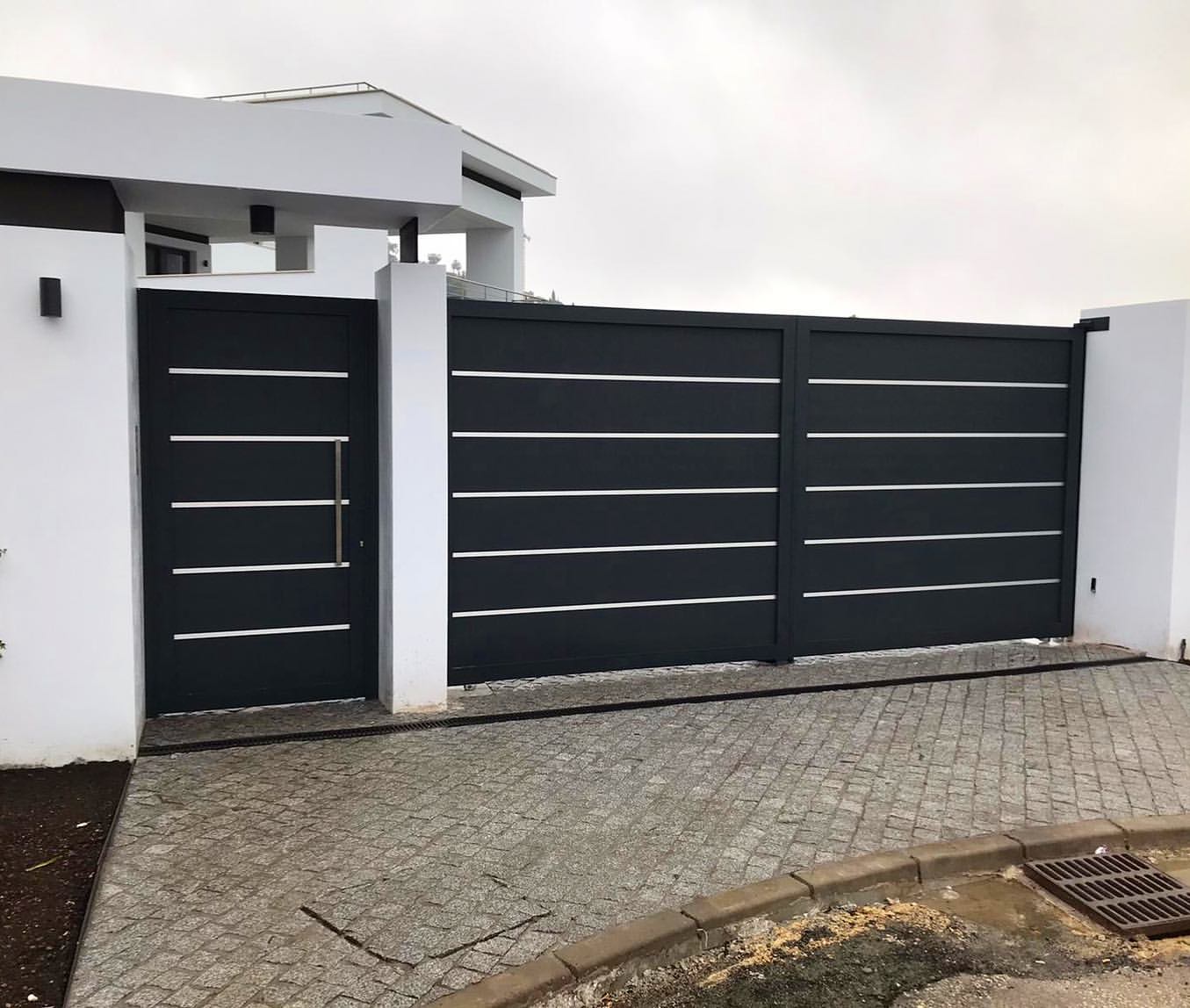
For design-conscious homeowners, there is another point worth making. A premium entrance should work as well as it looks. A made-to-measure aluminium gate with a poor-quality intercom or awkward access setup can undermine the whole experience. The best systems feel integrated from the start, both visually and functionally.
Choosing the right gate intercom system for your home
There is no single best option for every property. The right specification depends on how you use the entrance, who needs access and how much control you want day to day.
Audio only or video intercom
Audio intercoms still suit some properties, particularly where simplicity is the priority and the entrance is clearly visible from the house. They can be effective, reliable and more cost-conscious.
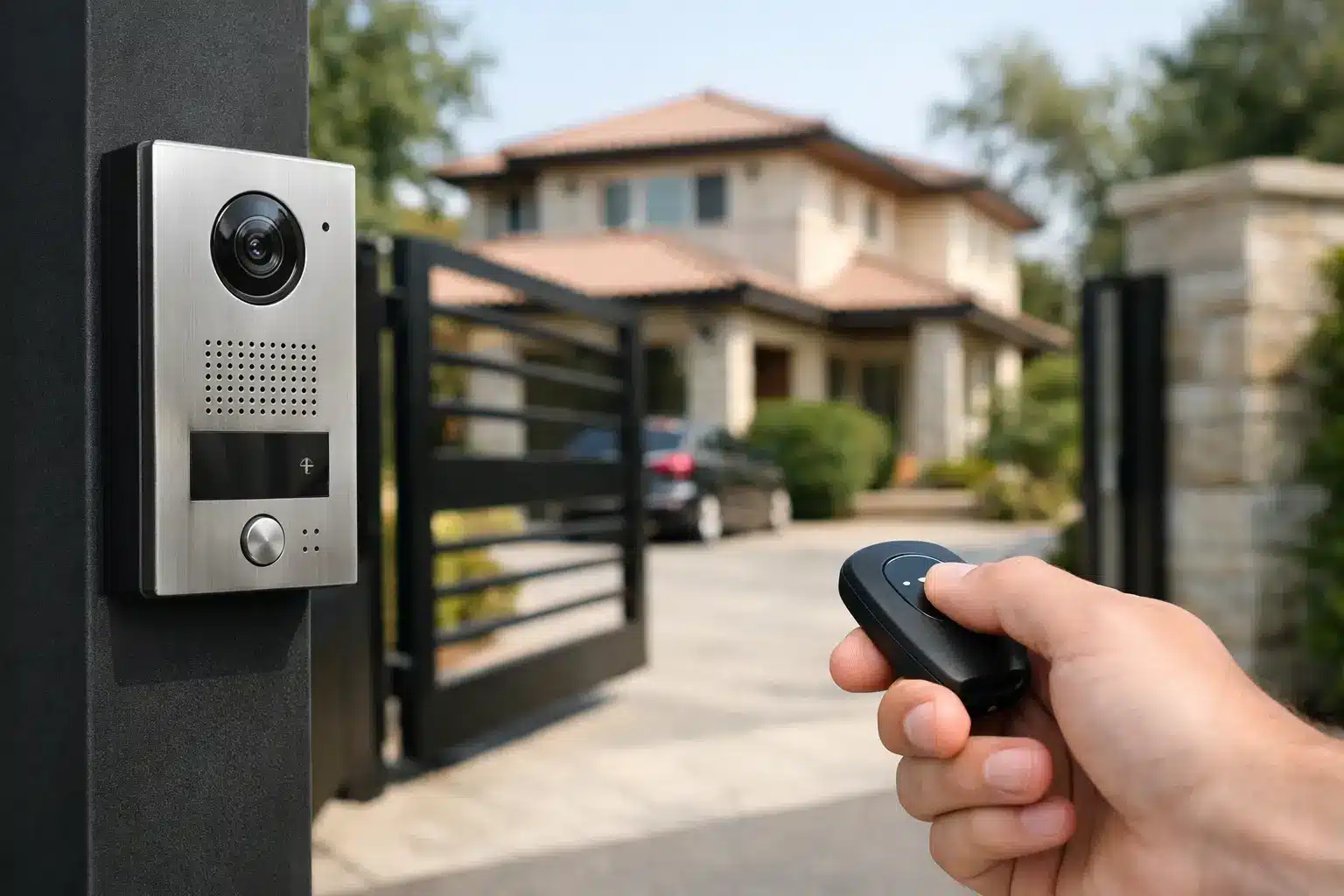
Video intercoms, however, have become the preferred choice for many modern homes. Being able to see who is calling removes uncertainty. That matters if couriers arrive frequently, if children may answer inside the house, or if the gate sits some distance from the front elevation. For larger driveways and screened entrances, video quickly becomes the more practical option.
Wired or wireless setup
Wired systems are typically the stronger long-term solution for new builds, major renovations and planned gate replacements. They offer stable performance and a cleaner, more permanent installation when the cabling is considered early.
Wireless systems can work well where retrofitting cable routes would be disruptive, but they are more dependent on signal strength, local conditions and power planning. In some homes they perform very well. In others, thick walls, long distances and poor Wi-Fi coverage can create frustration. This is one of those areas where convenience at installation stage needs to be weighed against reliability over time.
Keypad, fob, app or monitor access
Most homeowners now want more than one way to control entry. A keypad is useful for family access and trusted visitors. Fobs are convenient but can be misplaced. Internal monitors give a fixed control point inside the property. App-based control is increasingly popular because it allows you to answer the gate even when you are away.
The right answer often combines methods rather than relying on one. A family home with regular visitors, tradespeople and deliveries usually benefits from layered access rather than a single point of control.
What to look for in a premium residential system
A gate intercom should match the standard of the entrance it serves. If you are investing in a bespoke gate, look beyond the basic headline features.
Build quality matters first. External entrance equipment needs to cope with British weather, frequent use and temperature changes. A unit that looks smart on day one but deteriorates quickly will affect both appearance and performance.
Ease of use matters just as much. A system packed with functions is of little value if the interface is clumsy or the app is unreliable. The better systems are intuitive. They do the job clearly and consistently, whether you are answering from an indoor screen or opening the gate remotely.
Integration is another key point. The intercom should work properly with the gate automation, locking setup and access controls you intend to use. Compatibility problems are avoidable, but only if they are addressed at specification stage.
Then there is appearance. This is often underestimated. On a high-end property, the intercom panel is part of the entrance design. It should sit comfortably alongside the gate, posts, fencing and finishes, not look like a generic add-on.
The role of intercoms in security and daily convenience
Security is the obvious benefit, but convenience is what homeowners notice every day.
An intercom reduces unnecessary trips to the gate, especially on long driveways or during poor weather. It allows you to manage expected and unexpected visitors with more confidence. If the system includes camera functionality and mobile access, it can also give reassurance when you are away from home.
That said, convenience should not come at the cost of poor access discipline. For example, app control is useful, but it should be paired with sensible permissions and secure setup. The same applies to keypads. They are practical, but not if the code is shared endlessly and never changed.
The strongest setup balances quick entry for authorised users with clear control for everyone else.
Planning gate intercom systems for homes properly
The best results usually come from treating the gate, automation and intercom as one entrance system rather than separate purchases.
That affects everything from cable routes and power supply to post sizes, mounting positions and the user experience from inside the property. An intercom placed too low, too far from the vehicle, or in a poor line of sight can make even a premium system feel awkward. Equally, a beautifully fabricated gate deserves an access solution that feels equally considered.
This is why consultation matters. Entrance design is rarely just about opening and closing a gate. It is about how residents enter, how visitors call, how deliveries are handled and how the whole frontage looks when finished. A tailored approach avoids compromises that become irritating later.
For example, a busy family home may need app access, internal monitors and a keypad for regular visitors. A private rural property may prioritise video clarity, long-distance performance and strong perimeter control. A commercial entrance attached to a residential property may need yet another specification. It depends on the site and the way the property is used.
Common mistakes to avoid
One of the most common mistakes is choosing the intercom too late. By that point, the gate design may already be fixed, the power arrangements may be less than ideal and the most elegant installation options may have been lost.
Another is buying on features alone. More functions do not automatically mean a better system. Reliability, compatibility and ease of use are often more valuable than a long specification sheet.
There is also a tendency to under-specify for future use. If you are already investing in a new gate, it makes sense to think ahead. Will you want remote access later? Will family members need separate entry methods? Could deliveries be handled more efficiently with video verification? Planning for these now is usually easier than retrofitting later.
A design-led approach pays off
At the premium end of the market, homeowners are not just buying access control. They are investing in a better arrival experience.
That means the gate should look refined, operate smoothly and feel secure. The intercom should support that standard at every touchpoint, from the first call button press to the moment the gate opens. When all the elements are specified together, the result feels deliberate, not pieced together.
This is where a specialist approach makes a visible difference. A bespoke aluminium gate paired with a high-quality intercom system creates an entrance that performs well, presents well and stands up to daily use. For homeowners who value low maintenance, long-term reliability and a smarter frontage, that combination makes sense.
At Alu-Gate, that thinking sits at the heart of a well-planned entrance – designed to suit the property, built to last and specified with the right access control from the outset.
If you are considering a new entrance, think beyond the gate leaf and the finish. The real test is how the whole system works when someone arrives at your boundary and you decide what happens next.