
A gate can look impressive in a brochure and still be completely wrong for your property. The width may be off by a few millimetres, the opening style may clash with a slope, or the finish may work against the house rather than with it. That is why a made to measure gate guide matters. When you are investing in a new entrance, bespoke sizing and specification are not extras – they are what make the gate perform properly and look like it belongs.
Why a made to measure gate guide matters
Most gate problems start long before installation. They begin at specification stage, when buyers are forced to choose from standard sizes or generic designs that do not reflect the layout of the opening, the level of privacy required or the way the entrance is actually used.
A made-to-measure gate is built around the property, not the other way round. That means the dimensions are exact, the proportions are balanced and the operation suits the available space. On a narrow urban driveway, for example, a sliding or bi-folding format may be the smart choice. On a wider opening with good clearance, a pair of swing gates may create a more classic entrance. There is no single right answer. The right answer depends on access, gradients, vehicle movement and the overall design brief.
For many buyers, the appeal is not just fit. It is finish. A bespoke gate should strengthen kerb appeal, improve security and reduce maintenance over the long term. If you are replacing tired timber or dated steel, the difference is usually immediate. The entrance feels sharper, cleaner and more considered.
Getting the specification right from the start
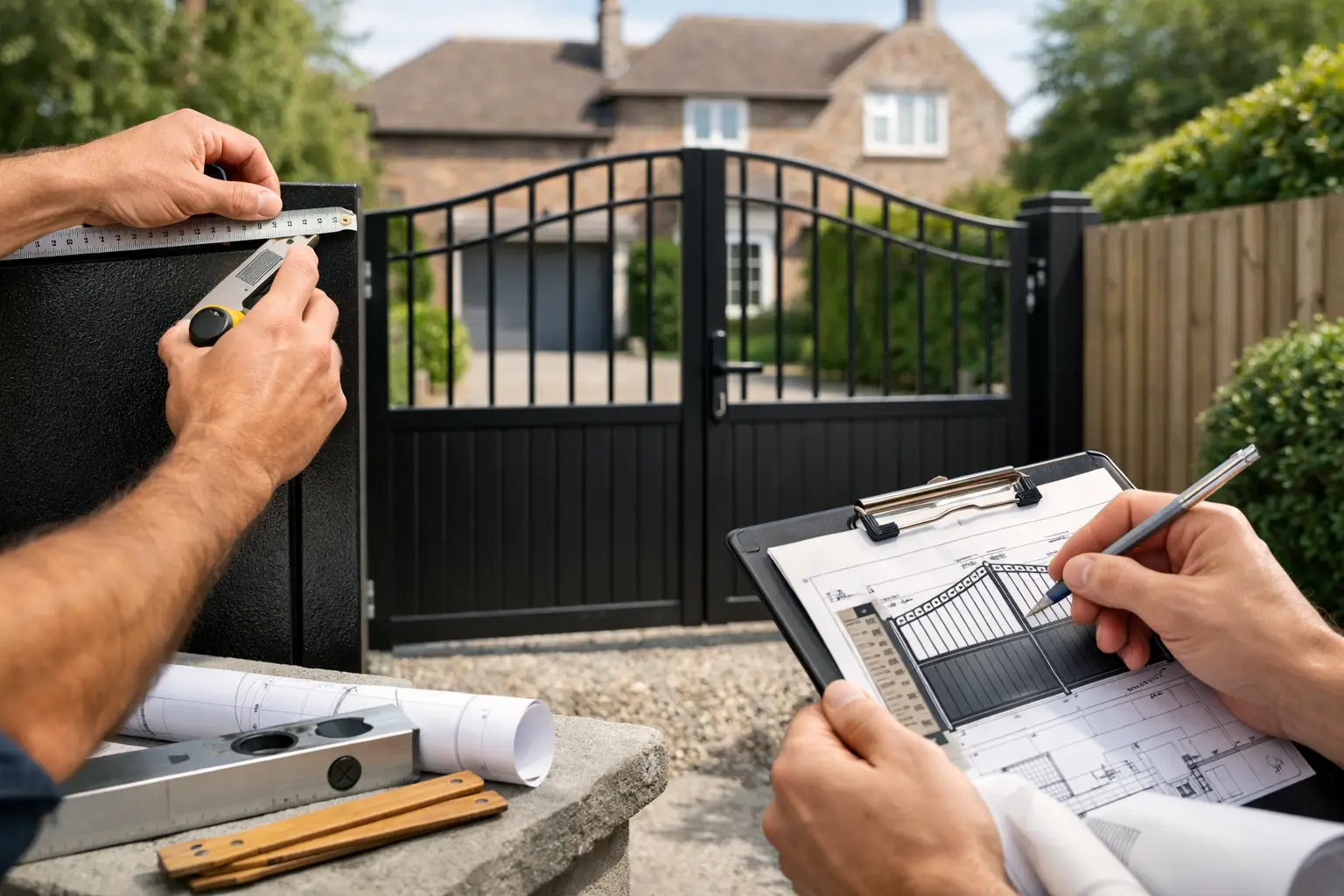
Choosing a gate begins with measurements, but it should not end there. Width and height are only part of the picture. A well-specified gate also accounts for ground levels, hinge positions, posts, automation allowances and how much space the leaves or track need to operate safely.
This is where many off-the-shelf solutions fall short. A standard gate may be close to the right size, but close is not good enough when dealing with driveways, walls and pillars that are already fixed. Even a small compromise can affect the way the gate hangs, closes and aligns.
A consultation-led approach avoids that problem. Rather than asking which gate looks best in isolation, it asks a better question: what will work best on this exact opening, for this exact property, over the next 10 or 20 years?
Width, height and proportion
A gate should feel substantial, but not oversized. If the height is too low, security and privacy can suffer. If it is too high, the entrance may feel heavy or out of scale with the house. Proportion matters just as much as measurement.
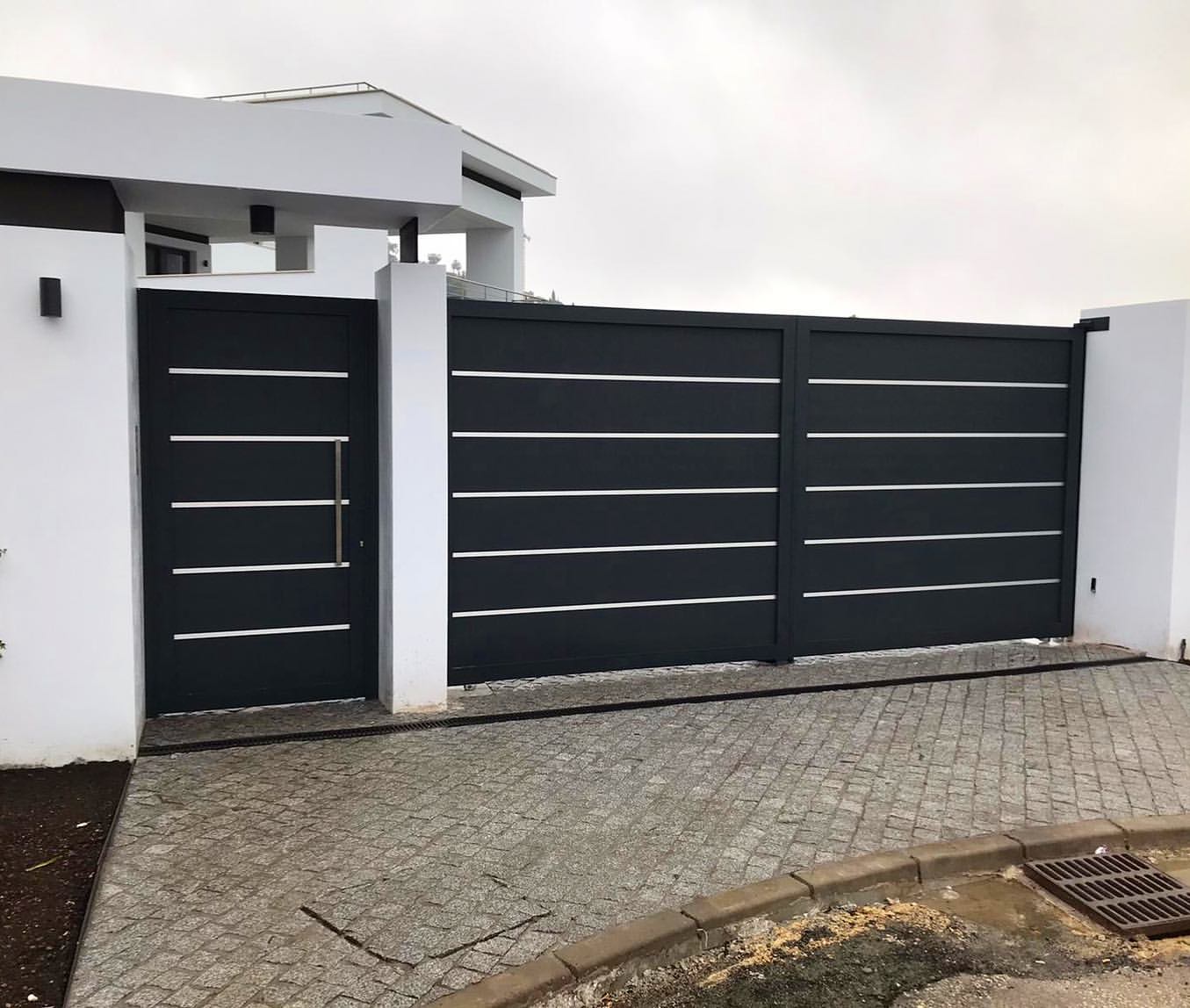
On residential projects, the best results usually come from balancing privacy with lightness. Slatted aluminium designs are a strong example. They can provide screening without creating a solid visual block, and they suit both contemporary and more traditional settings when the detailing is right.
Opening style and site conditions
Swing gates remain a popular choice because they are elegant and straightforward, but they need room to open. If your driveway rises sharply behind the gate line, inward opening leaves may not be practical. If space is tight near the pavement or entrance, outward opening may also be unsuitable.
That is where sliding, telescopic or bi-folding systems come into their own. They can solve access constraints that would make a swing gate awkward or impossible. The trade-off is that they often require more technical planning, particularly around tracking, stacking space or automation. Better performance usually comes from matching the format to the site rather than forcing a preferred style to fit.
Choosing materials that justify the investment
Material choice shapes everything from maintenance to lifespan. Timber can look attractive at first, but it needs regular upkeep and can move over time with moisture and temperature changes. Steel is strong, but without the right treatment it can become vulnerable to corrosion.
Aluminium has become a leading choice for premium residential and commercial gates because it offers a strong balance of appearance, durability and low-maintenance ownership. It does not rust, it holds finish well and it suits modern fabrication methods that support clean lines and precise detailing.
Not all aluminium gates are built to the same standard, though. Construction quality matters. Fully welded fabrication provides a more solid, refined result than mechanically assembled systems that rely heavily on fixings. It is the difference between a gate that feels engineered as one complete product and one that feels pieced together.
For buyers focused on long-term value, this is a major part of the decision. A gate should not just look good on day one. It should retain its structure, finish and ease of use year after year, with minimal intervention.
A made to measure gate guide to design choices
Design is often where buyers narrow their thinking too quickly. They focus on whether they want a modern gate or a traditional one, when the more useful question is how they want the entrance to behave visually.
Do you want full privacy from the road, or filtered visibility? Should the gate feel bold and architectural, or understated and in keeping with existing boundary lines? Does it need to coordinate with fencing, pedestrian access and intercom systems, or is it a standalone replacement?
These decisions affect the finished result more than many people expect. A coordinated entrance usually feels more premium because everything has been considered together. The gate, infill pattern, side panels, fencing and access control should speak the same design language.
Privacy, security and appearance
There is always a balance to strike. A very open design can feel lighter and more welcoming, but it may offer less screening. A solid design can increase privacy, yet if handled poorly it may look too severe for the property.
This is where tailored fabrication has a clear advantage. The spacing of slats, the profile depth, the frame detail and the finish can all be adjusted to create the right effect. Premium design is rarely about adding more. It is about refining the details until the entrance feels resolved.
Finish and colour selection
Finish has a practical role as well as an aesthetic one. A quality powder-coated finish supports longevity and helps the gate resist weathering. In the UK climate, that matters.
Colour choice should work with the architecture, not compete with it. Anthracite grey and black remain popular because they deliver a crisp, contemporary look, but they are not the only strong options. Softer neutral shades can suit stone, brick and rendered properties beautifully. The best finish is usually the one that complements the house and boundary treatment as a whole.
Automation and access control
A premium entrance is not only about the gate leaf itself. It is also about how you use it every day. Manual operation may be perfectly suitable for some pedestrian gates or lower-traffic settings, but driveway entrances increasingly benefit from automation.
The convenience is obvious, especially in poor weather or on busy roads, but automation also adds control. It allows the entrance to feel more secure, more deliberate and easier to manage. For commercial sites, that can be essential. For private homes, it can simply make the property feel better considered.
Intercoms, keypads and other access solutions should be planned alongside the gate, not added as an afterthought. The cleaner the integration, the stronger the final result. A bespoke system should feel cohesive in operation as well as appearance.
What UK buyers should ask before ordering
Before committing to any gate, it is worth asking a few direct questions. Is the gate genuinely made to measure, or are you choosing from adjusted standard sizes? How is it constructed? What guarantee supports it? What finish is applied, and how is long-term durability addressed?
You should also ask how the supplier approaches specification. A serious specialist will want to understand the site, the property style, the required opening method and the way the entrance is used day to day. If the process feels rushed, the product may be too.
This is one area where expertise pays for itself. A gate is a visible, functional part of the property. It has to operate reliably, contribute to security and justify its place architecturally. Getting all three right requires more than a price list.
For buyers who want an entrance that looks bespoke because it actually is bespoke, that difference is significant. Companies such as Alu-Gate build their offer around that principle – precision fabrication, design-led specification and long-term performance rather than one-size-fits-all supply.
The best gate is rarely the cheapest or the fastest to order. It is the one that fits the opening perfectly, suits the property completely and continues to perform without becoming a maintenance burden. When you approach the project with that standard in mind, the decision becomes much clearer.