
A gate can look perfect on paper and still be wrong for the way your driveway works. That is why the sliding gates vs swing decision matters so much. The right choice affects how easily you enter and leave, how much usable space you keep, how secure the entrance feels and how well the whole frontage sits with the property.
For some homes, a swing gate is the natural fit – elegant, familiar and highly effective. For others, a sliding gate is the smarter answer, especially where space is tight or the entrance sits on a slope. The key is not which type is better in general, but which one is better for your site, your priorities and the level of finish you expect.
Sliding gates vs swing gates: the core difference
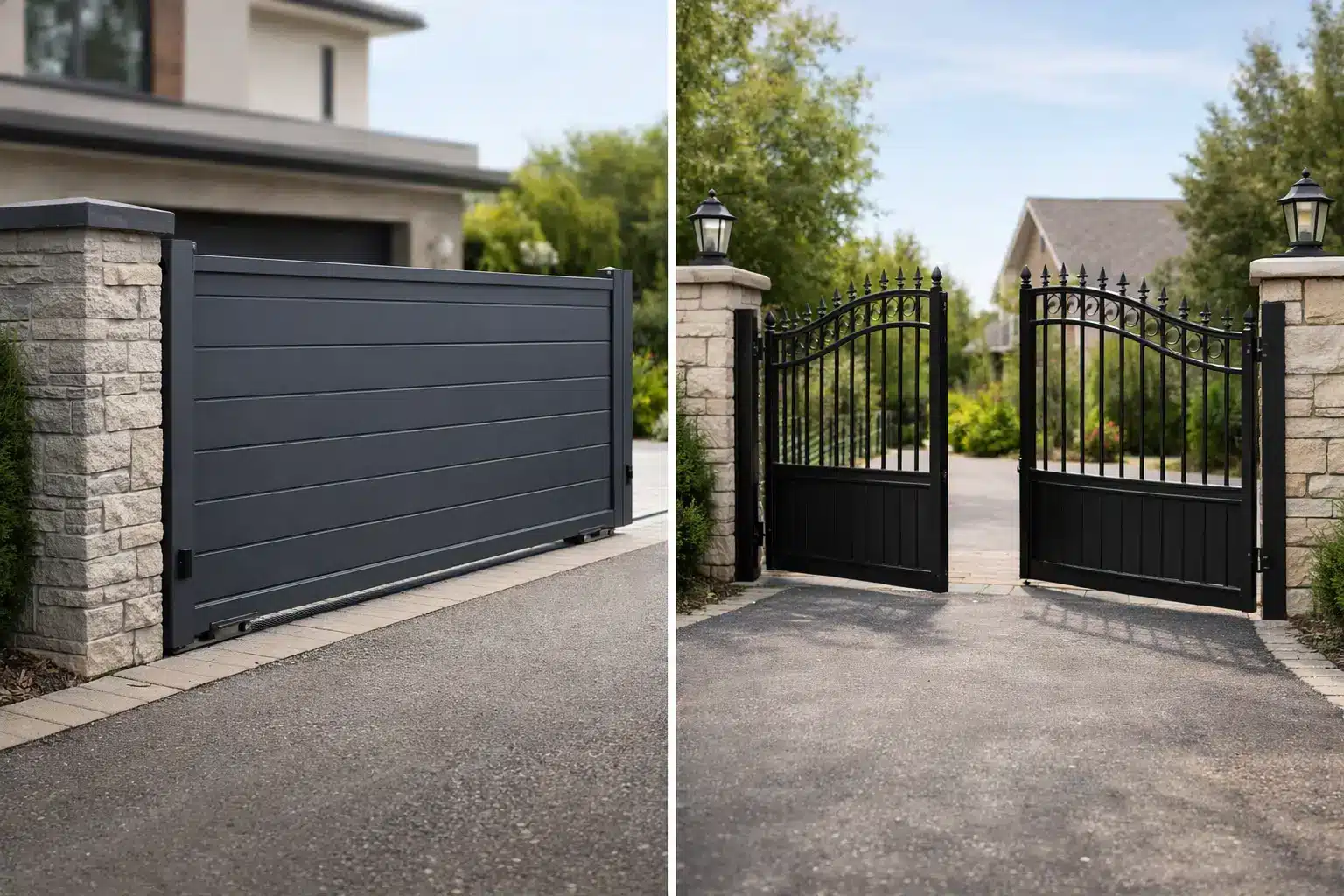
A swing gate opens inwards or outwards on hinges, much like a door. It needs a clear arc to move through, which means the driveway and surrounding space must allow for that movement. Depending on the opening width, this could be a single leaf or a pair of gates.
A sliding gate moves sideways along the line of the boundary. Instead of needing space to open into the driveway, it requires lateral run-back room to one side. That makes it particularly useful where parking space is limited or where the entrance meets the road closely.
At a glance, that sounds simple. In practice, the decision usually comes down to site conditions, intended use, visual preference and how much convenience you want from the system over the long term.
When swing gates are the better choice
Swing gates remain a popular option because they suit a wide range of domestic properties and can deliver a very balanced, architectural appearance. On a level driveway with enough clearance, they are often the most straightforward solution.
They can work especially well on traditional homes, wider entrances and projects where symmetry is part of the design brief. A pair of made-to-measure aluminium swing gates can frame a driveway beautifully while still offering excellent security and low-maintenance ownership.
There is also a practical advantage in simplicity. In the right setting, swing gates can be easier to specify and install because they do not need the same side-run space as a sliding system. If your entrance has room to open cleanly and there are no obstacles behind the gates, swing can be an efficient and refined choice.
That said, swing gates are less forgiving where space is restricted. If cars park close to the entrance, if the driveway rises sharply, or if the approach is awkward, the opening arc can become a limitation rather than a benefit.
Best situations for swing gates
Swing gates tend to suit level ground, generous driveways and properties where visual impact is just as important as day-to-day practicality. They are often a strong choice for private homes where vehicle movements are predictable and there is enough room to operate the gates without compromise.
They are also well suited to buyers who want a classic gate format with a premium finish. Aluminium changes the ownership experience here significantly. You still get a substantial, high-end entrance, but without the regular upkeep associated with timber or the corrosion concerns that can come with lower-grade metalwork.
When sliding gates make more sense
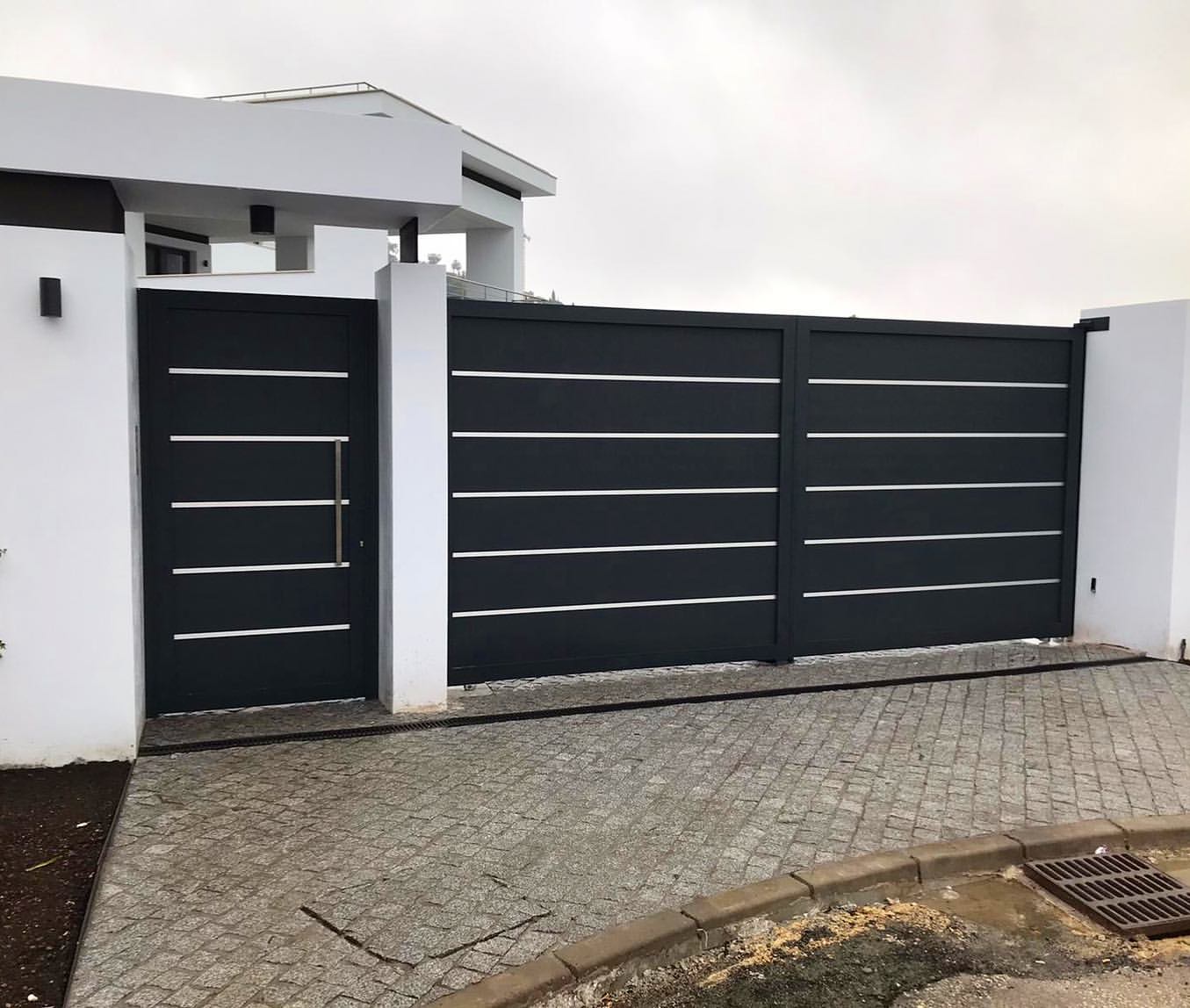
Sliding gates are often chosen because they solve access problems that swing gates cannot. If your driveway is short, if vehicles stop close to the entrance, or if the site falls away or rises near the gate line, sliding can be the more practical and more reliable answer.
Because the gate moves sideways, it does not take up driveway depth as it opens. That can make a significant difference on urban plots, commercial premises and modern residential projects where every metre counts. It can also create a cleaner experience for automated access, especially where regular vehicle traffic is expected.
From a security perspective, sliding gates can feel particularly solid. Their mode of operation can make them a strong option for wider openings and for sites where controlled access is a priority. When paired with quality fabrication, automation and intercom entry, they create a very composed and secure entrance solution.
The trade-off is that sliding gates need the right structural planning. You need enough run-back space to one side, and the gate system must be designed carefully around the opening, tracking or cantilever requirements and the surrounding boundary.
Best situations for sliding gates
Sliding gates are usually the stronger option where space efficiency is critical. They suit driveways with limited depth, entrances close to public roads and properties where parked vehicles might otherwise obstruct gate movement. They are also highly effective on sloping ground, where a swing gate may simply not open properly.
For commercial settings, sliding gates can be particularly appealing because they support controlled access without taking up operational space inside the site. For design-led residential projects, they also offer a distinctly contemporary look that works well with modern architecture and coordinated fencing.
Space, slope and layout matter more than style alone
Many buyers start with appearance, but site layout should lead the decision. A beautiful gate that fights against the driveway will never feel premium in use.
If the driveway slopes upward from the entrance, swing gates can become problematic unless the design is adapted around the fall. If the entrance opens straight onto a road and cars need to pull clear quickly, a sliding gate may be safer and more convenient. If boundary walls, planting or parked vehicles restrict one side, swing may actually be the easier format.
This is where consultation matters. Bespoke gate design is not just about choosing a panel style or powder-coated finish. It is about understanding how the gate will move, what the approach looks like, where vehicles stop and how often the entrance will be used.
Security and automation considerations
Both sliding and swing gates can deliver a high level of security when properly designed. Material quality, fabrication standard, locking arrangements and automation all influence the final result.
What often changes between the two is the user experience. Sliding gates are frequently chosen for smooth, controlled access on busy entrances. Swing gates can also automate very effectively, but they need the operating space to do so reliably.
For either format, access control should be considered early rather than added as an afterthought. Intercom systems, keypad entry, remote operation and safety features work best when the gate and access equipment are specified together. A premium entrance should feel deliberate in every detail, not pieced together later.
Cost is not just about the gate itself
It is reasonable to ask whether sliding or swing gates are cheaper. The honest answer is that it depends on the opening, the ground conditions, the level of customisation and the automation package.
Swing gates can be more cost-effective in straightforward domestic settings because the supporting requirements may be simpler. Sliding gates can involve more groundwork or structural preparation, particularly where the site needs careful engineering. However, that does not make one better value than the other.
True value comes from choosing the right system the first time. A lower initial price means very little if the gate is awkward to use, unsuitable for the entrance or likely to need compromise-led adjustments. For premium buyers, durability, low maintenance and precise fit matter more than headline cost alone.
Why aluminium changes the comparison
When comparing gate types, material should not be treated as secondary. The format matters, but so does what the gate is made from.
A bespoke aluminium gate offers clear advantages whether you choose sliding or swing. It combines strength with lower weight, which supports smooth operation and long-term performance. It will not rot like timber, and it avoids the ongoing upkeep that can come with more maintenance-heavy materials. For design-conscious properties, it also allows for crisp detailing, consistent finishes and a cleaner architectural result.
That matters even more on automated systems, where build quality and precision have a direct impact on reliability. At Alu-Gate, this is why fully welded construction, tailored specification and premium finishing are central to the result rather than optional extras.
So, which should you choose?
Choose swing gates if you have the opening space, level ground and a property that suits their balanced, classic presence. They are an excellent option for many homes and can deliver security, kerb appeal and easy automation when the site allows for them.
Choose sliding gates if your entrance needs to work harder. They are often the right answer where space is tighter, the driveway is sloped, vehicle movement is frequent or a more contemporary operating style is preferred.
The best gate is the one that feels right every day, not just on installation day. If the system is tailored to the property, fabricated properly and designed around the way you actually use the entrance, it will do more than secure the boundary. It will elevate the entire approach to your home or site.
A premium gate should look considered, operate with confidence and still feel like the right decision years later.