
A gate can transform the front of a property in a single decision. Get it right, and it sharpens security, improves daily access and gives the whole entrance a more considered finish. Get it wrong, and even a premium installation can feel awkward to use. If you are weighing up a sliding or swing gate for driveway access, the best option is rarely about appearance alone. It comes down to space, levels, traffic, automation and how you want the entrance to perform over time.
For some properties, a pair of swing gates is the obvious answer. For others, only a sliding system will work cleanly and reliably. The key is choosing a gate style that suits the site rather than forcing the site to suit the gate.
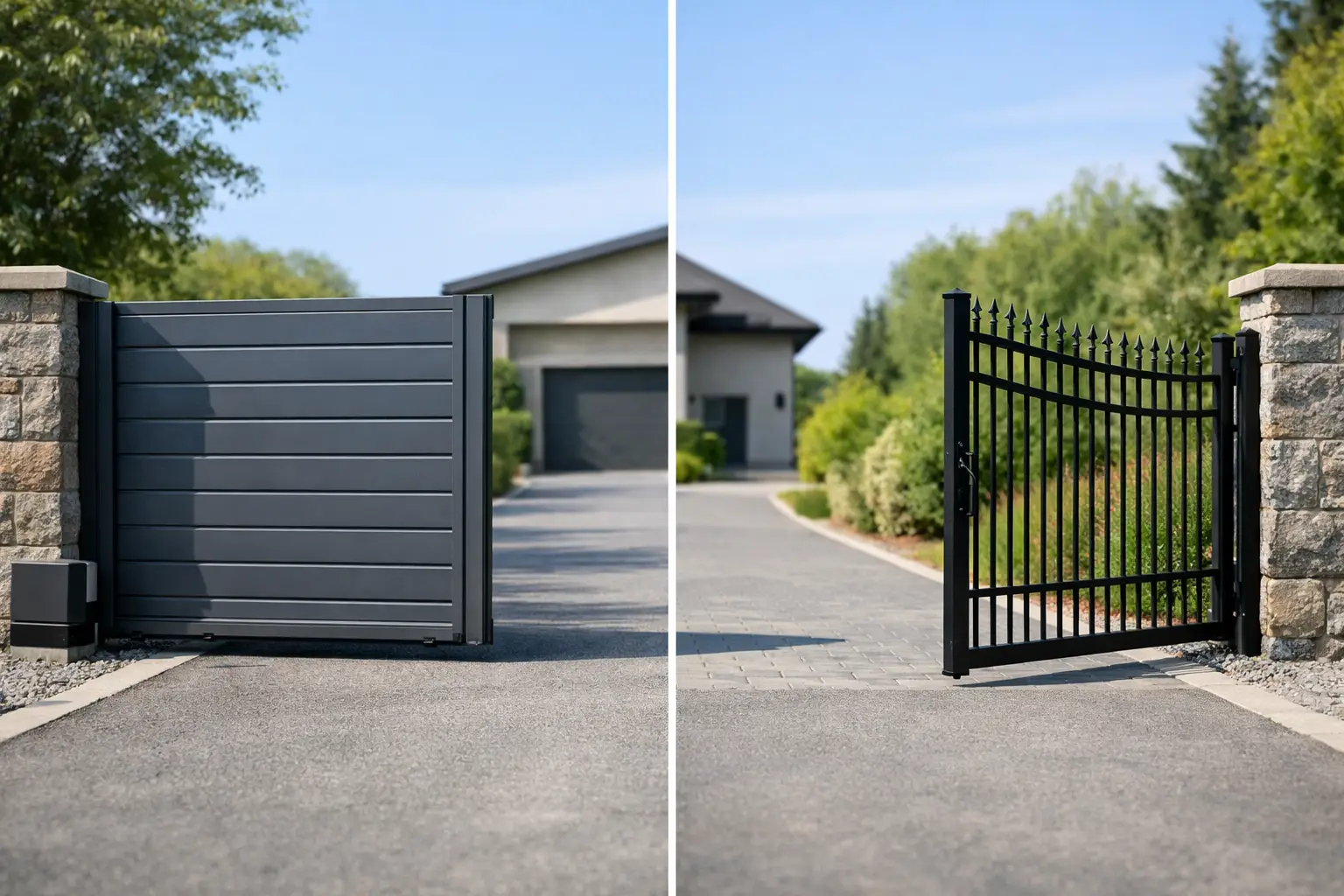
Sliding or swing gate for driveway – what is the difference?
A swing gate opens inwards or outwards on hinges, much like a traditional door. It can be a single leaf or, more commonly on residential driveways, a pair of gates meeting in the middle. Swing gates are familiar, elegant and often well suited to homes where there is enough clear space for the gates to open without obstruction.
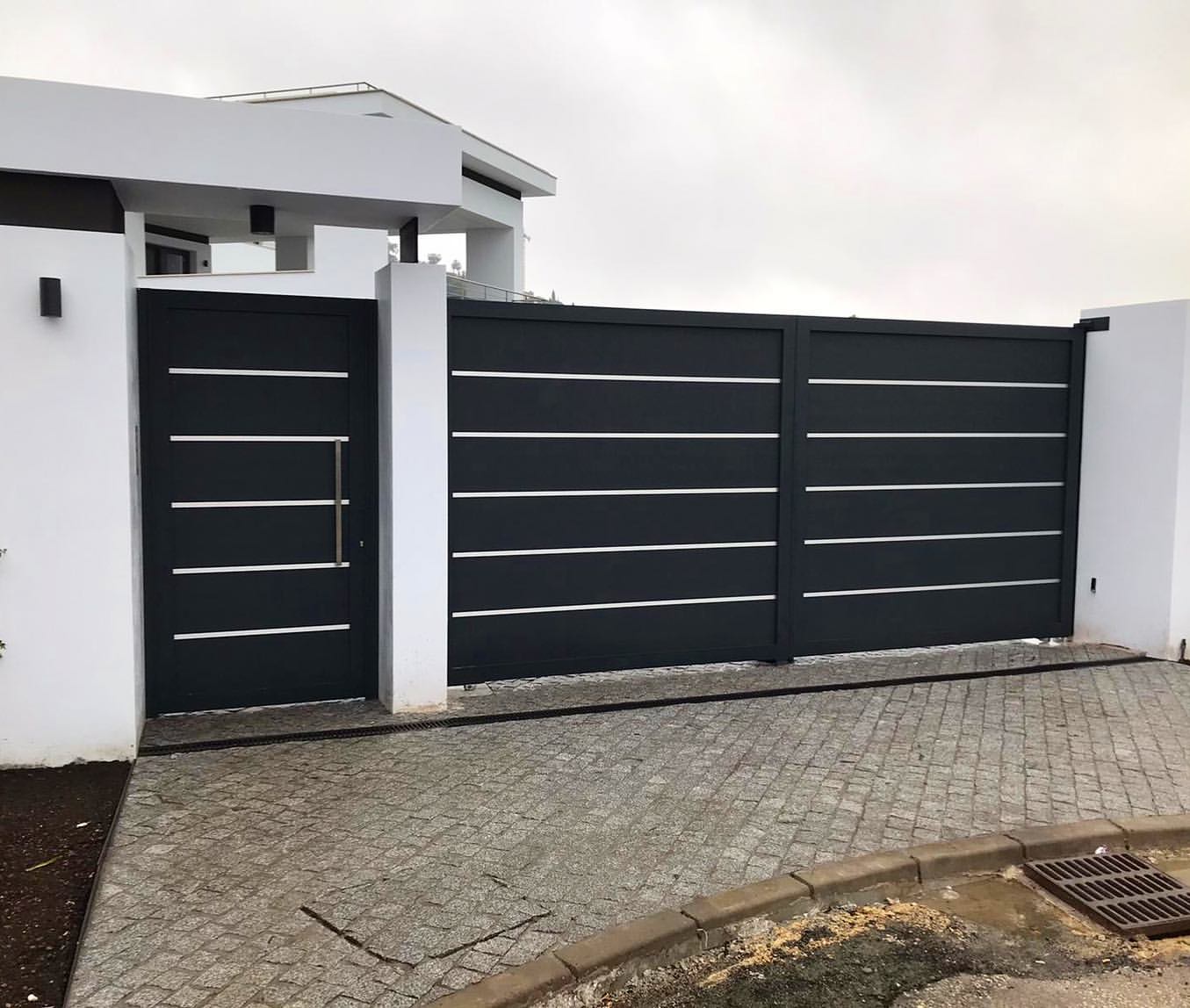
A sliding gate moves sideways along the boundary line instead of opening into the driveway. Depending on the design, it may run on a track or use a cantilever system. This format is especially useful where space in front of or behind the gate is limited, or where the driveway rises sharply.
Both options can be automated, both can be made to measure, and both can deliver excellent security and visual impact. The difference lies in how they interact with the layout of your entrance.
When a swing gate is the better choice
Swing gates remain a popular choice for good reason. They suit a wide range of property styles, from contemporary builds to period homes, and they create a balanced, architectural look across the entrance. On a flat driveway with adequate clearance, they are simple, effective and visually impressive.
If your driveway has room behind the gates for the leaves to open fully, a swing system can feel natural in daily use. It also allows for a clean frontage without the side run-back area a sliding gate requires. For many homeowners, this matters because the gate becomes part of the wider landscaping rather than a purely functional barrier.
There is also a design advantage. Swing gates often lend themselves particularly well to symmetrical layouts, wider entrances and statement driveways. When made in aluminium with a fully welded construction and a premium finish, they offer the traditional appeal of hinged gates without the maintenance burden associated with timber or steel.
That said, swing gates are not right for every site. If the ground slopes up steeply behind the entrance, the gate leaves may catch or require complex adjustments. If cars regularly stop close to the gate line, opening clearance can become a practical annoyance rather than a minor detail.
Best-fit scenarios for swing gates
Swing gates tend to work best where the driveway is level, the entrance is reasonably open, and the property benefits from a classic or formal approach to design. They also suit buyers who want a strong visual statement at the front boundary without needing side space for a sliding mechanism.
When a sliding gate makes more sense
A sliding gate is often the more practical engineering solution. If your driveway climbs immediately after the entrance, a swing gate may simply not operate cleanly. A sliding gate avoids that issue because it moves laterally rather than sweeping across the ground.
It is also an excellent option where space is tight. On shorter driveways, there may be little room for a vehicle to wait while swing leaves open inwardly. If the entrance opens directly onto a road and there is no safe or compliant way for gates to open outwards, sliding can solve the problem neatly.
From a security perspective, sliding gates are often seen as a strong choice because the system is inherently harder to force at the leading edge than some lighter hinged alternatives. In high-use settings, including commercial premises or larger residential entrances, they also offer controlled, consistent operation.
A sliding gate does, however, need enough lateral space for the gate to stack when open. That side run can be overlooked at the planning stage. If there is a wall return, planting scheme, meter box or change in boundary line, the available travel distance may be reduced. This is why accurate site assessment matters so much.
Best-fit scenarios for sliding gates
If your entrance is on a slope, your driveway is short, or your property needs a more space-efficient opening method, sliding is often the stronger choice. It is particularly effective on modern properties and premium driveways where clean lines and controlled access are priorities.
Space, levels and layout matter more than style
Many buyers begin by asking which gate looks better. In practice, the better question is which gate will work properly on the site. A well-designed gate should feel effortless in use. That only happens when the layout has been considered from the beginning.
Ground levels are usually the first deciding factor. Even a modest rise across the swing arc can rule out standard hinged gates. Vehicle movement is the next. If cars need to pull off the road quickly, the opening speed and footprint of the gate become important. Then there is side clearance, boundary walls, pedestrian access and whether you want integrated controls such as an intercom or keypad.
This is where bespoke design makes the difference. A made-to-measure aluminium system allows the gate format, dimensions and detailing to be tailored to the entrance rather than selected from a limited standard range.
Automation, maintenance and long-term ownership
Automation is now expected on many premium driveway gates, but not every gate type behaves the same once motors, safety devices and access control are involved. Swing gates generally use above-ground or underground operators and need consistent opening clearance. Sliding gates rely on a different motor arrangement and are often chosen where automation needs to work efficiently in tighter spaces.
Maintenance is another point worth treating realistically. Any automated gate system benefits from servicing, adjustment and good installation practice. The gate material itself, however, has a major impact on long-term upkeep. Aluminium remains one of the strongest choices for buyers who want lasting performance without the routine sanding, painting or treatment associated with timber.
For residential and commercial properties alike, that low-maintenance ownership model is not just a convenience. It is part of the value equation. A gate should continue to look sharp and operate reliably without becoming a recurring project.
Cost versus value
There is no single answer on price because the specification drives the cost. Opening width, gate height, infill design, automation, access control and site conditions all affect the final figure. A sliding gate can involve more groundwork or a more specialised support arrangement, while a swing gate may require additional consideration on gradients or hinge loading.
The more useful comparison is value over time. A well-specified gate that suits the site, is fabricated properly and is built in a durable material will usually prove more cost-effective than a cheaper option that compromises on fit, finish or operation. Premium entrances are judged every day, both visually and practically. They need to earn that position.
Which gate gives the best kerb appeal?
Both can look exceptional when designed well. Swing gates often bring a sense of proportion and formality, especially on detached homes, country properties and wider plots. Sliding gates tend to create a more contemporary impression, with a cleaner horizontal movement and a strong architectural feel.
The best result comes from matching the gate to the property style and surrounding elements such as fencing, walls, railings and pedestrian access points. Coordination matters. A driveway gate should not feel like an isolated product dropped into place. It should look like part of a complete entrance scheme.
For that reason, many buyers now favour bespoke aluminium solutions in coordinated finishes and made-to-measure designs. It gives far more control over the final appearance, while still delivering strength, precision and long-term durability.
Making the right choice for your property
If your driveway is level and spacious, a swing gate may give you the look and operation you want with a timeless sense of arrival. If your site is constrained, sloping or focused on efficient automated access, a sliding gate may be the smarter answer.
Neither option is universally better. The right choice depends on the entrance. That is why consultation-led design is so valuable. A specialist manufacturer can assess the layout, understand how the gate will be used and recommend a system that balances style, security and practicality without compromise.
At Alu-Gate, that approach sits at the centre of every made-to-measure project. Because when a gate is designed to impress and built to last, the best decision is the one that works beautifully for years, not just the one that looked good on paper.