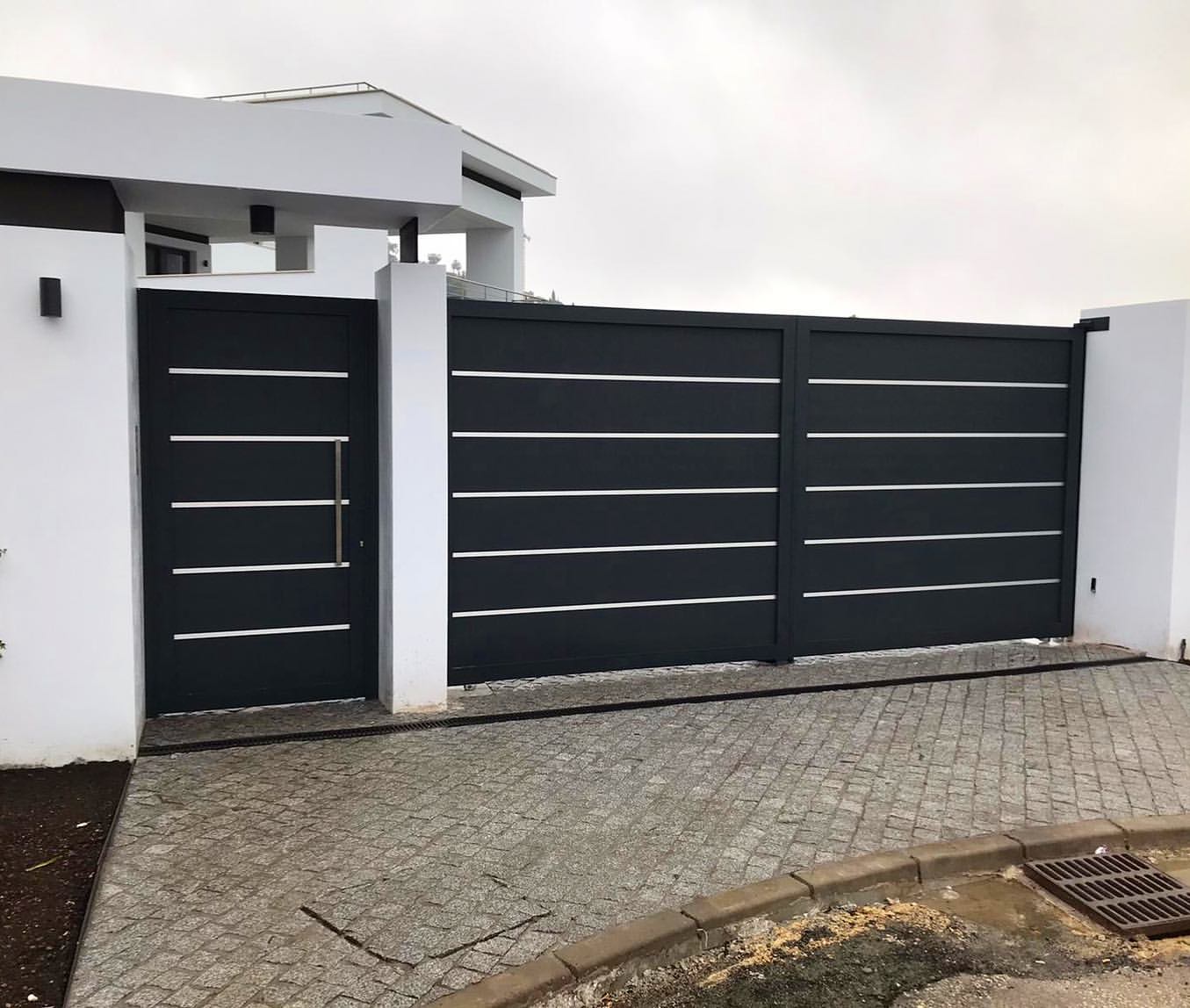

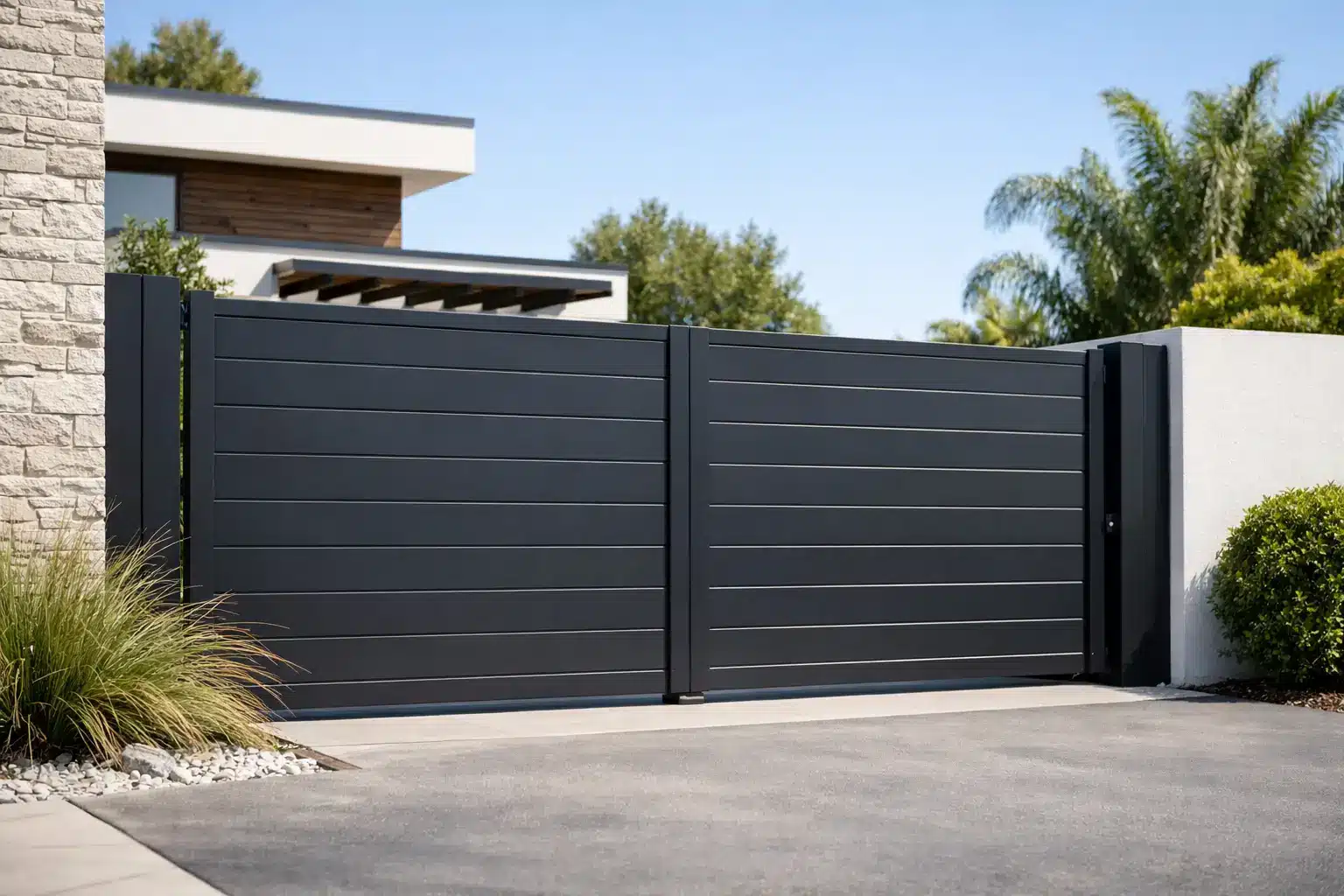
A front boundary says a great deal before anyone reaches the door. If your current gate leaves your driveway exposed, clashes with the property or demands constant upkeep, privacy aluminium gate designs offer a more considered answer – one that improves security, sharpens kerb appeal and stays looking right with minimal maintenance.
For many UK property owners, privacy is not simply about blocking a view. It is about defining the boundary properly, reducing visibility from the street, creating a stronger sense of arrival and choosing a gate that still feels refined rather than heavy or defensive. The best aluminium designs achieve that balance with precision.
What makes privacy aluminium gate designs so effective?
The strongest designs combine visual screening with clean architectural lines. Unlike more open gate styles, privacy-focused gates use solid or near-solid infill to limit sightlines into the property. That can make a driveway feel more secure, a garden more enclosed and an entrance more premium.
Aluminium is particularly well suited to this type of design because it allows for crisp fabrication without the weight and maintenance demands of steel or timber. A well-made aluminium gate resists warping, rust and routine deterioration, which matters when the gate is a prominent feature used every day. For buyers investing in a long-term exterior upgrade, that low-maintenance performance is not a small detail – it is part of the value.
There is also a practical point here. Full privacy does not have to mean a flat, featureless panel. With the right fabrication and finish, a privacy gate can still look sharp, contemporary and tailored to the property.
Choosing the right level of privacy
Not every site needs the same solution. Some properties benefit from complete screening, while others need only partial privacy to soften the view from the pavement without making the frontage feel closed off.
A fully boarded or fully infilled aluminium gate creates the highest level of privacy. This is often the preferred choice for homes on busy roads, corner plots or exposed driveways where passing traffic and footfall are constant. It also suits commercial premises where visibility into the site needs to be controlled.
Semi-private designs are a more balanced option for many homes. These may include closely spaced horizontal slats, narrow shadow gaps or a combination of solid lower sections with more open detailing above. You still gain meaningful screening, but the entrance can feel lighter and more architectural.
The right answer depends on the property, the surrounding streetscape and how you want the entrance to feel. A tall, fully private gate may be ideal for one driveway and too imposing for another. This is where bespoke design matters. Made-to-measure dimensions and carefully judged detailing can make the difference between a gate that looks purposeful and one that looks oversized.
Popular privacy gate styles for modern properties
Horizontal slat designs remain one of the most requested options because they sit comfortably with both contemporary homes and updated period properties. The lines look disciplined and modern, and the spacing can be adjusted to increase or reduce privacy. Tighter spacing gives stronger screening, while a slight gap retains a cleaner, lighter appearance.
Flush panel gates create a more minimalist result. These are often chosen where the brief is sleek, understated and highly private. On the right property, especially with coordinated fencing or side panels, a flush design gives a very polished frontage.
Vertical infill designs suit buyers who want privacy with a slightly more traditional rhythm. They can feel less stark than full panels and often work well on properties where the architecture is classic rather than ultra-modern.
Mixed-material styling is another route, at least in appearance. Aluminium can be finished in wood-effect tones or paired visually with complementary fencing and cladding to soften the overall look. That approach appeals to homeowners replacing timber gates but wanting the same warmth without the maintenance burden.
Why finish matters as much as the design
A privacy gate covers a large visual area, so the finish has a major influence on the final result. Dark greys, black and anthracite tones remain popular because they look crisp, premium and contemporary. They also pair well with modern brick, render and aluminium windows.
That said, the best colour is not always the most fashionable one. Lighter greys can reduce visual weight on a smaller frontage. Textured finishes can add depth and help the gate feel more substantial. Wood-effect finishes are often a strong option where the property needs warmth rather than contrast.
Finish quality matters just as much as shade. A premium powder-coated finish helps the gate retain its appearance over time, resisting fading and weathering far better than lower-grade alternatives. When you are investing in a bespoke entrance, consistency of finish across gates, fencing and entrance features is part of what makes the project look complete.
Privacy, security and access should work together
A privacy gate should never be judged on appearance alone. If the design hides the property effectively but does not support secure access, it is only doing half the job.
This is especially relevant for driveway gates. Swing gates, sliding gates, bi-folding systems and telescopic designs all offer different advantages depending on available space, driveway depth and usage. A steep driveway may rule out one format. Limited run-back space may point towards a bi-folding or telescopic solution. Higher traffic frequency may make automation and access control a priority from the start.
Privacy also changes how an entrance operates visually. With an open-rail gate, you can usually see movement behind it. With a private gate, that visibility is reduced. That makes reliable automation, safety devices and intercom integration more important, particularly on larger residential plots or commercial sites.
The strongest entrance schemes are designed as complete systems rather than isolated gate leaves. Gate format, privacy level, opening method, access control and adjacent fencing should all be considered together.
The case for bespoke over off-the-shelf
Privacy gates are rarely forgiving of poor fit. Because the panels are more solid, inaccuracies in proportion, alignment or installation tend to stand out. An off-the-shelf gate might seem convenient, but it often forces compromise in width, height, visual balance or opening practicality.
A bespoke aluminium gate allows the design to respond to the exact entrance. That includes matching awkward brick openings, accommodating falling driveways, aligning with piers and ensuring the privacy pattern looks deliberate rather than generic. It also allows details such as frame depth, infill style and finish to be specified properly.
For premium properties, this matters. A gate is not a background item. It is one of the first architectural features visitors notice. A tailored design gives the entrance a more resolved look and supports the value of the wider exterior investment.
At Alu-Gate, that consultation-led approach is central to getting the result right. Privacy, practicality and appearance need to be designed together, not chosen in isolation.
Are privacy aluminium gate designs right for every property?
Usually, yes – but the design should respond to context. On a narrow urban frontage, full privacy may feel exactly right because it reduces exposure and creates a stronger boundary. On a rural property, a more open upper section may better suit the setting. In conservation-sensitive locations or on traditional homes, the styling may need more restraint.
There are also planning and visibility considerations. Gate height, proximity to the highway and sightlines for vehicles may influence what is suitable. For commercial premises, operational demands and access frequency may shape the design just as much as appearance.
That does not mean privacy is difficult to achieve. It simply means the best solution is rarely selected from a single photograph. It comes from understanding how the gate will look, operate and age on the specific site.
What to look for before you commit
If you are comparing options, focus on more than the headline style. Ask how the gate is fabricated, whether the construction is fully welded, what guarantee supports it and how the finish is applied. Privacy gates have to look clean over a large surface area, so build quality becomes very obvious very quickly.
It is also worth asking how the gate will coordinate with fencing, side panels and access control. A well-designed entrance feels intentional from end to end. A gate that looks strong on its own but does not relate to the rest of the frontage can leave the project feeling incomplete.
The best privacy aluminium gate designs do not rely on one feature. They succeed because proportion, finish, security and fabrication all work together. When that balance is right, the result is elegant, secure and built for long-term ownership.
If you are planning a new entrance, start with the outcome you want the property to project. Privacy is not only about closing off a view – it is about creating a boundary that feels considered, secure and properly designed.