A gate can sharpen the entire front of a property – or quietly let it down. If you are comparing materials, layouts and automation options, this aluminium gate buying guide is designed to help you choose with confidence and avoid expensive compromises later.
For most buyers, the decision is not simply about opening and closing a driveway. It is about security, kerb appeal, privacy, ease of use and how the entrance feels every day. A well-specified gate should suit the property, cope with the available space and continue to perform without becoming a maintenance burden.
Why aluminium has become the premium choice
Timber has warmth, and steel has weight, but both come with trade-offs that many property owners would rather avoid. Timber requires regular upkeep to stay looking smart and structurally sound. Steel is strong, yet it can be vulnerable to corrosion if the finish is damaged or the environment is harsh.
Aluminium offers a cleaner long-term proposition. It is lightweight, resistant to rust and well suited to made-to-measure fabrication. For residential driveways and commercial entrances alike, that usually means smoother operation, less strain on motors and hinges, and a finish that keeps its appearance with minimal attention. For buyers investing in a premium exterior upgrade, those practical advantages matter just as much as the look.
That said, not all aluminium gates are equal. Material quality, frame design, welding standards and finishing all affect how the gate feels, how long it lasts and how convincingly it elevates the property.
Aluminium gate buying guide: start with the opening
Before choosing a style, focus on the site itself. The opening width, ground levels, side clearance and approach all influence which gate type will work best. This is often where a good-looking idea becomes either a well-engineered solution or a frustrating mistake.
Swing gates are a popular choice for homes because they create a classic, balanced entrance and suit a wide range of designs. They do, however, need clear space for the leaves to open. If the driveway rises sharply, or cars are regularly parked close behind the gate line, swing may not be ideal.
Sliding gates are often the stronger answer where space is tight behind the entrance. They can deliver excellent security and a clean, contemporary appearance, but they require lateral run-back space and careful planning around track or cantilever arrangements.
Bi-folding and telescopic systems come into their own when openings are wide but space is restricted. They are more specialised and need precise specification, yet they can solve difficult access challenges without sacrificing style.
A pedestrian gate should not be treated as an afterthought. If regular foot access is needed, a coordinated side or garden gate can improve convenience, protect the main driveway system from unnecessary use and create a more cohesive boundary design.
Choosing the right design for the property
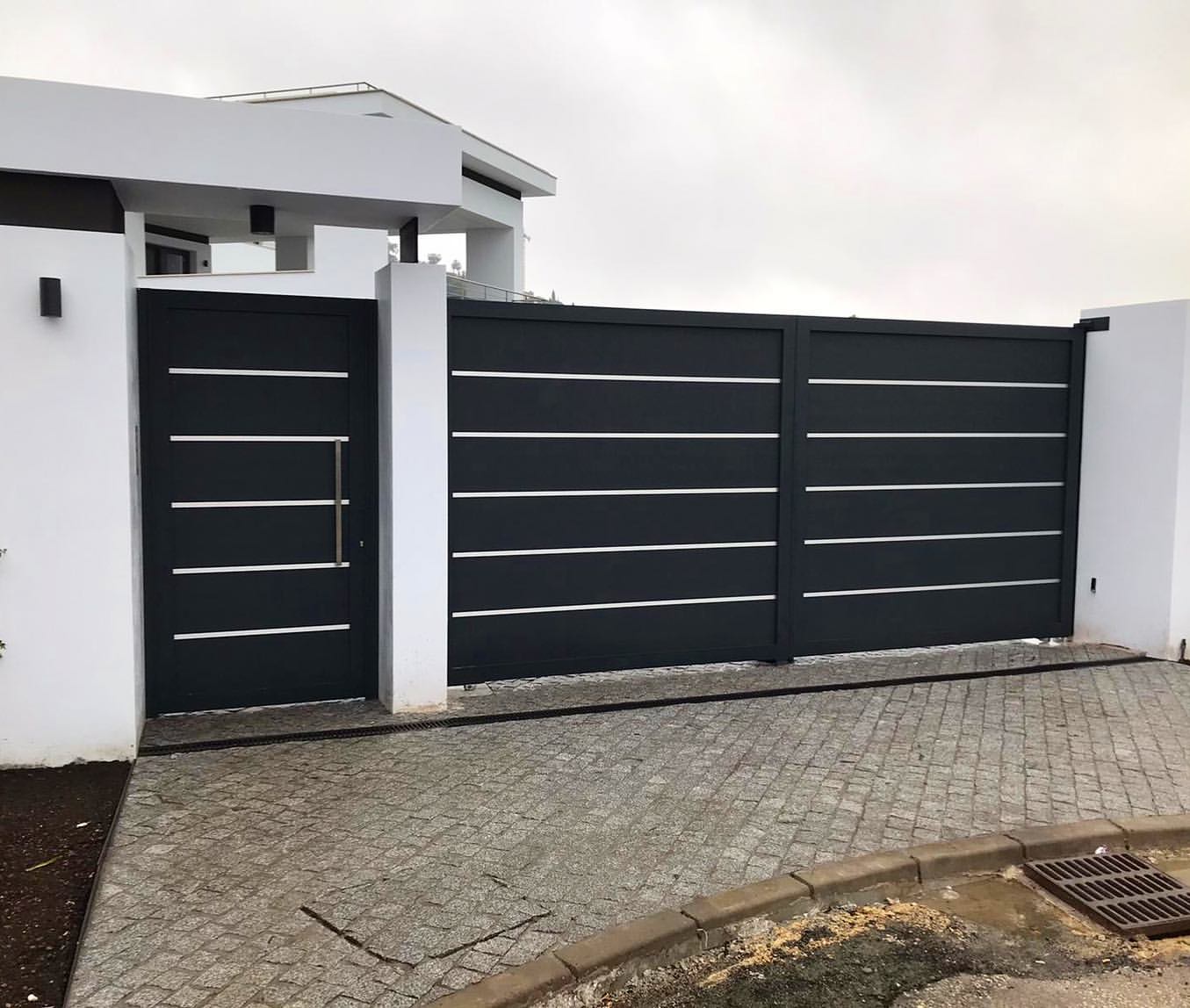
The most successful gates look as though they belong to the building. On a contemporary home, sleek horizontal lines, minimal detailing and a refined finish often feel right. On a more traditional property, a vertical board effect, softer proportions or understated decorative elements may sit more naturally.
Privacy is another key design decision. Open-bar styles can feel lighter and allow visibility outwards, which some buyers prefer for security and a less enclosed frontage. More solid infill designs offer greater screening and a stronger architectural statement, though they can appear heavier if the proportions are not carefully handled.
This is where bespoke manufacture has a clear advantage. Instead of forcing a standard design into an awkward opening, a made-to-measure gate can be scaled properly to the property, aligned with walls and fencing, and finished to complement windows, doors and other exterior details.
Construction quality matters more than brochures
A premium gate should look impressive in photographs, but the real measure is how it is built. Ask how the frame is constructed, whether the gate is fully welded and what grade of aluminium is being used. These points affect rigidity, durability and the overall quality of the finished product.
Fully welded construction usually gives a stronger, more refined result than mechanically joined alternatives. It helps maintain structural integrity, reduces movement over time and supports a cleaner appearance. Precision in fabrication also matters. Uneven sections, poor alignment or weak joints are often signs that the gate may not wear well.
Finish quality deserves equal attention. A gate is exposed to weather all year, so the coating needs to do more than look attractive on day one. Premium powder-coated finishes provide durability and colour consistency, but preparation standards and application quality make a significant difference.
Guarantees can be revealing. A serious long-term guarantee suggests confidence in both materials and workmanship, especially when backed by a specialist focused on bespoke aluminium systems rather than general garden products.
Aluminium gate buying guide: think beyond the gate leaf
Buyers often focus on the gate itself and overlook the wider system around it. Posts, hinges, latches, tracking, automation, intercoms and access control all contribute to daily performance. A beautiful gate with weak supporting hardware is not a premium solution.
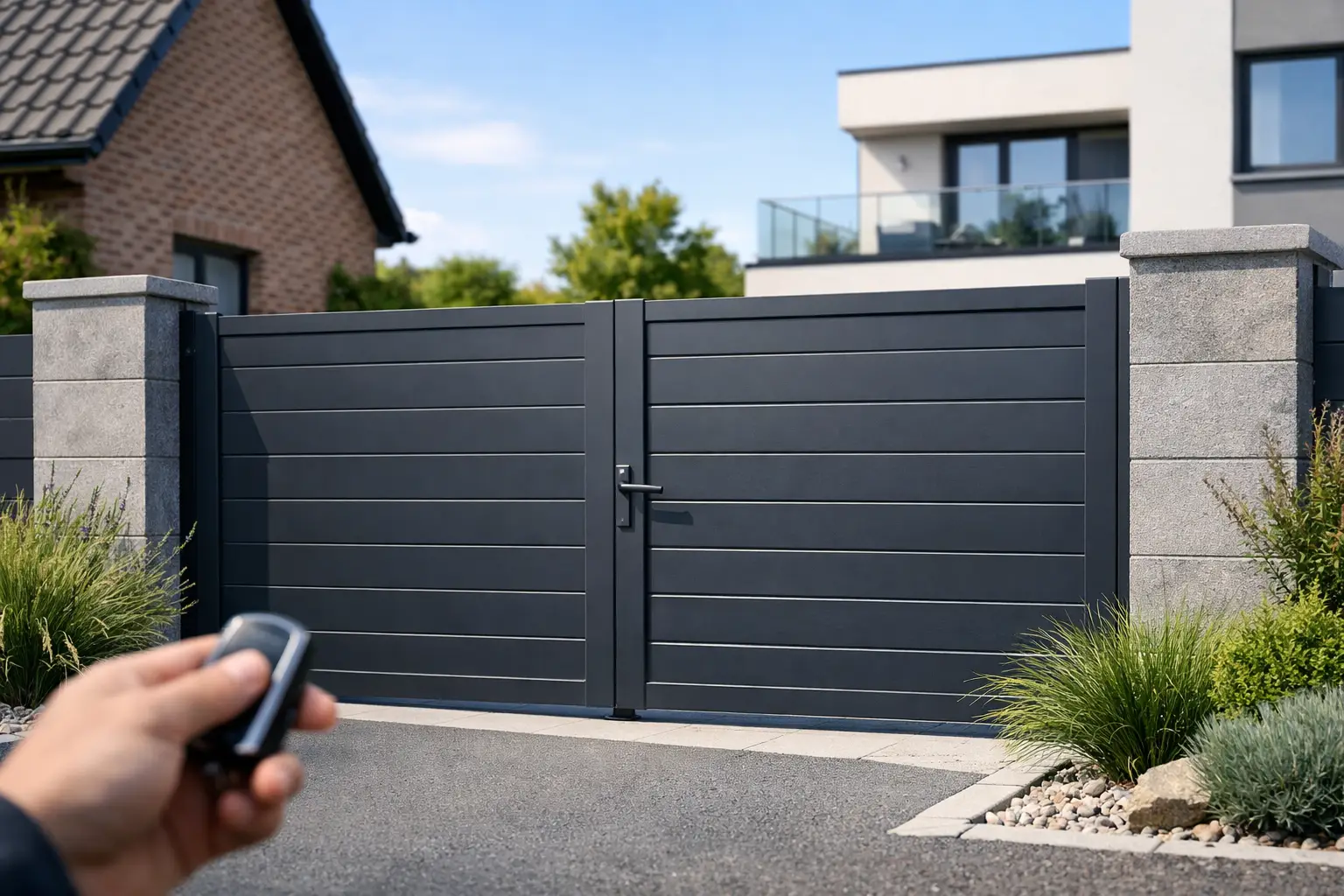
If you are considering automation, think about how the gate will be used in practice. A family home may need fast, reliable access for multiple users, safe obstacle detection and a simple way to manage deliveries or visitors. A commercial property may require more frequent cycles, tighter access control and greater integration with existing security arrangements.
Intercoms, keypads, fobs and app-based access can all improve convenience, but only if they are matched properly to the site and the people using them. Overcomplicating the system can be as unhelpful as under-specifying it. The right setup is the one that feels effortless day to day while maintaining the level of security the property needs.
Power supply, cabling routes and groundworks should also be considered early. It is far easier to plan these at the specification stage than to retrofit around finished paving or landscaping.
How to balance aesthetics, security and maintenance
The best gate is rarely the one that maximises just one feature. A very open design may preserve sightlines and feel elegant, but it may offer less privacy than the client wants. A highly solid gate can improve screening, but it may require careful design to avoid looking too imposing.
Security is not only about how difficult the gate is to force. It also includes the quality of locking, the strength of posts, the reliability of automation and how well the entrance works as a complete perimeter solution. Coordinated fencing and matching pedestrian access can strengthen both appearance and security.
Maintenance is where aluminium continues to justify its premium position. Compared with timber, ownership is far less demanding. You are not signing up to frequent sanding, staining or repainting simply to keep the entrance presentable. For many buyers, that lower maintenance requirement is not a secondary benefit – it is one of the main reasons to choose aluminium in the first place.
Questions worth asking before you buy
A good supplier should be able to guide you clearly through specification, not simply quote a price and leave the details vague. Ask whether the gate is made to measure, how the construction is engineered, what finish options are available and how the system will be tailored to your opening.
It is also worth asking who the gate is really designed for. Some products are built for cost-first purchasing and broad appeal. Others are fabricated for buyers who want a more exact fit, stronger construction and a higher standard of finish. If you are making a visible investment in your property, that distinction matters.
Lead times, installation requirements and aftercare should be discussed openly. Premium products often involve more consultation and fabrication time, but that usually reflects a more considered result rather than a standard item pulled from stock.
For design-conscious homeowners and commercial buyers, this is where a specialist approach stands apart. Companies such as Alu-Gate focus on the details that shape long-term satisfaction – bespoke sizing, premium finishes, precision welding and entrance systems that are designed to impress and built to last.
Making the right choice for long-term value
Price always matters, but gate buying is a classic case of short-term savings versus long-term value. A cheaper gate may look acceptable initially, yet if it lacks structural quality, finish durability or proper design support, the cost difference can disappear quickly in maintenance, repairs or early replacement.
A well-made aluminium gate should add more than security. It should improve the frontage, complement the architecture and make daily access easier. It should feel substantial without being cumbersome, and refined without being fragile.
If you are choosing carefully, trust the option that solves the practical demands of the site while still raising the standard of the property. The right gate should not feel like a compromise. It should feel like part of the home from the moment it is installed.