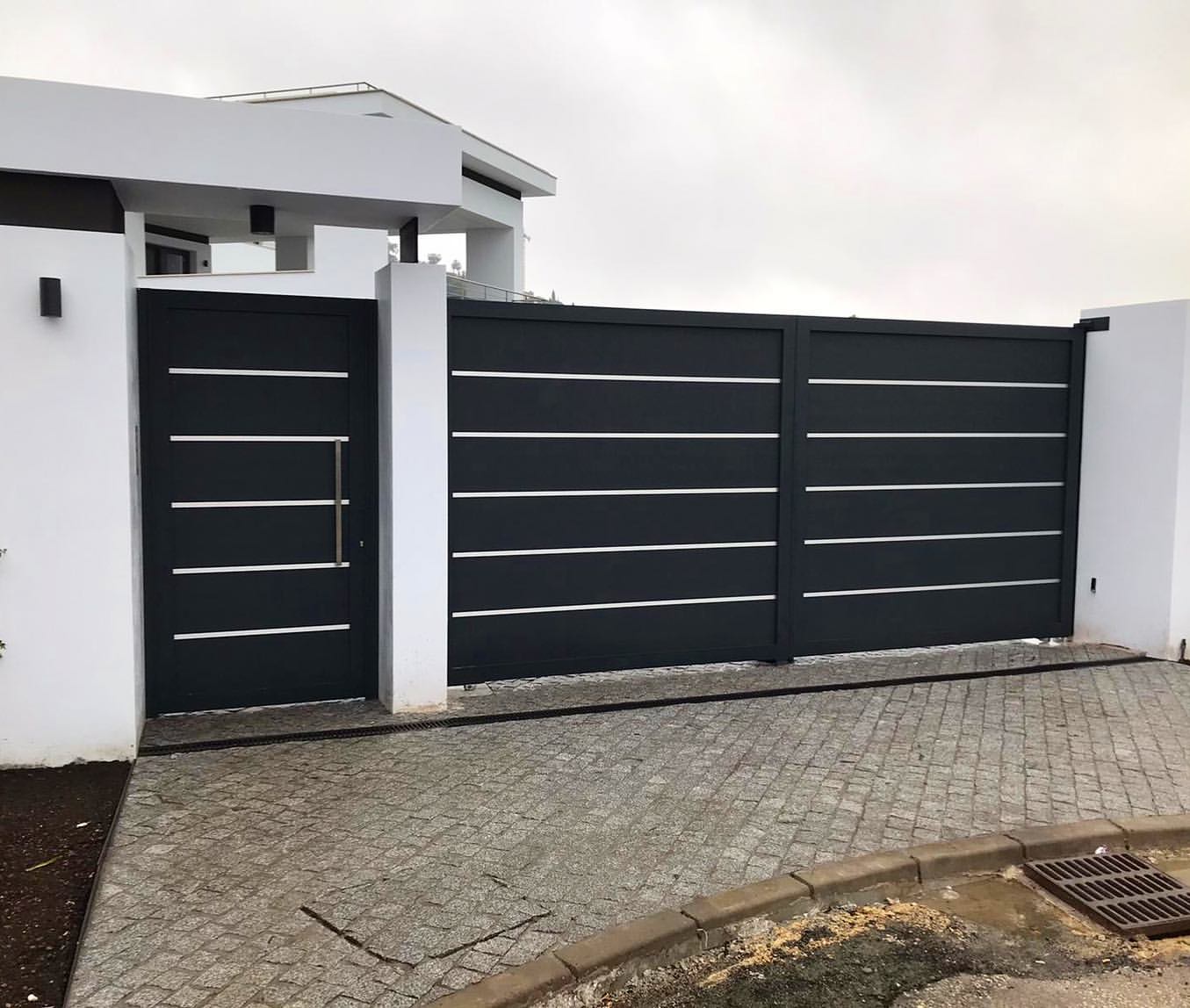
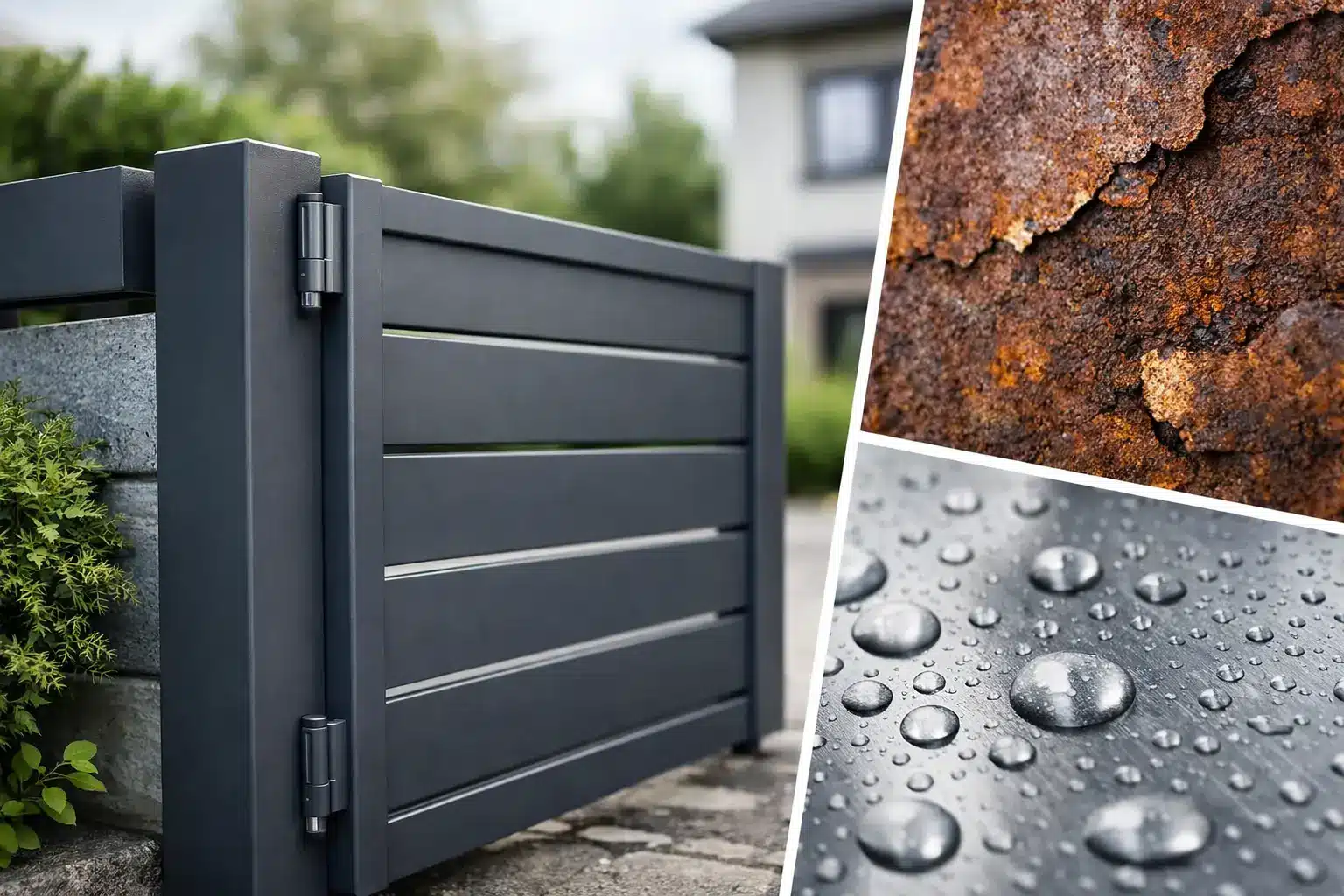
A gate at the front of a property has a hard life. It deals with rain, frost, road salt, airborne pollution and daily use, all while being expected to look sharp and operate smoothly for years. That is why one of the first questions buyers ask is simple and sensible: do aluminium gates rust?
The short answer is no – aluminium gates do not rust in the way steel or iron does. Rust is a specific form of corrosion that affects iron-based metals. Aluminium contains no iron, so it cannot produce the reddish-brown rust that flakes, stains surfaces and gradually weakens traditional metal gates. For homeowners and commercial buyers looking for long-term performance with less upkeep, that is one of aluminium’s biggest advantages.
Do aluminium gates rust in UK conditions?
Not even in a British climate. Wet winters, coastal air and frequent temperature changes can be unforgiving, but aluminium remains one of the most reliable materials for external gates because it forms its own protective oxide layer. When aluminium is exposed to air, the surface reacts with oxygen and creates a thin barrier that helps protect the metal underneath.
That does not mean aluminium is indestructible. It means its response to the elements is very different from mild steel or wrought iron. Instead of developing rust that spreads and flakes, aluminium is far more resistant to ongoing corrosion. In practical terms, that usually means a cleaner appearance, less remedial work and a longer service life when the gate is properly designed and finished.
For most buyers, the real question is not whether aluminium will rust, but how well it will hold its appearance and structural integrity over time. That comes down to material grade, fabrication quality, coating system and installation environment.
Why aluminium does not rust
Rust happens when iron reacts with oxygen and moisture. Because aluminium is a different metal, it does not go through that same process. What it does form is aluminium oxide, which acts as a protective skin rather than a destructive one.
This matters for gate manufacture because external entrance products need a material that can tolerate repeated exposure to water without constant intervention. Timber can swell, crack or rot if neglected. Steel can be extremely strong, but if the protective coating is breached, corrosion can begin. Aluminium offers a strong balance of durability, lower maintenance and modern appearance, which is why it has become a leading choice for premium driveway and pedestrian gates.
That advantage is especially clear in made-to-measure systems where buyers want a bespoke design without taking on a heavy maintenance burden. A well-manufactured aluminium gate is built for long-term ownership, not for regular repainting cycles.
If aluminium does not rust, can it still corrode?
Yes, but the distinction matters. Aluminium can corrode under certain conditions, particularly if the surface finish is poor, if incompatible metals are used together, or if the gate is exposed to harsh coastal or industrial environments without the right specification.
In most residential settings, this is not a major concern when the gate has been manufactured and finished correctly. Powder coating adds another layer of protection and gives the gate its final colour and appearance. Precision welding and proper fabrication also play a part, because weak joints, trapped moisture and inconsistent finishing can all shorten the life of any external product.
This is where quality separates premium systems from cheaper alternatives. A low-cost aluminium gate may still avoid rust, but that does not automatically mean it will age well. Poor coating adhesion, thin sections and inferior assembly can lead to cosmetic deterioration, movement or avoidable wear. Buyers investing in a front entrance feature usually want more than a material that simply avoids rust – they want a gate that stays straight, secure and visually impressive.
What affects the lifespan of aluminium gates?
The environment matters, but build quality matters just as much. A gate fitted inland in a sheltered setting will generally have an easier life than one installed near the coast, where salt in the air places greater demands on any exterior finish.
Design also plays a role. Drainage, panel construction, hinge positioning and frame strength all affect how well the gate performs over time. Fully welded construction, for example, creates a stronger and more stable structure than mechanically assembled alternatives, particularly on larger driveway gates where rigidity is essential.
Surface finishing is another key factor. A premium powder-coated finish does more than improve appearance. It helps protect the aluminium from weathering, UV exposure and day-to-day wear. If that finish is applied to a properly prepared surface, it contributes significantly to long-term durability.
Maintenance habits should not be ignored either. Aluminium is low maintenance, not no maintenance. A simple clean with mild soapy water from time to time helps remove dirt, traffic film and salt deposits. In harsher locations, more frequent washing is sensible. This is still a very different ownership experience from sanding, priming and repainting a rust-prone metal gate.
Aluminium vs steel and timber
For buyers comparing materials, the appeal of aluminium usually comes down to three things: corrosion resistance, lower maintenance and contemporary design flexibility.
Steel gates can deliver strength and a traditional appearance, but they need careful protection against rust. Once paint or coating is damaged, corrosion can start, especially around joints, edges and fixing points. That often leads to an ongoing maintenance cycle.
Timber has natural character and warmth, but it needs regular treatment to preserve its condition. Exposure to moisture and sunlight can lead to fading, warping and surface breakdown. Some owners are happy to accept that as part of timber’s character. Others want a cleaner, more consistent finish with less effort.
Aluminium sits in a strong middle ground. It offers excellent durability without the rust risk of iron-based metals, and it can be fabricated into sleek, modern styles or more classic designs depending on the property. For design-conscious buyers who want kerb appeal without a demanding maintenance schedule, that balance is hard to ignore.
Do powder-coated aluminium gates need much maintenance?
Very little, provided they are manufactured to a high standard and cared for properly. Routine cleaning is usually enough to keep them looking their best. In many cases, that means washing the gate down periodically with warm water and a mild detergent, then rinsing it clean.
The frequency depends on the setting. A gate on a quiet inland property may only need occasional attention. A gate beside a busy road or in a coastal location should be cleaned more often to remove salt and airborne contaminants.
It is also worth checking moving parts, access control components and hinges as part of general maintenance. Even the best gate system is a working product, not just an architectural feature. Reliability comes from both good manufacture and sensible aftercare.
When should buyers be cautious?
If you are comparing quotes, be wary of products that rely on aluminium as a headline selling point without giving much detail about fabrication, finish or guarantee. Aluminium itself is a strong material choice, but it is not a shortcut to quality.
Ask how the gate is constructed, what finish is applied, whether the system is made to measure, and how it is suited to your location. If your property is exposed, sloping, wide-fronted or automation-ready, those details matter. The right gate should be specified for the site, not pulled from a generic catalogue.
That is particularly relevant for larger driveway gates, sliding systems and premium entrance designs where precision and structural integrity are essential. A bespoke gate should feel engineered for the property, not merely sized to fit the opening.
So, do aluminium gates rust – and are they worth it?
They do not rust, and that is a major reason they are such a strong long-term investment. Aluminium offers a practical advantage in British weather, but the real value goes beyond that. It gives buyers the chance to combine security, style and lower maintenance in one tailored entrance solution.
For homeowners improving kerb appeal, replacing ageing timber or steel, or specifying a smarter access point for a renovation or self-build, aluminium is often the material that makes the most sense. For commercial sites, it brings the same benefit – durability without the constant upkeep burden that can come with traditional metals.
At Alu-Gate, that is why premium aluminium remains central to a gate system designed to impress and built to last. The material itself is only part of the story. The finish, the welding, the design and the specification are what turn a gate into a lasting feature of the property.
If you want an entrance that looks refined in year one and still performs years later, aluminium is not just the safer answer to rust – it is usually the smarter answer to ownership.