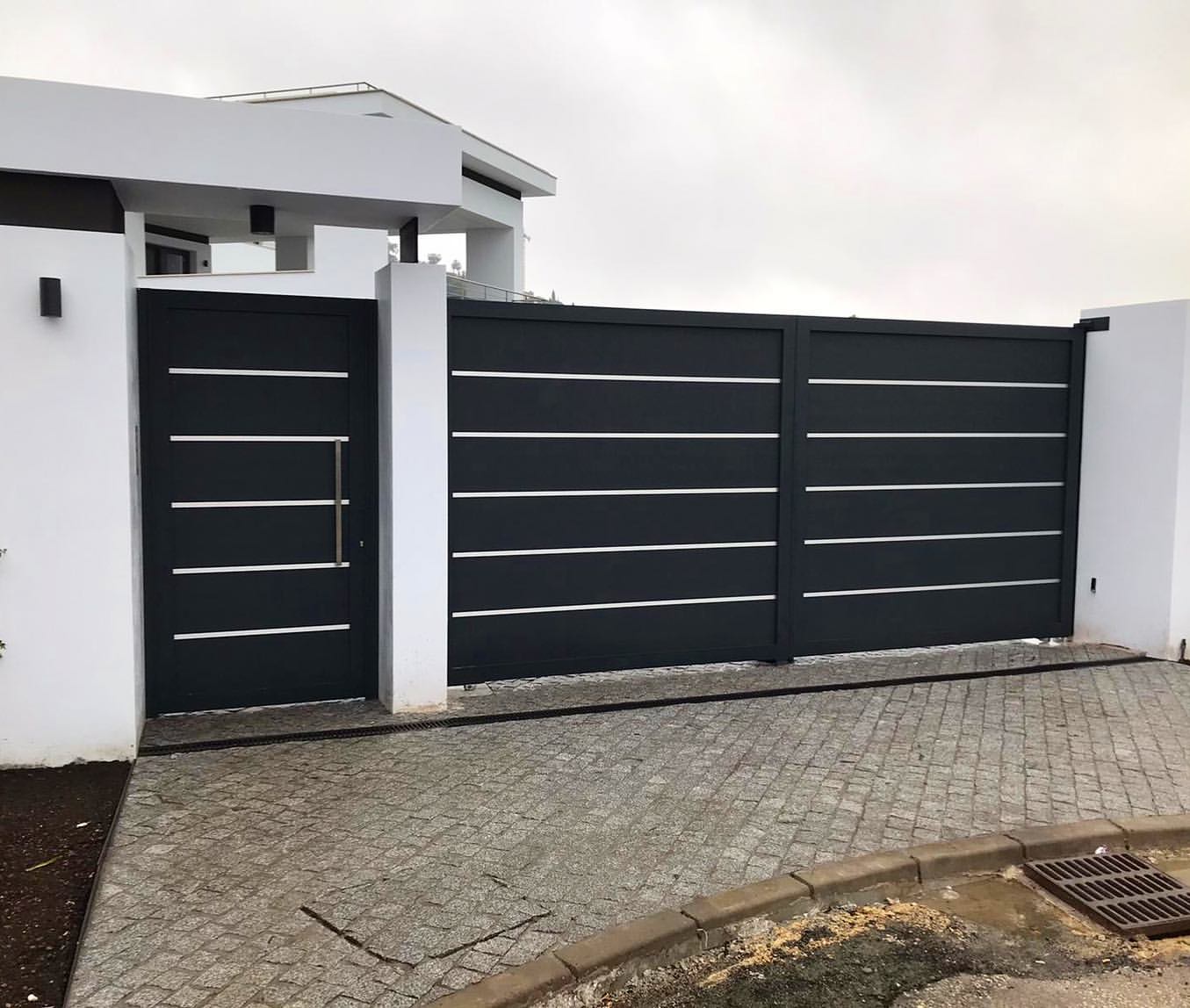

A gate can look impressive on day one and still be the wrong choice five winters later. That is why the question of welded gates vs assembled gates matters far more than many buyers first realise. The construction method affects strength, appearance, maintenance, long-term reliability and, ultimately, whether your entrance feels like a lasting upgrade or a compromise.
If you are investing in a bespoke aluminium gate for a home or commercial property, this is not simply a technical detail. It is part of the gate’s core quality. Two gates may appear similar in a brochure, but how they are built will shape how they perform under regular use, wind loading, automation and the general wear that comes with a busy entrance.
Welded gates vs assembled gates – what is the difference?
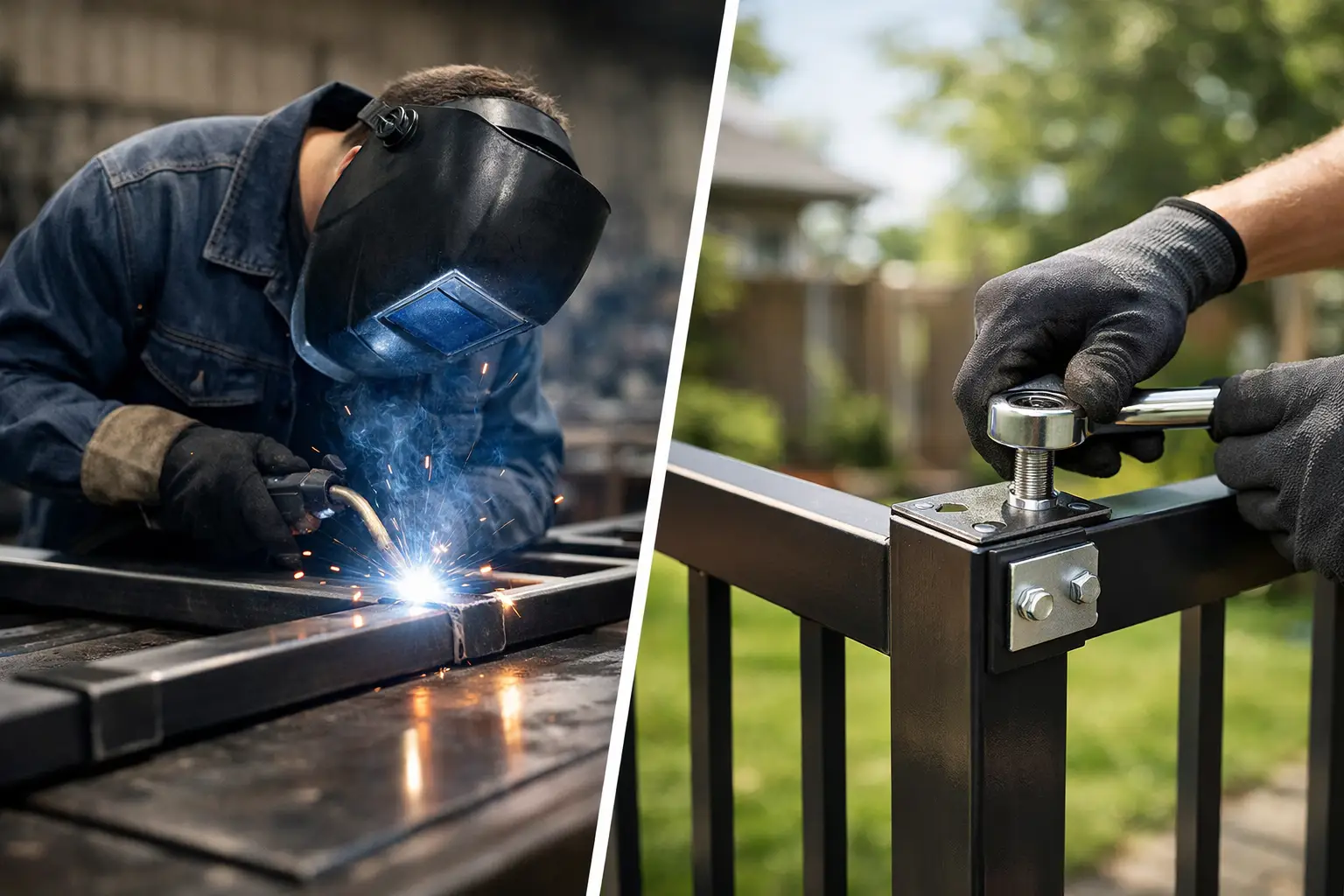
A welded gate is fabricated by permanently joining the frame and key components through welding. This creates a single, integrated structure. In a well-made aluminium gate, the welds are finished carefully so the final product looks clean, precise and purpose-built rather than pieced together.
An assembled gate, by contrast, is typically made from separate sections that are mechanically fixed together using brackets, screws, bolts or knock-down joints. This can speed up production and simplify transport or installation, but it also means the gate relies on multiple fixing points rather than a fully fused frame.
That distinction has practical consequences. A welded frame behaves more like one solid unit. An assembled frame has more individual parts and more points where movement can develop over time.
Why construction matters more than many buyers expect
When customers compare styles, colours and infill options, the frame construction can easily be overlooked. Yet it is one of the biggest factors in how a gate ages. This is especially true for larger driveway gates, automated systems and exposed properties where strength and alignment are critical.
A gate is not static. It opens and closes repeatedly, carries its own weight through hinges or tracking systems, and must stay square as temperatures change and weather takes its toll. Any weakness in the build tends to show up gradually – slight movement at the joints, visible misalignment, rattling, sagging or a finish that no longer looks as crisp as it once did.
For a premium entrance, those issues are frustrating not just because they affect operation, but because they undermine the look and feel of the whole installation.
Strength and structural stability
This is where welded gates usually hold a clear advantage. Because the frame is permanently joined, the load is distributed through the structure more consistently. That gives the gate greater rigidity, which is particularly important on wider openings and heavier designs.
An assembled gate can still be serviceable, especially in lighter-duty applications, but it is more dependent on the quality of its fixings and the precision of the assembly. Over time, repeated use can place stress on those mechanical joints. If there is any tolerance in the connections, even a well-installed gate may develop movement that a welded frame is better placed to resist.
For residential driveways with regular daily use, or commercial entrances where reliability matters, rigidity is not a luxury. It is part of what keeps the gate operating cleanly and looking properly engineered.
Wind, automation and daily use
The larger the gate, the more important structural integrity becomes. Solid or semi-solid infill designs can catch wind, putting additional pressure on hinges, posts and the frame itself. Automation adds another layer, because motors work best when the gate remains correctly aligned and moves with predictable resistance.
A fully welded aluminium gate is generally better suited to these demands. It offers a more stable platform for long-term use, particularly where precision matters.
Appearance and finish quality
Premium buyers are not only comparing function. They are also looking at the visual standard of the finished product. A gate sits at the front of a property, often as a focal point. Every line, joint and detail is visible.
Welded gates tend to deliver a cleaner, more refined appearance because the construction is integrated rather than obviously sectional. When fabricated and finished properly, the result looks tailored and architecturally coherent. There is less sense of a product being assembled from standard components.
With assembled gates, visible joints and connection points can sometimes be more apparent. Not every buyer will object to that, and not every assembled gate is unattractive, but if the brief is a high-end entrance with a bespoke feel, welded construction usually supports that standard more convincingly.
This matters even more when you are matching gates with fencing, walling, railings or a wider exterior scheme. The cleaner the fabrication, the more polished the final result.
Maintenance and long-term ownership
One of aluminium’s biggest strengths is low maintenance. It does not rot like timber and will not suffer the same corrosion issues associated with untreated steel. However, low maintenance does not mean construction quality becomes irrelevant.
With assembled gates, multiple mechanical fixings can introduce more points that may need checking over time. Depending on the design, joints can loosen, components can shift slightly and small issues can become more noticeable as the gate ages.
A welded gate generally reduces that risk by removing many of those separate connection points from the equation. That does not eliminate the need for proper installation or occasional servicing, especially on automated systems, but it does support a more stable, lower-fuss ownership experience.
For buyers who want to install a gate once and enjoy it for years without ongoing irritation, that difference carries real value.
Cost versus value
Assembled gates are often chosen because they can be cheaper to manufacture. Lower production complexity and faster assembly can make them appealing at the budget end of the market. If the priority is simply to secure an opening at the lowest possible upfront cost, that route may seem attractive.
But premium gate buying is rarely about the cheapest invoice. It is about the quality of the finished entrance and what it delivers over time. A gate that costs less initially but develops movement, loses its visual sharpness or requires earlier replacement is not necessarily the better-value choice.
Welded gates usually command a higher price because they involve more skilled fabrication and a more substantial build process. In return, buyers are typically getting better structural performance, a cleaner finish and stronger long-term confidence. For many homeowners and commercial buyers, that is the more sensible investment.
Are assembled gates ever the right choice?
There are cases where an assembled gate can be suitable. Smaller pedestrian gates, lower-demand installations or projects with tight cost constraints may not require the same level of structural performance as a large automated driveway gate. In those settings, a well-made assembled gate may meet the brief.
The key point is to match the construction method to the demands of the project. Problems usually arise when buyers assume all gates are broadly the same, then discover too late that the build quality was not aligned with the application.
If the gate needs to deliver strong kerb appeal, withstand regular use, integrate with automation and hold its shape for the long term, a welded solution is often the more dependable answer.
What to ask before you buy
Rather than focusing only on style and price, ask how the gate is fabricated. Is the frame fully welded? Are the joints visible? How is the gate designed to cope with width, weight and wind exposure? What guarantee supports the product?
These are the questions that separate a genuine premium gate from a product that simply looks good in photographs. A confident manufacturer should be able to explain not just what the gate looks like, but why it is built the way it is.
For bespoke aluminium entrances, precision welding is often a sign that the gate has been designed as a long-term architectural feature, not a short-term fix.
Which option is better for a premium aluminium entrance?
For most design-conscious homeowners and commercial buyers, welded gates come out ahead. They offer the strength, finish quality and durability expected from a premium entrance system. They also align more naturally with made-to-measure design, where every element is produced to suit the property rather than adapted from standard parts.
That is why specialists such as Alu-Gate place such a strong emphasis on fully welded construction. It supports the kind of entrance buyers actually want – secure, refined, low maintenance and built to last.
A gate should do more than close an opening. It should add presence to the property, work reliably every day and still look right years from now. If you are weighing up welded gates vs assembled gates, the better question may be this: do you want a gate that is merely put together, or one that is properly built?