Choosing between aluminium or steel gates usually comes down to one simple question: do you want a gate that looks impressive on day one, or one that still performs beautifully years later with far less upkeep? For most UK property owners, the right answer is not just about appearance or headline strength. It is about how the gate will live with the property, the climate, the level of use and the finish you expect to maintain.
A front entrance is one of the few exterior features that needs to do several jobs at once. It has to secure the boundary, complement the architecture, withstand weather and repeated use, and continue to look right in a setting that may have cost a great deal to create. That is why the aluminium versus steel decision deserves more than a quick price comparison.
Aluminium or steel gates – what is the real difference?
At a glance, aluminium and steel can appear similar. Both can be fabricated into contemporary or traditional gate designs, both can be automated, and both can create a strong physical presence at the entrance to a home or commercial site. The differences become clearer when you look at weight, corrosion resistance, maintenance demands and the way each material performs over time.
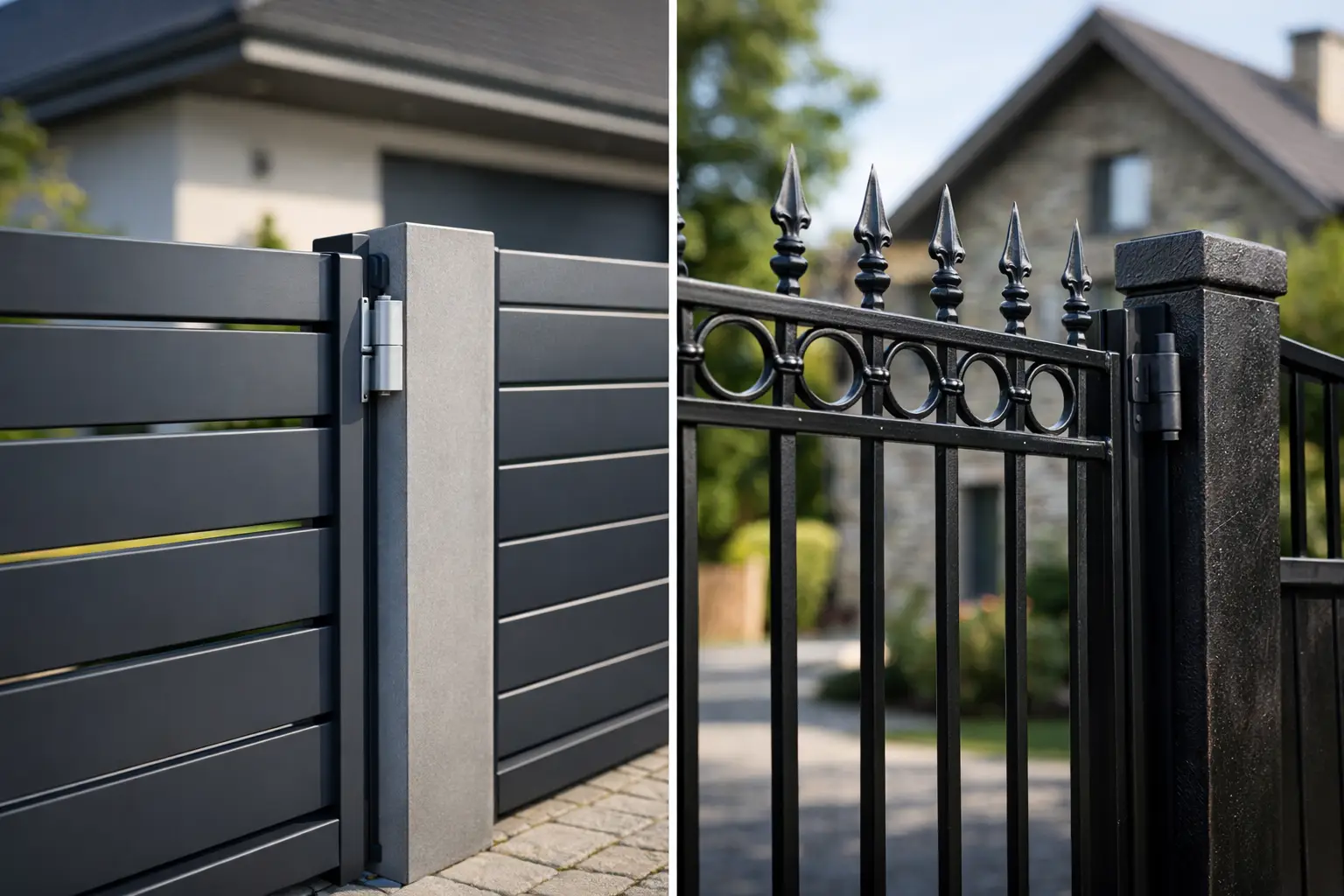
Steel has long been associated with strength. It is dense, solid and often chosen where buyers want a traditional wrought-iron look or a visibly heavy-duty structure. That reputation is earned, but weight is not always an advantage. Heavier gates place greater demand on posts, hinges, motors and supporting hardware. Over time, that can mean more wear and more adjustment, particularly on larger driveway openings.
Aluminium offers a different kind of strength – strength with efficiency. A well-engineered, fully welded aluminium gate can deliver excellent rigidity and security while remaining far lighter than steel. That lower weight matters in daily use. It supports smoother operation, reduces strain on automation systems and makes it easier to achieve larger bespoke gate formats without introducing unnecessary load.
Why aluminium suits modern UK properties
The British climate is not gentle on external metalwork. Rain, frost, airborne pollutants and coastal exposure all play their part. This is where aluminium stands apart.
Unlike steel, aluminium does not rust. That single fact changes the ownership experience significantly. With steel gates, even when they are galvanised and powder coated, any damage to the protective finish can create a route for corrosion to begin. Once rust takes hold, maintenance becomes a cycle of treatment, repainting and repair.
Aluminium removes much of that concern. It is naturally corrosion resistant, which makes it especially well suited to exposed driveways, busy entrances and properties where owners want a premium finish without committing to regular refurbishment. For clients investing in a smart exterior upgrade, low maintenance is not a minor benefit. It is a key part of long-term value.
There is also a design advantage. Aluminium fabrication supports clean lines, sharp detailing and high-end powder-coated finishes that work particularly well on contemporary homes, renovated period properties and commercial premises where presentation matters. The result is a gate that feels tailored and architectural rather than simply functional.
Where steel gates still make sense
Steel remains a valid choice in some situations. If the brief calls for ornate detailing, heritage styling or a particularly traditional visual language, steel can be attractive. Certain commercial or industrial settings may also favour steel where a visibly heavier material aligns with the surrounding architecture or security specification.
That said, steel is often selected because of perception rather than full-life performance. Buyers hear that steel is stronger and assume it is therefore the superior option. In practice, the best material depends on how the gate is designed, fabricated and installed. A poorly made steel gate will not outperform a precision-made aluminium one simply because it is heavier.
There is also the issue of ownership cost. Steel may appear competitive at the point of purchase, but if the gate requires more maintenance, coating repairs or hardware attention over the years, the long-term picture can look very different.
Aluminium or steel gates for security
Security matters, but it should be assessed properly. Material is only one part of the equation. Gate height, infill design, locking method, hinge quality, posts, automation and access control all influence how secure the entrance really is.
Steel is undeniably strong, but aluminium should not be mistaken for lightweight in the negative sense. Premium-grade aluminium gates, especially when fully welded and made to measure, can deliver excellent security performance for residential and many commercial applications. Their lighter operating weight can also be a practical advantage when paired with motors, intercoms and controlled access systems.
If your priority is a secure entrance that also feels refined, the specification matters more than the stereotype. A bespoke aluminium gate system with quality fabrication and integrated access control can provide a highly effective barrier while maintaining a cleaner, more premium look.
Maintenance and ownership over time
This is often the deciding factor once buyers move beyond first impressions. Steel requires more attention. Even high-quality coated steel can chip, scratch or wear, and every damaged point in the finish is a potential maintenance issue. In a damp environment, that becomes hard to ignore.
Aluminium is far easier to live with. Routine cleaning is generally enough to keep it looking its best, and there is no ongoing battle with rust. For busy homeowners, developers and facilities managers, that reduction in maintenance is not just convenient. It protects the appearance of the entrance and helps preserve the original investment.
This is particularly relevant for larger gates, automated systems and coordinated boundary projects where repainting or reactive repairs become more disruptive and more expensive. When the gate is part of a wider design scheme, consistency of finish matters. Aluminium helps maintain that standard.
Style, finish and kerb appeal
Premium gates are not only security products. They are part of the architecture of the property. The right design should frame the entrance, elevate the exterior and feel proportionate to the building behind it.
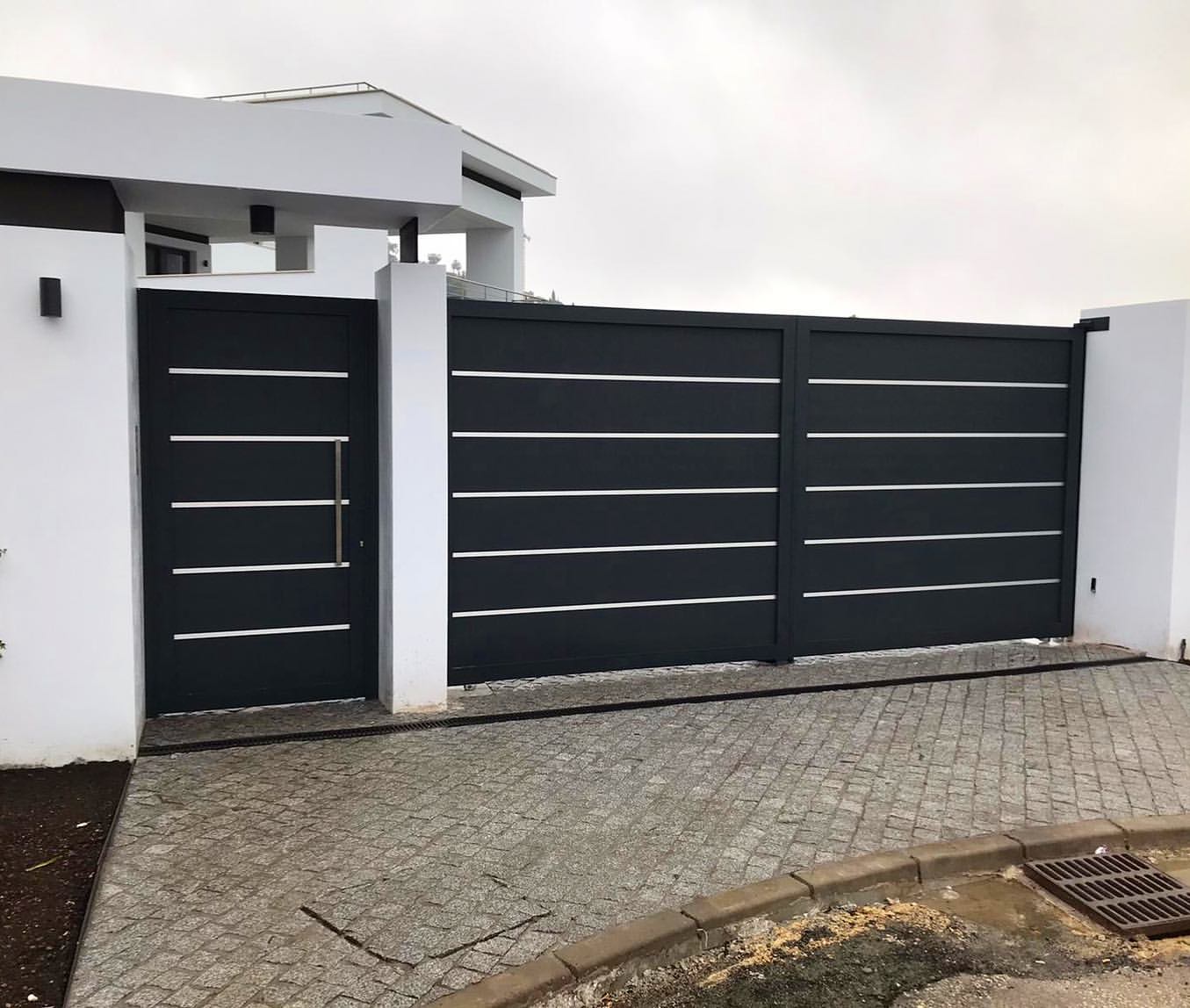
Aluminium is exceptionally strong in this area. It lends itself to sleek horizontal lines, solid privacy panels, contemporary slatted designs and coordinated fencing systems that create a unified look across the frontage. Powder-coated finishes offer a refined appearance with excellent durability, and the visual quality tends to remain stable with less intervention.
Steel can achieve impact too, particularly in classic styles, but it often suits a narrower design brief. For many modern UK homes and upgraded driveways, aluminium offers greater flexibility without compromising presence. It gives buyers the opportunity to choose a gate that feels bespoke and design-led rather than inherited from standard catalogue styling.
Cost versus value
The cheapest gate is rarely the best-value gate. A premium entrance should be judged over years, not weeks.
Steel can sometimes look attractive on upfront price, depending on the design and finish. But that comparison can be misleading if it excludes future maintenance, repainting, hardware strain or shorter aesthetic lifespan. The total cost of ownership matters.
Aluminium often delivers stronger long-term value because it reduces ongoing maintenance, supports durable finishes and performs efficiently in everyday use. When paired with made-to-measure fabrication, it also avoids the compromises that come with off-the-shelf sizing. That means a better fit, better appearance and better performance from the start.
For high-end residential projects and quality-focused commercial properties, value is rarely about buying the least expensive option. It is about choosing the system that will continue to justify its place at the entrance year after year.
Which material is right for your property?
The answer depends on what you are trying to achieve. If you want a heritage aesthetic and are comfortable with a more hands-on maintenance schedule, steel may still suit the brief. If you want a gate that combines strength, low maintenance, modern styling and long-term reliability, aluminium is usually the stronger choice.
That is especially true for bespoke driveway gates, sliding gates, swing gates, pedestrian access gates and coordinated fencing schemes where finish quality and ease of ownership matter as much as security. In these settings, aluminium offers a balance that is hard to ignore – lighter operation, corrosion resistance, design flexibility and a premium appearance that lasts.
At Alu-Gate, that is why the focus stays firmly on made-to-measure aluminium systems built with precision, fully welded construction and long-term durability in mind. For buyers who want an entrance solution that feels considered rather than compromised, material choice is not a small technical detail. It sets the standard for everything that follows.
If you are weighing up aluminium or steel gates, think beyond the brochure claims. Consider the finish in five winters’ time, the way the gate will operate every day, and whether the entrance you choose will still reflect the quality of the property behind it. The right gate should not just close an opening. It should complete the space.