
A driveway that leaves your front garden, parked vehicles or entrance in full view can make an otherwise impressive property feel exposed. The best entrance gates for privacy do more than close off a boundary. They create a composed arrival, limit sightlines from the road and give you greater control over who approaches your home.
For many UK homeowners, the strongest answer is a made-to-measure aluminium gate with a solid or carefully designed infill. It offers the clean, contemporary appearance expected of a premium exterior upgrade, without the staining, warping and regular upkeep associated with timber. The right choice, however, depends on your entrance width, available driveway space, desired level of screening and how you use the property every day.
What makes an entrance gate genuinely private?
Privacy is not simply a matter of choosing the tallest gate available. A gate may look substantial from a distance yet still expose the driveway through wide horizontal gaps, open decorative work or an awkward position relative to the road. The most effective designs consider direct views from passing traffic, neighbouring properties and nearby footpaths.
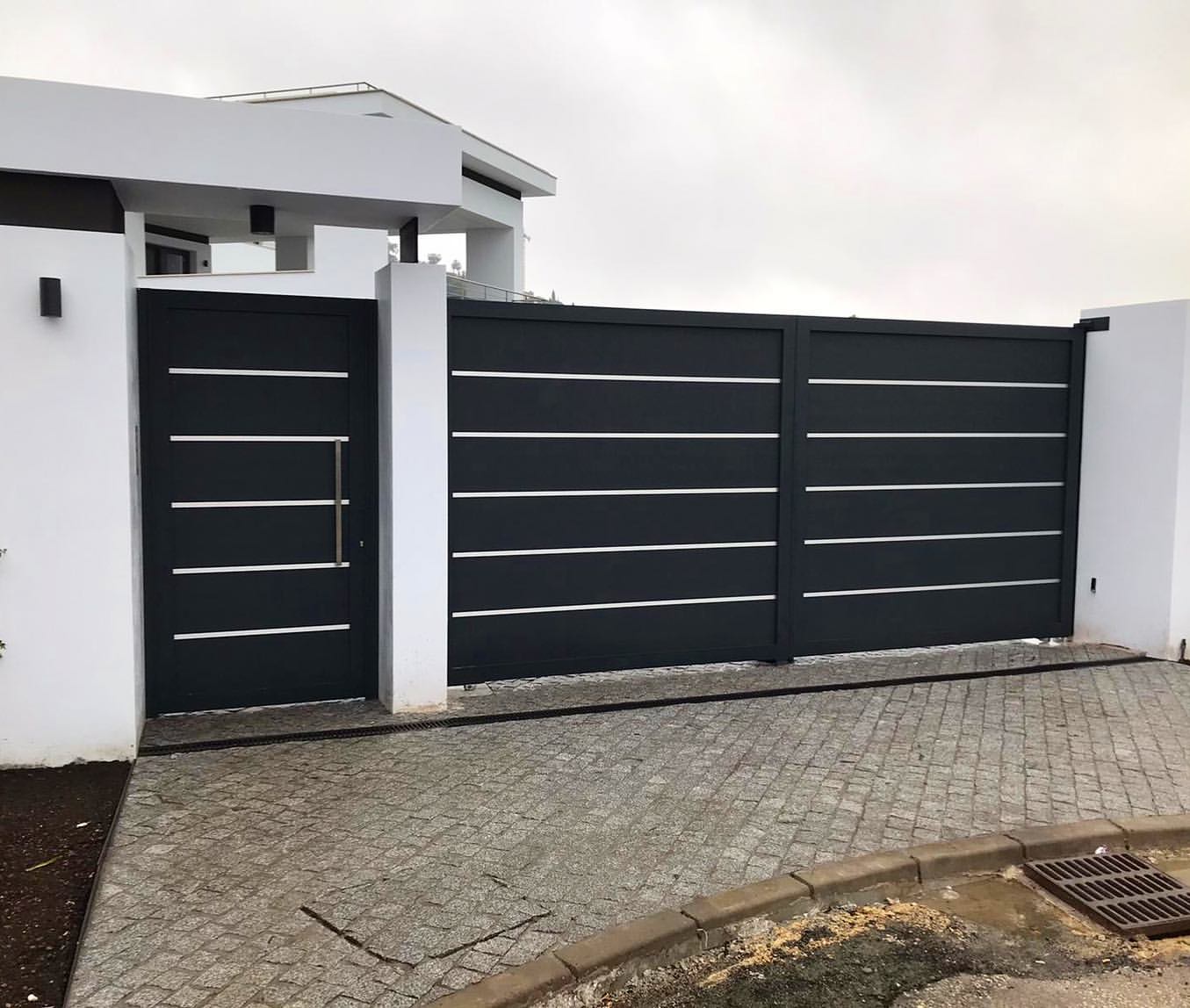
Solid-panel gates provide the greatest visual screening. They are particularly effective where the property sits close to a pavement or road, or where vehicles are parked directly behind the entrance. A fully enclosed aluminium design creates a confident architectural boundary and gives a clear sense of separation between public space and your home.
Slatted gates can also provide excellent privacy, provided the spacing and angle are specified carefully. Narrow gaps deliver a lighter, more textured appearance while obscuring clear views through the gate. This is often a good choice for properties that need screening without making the frontage feel overly enclosed. Wider gaps, by contrast, suit an open contemporary look but are less appropriate where privacy is the priority.
Gate height matters, but so does proportion. An oversized gate can dominate a modest frontage, while a low gate may leave vehicles and ground-floor windows visible. A bespoke design allows the height, panel arrangement and supporting fencing to work together as one considered boundary treatment.
Best entrance gates for privacy: choose the right format
The gate format should suit the way your driveway works, not just the style you prefer. Privacy, security and day-to-day convenience all improve when the opening method is properly matched to the site.
Solid swing gates
Double swing gates are a timeless choice for private driveways. They create a formal, balanced entrance and work especially well where there is enough clear space inside the property for the leaves to open. With solid aluminium panels, they offer maximum screening across the full width of the entrance.
Their main consideration is clearance. Gates should not swing out across a public pavement or road, and inward-opening leaves need room away from parked cars, planting and changes in ground level. For a well-proportioned residential entrance, this is often the most elegant privacy-led solution.
Sliding gates
Sliding gates are ideal when the driveway is short, slopes towards the house or cannot accommodate swinging leaves. They travel horizontally along the boundary, leaving the driveway clear and providing a continuous privacy screen when closed. They are also highly suited to automation and controlled access.
A sliding system requires sufficient run-back space beside the opening for the gate to travel. Where that space is limited, telescopic sliding gates can be a practical alternative. Their overlapping sections reduce the required travel distance while retaining the clean, secure appearance of a full-width entrance gate.
Bi-folding and telescopic gates
For compact urban plots and challenging access points, bi-folding and telescopic designs can resolve space constraints that would rule out conventional swing gates. They open quickly and make efficient use of the available frontage. As with any privacy gate, the key is to specify a panel design that remains visually closed when shut, rather than treating the opening mechanism as the only decision.
Aluminium is the practical premium choice
Timber gates have warmth and character, but they demand attention. Britain’s wet winters, changing temperatures and strong sunlight can lead to movement, peeling finishes and a cycle of sanding, painting or staining. Steel can be strong, yet it needs appropriate protection against corrosion and can add considerable weight to an automated system.
Aluminium offers a compelling balance of strength, refined finish and low-maintenance ownership. It does not rust, remains stable in changing weather and can be powder coated in a wide range of colours and finishes. For privacy gates, this means large solid panels can retain their crisp lines and dependable operation year after year.
Construction quality remains crucial. A premium aluminium gate should be fully welded rather than assembled from visibly joined sections. Precision welding gives the frame greater integrity, supports a cleaner finish and helps the gate withstand frequent use. It is the difference between a gate that simply fills an opening and one designed to perform as a long-term part of the property.
Coordinate the gate with fencing and walls
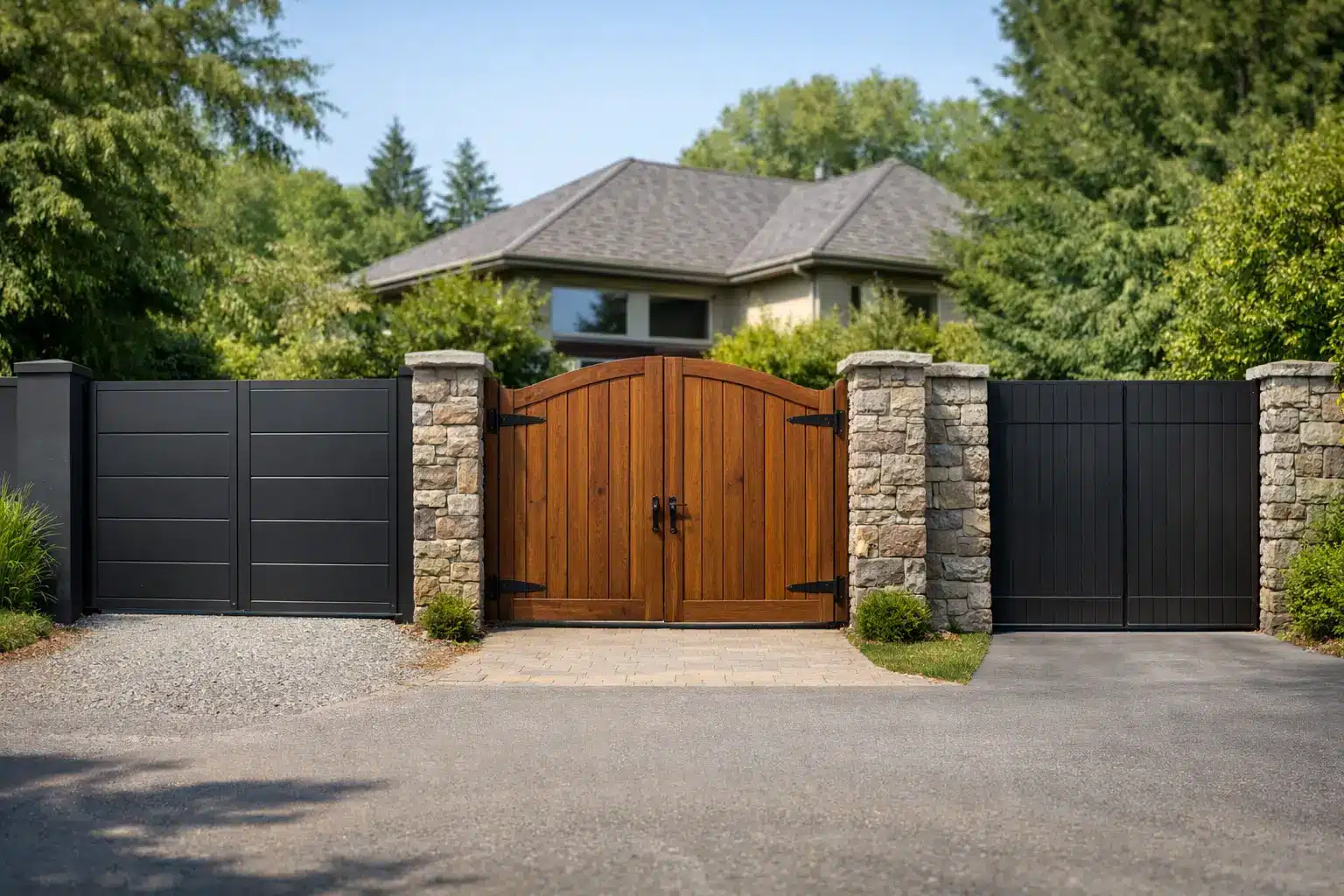
A private entrance can be undermined by open fencing or low walls immediately beside it. For the strongest result, extend the same design language across adjacent fence panels, pedestrian gates and side returns. Matching aluminium fencing can continue the screening line while keeping the frontage cohesive rather than pieced together.
This is also where a design consultation adds real value. The gate should relate to the brickwork, render, window frames and landscaping, not compete with them. Anthracite grey remains a popular choice for contemporary homes, while black creates a sharper, more formal outline. Softer greys, textured finishes and bespoke colours can suit heritage-inspired or individually designed properties.
Consider how much of the boundary needs to be screened. Full-height solid panels may be right for a road-facing side return, while slatted fencing can soften the transition towards a garden or lower boundary wall. A considered mix can preserve privacy where it is needed most without making the whole site feel closed in.
Do not separate privacy from security and access
A closed-panel gate naturally improves privacy, but it should also make access more controlled. Automation allows you to operate the gate without leaving the car, which is particularly valuable in poor weather or on busy roads. It also avoids the temptation to leave a gate open for convenience.
An intercom system with video capability gives you a clear view of visitors before granting access. For homes with regular deliveries, tradespeople or guests, this turns the entrance from a simple barrier into a more intelligent point of control. Commercial sites may require additional features, such as keypad entry, fob access or integration with wider access systems.
Safety should be designed in from the outset. Automated gates need suitable safety devices, correctly specified motors and a layout that accounts for pedestrians, vehicles and pinch points. A premium system is not defined by automation alone. It is defined by reliable operation, safe installation requirements and a gate structure capable of supporting the system for years to come.
Check planning and practical constraints early
Before finalising a high privacy design, assess the position of the gate in relation to a public highway. In many cases, planning rules and permitted development considerations can affect the acceptable height of a gate next to a road. Listed properties, conservation areas and certain developments may have further restrictions.
Ground levels, drainage, existing pillars and driveway gradients should also be assessed before manufacture. A gate that looks perfect in a drawing must still clear the surface, align with posts and operate correctly in all seasons. Made-to-measure fabrication gives far greater control over these details than adapting a standard-size product on site.
Alu-Gate approaches each entrance as a tailored system, helping property owners match gate style, opening method, finish and access control to the realities of their site. That level of specification is particularly valuable when privacy, security and appearance all need to work together.
Invest in the view you want to live with
The best private entrance does not need to feel defensive. It should feel calm, precise and purposeful from the street, while giving you the reassurance of a more secluded home behind it. Choose a design that suits the architecture, specify the screening level honestly and build the system around how you arrive, leave and welcome visitors. A well-made aluminium gate will then do its job quietly, every day, for years to come.