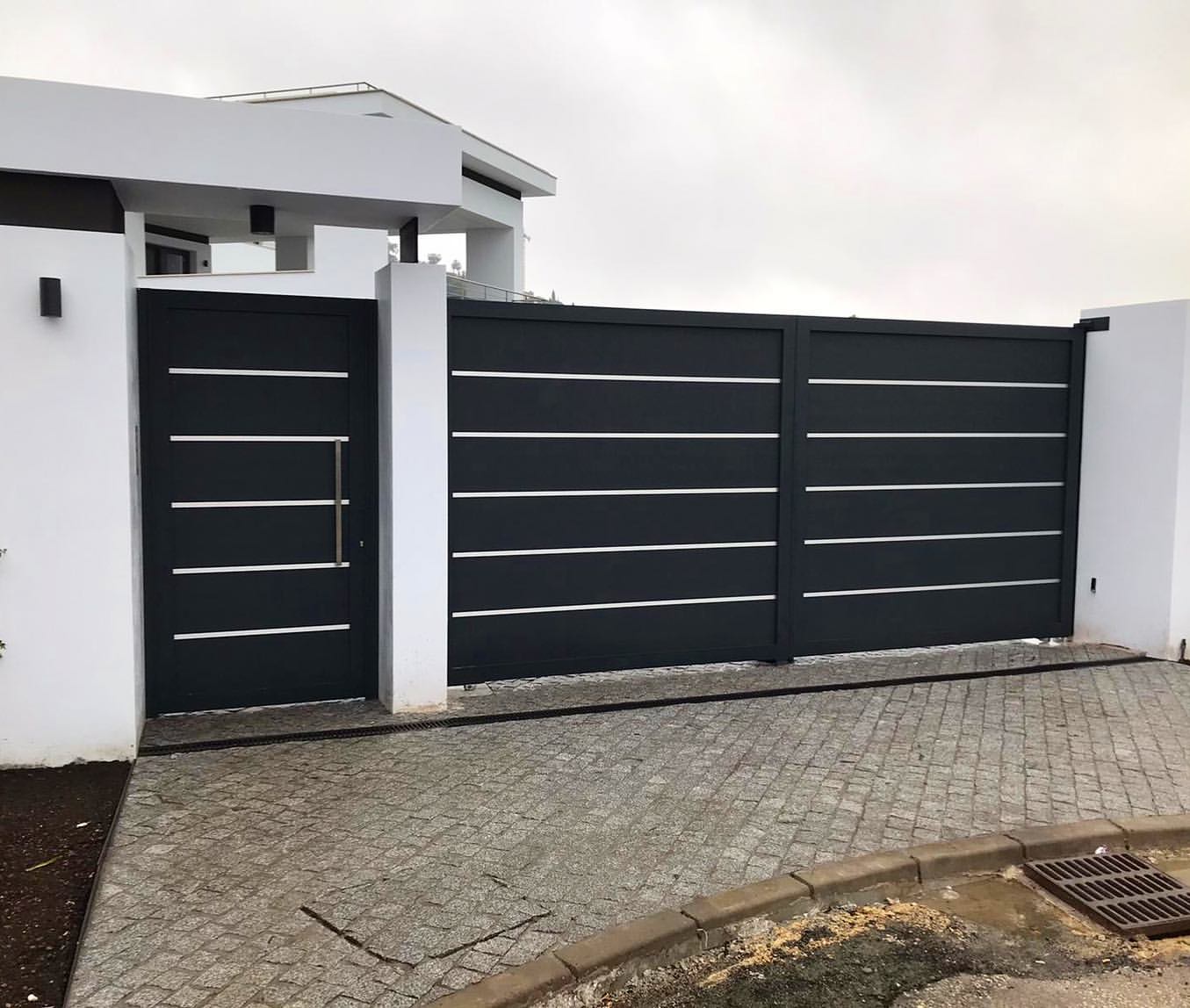

A gate should never feel like an obstacle to arriving home. The right automation makes a driveway entrance quieter, safer and more refined, while the wrong system can lead to slow operation, unnecessary wear and costly alterations. Knowing how to choose gate automation starts with looking beyond the motor itself. Your gate’s size, weight, layout, daily use and access requirements all shape the specification.
For a premium aluminium gate, automation should be considered as part of the complete entrance design. This creates a result that performs reliably, complements the property and delivers the level of security expected from a bespoke installation.
Start with the gate design and opening method
Gate automation must suit the way the gate moves. A swing gate needs a different operator from a sliding, bi-folding or telescopic gate, and the best choice depends on the available space as much as personal preference.
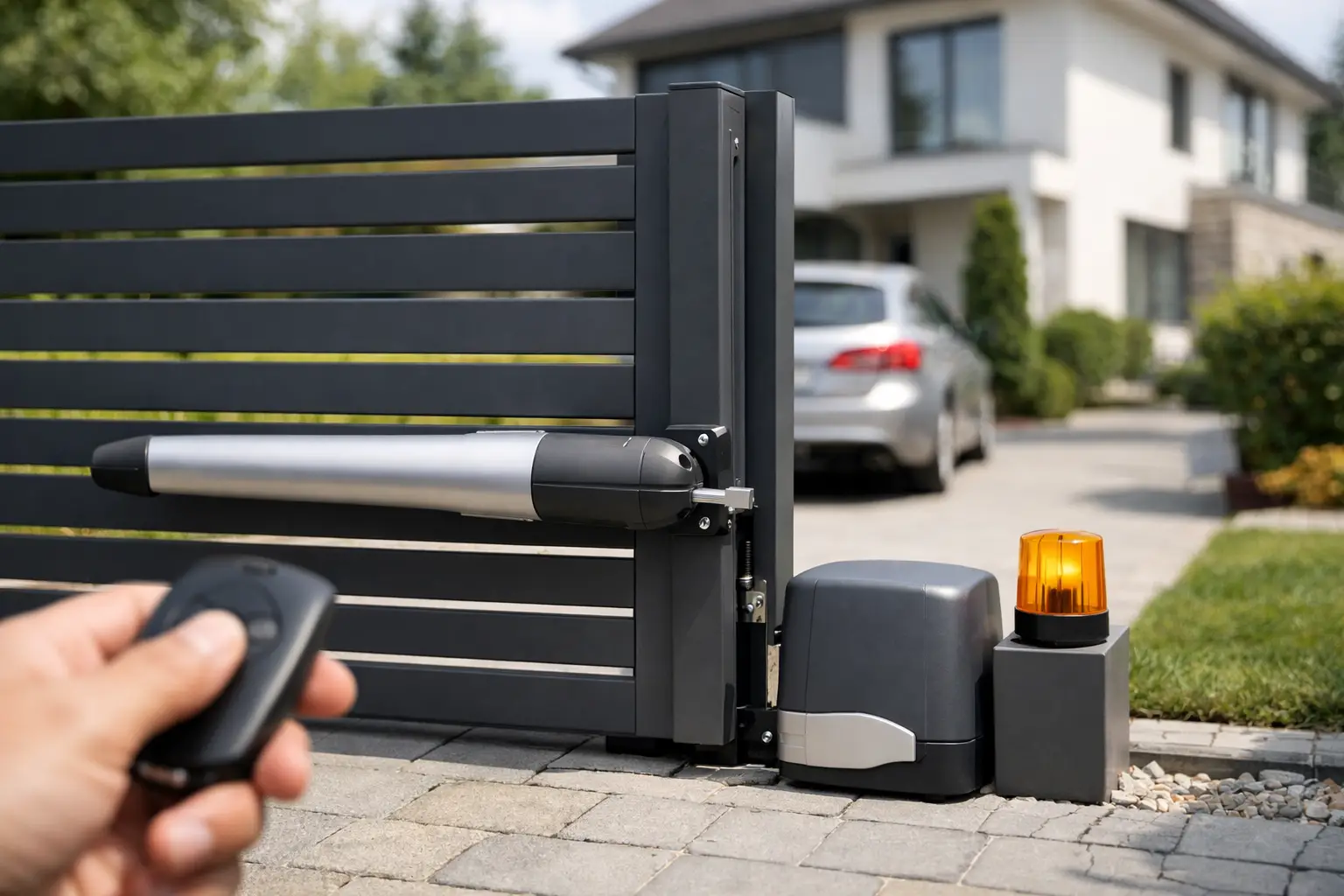
Swing gates remain a classic choice for homes with a clear, level driveway and sufficient space behind the gates for the leaves to open. They can be automated with above-ground articulated arm or ram motors, or with discreet underground operators where a cleaner architectural finish is the priority. Underground systems can be particularly effective for design-led entrances, but they demand careful drainage, quality installation and access for future servicing.
Sliding gates are often the practical answer where a driveway rises behind the entrance, opens directly towards a road, or has limited depth. The gate travels sideways along the boundary rather than into the driveway. This can make sliding automation an excellent option for busy or restricted sites, although the run-back area must be planned from the outset.
For compact driveways, bi-folding and telescopic gates offer an intelligent alternative. Their leaves fold or overlap as they open, reducing the space required and shortening opening times. These systems are more complex than a conventional swing gate, so precision fabrication, alignment and compatible automation are essential.
Match the motor to the real gate, not an estimate
Every automation system has operating limits. The motor must be selected for the actual gate weight, width, construction and expected use, with suitable capacity held in reserve. Choosing a motor solely on the basis of the gate’s stated maximum weight is a false economy, particularly for a wide driveway gate exposed to wind.
Aluminium offers a significant advantage here. A fully welded aluminium gate can provide a substantial, secure presence without the excessive weight associated with many steel or timber alternatives. Less weight can reduce strain on moving components, but it does not remove the need for a properly specified motor. The gate’s dimensions, infill style and wind loading still matter.
A solid or closely spaced gate presents a larger surface area to strong winds. On an exposed rural property or an elevated site, this can place considerable force on hinges, tracks and operators. A specialist should account for local conditions, rather than treating every gate as though it sits in a sheltered suburban driveway.
Commercial and shared-access locations also require a higher-duty solution than a typical private home. A gate used several times each day has very different demands from one operating for staff, deliveries, visitors and contractors throughout the day. Ask about the system’s duty cycle and make sure it reflects realistic usage, including peak periods.
Assess the driveway before choosing gate automation
A beautifully designed gate can only operate as well as the ground, structure and services supporting it. Before selecting automation, assess the approach to the entrance, the position of existing walls or posts, the ground level and the route for power and control cables.
Swing gates need a clear opening arc. Vehicles must be able to stop safely without obstructing the pavement or carriageway while the gate opens. Sliding gates need a level, stable path and enough lateral space for the gate to travel. Cantilever sliding systems can avoid a ground track, which is useful where leaves, gravel or uneven surfaces could interfere with a tracked design, but they require a longer gate structure and carefully engineered support.
The supporting pillars or posts deserve equal attention. Automated gates introduce repeated forces at hinge and motor fixing points. Existing brick piers may look substantial but may not have the foundations, condition or dimensions required for the proposed system. Purpose-designed aluminium posts or correctly constructed masonry pillars provide a more reliable base for long-term operation.
Power should be planned early. A mains supply is generally the most dependable option, especially for larger gates or frequent use. Solar-powered automation may suit a remote entrance where trenching a cable is impractical, but its viability depends on the site, seasonal light levels, battery capacity and usage pattern. It should be specified as an engineered solution, not a shortcut.
Choose access control around everyday life
Automation is only as convenient as the way you control it. Remote fobs provide straightforward vehicle access, but most premium entrances benefit from a considered combination of controls.
An audio or video intercom allows you to identify visitors before granting access. For homes, this adds reassurance when deliveries arrive or children are at the property. For commercial premises, it can support controlled entry for staff, visitors and service vehicles. Modern systems can also provide app-based operation, keypads, proximity credentials and timed access permissions.
The right combination depends on who needs to enter, how often and from where. A family home may need vehicle remotes, a pedestrian gate release and video calling at the entrance. A business may require keypad codes for contractors, separate staff credentials and the ability to manage access without handing out multiple physical keys.
Do not overlook pedestrian access. Opening a large driveway gate for someone on foot is inefficient and increases wear. A coordinated aluminium pedestrian gate with an electric lock or access-controlled release gives people a practical, secure route without operating the main entrance.
Make safety part of the specification
An automated gate is a machine, not simply a convenience feature. It must be designed, installed and maintained with safety at the centre of the process. This is especially important where children, pets, visitors or members of the public may come close to the entrance.
A suitable system will use safety measures appropriate to the gate type and site conditions. These can include photocells that detect an obstruction, safety edges that stop or reverse the gate on contact, force limitation, emergency release and clearly positioned control equipment. The exact combination should be based on a risk assessment of the complete installation.
Avoid treating safety devices as optional extras added at the end. The opening and closing zones, pinch points between gate leaves and posts, and any risk of a person entering the path of travel all need to be addressed during design. A premium gate installation should feel effortless to use because the engineering behind it has been properly considered.
Consider finish, integration and long-term ownership
Automation hardware should support the visual standard of the entrance rather than distract from it. Above-ground operators can be practical and accessible for servicing, while underground systems may be preferred where minimal visible hardware is part of the brief. Neither is automatically better. The appropriate choice is the one that balances appearance, site conditions, service access and budget.
Coordinating the gate, posts, fencing, intercom pedestal and pedestrian entrance creates a far stronger result than adding separate components over time. Aluminium is particularly well suited to this approach, offering clean lines, durable powder-coated finishes and low-maintenance ownership. Unlike timber, it will not require regular staining or painting to retain its appearance.
Maintenance is still necessary. Gates benefit from periodic checks of hinges, tracks, fixings, safety devices and operator settings. Keep sliding tracks clear where applicable, inspect drainage around underground motors and arrange professional servicing at intervals suited to the system and its use. Reliable automation is built on correct specification, but it is protected by sensible aftercare.
Work with a specialist from the first survey
The most successful automated entrances are not assembled from a gate chosen first and a motor chosen later. They are designed as one system. A detailed survey should establish the opening style, driveway geometry, structural supports, electrical provision, usage levels, wind exposure, safety requirements and preferred access controls before fabrication begins.
This is where bespoke manufacture makes a measurable difference. Made-to-measure aluminium gates can be proportioned precisely for the opening, engineered around the selected automation and finished to complement the architecture of the property. At Alu-Gate, fully welded construction and tailored design help create entrances designed to impress and built to last.
When comparing proposals, look beyond the headline price. Ask what gate weight and usage the motor is rated for, which safety devices are included, how power will be provided, what access control is allowed for, and who will be responsible for commissioning and future servicing. Clear answers now prevent compromises later.
A well-chosen automated gate should feel calm and dependable every time you arrive. Give the design, site conditions and safety specification the same attention as the gate itself, and your entrance will deliver security, convenience and lasting kerb appeal for years to come.