
A driveway gate should not leave you searching for a handset, walking to the entrance or guessing who is outside. Gates with integrated intercom bring visitor communication, controlled entry and a more considered appearance into one coordinated entrance system. For homes and commercial sites alike, the result is greater confidence at the boundary without compromising the design of the gate.
The detail that makes the difference is not simply adding an intercom at the end of a project. It is specifying the gate, posts, access equipment and automation together from the outset. That is how an entrance feels purpose-built rather than adapted.
What integrated intercoms should mean
An integrated intercom is built into the architecture of the entrance. It may sit neatly within a purpose-made aluminium post, a matching access pedestal or, in some cases, a fixed section beside the gate. The equipment is positioned at the right height for visitors, framed in a finish that complements the gate, and planned around cabling and control equipment from the first drawing.
This is different from fixing a standard surface-mounted call panel to a convenient wall after installation. A retrofit can work well in the right setting, but it may leave visible trunking, awkward positioning or a panel that does not match the quality of a premium gate. At a prominent driveway, these details are immediately noticeable.
There is also a practical reason to favour a fixed post or pedestal over mounting an intercom directly on a moving gate leaf. A gate leaf requires protected moving cables and careful engineering, particularly on automated swing gates. A fixed position is normally more reliable, easier to service and kinder to the equipment over the long term.
Gates with integrated intercom: start with how you arrive
The best specification begins with the people who will use the entrance. A family may want video calls to a mobile phone, simple key fob access and a pedestrian gate for everyday use. A commercial premises may need multiple authorised users, timed access permissions and a clear record of calls. The gate itself must support that routine rather than introduce delays or confusion.
Consider where a visitor stops. On a busy road, there may be limited room for a car to wait, making the call point location especially important. At a longer private drive, a call panel at the boundary can prevent unauthorised vehicles from travelling further onto the property. If deliveries are frequent, a pedestrian entrance beside the driveway gate may provide a safer and more efficient route than opening the full vehicle entrance.
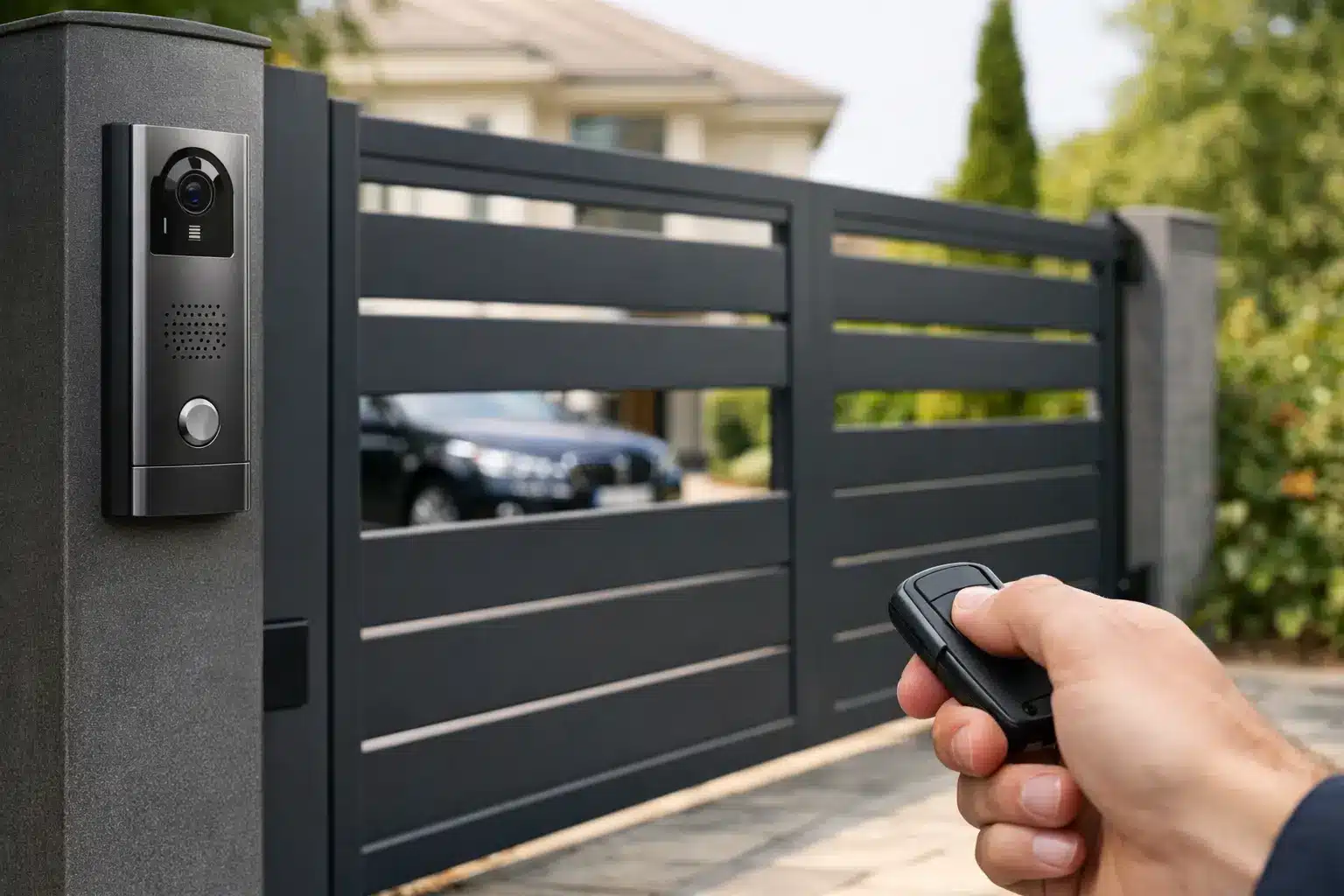
Video intercoms are particularly valuable where the entrance cannot be seen from the house or office. A camera allows the user to identify visitors before releasing the gate, while two-way audio supports clear communication. Systems such as Akuvox intercoms can be selected to suit the level of control required, from a straightforward home entrance to a more managed commercial access point.
Choose access methods that suit the property
A good entrance can offer more than one way to enter. Residents or staff may use fobs, keypads, mobile credentials or internal release buttons, while visitors use the call panel. The right combination depends on the number of users and how often access changes.
For a private home, simplicity often has greater value than a long list of features. For an office, managed estate or shared development, the ability to add and remove permissions without changing locks can be a strong operational benefit. The trade-off is that more capable systems require clearer planning for network connection, power and ongoing administration.
Design the intercom into the gate system
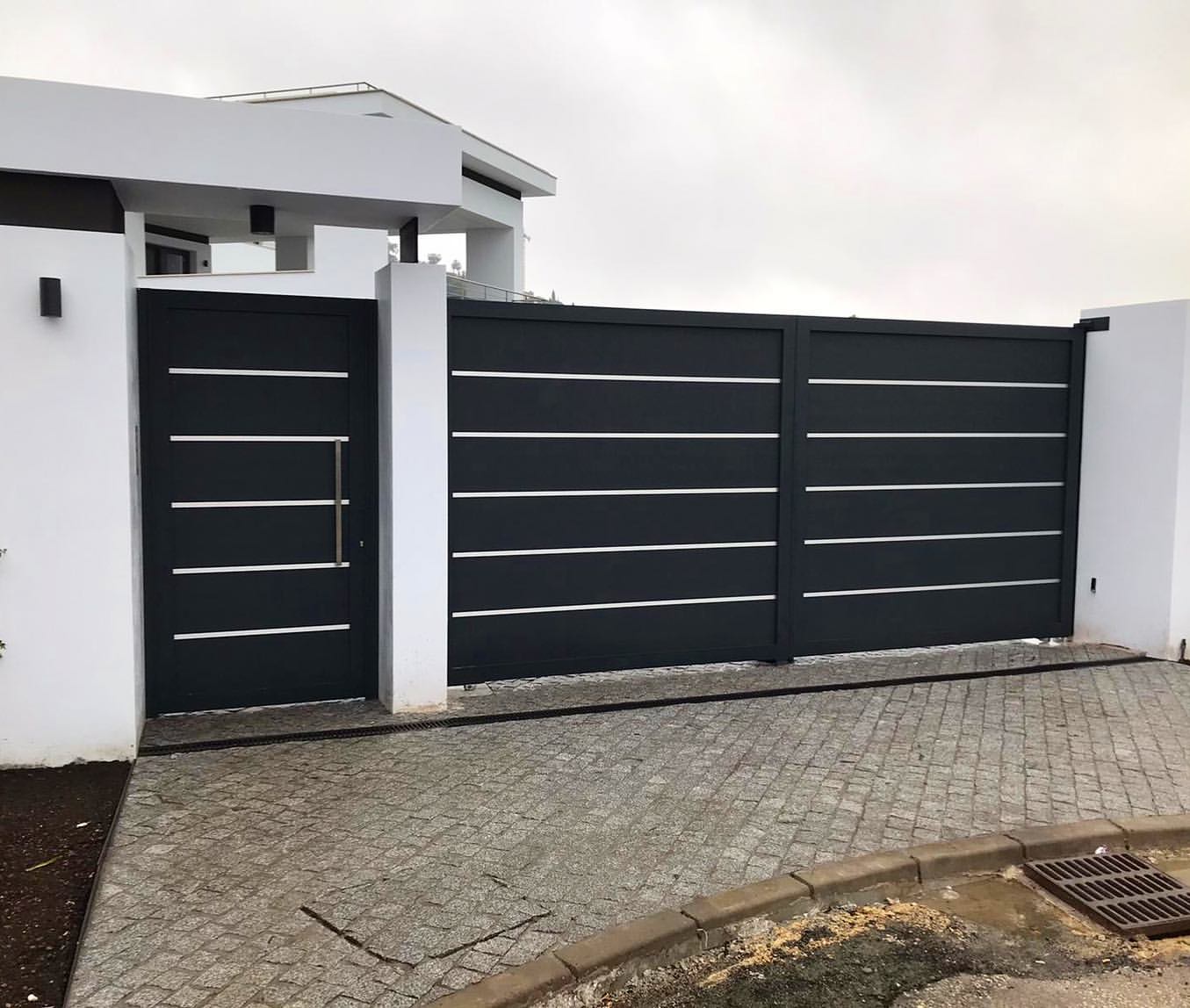
An intercom should look like it belongs to the entrance. Matching aluminium posts and coordinated powder-coated finishes help create a cohesive result, whether the gate has horizontal slats, solid privacy panels, decorative laser-cut detailing or a more traditional vertical layout.
Placement deserves the same attention as the gate design. The camera must have a useful view of a caller rather than the sky, a hedge or vehicle headlights. It needs enough light to identify visitors after dark, while avoiding glare from low evening sun where possible. A recessed panel can offer a refined appearance, but it must remain accessible for maintenance and allow sound to travel clearly.
Height and reach also matter. The call panel should be usable by someone on foot and, where the site requires it, from a vehicle. This can mean a separate vehicle-height pedestal rather than trying to make one position work for every visitor. At commercial sites, clear signage and a sensible waiting area are often as important as the intercom itself.
Do not leave cabling until the installation date
Power, data and gate controls should be planned before foundations are poured and before aluminium sections are fabricated. Concealed routes protect cables from weather, accidental damage and visual clutter. They also make the entrance easier to diagnose and service in years to come.
Wireless connectivity can reduce the need for a physical data cable, but it does not remove the need for dependable power or a reliable signal at the boundary. Long drives, stone walls, dense planting and outbuildings can all affect connection quality. For a security-critical entrance, a wired connection is often the more dependable choice where it is practical to install.
It is equally sensible to consider what happens during a power cut or internet outage. The answer may be a manual release, battery back-up, a dedicated access method or a clear procedure for residents and staff. There is no single right arrangement, but there should be a deliberate one.
Match the gate format to access and space
Swing gates create a classic, substantial entrance and suit many driveways, provided there is adequate space for the leaves to open safely. Sliding gates are a strong option where the drive rises behind the entrance, space is limited or vehicle access needs to be controlled within a compact footprint. Bi-folding and telescopic gates can reduce the area needed for opening while delivering an impressive, tailored solution.
The intercom position should be designed around the chosen format. For sliding gates, a fixed end post or standalone pedestal keeps the call panel clear of the moving gate. For double swing gates, an integrated post beside the hinge line can provide a balanced appearance and straightforward cable routing. A separate pedestrian gate can accommodate the intercom where visitor access is primarily on foot.
Automation must also be considered as part of the access control system. Safety devices, obstacle detection, manual override and professional commissioning are essential. An intercom can send an open command, but it should never bypass the safety measures that protect people, vehicles and the gate mechanism.
Why aluminium is suited to a connected entrance
Premium aluminium gates offer the precision needed for a coordinated intercom post, concealed services and clean modern detailing. Fully welded construction provides a stable, made-to-measure framework, while quality powder-coated finishes offer a durable surface with far less routine upkeep than painted timber.
For property owners, low maintenance is not just about appearance. An entrance system that is easy to keep clean and resistant to the usual effects of British weather is more likely to retain its intended finish and operate as designed. The intercom itself will still require occasional cleaning and checks, particularly around the camera lens, speaker grille and call button, but it should not become an obvious weak point in the entrance.
Colour choice can be used to either make the access point discreet or establish it as a design feature. A panel in the same finish as the gate and posts creates a restrained, architectural effect. A contrasting black, bronze or metallic detail can give a contemporary gate more definition. What matters is that the finish is intentional and consistent across the boundary.
Questions to settle before fabrication
Before a bespoke gate is manufactured, establish whether the intercom is for pedestrians, drivers or both; how far the house or office is from the entrance; and whether reliable mains power and network access are available. Confirm the desired release method, the number of users, the location of automation controls and the required view from the camera.
It is also worth deciding who will maintain the system. A straightforward domestic arrangement may only need an occasional check, whereas a commercial site may need nominated administrators, access records and a process for replacing credentials. Getting these decisions right early avoids costly alterations to finished posts, paving or landscaping.
A well-specified entrance should make security feel effortless for the people who use it and unambiguous for the people who approach it. When gate design, access control and installation conditions are considered together, the finished result is stronger, smarter and designed to impress for years to come.