
A gate is often the first architectural detail people notice from the road. The right RAL colour gate finishes can make an entrance feel quietly refined, sharply contemporary or perfectly connected to the rest of the property. The wrong choice can make a well-designed gate look separate from the home it is meant to enhance.
For made-to-measure aluminium gates, colour is not an afterthought. It is part of the design specification, alongside gate layout, infill style, automation and access control. A considered finish brings the whole scheme together while helping your gate retain its appearance with minimal upkeep for years to come.
Why RAL colour matters for aluminium gates
RAL is a widely recognised colour-matching system used across architecture, construction and metalwork. Selecting a RAL reference gives homeowners, designers and installers a clear point of reference when coordinating gates with window frames, front doors, garage doors, fencing, brickwork and exterior joinery.
That consistency is particularly valuable on a bespoke project. A driveway gate may sit beside aluminium fencing, masonry piers and a composite or timber-clad façade. Choosing a specific RAL shade allows those elements to feel intentional rather than simply assembled.
A RAL number alone, however, does not tell the whole story. The same nominal shade can look different depending on the coating texture, gloss level, surrounding materials and changing natural light. Anthracite grey can appear almost black in shadow but softer and more blue-grey on a bright morning. This is why viewing a physical colour sample against the property is a far better decision-making process than relying on a screen.
RAL colour gate finishes: choosing the right direction
The most successful gate colour responds to the character of the building and the practical demands of its setting. There is no single premium colour. A bold, dark finish may suit a contemporary rendered home, while a softer neutral can bring balance to a traditional stone property or a rural boundary.
Dark greys and black for a contemporary entrance
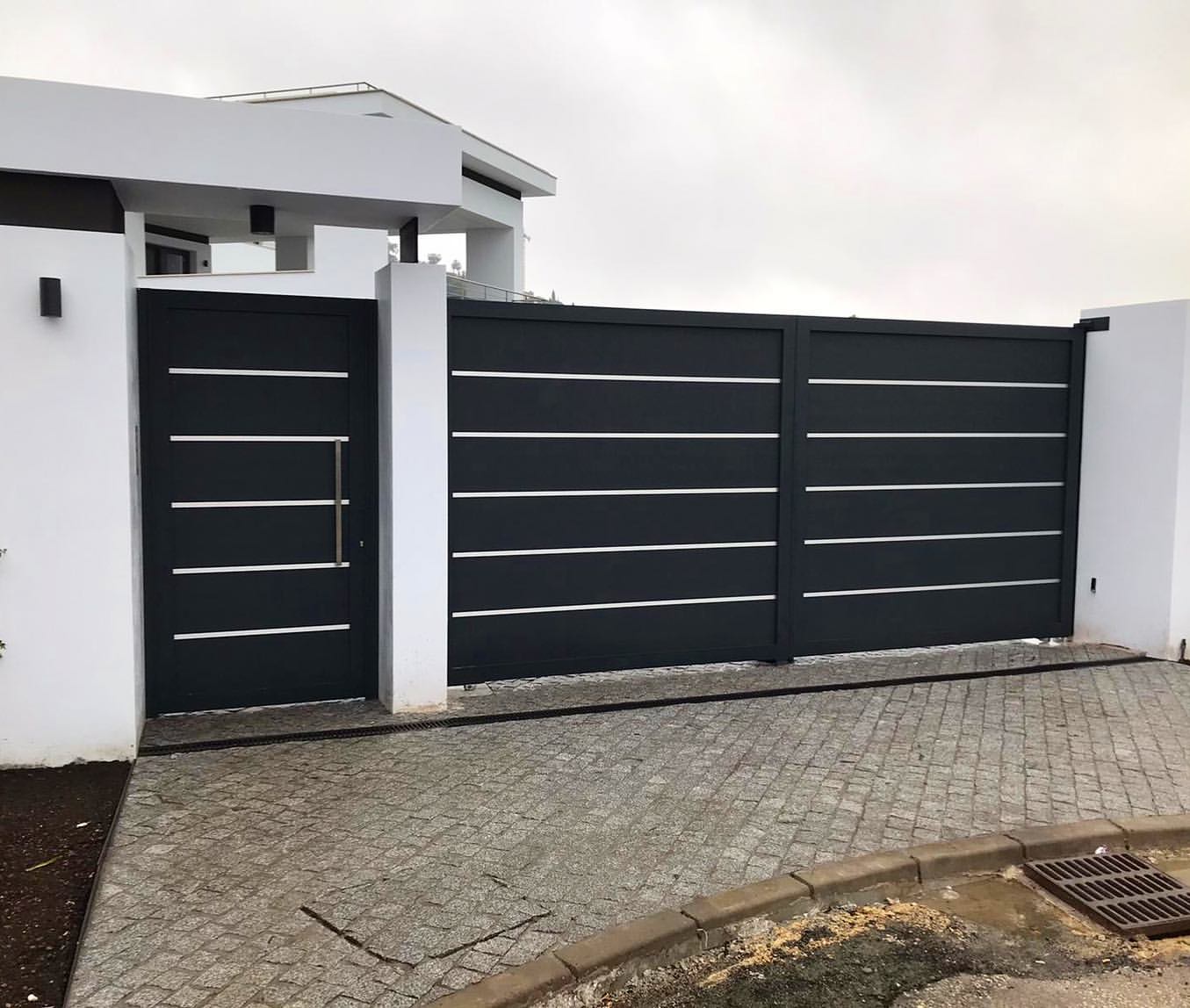
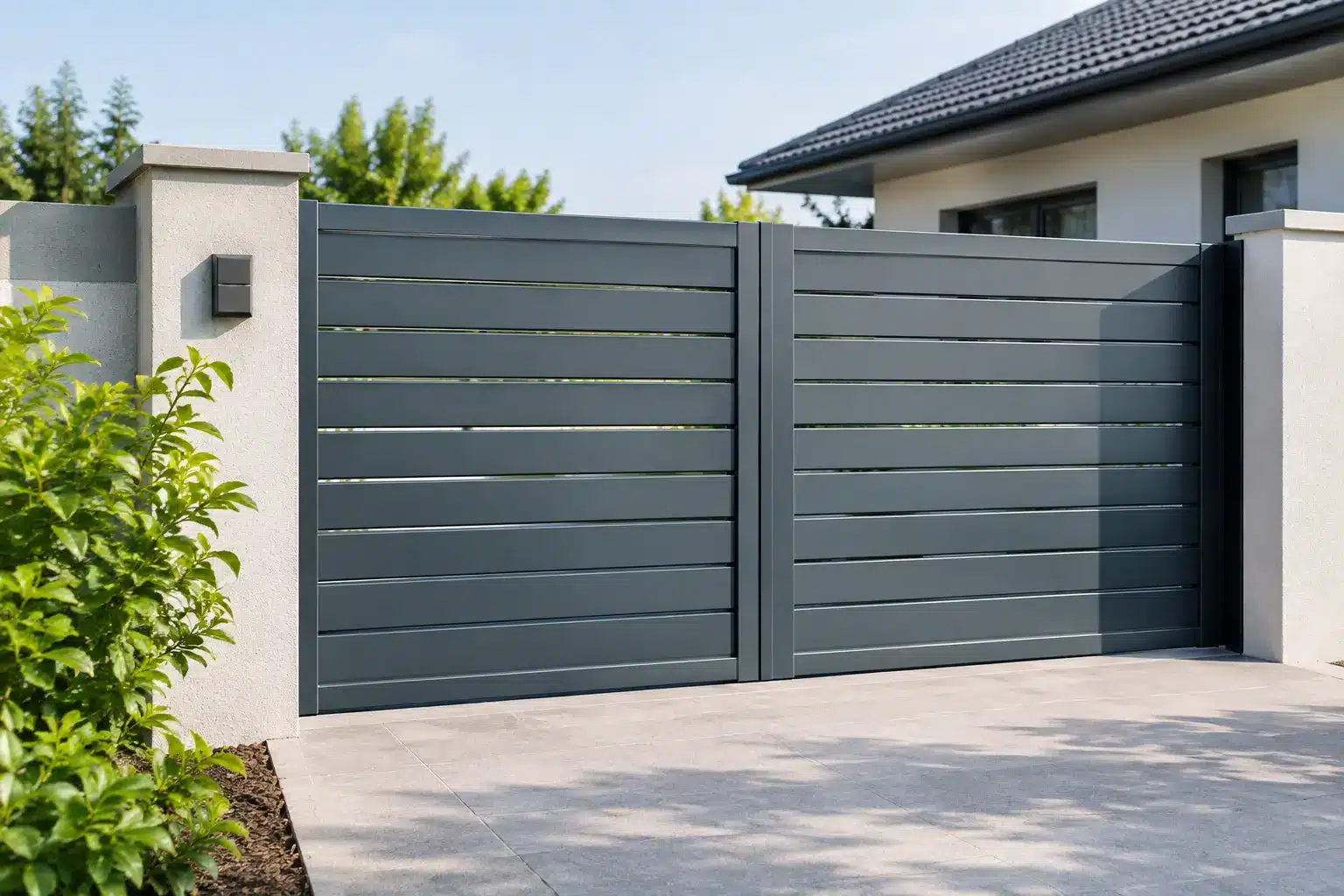
RAL 7016 Anthracite Grey remains a popular choice for aluminium gates in the UK. It works naturally with modern glazing, grey roof tiles and contemporary front doors, giving a property definition without the starkness of pure black. It is particularly effective on slatted gates, where shadow lines add further depth.
RAL 9005 Jet Black creates a more dramatic result. On a simple, fully welded aluminium frame, black looks crisp, confident and architectural. It can also sit well alongside black-framed windows and steel-style doors. The trade-off is that very dark colours show dust, pollen and water spotting more readily than mid-tone finishes, especially on large flat panels. Aluminium remains low maintenance, but a periodic wash will keep the finish looking its best.
Mid-tone greys for a quieter, flexible finish
Mid and lighter greys are often the right answer where a gate should complement the property without becoming its strongest visual feature. Shades such as RAL 7030 Stone Grey or RAL 7040 Window Grey can feel elegant beside pale render, natural stone and lighter brickwork.
These colours are also practical. They tend to be more forgiving of everyday dust than black and can reduce the visual scale of a tall driveway gate. For commercial premises, a neutral grey may offer a professional appearance that works with changing signage, landscaping or building upgrades.
White, cream and light neutrals for traditional properties
A pale gate can look exceptional when it is properly specified. RAL 9016 Traffic White offers a clean, fresh finish for coastal-style homes, period renovations and properties with white-painted joinery. Cream and off-white tones can provide a gentler alternative where the house has traditional features or warm stonework.
Light finishes need careful consideration on exposed driveways or near busy roads, as surface dirt is naturally more visible. They are best chosen by owners who value the brighter aesthetic and are happy to include a simple clean in their routine exterior maintenance.
Earthy tones and statement colours
Greens, browns and muted bronze-inspired shades can give a boundary a more natural relationship with planting, timber cladding and countryside surroundings. Deep green is especially effective where a gate should sit comfortably within mature landscaping rather than contrast with it.
A statement colour can be equally successful when it has a clear connection to the property. A rich blue pedestrian gate, for example, may echo a front door or heritage detail. The principle is restraint: use a distinctive colour where it supports the architecture, not simply because it stands out on a sample chart.
Finish texture and sheen change the final result
Colour and finish should be specified together. Powder coating is commonly available in different surface effects, and each changes the way the gate reads at close range and from the street.
A smooth matt or satin finish delivers a clean, contemporary appearance. It suits minimalist aluminium driveway gates and properties with sharp-lined detailing. Fine-textured finishes have a subtly tactile surface that can soften reflections and disguise minor everyday marks more effectively. They are a strong choice for busy family homes, commercial entrances and exposed locations.
Glossier finishes can bring a more formal look, but they also reflect light and highlight surface marks more readily. For many modern aluminium gate designs, matt and fine-textured coatings provide the most balanced combination of premium appearance and easy ownership.
The coating must also be applied to a properly prepared aluminium structure. Precision fabrication and fully welded construction create the sound basis for a finish that looks consistent across the frame, posts and infill. A premium coating cannot compensate for poor underlying workmanship.
Coordinate the gate with the wider property
A bespoke gate should belong to the whole entrance scheme. Start by identifying the fixed elements that will remain for the longest time: window frames, roof colour, brick or stone, garage door and boundary walls. These usually provide a more reliable guide than removable items such as planters or outdoor furniture.
Matching gate and window-frame colours exactly can create a sharp, cohesive look. Choosing a related tone can be just as effective, particularly if an exact match would make the frontage feel too dark. For example, anthracite gates may sit comfortably with black doors or darker grey fencing, provided the undertones do not clash.
If you are including coordinated fencing, pedestrian gates or side panels, specifying one finish across the system creates a stronger result than treating each item separately. It also gives the property a more complete, purpose-designed appearance from every angle.
Consider sunlight, location and use before committing
A colour sample should be assessed outdoors at different times of day. North-facing entrances, tree cover and deep porches can make colours appear much darker than expected. South-facing driveways may intensify warm undertones and show glare on smoother, darker finishes.
Location also affects the practical choice. Properties near the coast, main roads or agricultural land can experience more airborne salt, grime or dust. Aluminium is valued for its resistance to corrosion and low-maintenance nature, but regular cleaning remains good practice. Use mild soapy water and a soft cloth or sponge, then rinse clean. Avoid abrasive pads and harsh solvents that could damage the coating.
For automated gates, do not let colour selection overshadow operational design. Sliding, swing, bi-folding and telescopic systems each have different space requirements, opening speeds and site considerations. The best entrance solution combines a finish you are proud to see every day with a gate format that works reliably for the way you arrive, leave and secure the property.
Use samples to make a confident final choice
Before finalising your specification, compare physical samples beside the gate location, your exterior walls and any adjacent metalwork. Look at them in direct sun, overcast weather and evening light. If several elements are being colour-matched, confirm whether they use the same coating type and sheen as well as the same RAL reference.
At Alu-Gate, this level of detail is part of a consultation-led approach to bespoke aluminium entrances. Colour, layout and function should be resolved together, so the final gate delivers the security, kerb appeal and long-term value expected of a premium installation.
Choose a colour that respects the building, works with its surroundings and still feels right when fashions move on. A well-specified aluminium gate should not just make a strong first impression – it should continue to do so with very little demanded in return.