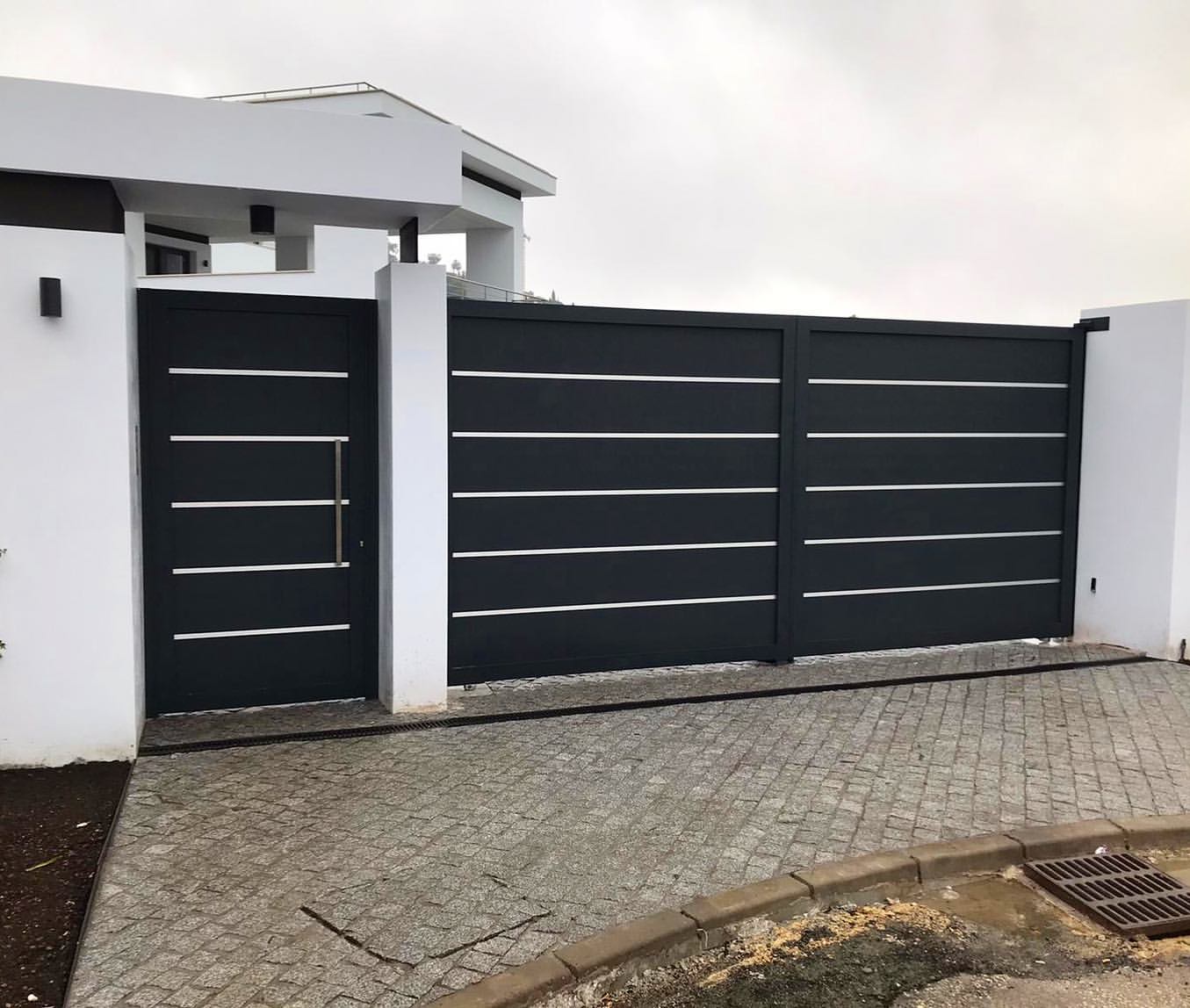

A gate should make a clear statement before anyone reaches the front door. Entrance intercoms add the intelligence behind that first impression, allowing you to identify visitors, manage deliveries and control access without compromising the clean, considered appearance of a premium entrance.
For a driveway gate, pedestrian gate or commercial entrance, the right system does far more than provide a call button. It becomes part of how the property works every day. The best specification balances security, convenience, visual integration and long-term reliability – not simply the longest list of features.
What entrance intercoms do for a property
An intercom creates a controlled point of contact at the boundary. Rather than opening a gate on assumption, you can speak to a visitor, see who has arrived where video is fitted, and choose whether to grant access. This is valuable for family homes with long driveways, properties set back from the road, shared entrances and commercial sites with regular visitors or deliveries.
The practical benefit is immediate. Couriers no longer need to approach the house before contact is made. Tradespeople can be admitted when expected, while unplanned callers remain outside the boundary. For commercial premises, a properly specified intercom helps establish a more professional arrival process and gives staff a clear way to screen access.
There is an aesthetic benefit too. A well-designed entrance should feel intentional from the gate through to the access controls. A slim, neatly positioned intercom panel can complement contemporary aluminium gates and coordinated fencing rather than interrupting the overall design.
Audio, video and smart entrance intercoms
The right choice depends on how the gate is used, who needs access and whether the property is occupied throughout the day. There is no value in paying for functions that will never be used, but under-specifying an entrance can leave an otherwise excellent gate system less convenient than it should be.
Audio intercoms
An audio-only intercom is a straightforward, dependable option. A visitor presses the call button, the resident or member of staff answers from an internal handset, and the gate can be released if appropriate. It suits entrances where there is a clear expectation of visitors, or where visual verification is not essential.
Its principal advantage is simplicity. Fewer components can mean a more economical installation and an uncomplicated user experience. However, audio does not show who is at the gate. On a secluded property or a busy commercial entrance, that limitation may matter.
Video intercoms
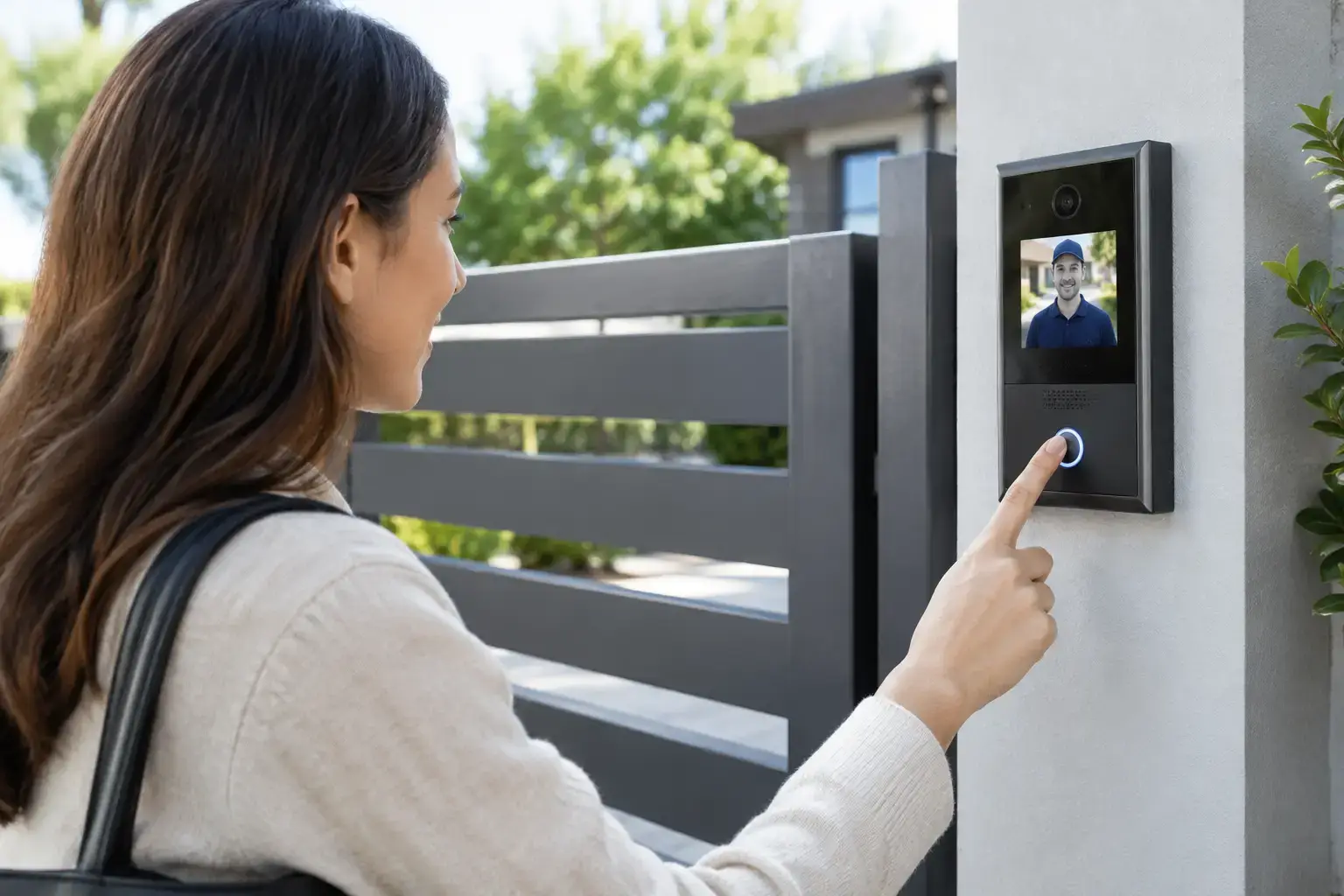
Video intercoms provide a live image of the visitor before access is granted. For many homeowners, this is the most useful step up in security and day-to-day confidence. You can verify a face, assess whether a delivery has arrived, or see if someone is accompanied before responding.
Image quality, camera angle and lighting deserve attention. A camera needs to capture visitors of different heights, remain useful after dark and be positioned to avoid glare from headlights or direct sunlight. The panel should be installed at a practical height and placed where a person naturally stands, not simply where cable routing is easiest.
App-based and smart systems
Smart entrance intercoms send calls to a mobile phone or tablet, allowing you to answer from elsewhere on the property or while away. This can be particularly useful for remote working, frequent deliveries, second homes and sites where a physical reception point is not always staffed.
Convenience should be weighed against network dependency. A smart system needs reliable connectivity at the entrance, along with a sensible plan for what happens if the internet drops out or a phone has no signal. For that reason, many premium installations combine app control with a fixed indoor monitor, keypad or alternative access method.
Specify the intercom with the gate, not afterwards
An intercom works best when it is considered during the gate design stage. Retrofitting is possible, but it may involve visible conduit, awkward positioning or compromises in the finish. Planning access control early gives greater freedom over cabling, foundations, posts, power supply and the relationship between the call panel, gate and pedestrian route.
For a sliding gate, the intercom panel is often positioned on a dedicated post or integrated entrance feature before the gate line. With swing gates, it may sit alongside the opening leaf, provided the visitor can safely stand clear as the gates operate. At a pedestrian entrance, the panel can be incorporated into a matching aluminium post or fence section for a particularly cohesive result.
The intercom should never obstruct the entrance or create a pinch point. Visitors need a stable place to stand, room to turn towards the camera and a clear route away from moving gates. On larger driveways, think about vehicle positioning as well. A driver should be able to use the panel without blocking the pavement or sitting in the road.
Access methods that suit real life
The call panel is only one part of access control. The system should also make entry easy for the people who use the property regularly. A family home may need key fobs, a keypad code and app access for different household members. A business may need timed access permissions for staff, contractors and delivery teams.
Keypads are useful where occasional access is required without issuing physical keys. They work well for gardeners, cleaners or trusted trades, provided codes are changed when circumstances change. Key fobs and cards offer quick entry and are easy to remove from the system if lost. Smartphone credentials can be highly convenient, though they should not be the only method where reliable access is critical.
For a larger household or business, consider how access rights will be managed. A system that allows individual credentials is easier to control than one shared gate code known by everyone. This is a small specification detail that can make a substantial difference over time.
Security depends on the whole entrance
A video panel alone does not make an entrance secure. It needs to work with a strong gate, appropriate automation, a correctly specified lock or latch, safe control equipment and good perimeter design. The objective is not to make a property feel hostile. It is to create a clear, controlled boundary that looks refined and performs reliably.
Fully welded aluminium gates are particularly well suited to this approach. They provide a stable, low-maintenance structure for integrated access control, while their clean lines suit contemporary intercom panels and matching fencing. Privacy levels can also be designed into the gate style. A solid or closely spaced infill provides greater screening than an open horizontal design, although a more open gate may preserve sightlines and a lighter visual feel.
At night, lighting makes a meaningful difference. A visitor needs to find the panel easily, and the camera needs enough illumination to identify them. Discreet entrance lighting can improve both security and kerb appeal, but it must be positioned carefully to avoid bleaching the camera image.
Questions to ask before choosing an intercom
Before selecting a system, establish where calls need to be answered, how far the entrance is from the building and who will require access. Think through the everyday scenarios: a child arriving home, a parcel delivery when nobody is in, a visitor during the evening, or a contractor attending outside normal hours.
It is also worth asking whether the entrance may expand later. You may initially require one gate and one internal monitor, then later add a pedestrian gate, staff entrance or secondary dwelling. Choosing a system with suitable capacity from the outset can avoid replacing components unnecessarily.
For commercial properties, consider visitor volume, multiple call destinations, audit requirements and the resilience needed during power or connectivity issues. A small office entrance has very different needs from a managed residential development or an industrial yard.
Installation details that protect performance
Premium equipment deserves a premium installation. External panels must be suited to British weather, securely mounted and protected from water ingress. Cabling should be routed discreetly and safely, while power and network equipment should remain accessible for servicing rather than hidden behind finished surfaces.
Compatibility matters just as much. The intercom must communicate correctly with the chosen gate automation, electric lock or magnetic lock, safety devices and exit controls. This is why a consultation-led approach is valuable: the gate, access controls and surrounding structure can be specified as one considered system rather than assembled from unrelated parts.
At Alu-Gate, bespoke aluminium gate design allows the intercom position, supporting posts and entrance layout to be planned around the property from the outset. The result is a stronger visual finish and a more dependable daily experience.
Choose for the next decade, not the next delivery
Entrance intercoms are used in brief moments, but those moments happen repeatedly. A clear call, a sharp image, a reliable release and a panel that still looks right against the gate years later are what define the value of the investment.
Choose a system that suits the way the property is lived in or managed, then give it an entrance worthy of it. When gate design, access control and craftsmanship are considered together, security becomes part of the architecture rather than an afterthought.