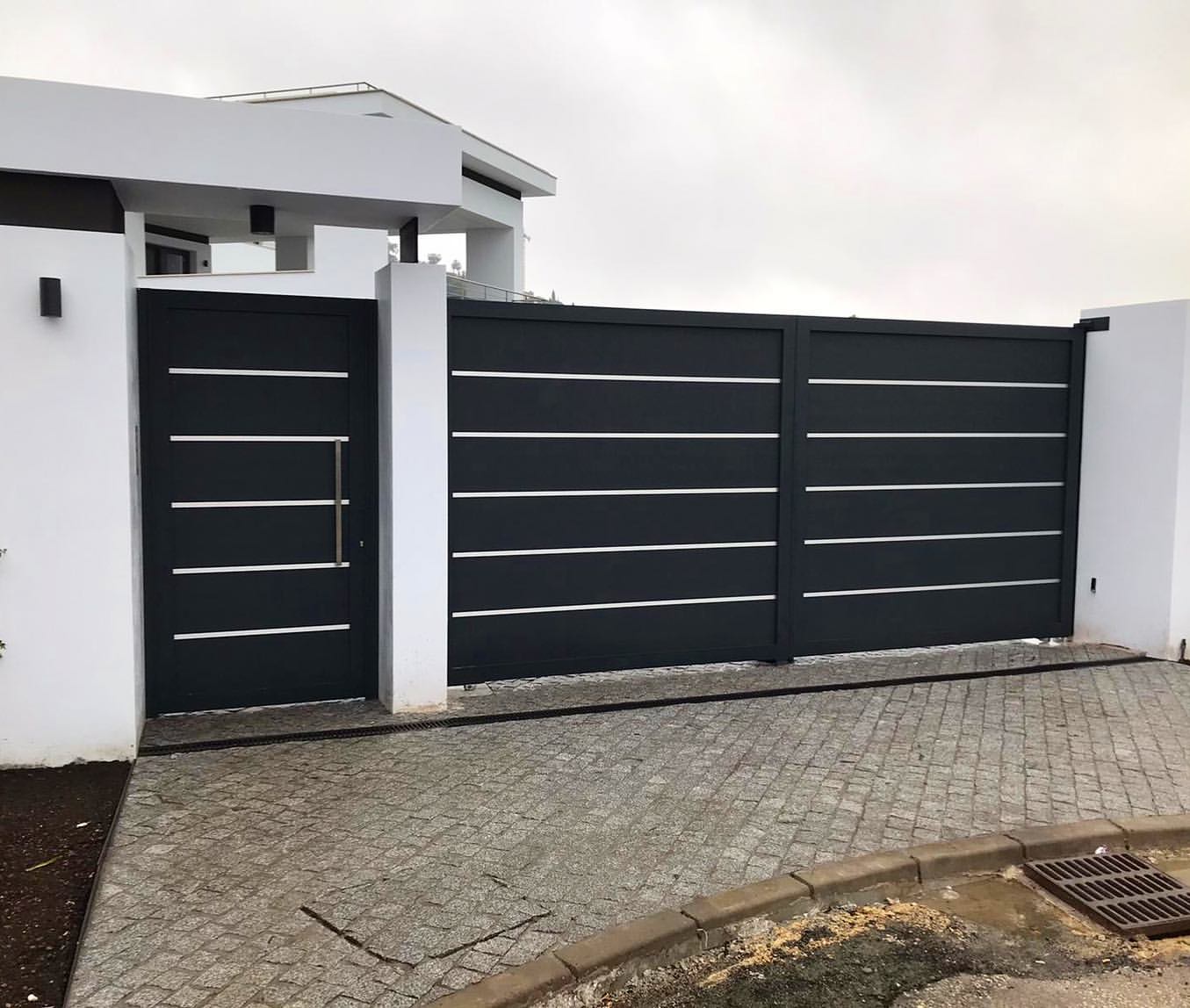
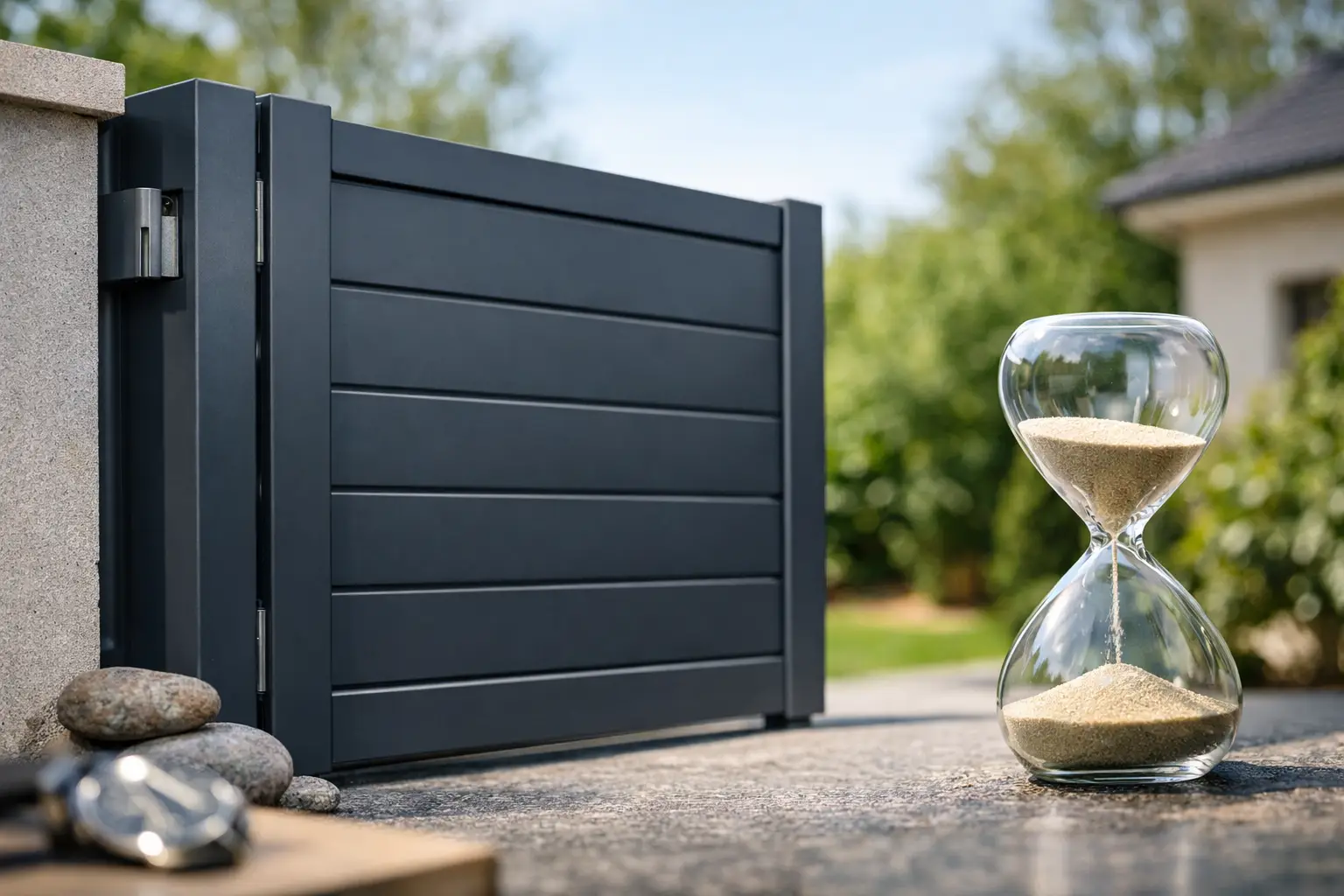
A gate usually starts to show its true quality after a few British winters. Timber can swell, crack or demand another round of sanding and paint. Steel can look solid for years, then rust begins to creep in at joints and edges. So when homeowners and commercial buyers ask how long do aluminium gates last, what they are really asking is whether they can invest once and trust the result to keep performing.
The short answer is that a well-made aluminium gate can last for decades. In many cases, 20 years is a realistic expectation, and premium systems built with the right grade of aluminium, high-quality welding and a durable powder-coated finish can continue performing well beyond that. The difference is rarely the material alone. It comes down to how the gate is designed, fabricated, finished, installed and used.
How long do aluminium gates last in real conditions?
In UK conditions, a quality aluminium gate should comfortably outlast many timber alternatives and compete very strongly with steel, without the same maintenance burden. Aluminium does not rust, which gives it a major advantage in a climate defined by rain, fluctuating temperatures and damp air.
That does not mean every aluminium gate on the market will deliver the same lifespan. A lightweight, poorly assembled gate made to hit a price point is not comparable to a bespoke, fully welded system designed for daily use. The material may be aluminium in both cases, but the long-term result can be very different.
For most residential properties, a premium aluminium driveway or pedestrian gate should offer decades of reliable service when it is correctly specified and maintained. For commercial settings, where usage is often heavier and automation cycles are higher, lifespan still remains excellent, but hardware, motors and access control components may require attention sooner than the gate leaf itself.
Why aluminium lasts so well
Aluminium earns its reputation because it solves some of the main reasons gates fail. It is naturally resistant to corrosion, it is lightweight compared with steel, and it is stable enough to cope well with changing weather conditions.
That lower weight matters more than many buyers realise. A heavy gate places greater strain on hinges, posts, tracks and automation systems. Over time, that extra load can lead to sagging, misalignment and more frequent servicing. Aluminium reduces that stress while still allowing for a strong, secure gate when the profile design and fabrication are handled properly.
It also avoids one of the biggest frustrations associated with timber. Wood is an attractive material, but it moves with moisture and temperature. It can twist, warp and deteriorate if maintenance slips. Aluminium is far more predictable. Once installed, it keeps its shape well and does not ask for ongoing repainting or treatment just to remain presentable.
The biggest factors that affect lifespan
If you want a realistic answer to how long aluminium gates last, you need to look beyond the brochure claim. Several factors have a direct impact on longevity.
Build quality
This is one of the most important. A bespoke gate fabricated with premium-grade aluminium and precision welding will generally last much longer than a mechanically joined gate made from lighter sections. Fully welded construction creates a stronger, more rigid structure with fewer weak points over time.
For wider driveway gates, sliding systems or large commercial entrances, that structural integrity becomes even more important. Bigger openings demand more from the gate, so the quality of fabrication cannot be an afterthought.
Surface finish
The finish protects the gate and keeps it looking sharp. A high-quality powder coating, properly applied to a well-prepared surface, stands up far better to weather, UV exposure and everyday wear than cheaper finishing methods.
In practical terms, this affects both lifespan and appearance. The gate may remain structurally sound for many years, but if the finish fades, chips or degrades early, the product will not feel premium for long. Buyers investing in a design-led entrance solution should expect both durability and lasting visual quality.
Installation
Even an excellent gate can underperform if it is badly installed. Posts need to be correctly specified, foundations need to suit the size and weight of the gate, and the opening must be accurately set out. Poor alignment creates ongoing stress on hinges, locks, rollers and motors.
This is especially relevant for automated gates. Automation adds convenience and security, but it also introduces moving parts that rely on precise installation. If the gate is not running true from day one, wear will build faster.
Environment
Not every site places the same demands on a gate. A sheltered suburban driveway is different from an exposed coastal property or a busy commercial entrance with frequent daily cycles. Coastal environments can be harsher on finishes and hardware because of salt in the air. High-traffic sites naturally create more wear on moving components.
The good news is that aluminium remains a very strong choice in tougher environments, but the specification should reflect the setting. This is where a consultation-led approach makes a real difference.
What tends to wear out first?
When people ask about lifespan, they often assume the gate itself and all of its components age at the same rate. In reality, the aluminium structure usually outlasts the parts attached to it.
Hinges, locks, latches, rollers, track systems, motors and intercom equipment all have their own service life. On an automated gate, the motor and control hardware may need servicing or replacement long before the aluminium frame has reached the end of its life. That is not a flaw in the gate material. It is simply the reality of mechanical and electronic systems doing regular work.
This is why a premium gate should be seen as a system rather than a single product. Strong fabrication provides the foundation, but hardware quality and correct specification matter just as much if you want long-term reliability.
How much maintenance do aluminium gates need?
One of aluminium’s strongest selling points is low maintenance. That does not mean no maintenance at all, but it is far less demanding than timber and generally simpler than steel.
For most properties, occasional cleaning with mild soapy water is enough to keep the finish in good condition. In coastal or high-pollution areas, cleaning may need to be a little more frequent. It also makes sense to check hinges, fixings, locks and automation components periodically so that small adjustments can be made before they become larger issues.
The key point is that aluminium gates do not require the cycle of scraping, repainting and preservative treatment that many timber gates do. For buyers who want a premium entrance without adding another maintenance project to the calendar, that matters.
Aluminium vs timber and steel for longevity
Timber has natural character, but its lifespan depends heavily on upkeep. Without regular care, deterioration can set in much sooner than expected. Even when maintained properly, movement in the material can affect operation and appearance over time.
Steel is undeniably strong, but unless it is exceptionally well protected and maintained, rust is always the long-term concern. In the UK climate, that can become expensive and inconvenient.
Aluminium sits in a very attractive middle ground. It delivers strength, modern aesthetics and excellent corrosion resistance, while keeping maintenance low. For design-conscious property owners, that combination is hard to ignore. It offers the premium look many buyers want, with a more practical ownership experience over the long term.
Is a guarantee a good indicator of lifespan?
A strong guarantee can tell you a great deal about how confident a manufacturer is in its product. It should never be the only factor you rely on, but it is a useful sign of expected durability.
If a company is prepared to stand behind its gate for 20 years, that suggests the material, finish and fabrication have been chosen with long-term performance in mind. It also shows a level of accountability that cheaper, off-the-shelf products often cannot match.
That is why premium buyers should ask not just how long the gate should last, but what backs up that claim. At Alu-Gate, the emphasis on bespoke design, precision welding and a 20-year guarantee reflects exactly the kind of confidence that serious buyers should look for.
When is aluminium the right long-term choice?
If you want a gate that looks refined, performs reliably and does not become a recurring maintenance job, aluminium is one of the strongest long-term options available. It is particularly well suited to driveway gates, pedestrian gates and coordinated entrance systems where appearance matters as much as security.
It also makes sense for buyers who want a made-to-measure solution rather than something generic. A gate that is tailored to the property, fabricated to a high standard and matched to the right access system is far more likely to deliver the lifespan you expect.
The better question is not simply how long do aluminium gates last. It is whether the gate you choose has been built to justify that lifespan. Premium materials, fully welded construction, quality finishing and expert specification are what turn a good-looking gate into a lasting investment.
Choose well, and your gate should not just survive the years ahead. It should continue to add security, presence and value to the property long after cheaper alternatives have needed replacing.