You notice it fastest when a gate starts asking too much of you. Timber needs sanding again. Steel has picked up rust around joints and fixings. Paintwork dulls, hardware stiffens, and what should frame the entrance beautifully starts to feel like another job on the list. That is why low maintenance driveway gate options matter so much – not just for convenience, but for long-term appearance, security and value.
For most property owners, the real question is not simply which gate looks good on day one. It is which material and design will still look sharp, operate reliably and suit the property five, ten or twenty years from now without constant upkeep. The right answer depends on your priorities, but some options are clearly better suited to low-maintenance ownership than others.
What makes a driveway gate low maintenance?
A genuinely low-maintenance gate needs more than a durable surface. It should resist corrosion, cope with British weather, retain its finish, and avoid design weaknesses that create ongoing repairs. Material choice matters most, but construction quality, gate format and installation all affect how much attention the gate will need over time.
This is where many buyers get caught out. A gate might be sold as durable, but if it relies on hollow sections that trap moisture, poor coatings, or hardware unsuited to regular use, maintenance will arrive sooner than expected. The easiest gate to live with is one designed from the start for outdoor exposure, repeated operation and a long service life.
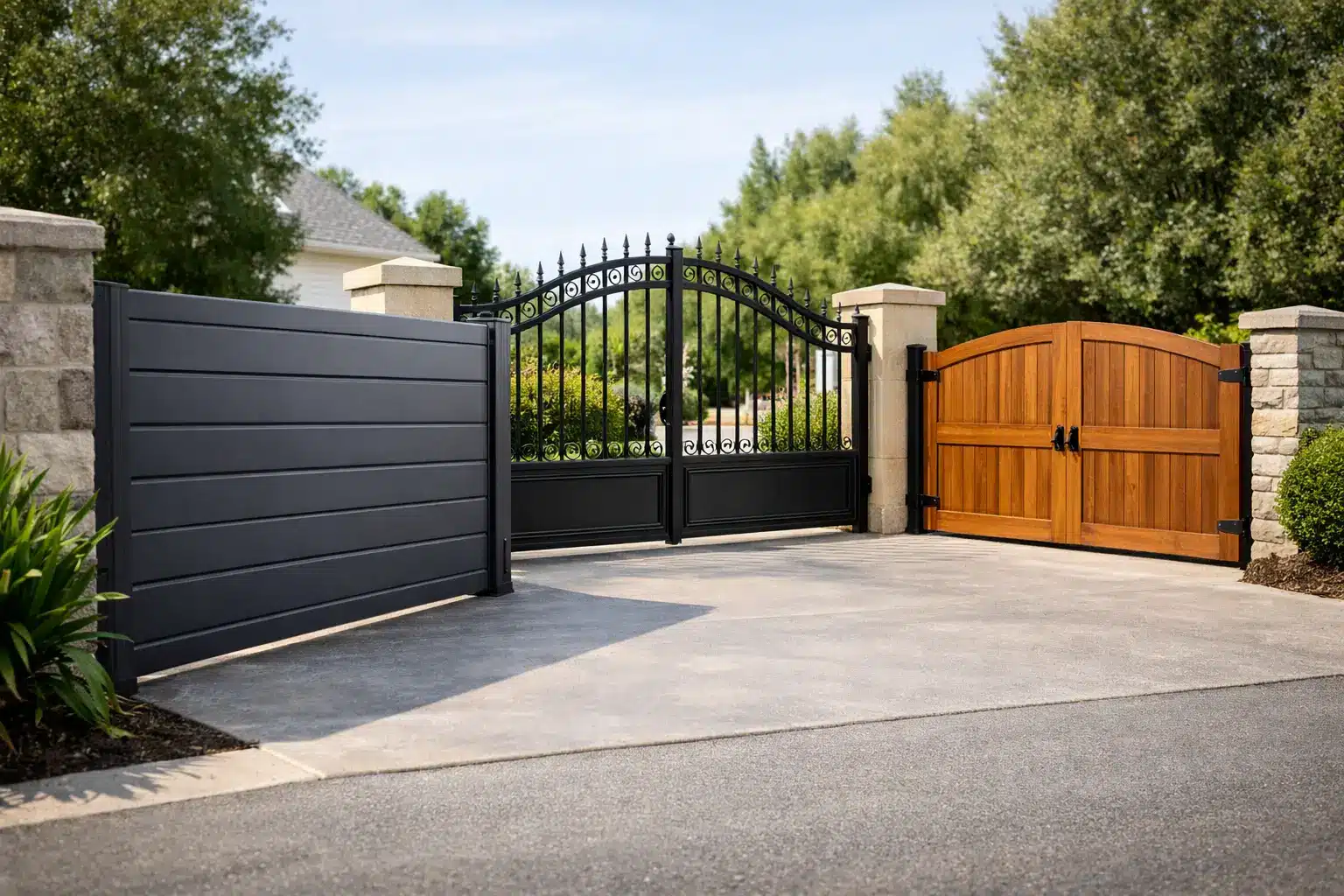
Low maintenance driveway gate options by material
Aluminium gates
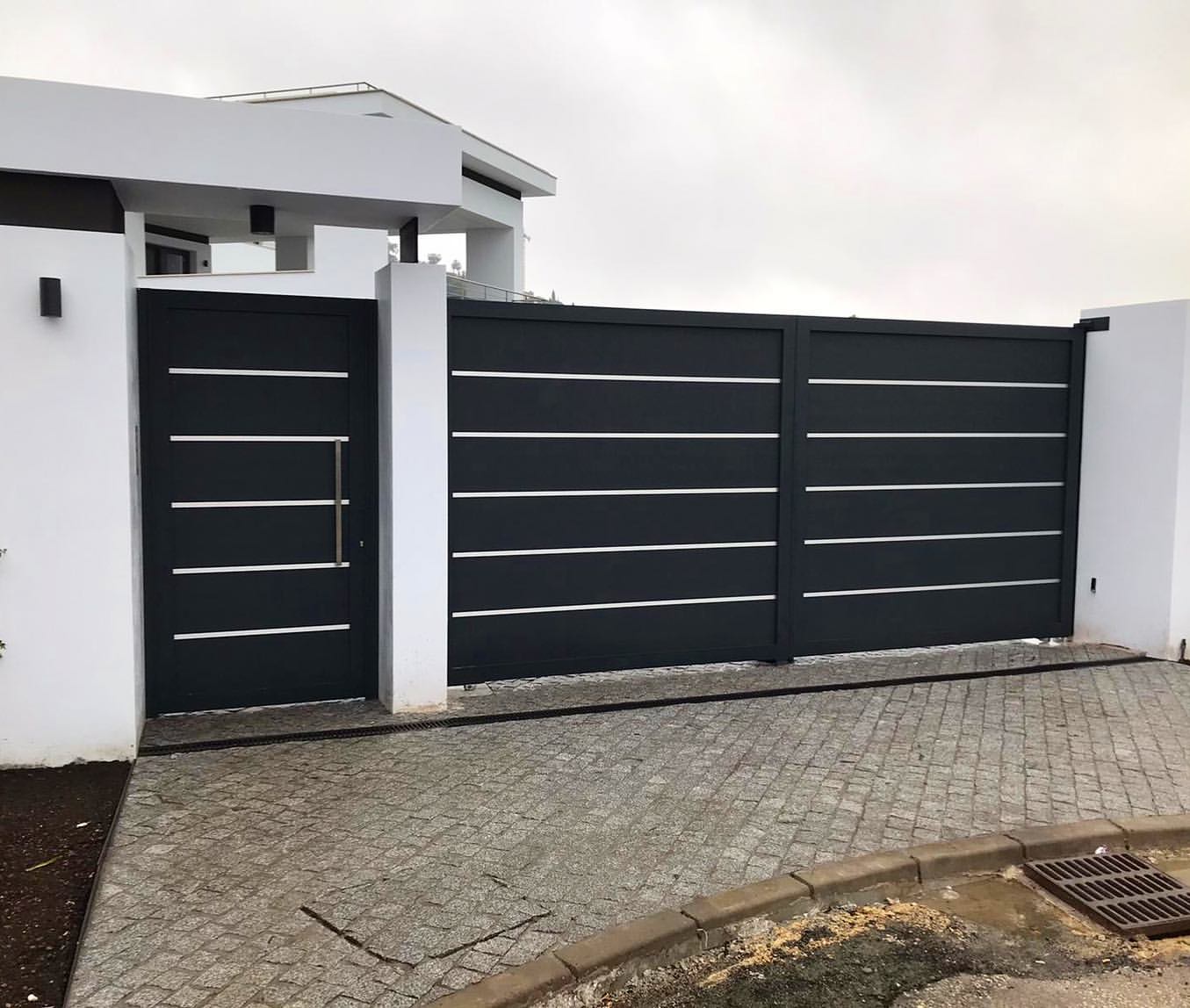
For most residential and commercial entrances, aluminium is the standout choice among low maintenance driveway gate options. It offers the appearance expected from a premium entrance feature while avoiding many of the issues associated with traditional materials.
Aluminium does not rust, which immediately removes one of the biggest maintenance concerns. With a high-quality powder-coated finish, it holds its colour well, copes with wet conditions and generally needs little more than occasional cleaning to keep it looking right. For busy homeowners and site managers alike, that is a major advantage.
It is also a strong material when engineered properly, particularly in fully welded, made-to-measure systems. That point matters. Not all aluminium gates are equal. Better fabrication delivers a cleaner finish, stronger frame integrity and improved long-term reliability, especially on larger driveway openings or automated systems.
There are trade-offs, of course. Aluminium is a premium product, so the upfront investment is usually higher than a basic timber or mild steel gate. But when you factor in reduced repainting, less remedial work and a longer aesthetic lifespan, the ownership picture often looks far better.
Composite-style infill systems
Some buyers are drawn to the look of timber but want less upkeep. Composite or timber-effect infill designs can be attractive in that scenario, especially when combined with aluminium framing. They can deliver a warmer visual style without the routine staining and treatment real timber demands.
The key is product quality. Lower-grade composite systems may fade unevenly or look less convincing up close, so this route works best when design standards are high and the overall gate is fabricated to a premium specification. For contemporary homes, it can be an effective middle ground between modern durability and a softer architectural finish.
Galvanised and powder-coated steel
Steel can be low maintenance when properly galvanised and finished, and it remains a valid option for certain properties, particularly where a more traditional look or heavier-duty security profile is required. It is strong, familiar and often suited to period or commercial settings.
That said, steel still carries more corrosion risk than aluminium if the finish is compromised. Scratches, exposed edges and wear points need closer attention over time. In practical terms, it can be a durable choice, but it rarely matches aluminium for ease of ownership.
Timber gates
Timber still appeals for its character and natural warmth, especially on rural or heritage-style properties. A well-made hardwood gate can look exceptional. The issue is not whether timber can look premium. It can. The issue is maintenance.
Even quality timber moves with moisture and temperature changes. Finishes need renewing, colour changes over time, and the surface is more vulnerable to weathering. For buyers specifically prioritising low upkeep, timber is usually the wrong fit unless they are happy to commit to regular care.
The best gate styles for low upkeep
Material is the main factor, but style affects maintenance too. Simpler, well-engineered designs tend to perform best over time.
Swing gates
Swing gates are a popular choice for private driveways and often offer a clean, elegant appearance. In low-maintenance terms, they can work very well when the opening is suitable and the hinges, posts and automation are correctly specified. Their relative mechanical simplicity is part of the appeal.
The main consideration is space. Swing gates need room to open safely, and on sloping driveways they may require more careful planning. If the site works for them, they remain a refined and reliable option.
Sliding gates
For wider entrances or properties where internal space is limited, sliding gates can be the more practical solution. They avoid the arc of a swing gate and often suit modern architectural schemes particularly well.
From a maintenance perspective, sliding systems need accurate installation and quality running gear. A poorly planned track or support arrangement creates problems, but a well-built sliding gate can deliver excellent long-term performance with very little intervention beyond routine checks and cleaning.
Bi-folding and telescopic gates
These formats are ideal where access is tight or speed of opening matters. They offer smart solutions for compact sites and can look very polished in contemporary settings.
They do involve more moving parts, which means specification becomes even more important. If low maintenance is the priority, these systems should be supplied by specialists who understand the engineering, not treated as a generic add-on. Done properly, they are practical and impressive. Done badly, they become service-heavy.
Why finish quality matters as much as material
When buyers compare low maintenance driveway gate options, finish quality is often underestimated. A premium finish is not purely cosmetic. It protects the gate, preserves its appearance and reduces the need for corrective work.
Powder coating is typically the preferred finish for aluminium gates because it creates a hard-wearing, consistent surface available in a wide range of colours and textures. Matt contemporary shades are especially popular for modern homes, but the real benefit is durability rather than trend.
Preparation also matters. If the fabrication, pretreatment and coating process are not carried out to a high standard, long-term performance suffers. A gate should not only look refined when installed. It should retain that standard through years of rain, UV exposure and regular use.
Automation and access control without extra hassle
Many buyers assume an automated gate must mean more maintenance. In reality, a professionally specified automated system can improve day-to-day reliability and convenience. The key is matching the motors, controls and safety features to the gate’s size, weight and frequency of use.
Access control can also support longevity. Intercoms, controlled entry and dependable operating systems reduce misuse and create a smoother user experience, particularly on busy residential entrances and commercial sites. The system is only as good as the gate it is attached to, though, so the structure and hardware still come first.
How to choose the right option for your property
The best choice depends on how your entrance is used, what style suits the property and how much maintenance you are genuinely prepared to accept. For a contemporary home renovation, a made-to-measure aluminium swing or sliding gate is often the strongest all-round answer. It delivers clean design, excellent durability and minimal upkeep.
For larger commercial openings, heavy-use entrances or more complex access requirements, the conversation becomes more technical. Gate format, automation, wind loading, privacy level and traffic flow all need proper consideration. That is where a consultation-led approach adds real value, because the lowest-maintenance answer is not always the most obvious one from a brochure.
At the premium end of the market, the difference is rarely just the material. It is the combination of bespoke sizing, precise fabrication, high-grade finish and informed specification. That is why specialist manufacturers such as Alu-Gate focus on tailored systems rather than one-size-fits-all products.
The option that usually makes the most sense
If your priority is a gate that looks impressive, strengthens security and does not become a recurring maintenance project, aluminium is usually the strongest choice. It offers the cleanest balance of style, strength and low-maintenance ownership, especially when fabricated to measure and finished to a high standard.
A driveway gate should add confidence every time you arrive home or open the site for the day. The best ones do that quietly – holding their finish, operating reliably and asking very little in return.