
A gated entrance can look impressive from the road and still leave obvious weaknesses once you start assessing how it actually performs. The difference between a gate that simply marks a boundary and one that genuinely protects it comes down to specification. If you are working out how to secure a gated entrance, the answer is rarely one product. It is a combination of gate design, materials, access control, installation quality and the way the whole entrance is planned.
For most properties, security and appearance should not compete. A well-designed entrance should do both – present the property properly and make unauthorised access far more difficult. The best results come from treating the gate as part of a complete entrance system rather than a standalone feature.
How to secure a gated entrance from the ground up
The first decision is the gate itself. Security starts with structure, and this is where many entrances fall short. A lightweight gate with visible movement in the frame, weak fixings or poor alignment may look acceptable when new, but it gives up its strength quickly under daily use.
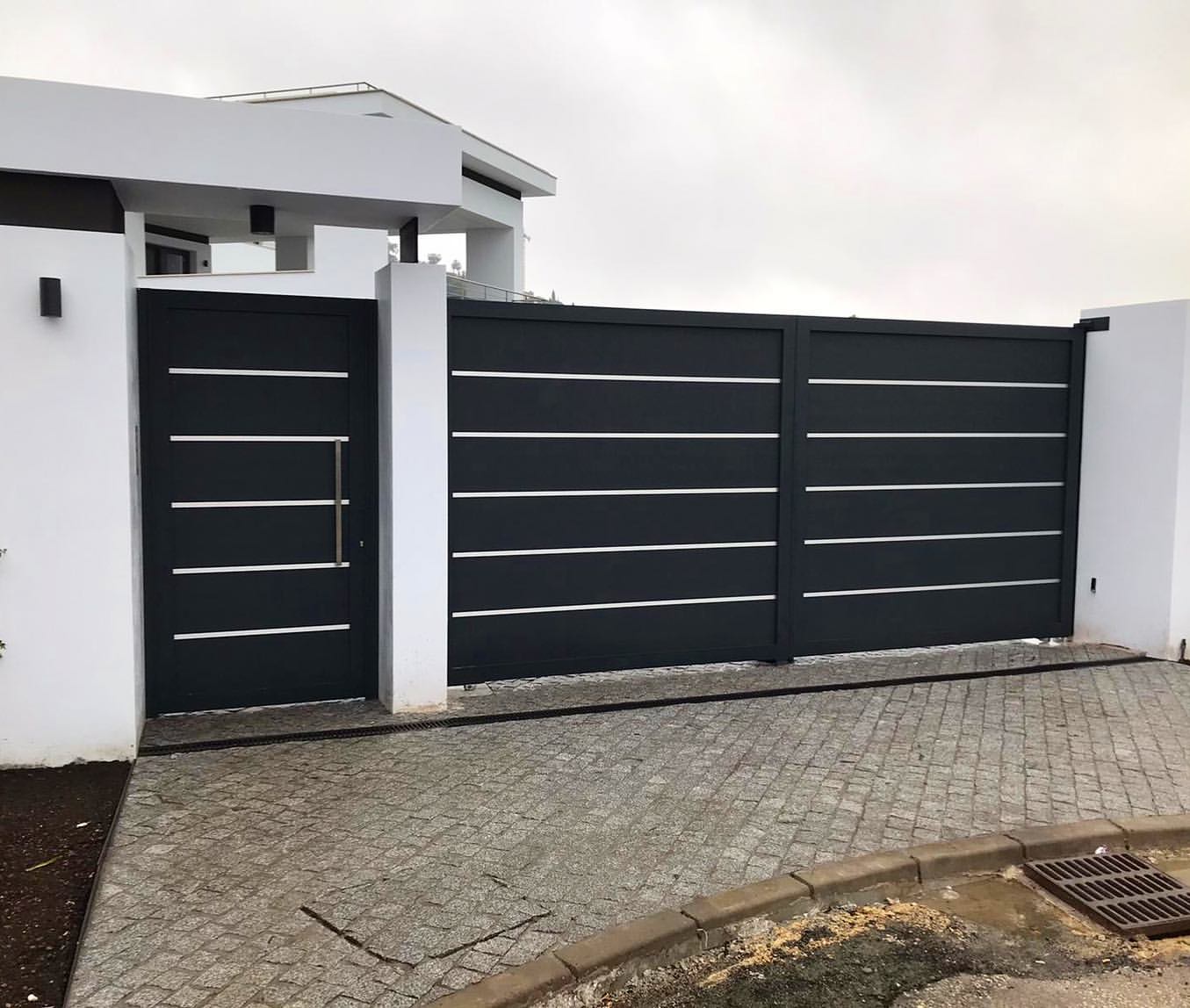
A made-to-measure aluminium gate offers a strong balance of security, low maintenance and long-term reliability. The benefit is not simply the material. It is how that material is fabricated. A fully welded construction creates far more rigidity than gates assembled from multiple bolted sections, and that matters when the gate is taking repeated use, wind loading and the pressure that comes with attempted forced entry.
Design also affects security more than many buyers expect. A gate with generous gaps may suit an open frontage, but it reduces privacy and visibility control. If your priority is a more secure perimeter, a design with reduced spacing or solid infill panels gives fewer sightlines into the property and makes it harder to assess what is behind the entrance. That can be particularly valuable on detached homes, side entrances and commercial sites where equipment or vehicles are kept within the boundary.
Height matters too, but only up to a point. A taller gate can improve deterrence, yet height alone does not make an entrance secure if the frame, posts and locking setup are under-specified. Security should feel integrated, not added on afterwards.
The frame, posts and hinges matter as much as the gate leaf
It is easy to focus on the gate leaf because that is the visible element, but the supporting structure does much of the real work. If the posts are not appropriate for the gate size and weight, or if the hinges and anchor points are poor, the entrance becomes vulnerable through movement, sagging or fixings working loose over time.
For residential driveways, this often shows up as gates that no longer close cleanly after a few seasons. For commercial use, the issue can become more serious because opening cycles are higher and wear appears faster. A secure entrance depends on precise fabrication and installation tolerances. The gate should close squarely, the hardware should operate consistently and the whole assembly should feel solid rather than flexible.
This is one of the clearest differences between a bespoke system and an off-the-shelf option. A gate built around the actual opening, gradient and access requirements will generally perform better than one adapted to fit later. When every element is specified together, you reduce weak points.
Access control is what turns a gate into a secure entrance
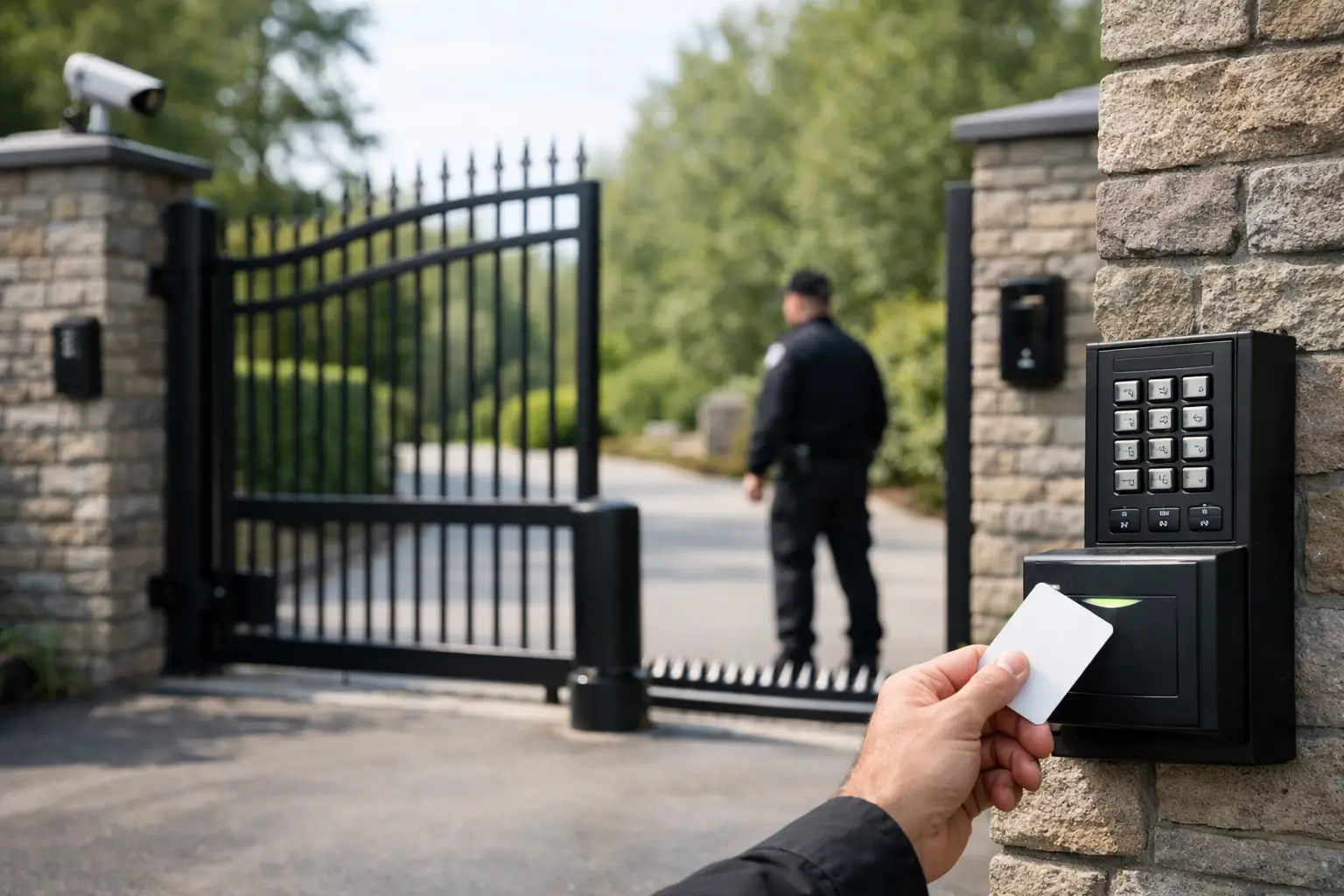
A locked gate is better than an unlocked one, but proper access control is what gives you control over who enters, when they enter and how the gate is operated. For many properties, this is the step that changes the entrance from basic boundary security into something much more effective.
Intercom systems are often the most practical starting point. They allow visitors to request access without compromising the security of the property, and they are particularly useful on longer driveways or sites where the front entrance is set back from the house or building. A quality intercom setup adds convenience, but more importantly, it reduces the habit of leaving gates open or relying on manual access arrangements that weaken security.
Keypads, fobs and app-based entry can also work well, depending on the property type. A private home may prioritise convenience for family access and deliveries, while a commercial premises may need controlled entry for multiple users across the day. There is no universal answer here. The right setup depends on traffic levels, user numbers and whether the entrance needs to stay secure outside working hours or overnight.
Automation adds another layer. An automated gate can improve security by reducing the time the entrance is left open and by ensuring controlled opening and closing each time it is used. However, automation must be properly matched to the gate type, usage and site conditions. A high-quality sliding gate may be the right choice where space behind the entrance is tight or where wind exposure makes large swing gates less practical. On wider driveways with sufficient clearance, swing gates can deliver a strong visual statement and secure closure. The point is not that one format is always superior. It depends on how the site works in daily life.
Layout can strengthen or weaken the whole entrance
When people ask how to secure a gated entrance, they often focus on the gate and ignore the surrounding boundary. That creates avoidable weaknesses. A secure gate is only as effective as the perimeter around it.
If fencing, walls or side panels are low, damaged or easy to bypass, the gate becomes more symbolic than protective. The entrance should be considered as one continuous boundary line. Coordinated fencing and side infill panels can remove access gaps and create a cleaner, more complete frontage. This matters for both security and appearance. A disjointed entrance can look like it has been pieced together over time, while a well-integrated scheme feels intentional and harder to exploit.
The driveway layout also deserves attention. Long, open approaches can give vehicles room to accelerate towards a gate. Narrower entrance planning, well-positioned piers and sensible setbacks can help control movement and improve visibility for users entering and leaving the property. On commercial sites, traffic flow becomes even more important because poor layout can create pressure to prop gates open during busy periods, undermining the very security they are meant to provide.
Lighting should not be overlooked either. Good entrance lighting improves visibility for cameras, intercom use and vehicle access, while also increasing deterrence. It does not need to be overdone. Clean, well-placed lighting around the gate, posts and approach is usually more effective than harsh floodlighting that creates glare and shadow.
Choosing the right gate type for better security
Different gate formats solve different problems. Sliding gates are often chosen where security and space efficiency need to work together. Because they open laterally, they suit driveways with limited depth and can be a very strong option for high-use entrances. Telescopic and bi-folding gate systems can also help where opening speed or restricted space is a factor.
Swing gates remain a popular choice for premium residential properties because they offer a balanced, architectural look. When designed and installed correctly, they can be highly secure. Their suitability depends on available swing clearance, levels across the driveway and how the entrance is used day to day.
Pedestrian access should be thought through separately. If people regularly enter on foot, adding a dedicated pedestrian gate can reduce wear on the main entrance and improve control. It is a practical detail that often makes the whole setup safer and more convenient.
Security without constant maintenance
A secure entrance should stay secure without becoming a maintenance burden. That is one reason aluminium has become such a strong choice for quality gate systems. It offers excellent resistance to rust, does not require the regular treatment associated with timber and holds its finish well when manufactured to a high standard.
Low maintenance is not just about convenience. It protects performance. Gates that are easier to maintain are more likely to remain aligned, presentable and fully operational over the long term. For homeowners and commercial buyers alike, that supports better value over the life of the installation.
This is where premium fabrication matters. Precision welding, quality finishes and accurate specification reduce the chance of early deterioration or operational problems. A gate should not only look the part on installation day. It should continue to perform years later with minimal intervention. That long-term thinking sits behind the strongest entrance solutions, and it is why many buyers choose specialist manufacturers such as Alu-Gate when security, style and durability all matter.
The strongest gated entrances are never accidental. They are planned carefully, built properly and tailored to the property they protect. If you want an entrance that feels secure every day, start by asking not just how the gate looks, but how every part of the system works together.