A sliding gate can solve a problem that a swing gate simply cannot. If your driveway rises sharply, space is tight, or you want a cleaner, more architectural entrance, this aluminium sliding gate review will give you a clear view of where the format excels, where it needs careful planning, and whether it is the right long-term investment for your property.
For many UK buyers, the first attraction is obvious. Aluminium sliding gates look sharp, feel modern and avoid the clearance issues of gates that open inwards or outwards. Yet the better question is not whether they look good. It is whether they will perform well, hold their finish, support reliable automation and still feel like a smart purchase years down the line.
Aluminium sliding gate review: what stands out
The strongest argument for aluminium is that it delivers a premium appearance without the ownership demands that often come with timber or the weight penalty associated with steel. A well-made aluminium sliding gate offers a clean, precise look, strong corrosion resistance and lower routine maintenance, which is a significant advantage in the British climate.
That said, not all aluminium gates are equal. A proper review has to separate premium, made-to-measure systems from lightweight, generic products. The quality of the frame design, the welding, the track or cantilever specification, the finish and the installation details all affect how the gate will feel in daily use.
When aluminium sliding gates are done properly, they tend to score highly in five areas: appearance, durability, low maintenance, automation compatibility and design flexibility. For homeowners investing in kerb appeal and security at the same time, that combination is difficult to ignore.
Design and kerb appeal
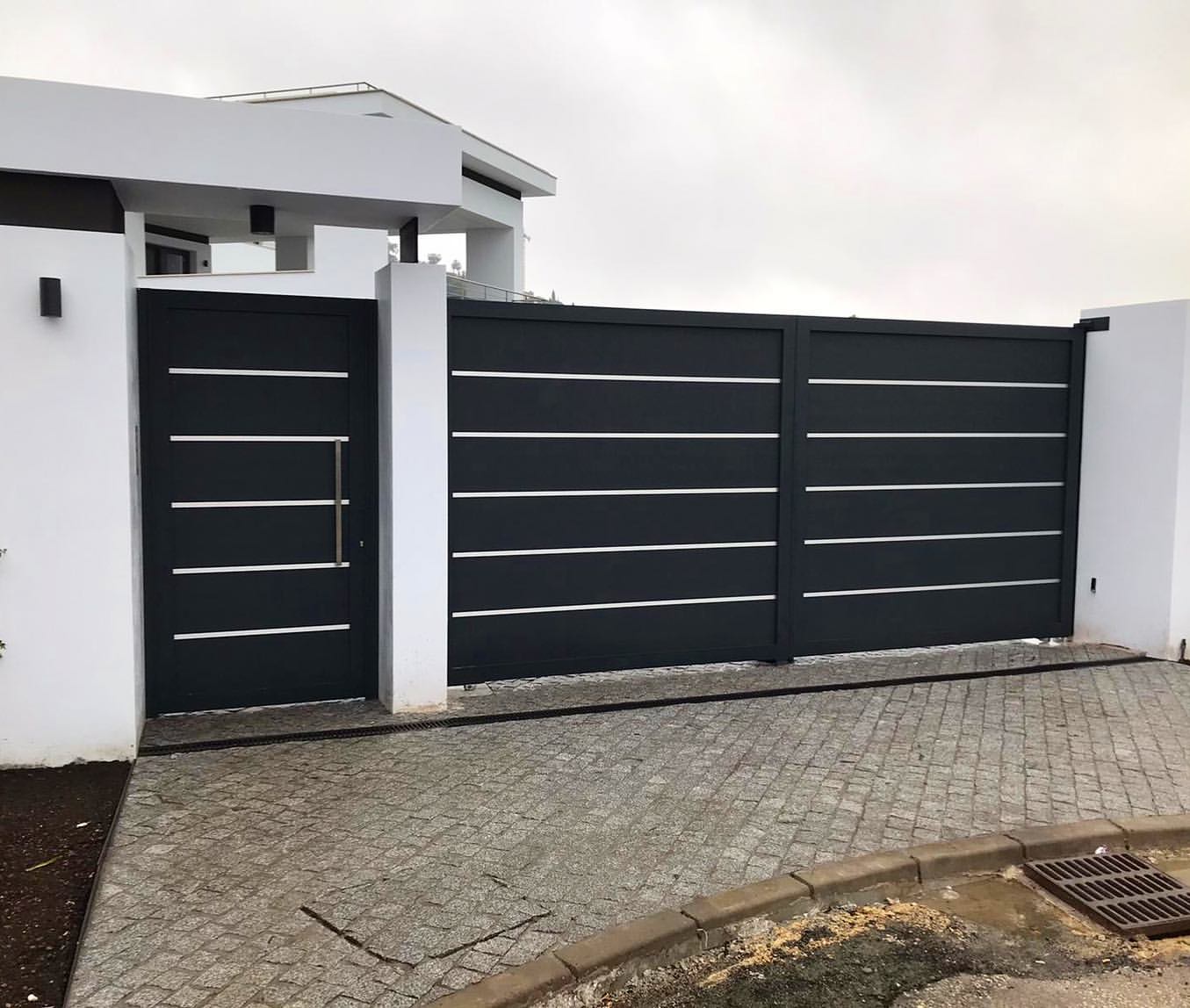
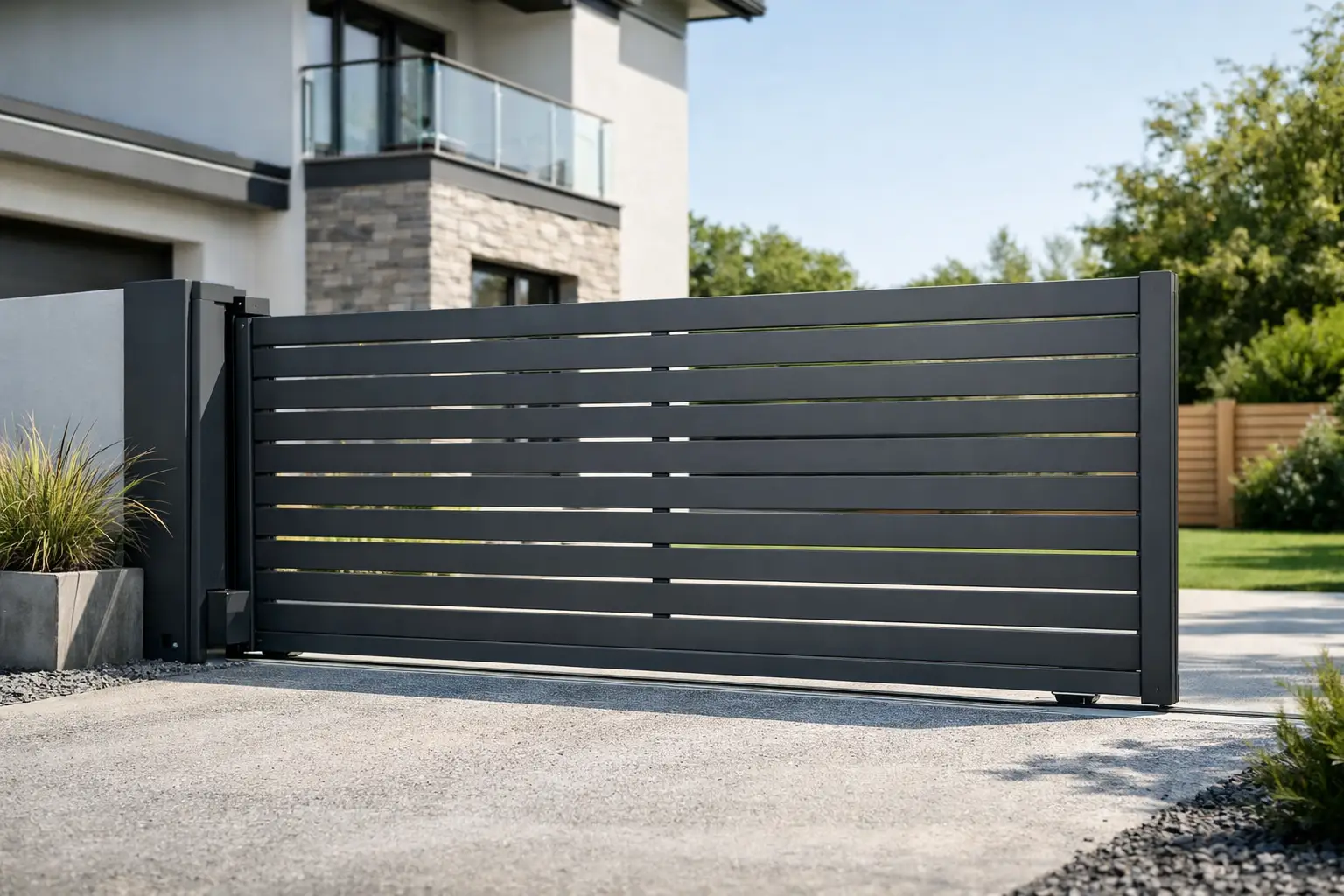
This is where aluminium often outperforms expectations. Sliding gates naturally create a more contemporary frontage because the movement is controlled and discreet, and the gate itself can be designed with strong horizontal lines, privacy infills or more open styles depending on the property.
For modern homes, aluminium complements glazing, rendered walls, brickwork and dark-framed windows especially well. On period or mixed-style properties, the result depends more on the design brief. A bespoke aluminium gate can still work beautifully, but the profile choice, spacing and finish need to be considered carefully so the entrance feels intentional rather than too stark.
Powder-coated finishes are another major strength. Buyers are no longer limited to a basic industrial look. Premium finishes offer a refined surface and a broad choice of colours, making it easier to match fencing, pedestrian gates and other exterior elements across the site.
The trade-off is simple. If you choose a standardised design to save money, aluminium can look flat or generic. If you choose a made-to-measure, fully welded system, it can look genuinely high-end.
Security and day-to-day performance
A gate is not just a design feature. It needs to control access, withstand regular use and feel dependable every time it opens. On that front, aluminium sliding gates perform well, especially when paired with quality automation and access control.
Sliding gates are inherently practical where security matters because they open in a fixed path. There is no broad swing arc to account for, and the closed position can feel solid and deliberate. For residential driveways, that can create a strong sense of privacy and control. For commercial settings, it supports more predictable entry management.
The key point is structural quality. Aluminium itself is strong, but the gate must be engineered correctly. A poorly fabricated gate may flex, rattle or lose alignment over time. A properly built gate with precision welding and the right section sizes feels stable, secure and premium.
Automation is often where buyers notice the difference between average and excellent specification. A gate can only be as reliable as the system around it. Motor choice, safety edges, photocells, intercom integration and control setup all matter. The best sliding gates are designed from the outset to work as a complete entrance solution rather than as a standalone leaf with automation added as an afterthought.
Durability in UK conditions
British weather is not kind to exterior joinery or metalwork. Rain, frost, road grime and coastal air can all shorten the life of the wrong material. This is one of the clearest areas where aluminium earns its reputation.
Unlike timber, aluminium will not rot, warp or require repeated painting to remain presentable. Unlike untreated or poorly finished steel, it is not prone to the same corrosion concerns. That does not mean it is indestructible, but it does mean ownership tends to be far simpler over the long term.
A good finish is essential. Marine-grade or high-spec powder coating is worth attention, particularly in exposed or coastal locations. Buyers should also ask how the gate is fabricated. Fully welded construction generally offers a more rigid, refined result than mechanically assembled alternatives, and it supports long-term durability in a way many cheaper systems do not.
In practical terms, aluminium suits buyers who want a premium entrance without signing up to constant upkeep. That low-maintenance advantage is not marketing fluff. It is one of the material’s most persuasive benefits.
Aluminium sliding gate review on maintenance and ownership
Most buyers are not looking for a hobby. They want a gate that works, looks right and does not start demanding time and money after the first few winters. Aluminium scores well here.
Routine care is typically limited to cleaning the surface, checking moving parts and servicing automation components at sensible intervals. There is no cycle of sanding, staining or repainting that often comes with timber gates. For larger entrances or commercial sites, that reduction in maintenance can make a real difference to lifetime cost.
Still, low maintenance does not mean no maintenance. Tracks need to stay clear. Automation needs proper servicing. Safety systems should be checked. A sliding gate is a mechanical entrance system, not a decorative panel. Buyers who understand that from the start tend to be happier with the result.
Where sliding gates are not the perfect answer
A balanced review should be clear about this: sliding gates are not right for every site.
They need lateral run-back space, so the gate has somewhere to travel when open. If your boundary layout does not allow that, a swing or bi-folding option may be more practical. Ground conditions also matter. Traditional tracked systems need accurate groundwork and drainage planning. Cantilever systems avoid a ground track across the opening, which is useful in some settings, but they require their own structural allowances.
Cost can also be higher than buyers first expect. A quality aluminium sliding gate is not simply a panel on wheels. It is part of a wider engineered system that may include fabrication, posts, supports, automation, controls and safety measures. If you compare it with a basic manual swing gate, the price gap can look significant.
But that comparison is not always fair. Buyers are usually comparing different levels of convenience, security, finish and lifespan. In many premium residential and commercial projects, the better comparison is not cheapest gate versus most expensive gate. It is short-term saving versus long-term value.
What to look for before you buy
The difference between a gate that impresses for years and one that disappoints often comes down to specification. Ask how the gate is made, not just what it looks like. Material grade, frame depth, welding quality, finish standard and automation integration all deserve attention.
It is also worth asking whether the system is genuinely bespoke. Made-to-measure gates usually sit better within the opening, look more considered and perform more consistently because the design responds to the exact site conditions. That is especially important on sloping driveways, wide openings or properties where the entrance needs to coordinate with fencing and pedestrian access.
Guarantees matter too, but only if they are backed by real manufacturing standards. A long guarantee is a strong signal when it is supported by quality materials, fabrication and finish. Specialist suppliers tend to offer more confidence here than general resellers.
For buyers who want a premium result, this is where consultation-led design becomes valuable. A good supplier should challenge assumptions, explain the trade-offs and recommend the gate format that actually suits the property.
Final verdict
So, how does an aluminium sliding gate score overall? Very well, provided the product is specified properly and matched to the site. It is an excellent choice for buyers who want modern styling, strong security, low maintenance and a tailored entrance that feels every bit as good as it looks.
It is less suitable where budget is the only driver or where the site cannot accommodate the gate’s travel requirements. But for design-conscious homeowners and commercial buyers who value durability, precision and long-term ownership, aluminium sliding gates are one of the strongest options on the market.
If your entrance needs to work hard and look exceptional while doing it, it is worth taking the time to get the specification right. The right gate does more than close an opening. It changes how the whole property is seen.