
A side passage is often the least visible route onto a property – and, for that reason, one of the first places an intruder may test. Secure gates for side access close this overlooked gap while giving the boundary a considered, high-quality finish. The right gate should feel like a natural extension of the property, not an afterthought fitted only because there was an opening to fill.
For many UK homes, the side access is used every day for bins, bicycles, garden equipment and access to the rear garden. It needs to be convenient for the people who live there, difficult for anyone who should not be there, and capable of standing up to years of British weather. That calls for more than a standard timber panel and a lightweight latch.
Why side access deserves proper security
A side gate can protect far more than a narrow passage. It can reduce access to rear doors and windows, screen valuable items from view, define the boundary clearly and help keep children and pets within the property. On commercial premises, it may also control access to service yards, storage areas and staff-only spaces.
The challenge is that side access usually comes with constraints. The passage may be narrow, uneven or overlooked. There may be a wall on one side and a fence on the other, limited room for a gate to swing, or a need to retain easy access for refuse collections and garden maintenance. A secure solution starts with understanding these practical details rather than choosing a gate from a standard size chart.
Aluminium is particularly well suited to this role. It does not rot, warp or require the routine sanding and repainting associated with timber. When fabricated to measure with a fully welded frame, it provides a strong, stable structure with crisp lines and a premium powder-coated finish. The result is security that continues to look the part long after installation.
What makes a side access gate genuinely secure?
Security is created by the whole assembly, not by the gate leaf alone. A thick-looking gate with weak posts, exposed hinges or a poor lock can still be a vulnerable point. Every component needs to work together.
A made-to-measure fit
Gaps around a gate are more than an aesthetic issue. Excessive clearance can make a gate easier to force, reach through or climb around. A bespoke gate is designed around the actual opening, accounting for walls, posts, ground levels and any changes in level across the passage.
This matters particularly in older properties, where walls are rarely perfectly square. A measured solution allows the gate to close cleanly, operate reliably and maintain a neat, secure perimeter line.
Fully welded aluminium construction
The frame is the foundation of a high-quality side gate. Fully welded aluminium construction creates a rigid, durable structure that is far less susceptible to movement than loosely assembled systems. It supports the infill panels, hinges and locking hardware properly, helping the gate remain aligned through repeated daily use.
For a gate exposed to wind or fitted at the end of a long side passage, this strength is especially valuable. A gate should not rattle, sag or begin catching on the ground after a season of use. Precision fabrication pays for itself in dependable operation and a more refined appearance.
Locking that suits how you use the gate
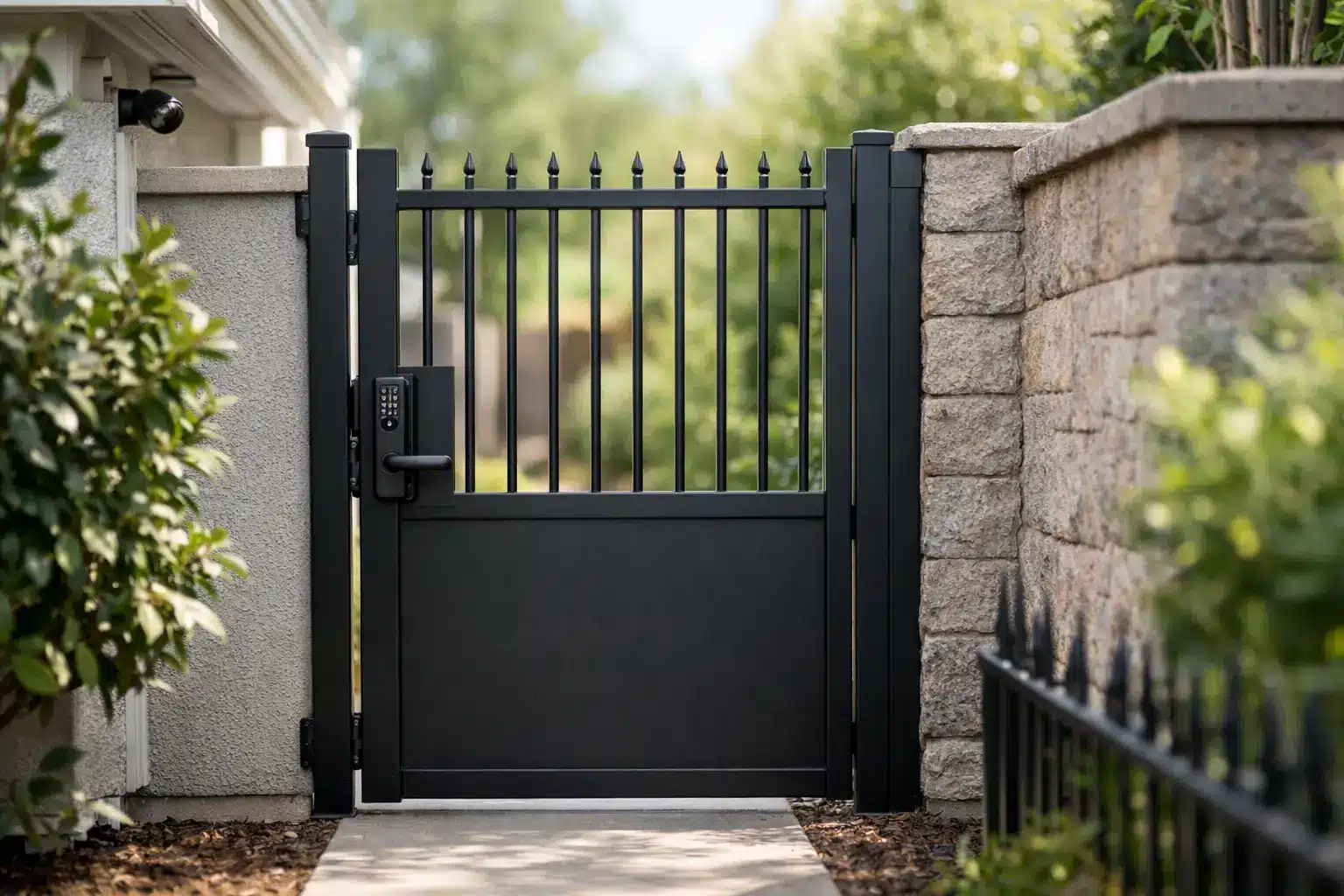
A lock must be secure, but it must also be practical. A pedestrian side gate often benefits from key-operated access from the outside and convenient release from inside the property. Where the gate forms part of a more controlled entrance, keypad, intercom or electronic access options can be specified.
The best choice depends on who needs regular access. A family home may prioritise a simple, reliable key lock, while a shared development, office or commercial yard may need controlled entry for staff, visitors or contractors. Akuvox intercom systems can add visual verification and remote access where the layout and security requirements justify it.
Avoid treating a lock as a last-minute add-on. Its placement, handle style, strike arrangement and compatibility with the gate frame should be considered during design. This produces a cleaner finish and a more reliable system.
Secure posts, hinges and fixings
A gate is only as strong as the structure holding it. Posts must be correctly specified for the gate’s size, weight and location, then fixed securely to the ground or existing masonry. Hinges should be substantial, correctly aligned and positioned to discourage tampering from the public side.
This is where a consultation-led approach matters. A gate fitted between solid brick piers has different requirements from one mounted to a timber fence line or purpose-made aluminium posts. An experienced supplier will assess the mounting points before confirming the final design.
Choosing the right design for secure side access
A secure gate does not need to make a property feel closed off. The most successful designs balance privacy, light, airflow and architectural character.
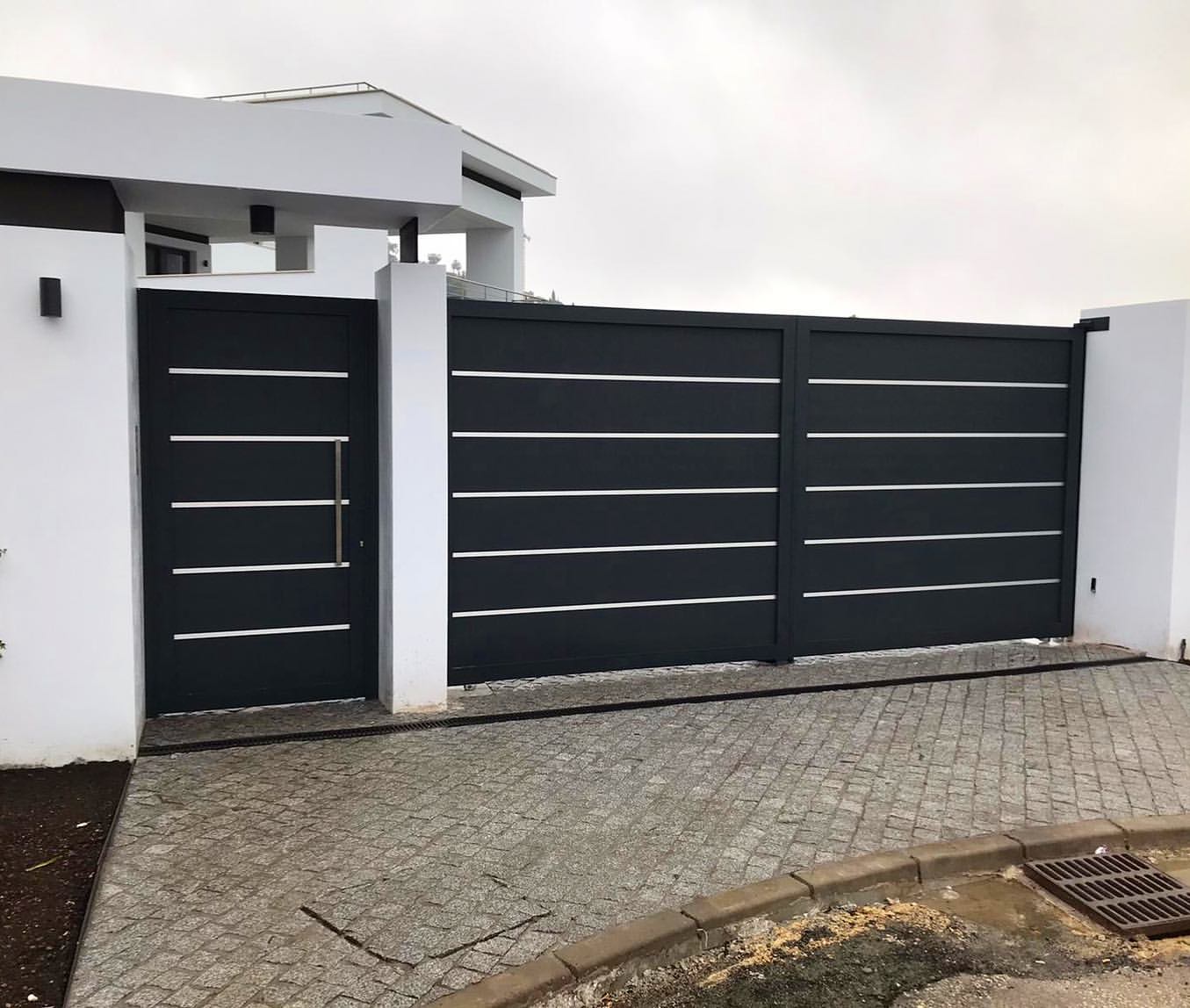
For maximum screening, a solid or closely spaced horizontal aluminium infill prevents direct views into the side passage and rear garden. This is a strong choice where bins, bicycles or outdoor equipment are stored behind the gate. Slatted designs offer a more contemporary appearance and can be configured with narrow gaps where some light and ventilation are useful without sacrificing meaningful privacy.
If the side boundary is visible from the front of the house, coordinate the gate with driveway gates, fencing and exterior details. Matching colours, panel styles and lines create a coherent entrance rather than a collection of unrelated products. Popular darker finishes can give a crisp modern contrast, while lighter and textured tones may sit more naturally alongside brick, stone or rendered elevations.
Height needs careful thought. A taller gate can improve privacy and discourage opportunistic access, but planning considerations, neighbouring sightlines and local requirements may apply. In some locations, particularly beside a highway, height limits can be relevant. Checking the position and intended height before manufacture avoids costly changes later.
Swing gates, sliding options and restricted spaces
Most side passages use a single-leaf swing gate because it is simple, effective and economical with space. The important question is which way it should open. Opening inward normally keeps the gate from obstructing a pavement or shared route, but the passage must have enough clear room for the leaf to move freely.
Where an inward-opening gate would conflict with steps, bins, planting or a parked vehicle, an alternative configuration may be possible. A bi-folding or sliding arrangement can help in specific layouts, although these systems require more hardware and detailed planning. They are not automatically the best option for a narrow domestic side passage, but they can be highly effective where conventional swing clearance is limited.
Ground conditions also affect the decision. A swinging gate needs appropriate clearance above the finished surface, especially where gravel, sloping paving or drainage channels are present. The aim is a gate that remains easy to operate year-round, not one that catches after heavy rain or as the surface settles.
Security without sacrificing everyday convenience
The strongest gate is of limited value if it is left open because it is awkward to use. Think through daily routines before finalising the specification. Will you need to wheel a bicycle through? Does a gardener require access? Is the passage used to move bins? Will children need to operate the gate safely?
Clear opening width is often more valuable than homeowners first expect. A gate can be designed to fit a restricted opening, but narrowing it unnecessarily may turn a useful route into an inconvenience. Likewise, a self-closing mechanism can be worthwhile where the gate must not be accidentally left open, though it should be selected carefully so that it does not make access frustrating for regular users.
Security should work alongside broader property protection. Good lighting, sensible storage and secure rear doors and windows all have a role. A side gate creates an effective first line of defence and reduces easy access, but it performs best as part of a well-considered boundary and home security plan.
A long-term investment in the property boundary
A premium aluminium side gate offers a different proposition from a temporary fence-panel replacement. It is fabricated for the opening, finished to complement the property and built for years of low-maintenance ownership. With no need for regular staining or painting, more time can be spent enjoying the garden rather than maintaining the boundary.
At Alu-Gate, every made-to-measure aluminium gate is designed around the property, the access route and the level of security required. Fully welded construction, premium finishes and a 20-year guarantee provide confidence that the result is designed to impress and built to last.
The best side gate is one you scarcely need to think about after it is installed: it closes with confidence, looks right from every angle and protects the route to the part of your property that should remain private.