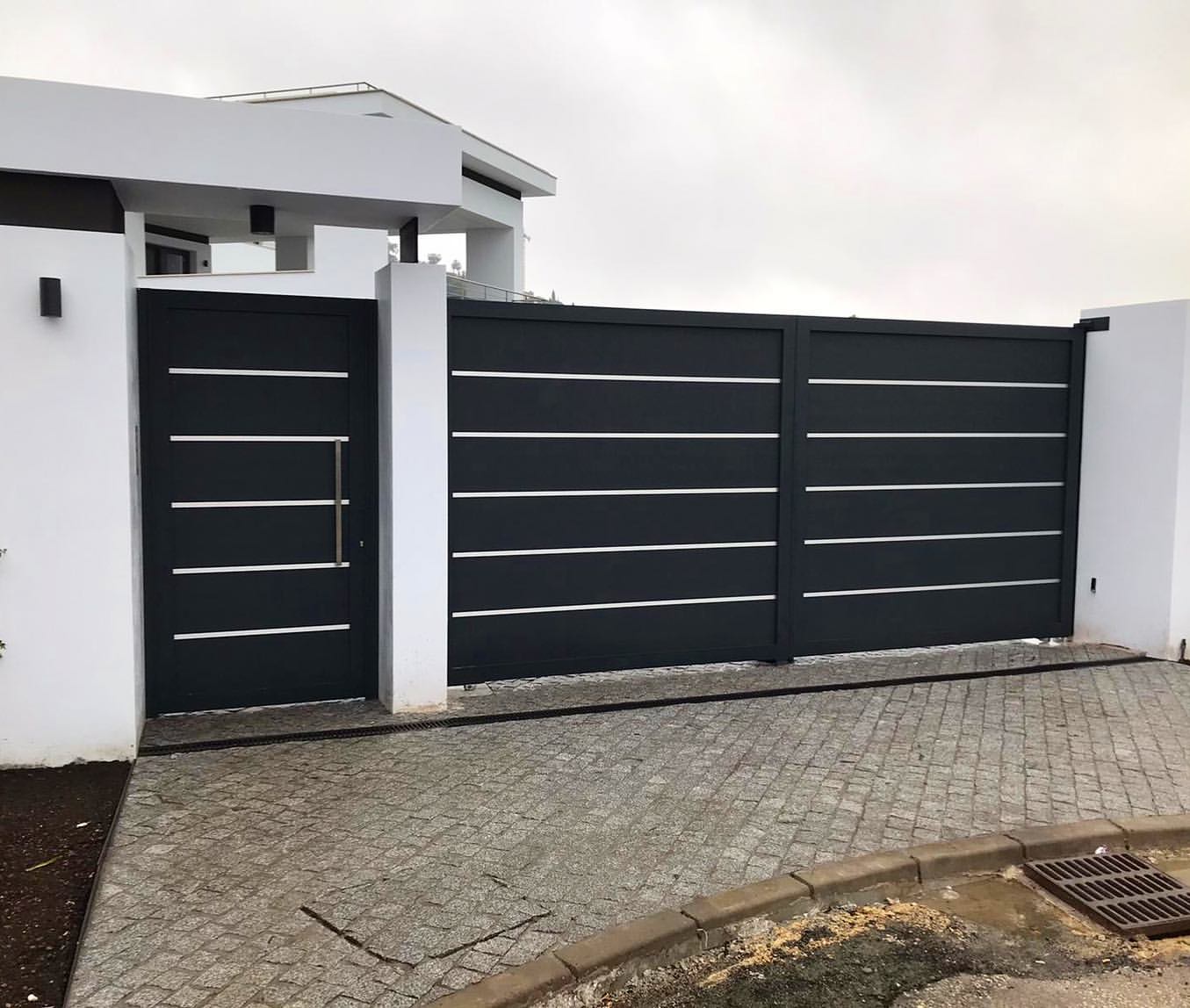

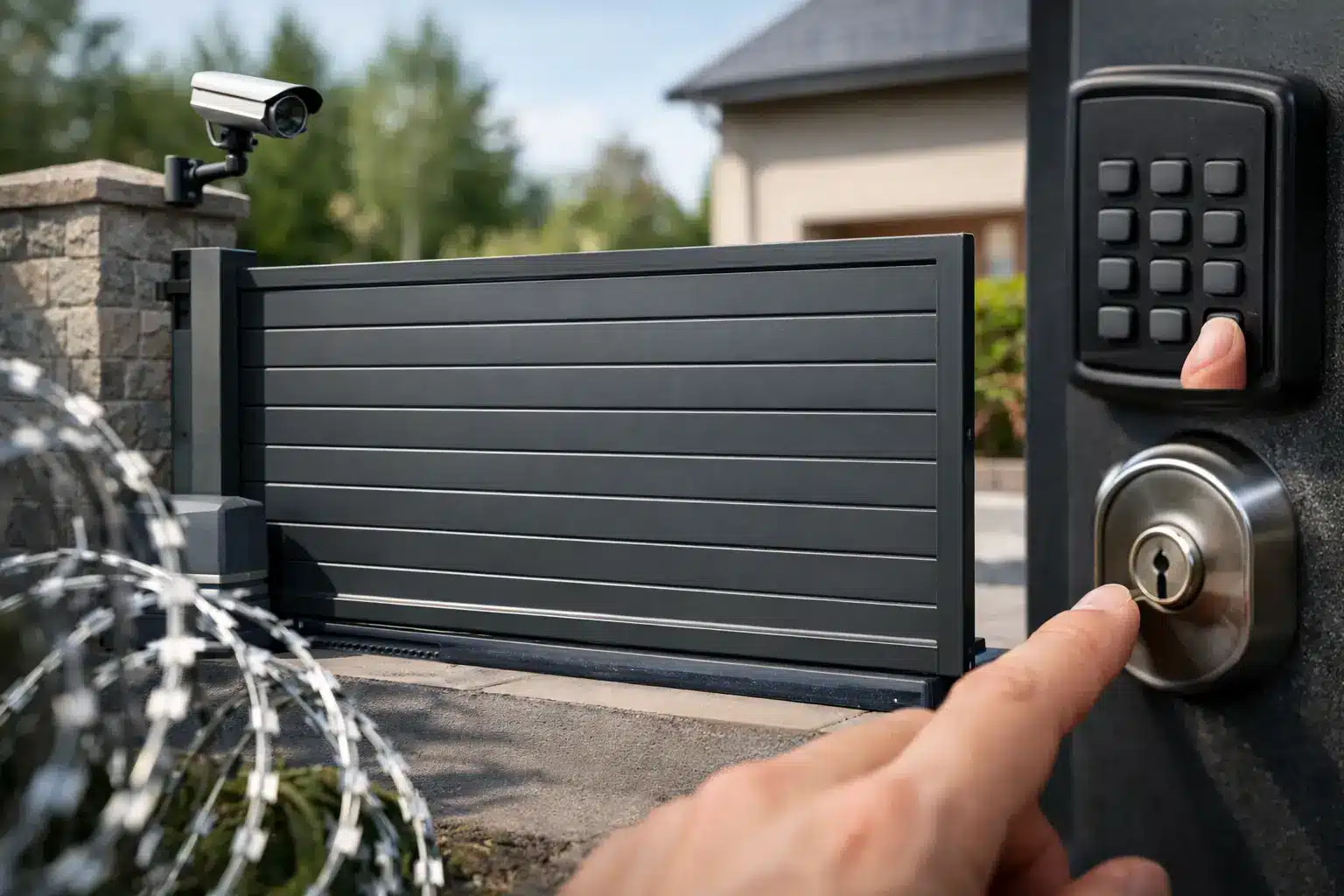
A driveway entrance is only as secure as the point where someone can get through it. That is why homeowners and commercial buyers often ask, are sliding gates secure? The answer is yes, when the system is properly designed, professionally specified and matched to the way the property is used. A sliding gate can create a highly effective physical and visual boundary, but its security does not come from its movement alone.
For a premium property, the goal is not simply to install a gate that closes. It is to create a controlled entrance that looks considered from the street, stands up to daily use and gives unauthorised visitors as few opportunities as possible.
Are sliding gates secure for driveways?
A well-built sliding gate is one of the more secure driveway gate formats available. Unlike a swing gate, which opens into or across a driveway, a sliding gate moves laterally behind the boundary line. This makes it particularly suitable where space is limited, the entrance is on a slope, or there is a need to secure a wider opening without taking up room inside the drive.
Security depends on several connected decisions: the strength of the gate leaf and supporting structure, the quality of the track or cantilever system, the locking arrangement, access control, automation and the surrounding fencing. A weak fence line or an easy route around the side of the gate can undermine an otherwise excellent entrance system.
The right specification creates a meaningful barrier. It also signals that the property is cared for and access is managed, which can discourage opportunistic intrusion before a person ever reaches the gate.
The gate construction matters first
A sliding gate should feel substantial because it is substantial. Lightweight, loosely assembled gates can flex, rattle and become vulnerable around fixings over time. By contrast, fully welded aluminium construction provides a rigid, clean-lined gate leaf that is designed to retain its form through regular operation and changing weather.
Aluminium is especially well suited to modern driveway gates. It does not rust in the way steel can, and it avoids the swelling, splitting and recurring treatment associated with timber. That low-maintenance advantage is also a security advantage: a gate that continues to close, align and latch correctly is far more dependable than one left to deteriorate.
The frame, infill design and posts must be specified as a complete system. Wider entrances, exposed locations and solid privacy panels can all increase wind loading. A secure gate needs adequate structural support to resist that force without movement or distortion. Precision fabrication and correct installation are not cosmetic details here. They determine whether the gate remains reliable years after it is fitted.
Privacy panels versus open designs
Solid or closely spaced aluminium infill can improve privacy by limiting views of vehicles, doors and activity within the property. For many homes, this is an attractive first layer of security. It can also give a driveway a more architectural, private appearance.
However, a completely solid design is not automatically right for every site. On an exposed driveway, it may catch more wind, calling for a stronger supporting arrangement. Open slatted designs can offer a balance between privacy, airflow and a lighter visual presence. The best choice depends on the property, frontage and level of privacy required, rather than a one-size-fits-all rule.
Locking and automation are where security becomes practical
An automated sliding gate should close positively and remain held in position when shut. Depending on the system, this may involve the inherent holding force of the operator, a mechanical lock, or a combination of both. The appropriate arrangement depends on gate size, usage levels, exposure and the level of security required.
A professional system should not rely on a basic domestic latch as its main line of defence. The gate, motor and locking components need to work together. This is particularly relevant for larger openings and commercial premises, where frequent use and greater gate weight place more demand on every moving part.
Automation also removes a common weakness in day-to-day behaviour: leaving the gate open. With timed closing, residents and staff are less likely to forget to secure the entrance after driving through. That said, the close timer should be configured thoughtfully. Too short can inconvenience users and create safety issues; too long leaves the opening exposed for longer than necessary.
A manual release is essential for safe operation during a power cut or fault. It should be secure, protected from casual access and understood by authorised users. This is one of the details worth discussing at the design stage, rather than discovering when access is needed urgently.
Access control should suit the people using the entrance
The strongest gate can be compromised by an overly simple method of entry. A keyed control may suit a small, low-traffic driveway, but keys can be copied, lost or passed on. For a home with regular visitors, deliveries or tradespeople, an intercom system gives the owner the ability to identify a caller before granting access.
Video intercoms, such as Akuvox systems, add another useful layer. They allow residents to see and speak with a visitor at the gate, rather than opening it on assumption. This is valuable for busy family homes and properties where the main entrance is set back from the road.
Commercial sites often need more structured control. Keypads, fobs, remote controls and managed user permissions can be selected according to staff numbers and operational needs. The principle is straightforward: only authorised people should be able to operate the gate, and access should be easy to remove when circumstances change.
Do not overlook pedestrian access. If people regularly climb, squeeze around or wait for the driveway gate to open, the entrance is being used against its design. A coordinated pedestrian gate with its own secure latch or access control can improve convenience and reduce unnecessary operation of the main sliding gate.
A sliding gate must not create a side route
Gate security is perimeter security. A sliding gate can be expertly made, but it cannot protect a boundary that is open at the sides, low enough to step over or interrupted by poorly secured panels.
The return fencing, walling and posts should meet the gate cleanly, without gaps that invite access. The gate should also be designed with sensible clearances around the opening and closing edge. Excessive gaps can weaken privacy and create a temptation to reach through to controls. Too little clearance, meanwhile, risks poor operation or damage. This is why made-to-measure design is preferable to adapting a standard-sized product to an awkward entrance.
Consider the full arrival route as well. Clear house numbering, suitable lighting and a well-positioned intercom help legitimate visitors use the entrance correctly. Lighting can make it easier for cameras to capture useful footage and makes a property feel less vulnerable after dark. Cameras and alarms can complement a sliding gate, but they do not replace a strong physical boundary.
Track-mounted and cantilever gates have different security considerations
Track-mounted sliding gates run on a ground track. They can provide a precise, stable solution, but the track needs to be kept clear of leaves, gravel, ice and debris. Poor maintenance may stop a gate closing fully, which is a security issue as much as an inconvenience.
Cantilever sliding gates travel above the driveway surface, supported by a counterbalanced structure. With no track across the entrance, they are often well suited to uneven surfaces, busy commercial access points or locations where debris is likely. They require additional run-back space and carefully engineered support, so they are not the answer for every driveway.
Neither option is automatically more secure in every situation. The best system is the one that can be installed correctly, operate consistently and close securely in the conditions it will actually face.
Safety and security must work together
A secure automated gate must also be safe. Safety devices, force settings, emergency release arrangements and professional commissioning are essential. A gate should respond appropriately to an obstruction and should never be specified in a way that creates avoidable risk to children, visitors, vehicles or pets.
This is also where quality pays back over time. A gate that is correctly aligned, sensibly automated and maintained will deliver a more dependable level of security than a cheaper system that repeatedly sticks, misaligns or requires improvised repairs. Regular checks of the gate’s travel, safety devices, fixings and access controls help identify small issues before they affect performance.
A secure sliding gate is not about making a property feel closed off. It is about creating an entrance that is controlled, composed and built around how you live or work. For a made-to-measure solution, Alu-Gate can help define the right gate format, finish, access control and perimeter detail before fabrication begins – so the finished entrance protects the property as confidently as it enhances it.