
A pedestrian gate is often the first detail people touch, not just the first thing they see. It needs to feel secure under the hand, suit the character of the property and cope with daily use without demanding constant upkeep. That is why aluminium pedestrian gate design deserves more attention than it usually gets. When it is specified properly, it brings together security, kerb appeal and long-term value in one made-to-measure solution.
For many property owners, the gate itself is replacing something that has become a problem. Timber may have warped, split or faded. Steel may look tired or need regular treatment to keep rust at bay. Off-the-shelf options can feel generic and rarely sit neatly within an opening or alongside existing fencing, walls or entrance features. A well-designed aluminium gate solves those issues more cleanly because it can be tailored to the exact opening, finish and style of the property.
What good aluminium pedestrian gate design gets right
The best designs are not just attractive. They are proportioned correctly, built for the way the entrance is used and finished to complement the wider exterior. A side access gate for a family home has different priorities from a secure gate serving a commercial boundary, even if both need strength and a premium appearance.
Design starts with scale. A gate that is too visually heavy can make a smart entrance feel cramped. One that is too open may reduce privacy or feel underwhelming against substantial brick piers, rendered walls or coordinated fencing. The right balance depends on sightlines, boundary height and how prominent the gate is from the street.
Construction matters just as much as appearance. Fully welded aluminium gates tend to offer a cleaner, more solid result than mechanically assembled alternatives. They feel more substantial, hold their alignment more reliably and suit premium installations where finish quality matters. For buyers investing in a long-term solution, that detail is not cosmetic. It affects durability, rigidity and how the gate performs over time.
Choosing a style that suits the property
There is no single best aluminium pedestrian gate design for every project. The right choice depends on architecture, privacy needs and how contemporary or traditional you want the entrance to feel.
Contemporary slatted designs
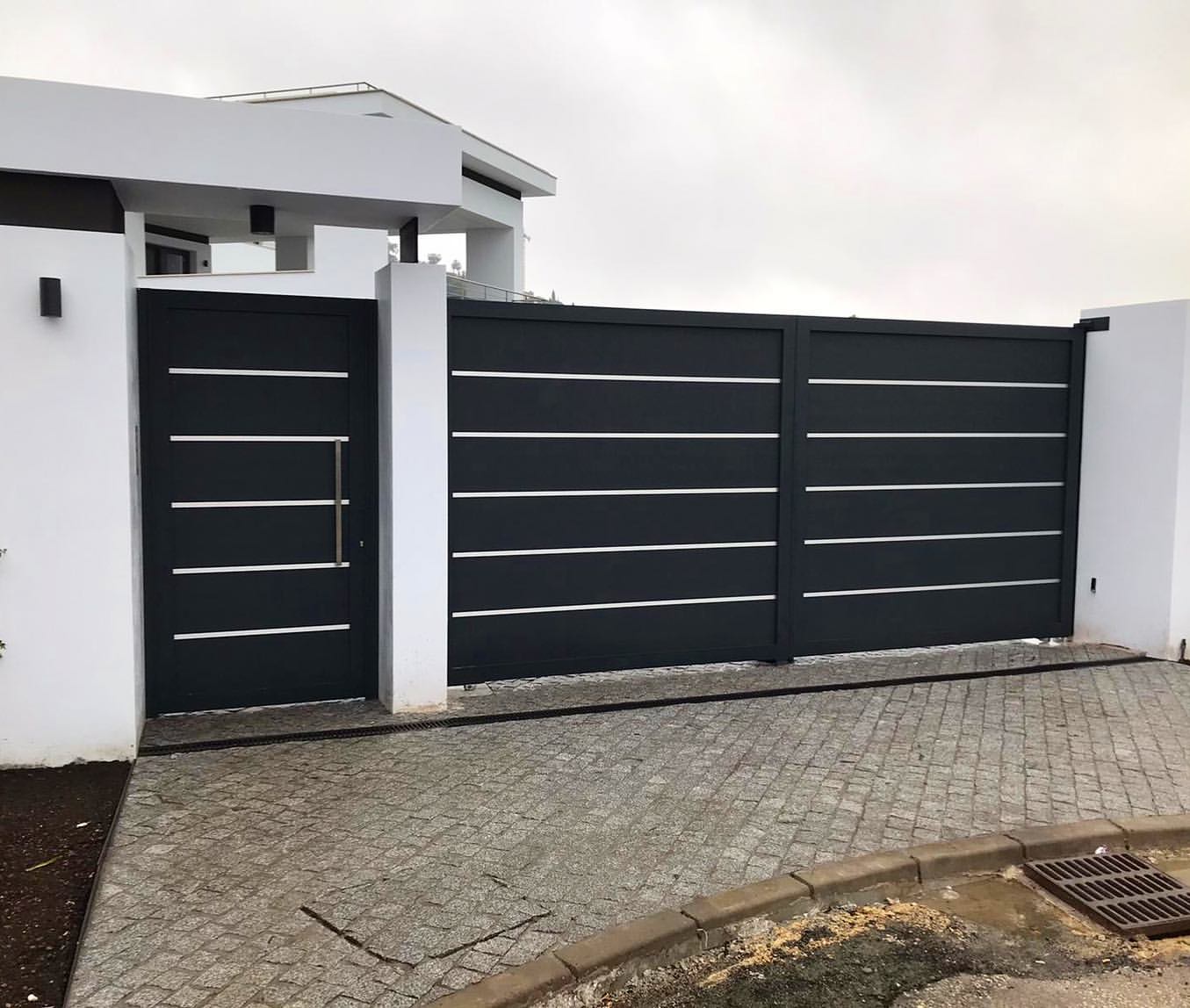
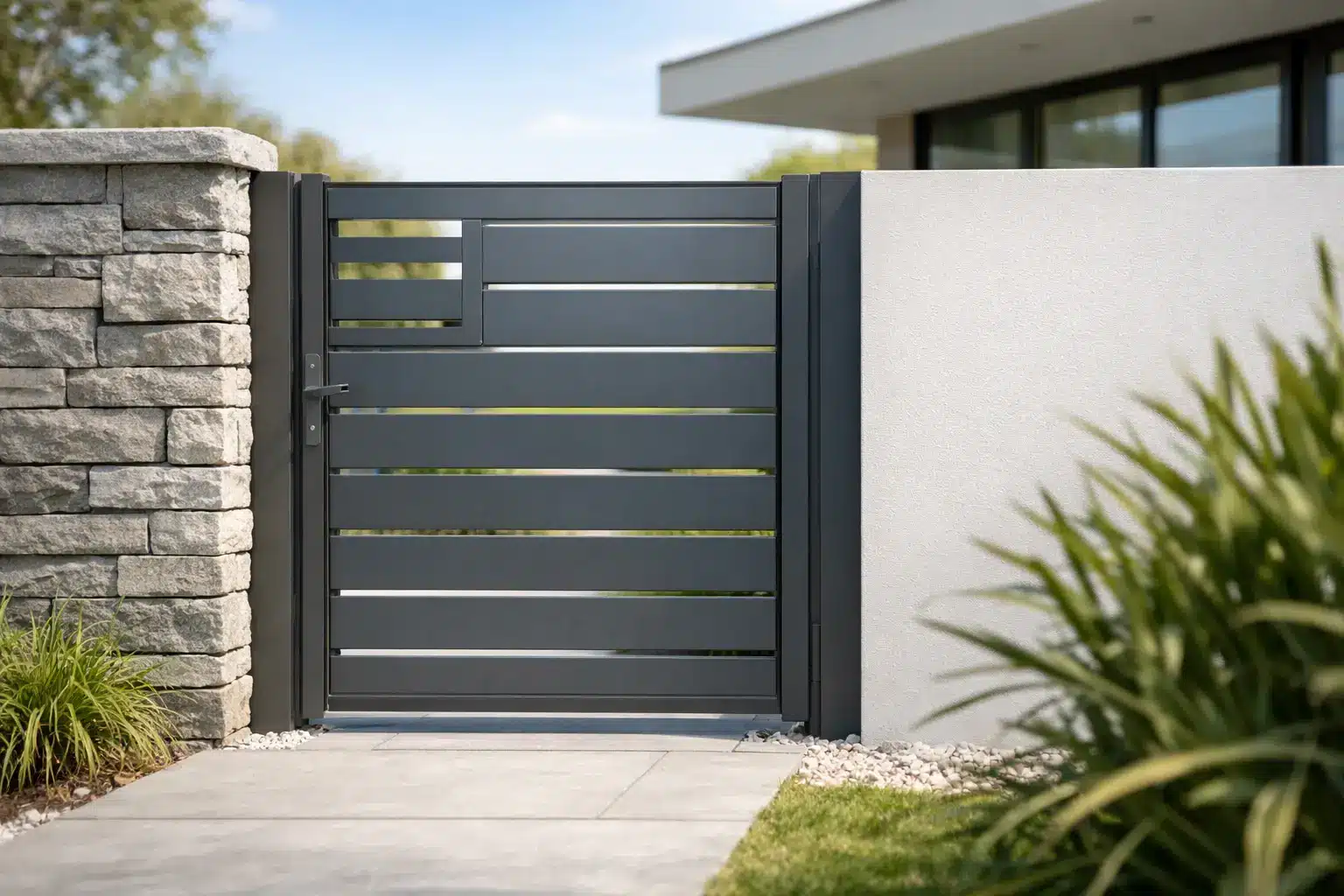
Horizontal slatted gates remain one of the most popular choices for modern homes. They create a crisp, architectural look and work particularly well with contemporary brick, render and minimalist landscaping. Slat spacing can be adjusted to change the feel of the gate. Tighter spacing increases privacy, while open spacing allows more light and visibility.
This style is especially effective when matched with aluminium fencing panels or driveway gates. The overall result looks considered rather than pieced together over time.
Vertical infill designs
Vertical lines can make a pedestrian gate feel taller and more formal. They are often a strong fit for period-inspired properties, smart side entrances and commercial settings where a more structured appearance is preferred. Depending on the section size and spacing, vertical infill can look either understated or more security-focused.
Where privacy matters, the design can be closed up. Where visibility is useful, such as at a front path or access point near a pavement, a more open arrangement may be the better choice.
Privacy-led solid panel gates
For side passages, garden access points and boundaries that back onto public routes, solid or near-solid aluminium designs are often the most practical option. They offer a clean, premium face while screening bins, storage areas or private gardens from view.
The trade-off is that a fully closed design can appear more imposing, especially on narrower frontages. That is why proportion and colour choice matter. Dark finishes can look striking and refined, but on smaller spaces a lighter or softer tone may feel less dominant.
Aluminium pedestrian gate design and security
Security should be designed in from the start, not added as an afterthought. A premium pedestrian gate should deter forced access, control entry clearly and feel dependable in everyday use.
That means looking beyond the panel design alone. The hinge system, lock preparation, frame strength and post specification all influence the final performance. A gate can look impressive in a brochure but underperform if the supporting elements are not specified to the same standard.
For residential properties, that may involve a secure manual latch and lockable system that works smoothly for family access. For commercial sites or higher-spec homes, the design may need to accommodate keypad access, intercom integration or coordinated entrance control. The visual style still matters, but it has to work with the access requirements rather than compete with them.
The role of colour and finish
Finish is one of the biggest factors in how bespoke a gate feels. The same frame and infill design can look sharply modern, quietly classic or distinctly bold depending on the colour chosen.
Anthracite grey remains a leading choice for good reason. It suits a wide range of UK property styles and pairs well with modern windows, doors and fencing. Black offers a stronger contrast and can give gates a more formal presence. Neutral tones and custom powder-coated finishes can soften the overall look or tie the gate into existing architectural details.
This is where low maintenance becomes a real advantage. Unlike timber, aluminium does not require regular staining or painting to keep the entrance looking smart. For busy homeowners and commercial buyers alike, that reduces both maintenance time and ongoing cost.
Made-to-measure design always looks better
A pedestrian gate is rarely judged in isolation. People see it against brickwork, paving, cladding, fencing and often a driveway gate nearby. If the proportions are wrong, the whole entrance can feel compromised.
Made-to-measure fabrication gives much more control over those visual details. Heights can align with walls and fences. Rail sizes can be adjusted to suit a larger opening. Infill choices can echo other boundary elements so the entrance feels cohesive. Even practical challenges such as sloping ground, awkward returns or tight clearances can be addressed more elegantly.
This is often the difference between a gate that simply fills a gap and one that improves the appearance of the property. Premium buyers notice that difference straight away.
Where homeowners and site managers often get it wrong
The most common mistake is choosing purely on appearance without thinking through daily use. A gate may look ideal online, but if it opens into a restricted path, lacks privacy where needed or does not match the scale of the property, the design quickly feels less convincing.
Another issue is underestimating build quality. Not all aluminium gates are made to the same standard. Section sizes, welding quality, finishing processes and hardware choices all affect longevity. A cheaper option may appear similar at first glance, but long-term performance is where the difference shows.
It is also worth thinking about future plans. If a customer expects to add matching fencing, driveway gates or access control later, the pedestrian gate should be designed as part of that wider scheme. That avoids a disjointed result and helps protect the investment.
A smarter approach to specifying your gate
The best projects begin with the opening, the property style and the practical brief. How much privacy is needed? Is the gate primarily front-facing or secondary access? Does it need to match existing aluminium features or form part of a full entrance upgrade? Those answers shape the right design much more effectively than browsing styles in isolation.
For some properties, simplicity wins. A clean vertical or slatted design in a premium finish can deliver exactly the right result. For others, a more architectural gate with integrated detailing, bespoke proportions and coordinated fencing will better suit the level of the project.
That consultative process is where a specialist manufacturer adds value. Alu-Gate, for example, focuses on bespoke aluminium entrance solutions built around made-to-measure fabrication, precision welding and long-term performance. For buyers who want the gate to feel properly resolved rather than standard, that level of specification matters.
Why aluminium continues to lead
When customers compare materials seriously, aluminium stands out because it answers several needs at once. It offers clean design freedom, strong long-term durability and very low maintenance. It also suits both contemporary and more traditional settings depending on how the gate is detailed.
That flexibility is a major strength. You are not choosing a material that forces a certain look. You are choosing one that can be shaped around the property, the security requirement and the level of finish you want to achieve.
If you are planning a new gate, start by thinking less about a product and more about the entrance you want to create. The right aluminium pedestrian gate design should look like it belongs there, work effortlessly every day and still feel like a quality decision years from now.