
A driveway gate is one of the first features visitors notice, often before they see the front door. The right driveway gate colour options can sharpen a contemporary façade, bring warmth to a period property or give a commercial entrance a more assured, professional presence. The wrong choice can make even a beautifully made gate feel disconnected from its setting.
For a made-to-measure aluminium gate, colour is not an afterthought. It is part of the design decision, alongside gate style, opening method, privacy level and access control. A considered finish helps your entrance look intentional for years to come – not just on installation day.
Why driveway gate colour options matter
Colour influences how substantial, private and welcoming your entrance feels. Dark shades tend to make gates appear more architectural and discreet, particularly when set against pale render or natural stone. Lighter finishes can soften a boundary and suit homes with cream brickwork, coastal settings or a more traditional character.
It also affects how well the gate integrates with the wider scheme. Window frames, garage doors, fencing, railings, exterior lighting and intercom posts all create visual reference points. A coordinated gate colour can bring these elements together without making the frontage feel overly matched.
For aluminium driveway gates, a premium powder-coated finish offers a crisp, consistent surface that is designed for everyday exposure to the British weather. Unlike timber, it does not need regular staining or painting to maintain its appearance. The best colour is therefore one you will be happy to live with over the long term, rather than a short-lived trend chosen in isolation.
Classic driveway gate colour options
Black: confident, timeless and versatile
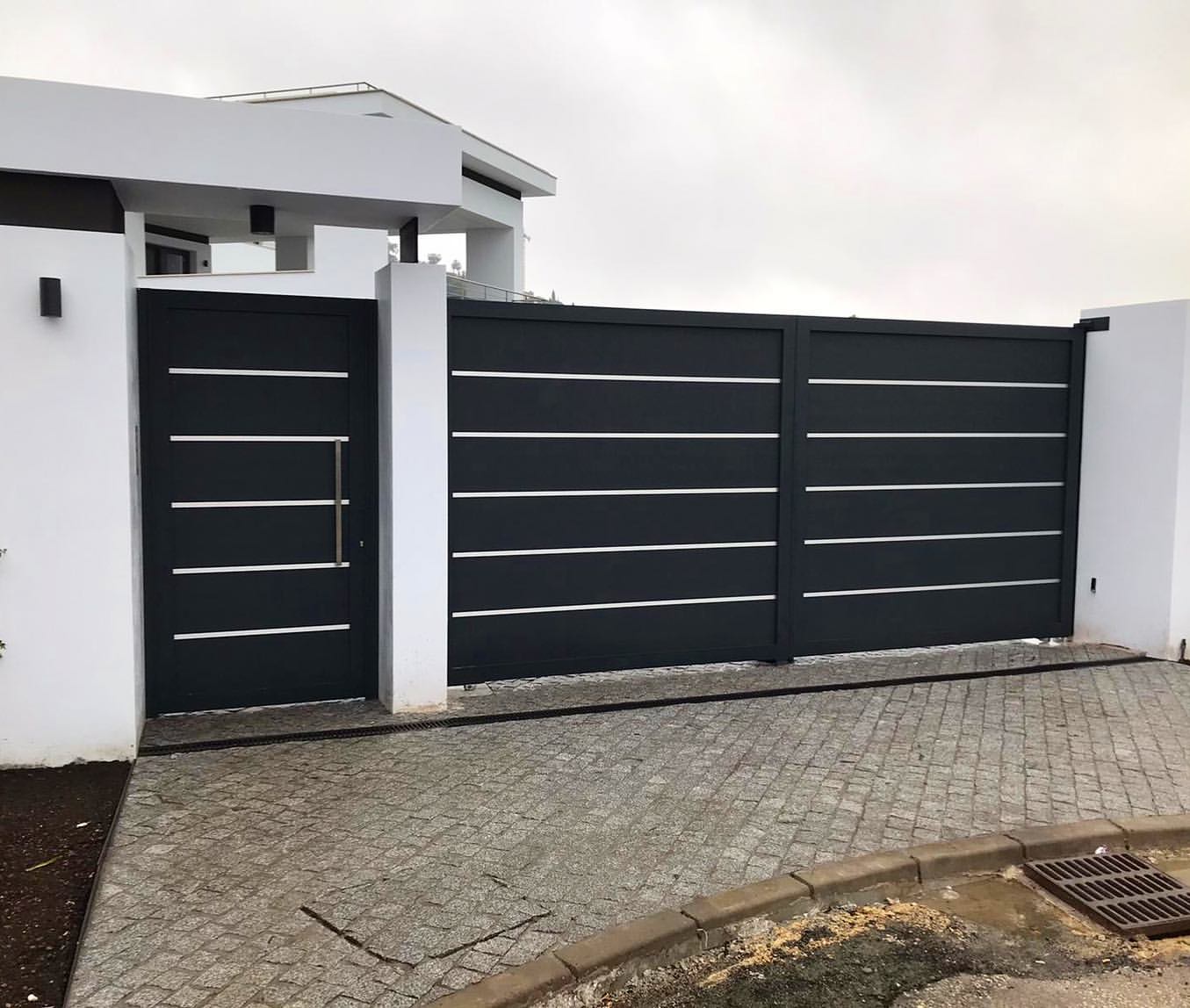
Black remains a leading choice for driveway gates because it works across so many property styles. A matt or fine-textured black gate creates a strong outline against brick, stone and planting, while also sitting naturally alongside black window frames, lanterns and contemporary hardware.
It is particularly effective for properties where you want the gate to provide security without becoming visually dominant. On a larger entrance, black can make a wide sliding or double swing gate feel elegant rather than imposing. Bear in mind that very dark colours can show dust, pollen and water marks more clearly in certain locations, although a quality powder-coated aluminium finish remains straightforward to clean.
Anthracite grey: the modern favourite
Anthracite grey has become a familiar choice for modern UK homes, largely because it pairs so well with grey window and door frames. It is softer than black yet still delivers a premium, architectural feel. It works especially well with white or light render, porcelain paving, zinc-effect details and clean-lined landscaping.
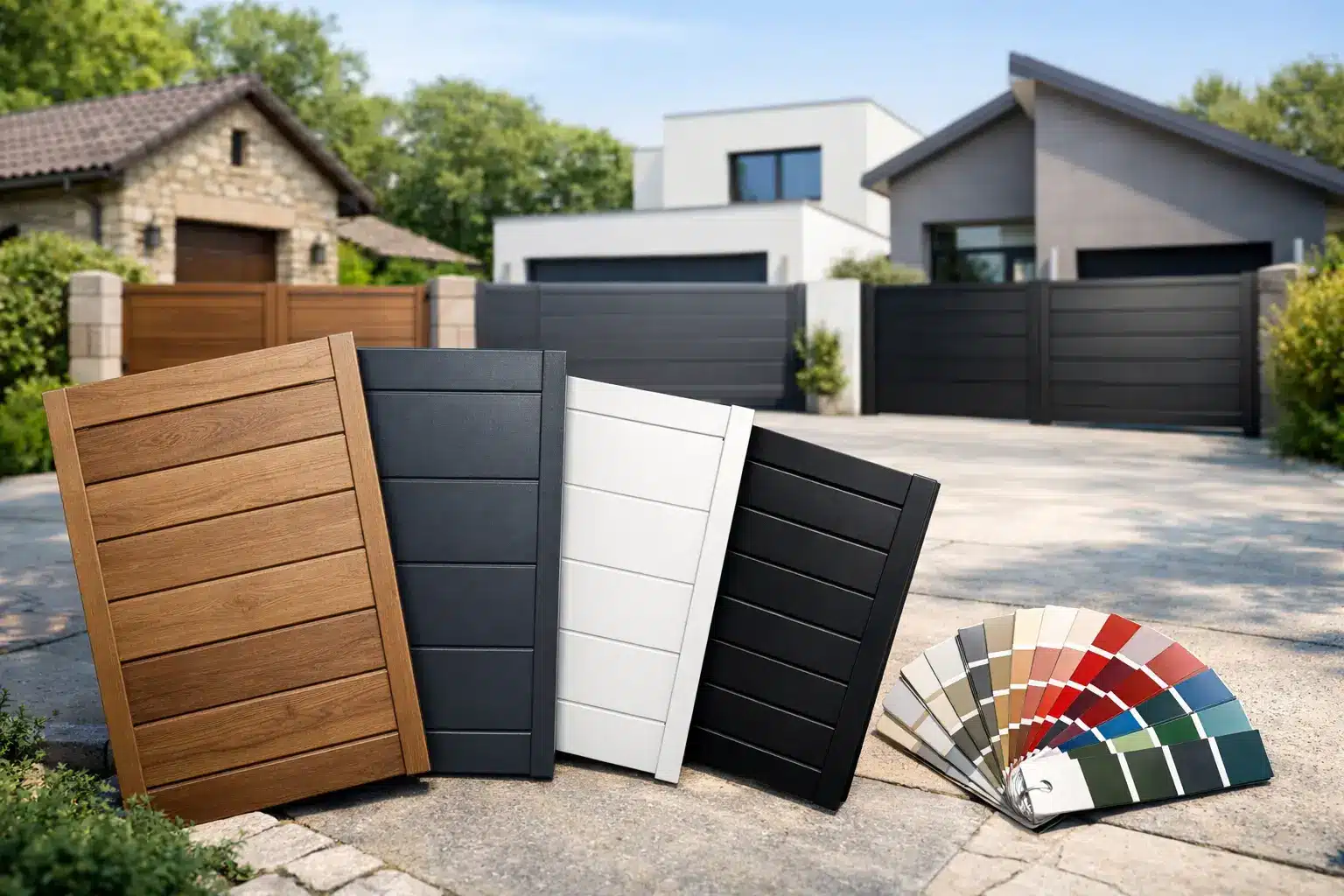
The key is checking the precise shade. “Anthracite” is often used broadly, but the tone can vary between products and surrounding features. Comparing a physical sample against your windows, garage door and masonry is far more reliable than choosing from a screen image.
Mid-grey and silver tones: refined without the contrast
Mid-grey, aluminium grey and selected silver tones offer a lighter alternative where black or anthracite would feel too severe. These colours can complement pale stone, soft grey render and contemporary cladding, while retaining the smart, precise appearance expected from an aluminium entrance system.
They are often a considered option for commercial premises too. A mid-grey gate can look professional and well specified without drawing unnecessary attention to a boundary or service entrance.
White and light neutral finishes: clean but considered
White, off-white and light neutral gates can look striking on the right property. They suit crisp, minimalist architecture and can echo white-framed windows or rendered walls. However, a bright gate will naturally show roadside grime, splashback and organic marks sooner than a darker finish.
This does not rule out light colours. It simply means they are best specified with a realistic view of the driveway’s surroundings and a willingness to give the surface an occasional wash. Warm whites and soft greys are often more forgiving than a brilliant white.
Add warmth with wood-effect aluminium gates
For homeowners who like the character of timber but not the recurring maintenance, wood-effect aluminium provides a compelling middle ground. A convincing wood-effect finish can introduce warmth to a modern frontage, soften stone or render, and connect the gate to timber cladding, garden structures or internal joinery visible from the entrance.
Oak-inspired tones tend to feel lighter and more contemporary, while richer walnut-style finishes bring depth and formality. The design of the gate matters here. Horizontal aluminium slats in a wood-effect finish can create a polished, modern look; a more traditional profile may be better suited to a period or rural setting.
There is a trade-off. Wood-effect gates make more of a visual statement than plain black or grey, so they benefit from restraint elsewhere. If the home already has varied brickwork, busy paving and prominent planting, a simple solid colour may create a calmer result.
Match the colour to your property, not just a trend
A useful starting point is to identify the element your gate should relate to most closely. At a contemporary home, that may be anthracite window frames. On a period property, it could be the dark tone of roof tiles, heritage-style railings or a painted front door. For a rural property, warm timber-effect tones or deep greens can sit comfortably within a softer landscape.
Brick colour also deserves close attention. Red brick generally works well with black, charcoal, deep green and darker wood effects. Buff and honey-coloured brick can suit bronze, brown, olive and warmer timber shades. Grey or white render provides a flexible backdrop, although it makes contrasting colours appear stronger.
Do not overlook the driveway surface. Block paving, resin-bound gravel, tarmac and porcelain all alter how a colour reads. A gate sample should be viewed outside, next to the actual materials where possible, in both direct daylight and shade.
Choose a finish that supports everyday use
The sheen and texture of the coating matter almost as much as the colour itself. A matt finish gives a contemporary, understated result and reduces reflections. Fine-textured coatings add subtle depth, can feel more tactile and are often forgiving of minor surface marks. Smoother finishes offer a clean, sleek appearance that can suit formal or highly modern designs.
For busy driveways, especially those close to a road, darker textured finishes are often practical choices. They can disguise the light dust and minor marks that accumulate between cleans. In sheltered, design-led settings, a smoother finish or lighter shade may be entirely appropriate.
A premium aluminium gate should be fabricated and welded for strength before it receives its protective finish. This is not simply about appearance. A properly specified coating helps preserve the gate’s finish through rain, frost and strong sunlight, supporting the low-maintenance ownership aluminium is valued for.
Coordinate gates, fencing and access control
A driveway entrance rarely stands alone. Matching pedestrian gates, side panels and aluminium fencing in the same colour creates a far more considered perimeter. It also prevents the piecemeal appearance that can arise when separate elements are selected at different times.
Access control should be included in the design conversation early. An intercom, keypad, letterbox or gate-mounted lighting can either blend in or provide deliberate contrast. Black and anthracite are particularly easy to coordinate with modern intercom systems, while a wood-effect gate may look best with discreet black or dark bronze accessories.
At Alu-Gate, colour selection is part of a wider made-to-measure consultation, ensuring the finish suits the gate format, property architecture and practical demands of the entrance. A fully welded aluminium system, finished to a high standard and backed by a 20-year guarantee, is designed to retain that first impression for the long term.
Ask for samples before you specify
Digital images are useful for inspiration, but they cannot show the true undertone, texture or sheen of a powder-coated finish. Request samples and place them against the house, driveway and existing external joinery. Look at them in morning light, on an overcast afternoon and under exterior lighting if your entrance is used frequently after dark.
It is also worth considering the view from inside the property. A gate may look excellent from the road but feel too dominant when seen through a front window or from a home office. The most successful choice balances kerb appeal with the everyday experience of arriving home.
Choose a colour with confidence, but allow the architecture and surroundings to lead. A gate built precisely for your entrance deserves a finish that feels equally considered – strong in character, easy to live with and right for the property from every angle.