A driveway gate is exposed to the conditions that test a property most: driving rain, frost, road grime, strong winds and daily use. Choosing between gate materials is therefore about far more than appearance. The right choice determines how your entrance performs, how much maintenance it needs and whether it continues to complement the property years from now.
For a premium residential or commercial entrance, the material should support the whole specification: the gate’s size, opening method, privacy level, automation, security requirements and finish. A handsome gate that warps, corrodes or demands constant repainting soon becomes a costly compromise.
Why gate materials deserve careful consideration
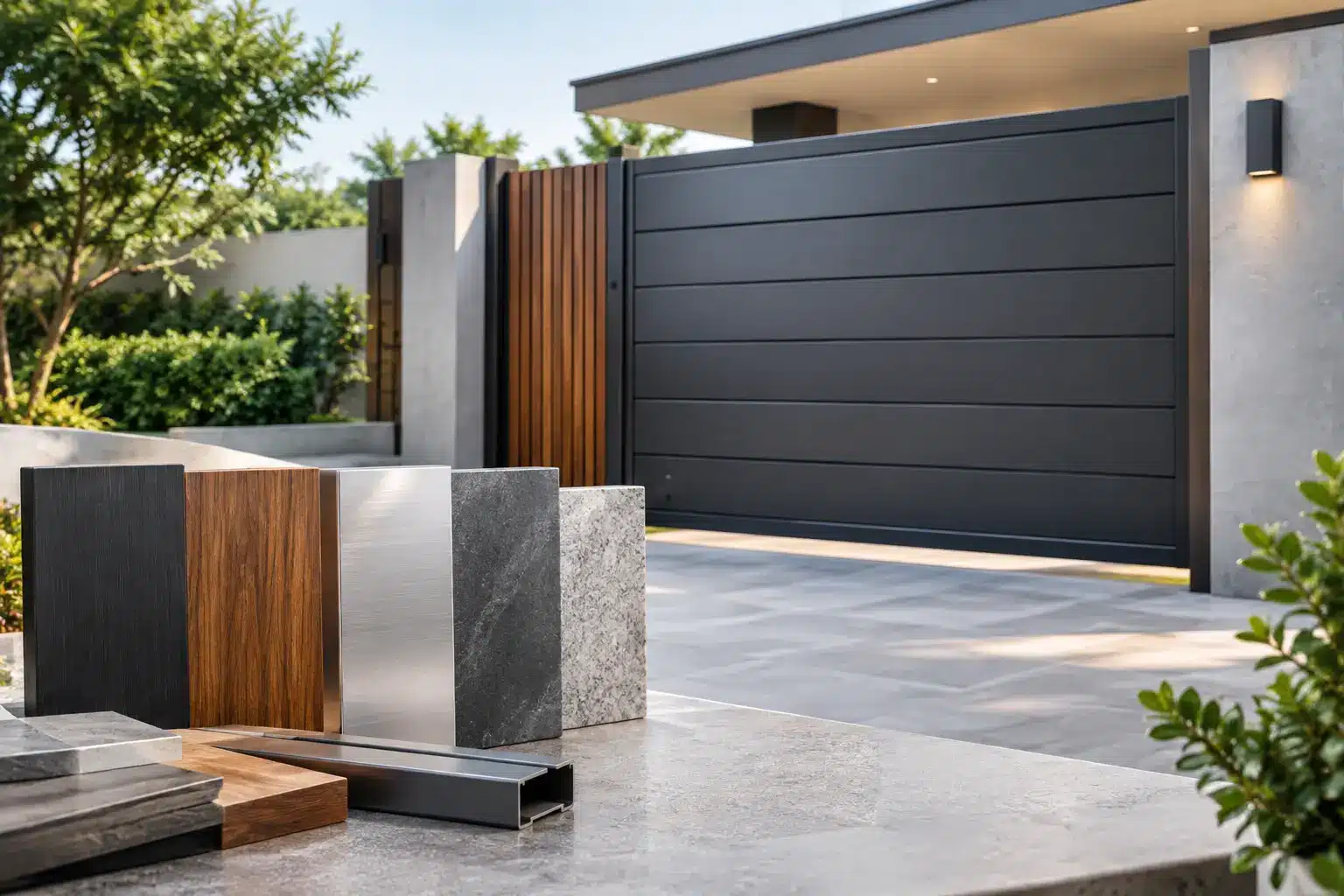
Every material brings a different balance of strength, weight, maintenance and design flexibility. Timber has natural character, for example, while steel can create a traditional statement. Yet both need considered protection and ongoing care in the British climate. Aluminium offers a different proposition: a lighter metal with excellent resistance to corrosion, broad design potential and minimal routine maintenance.
This matters particularly for wide driveway gates and automated systems. Weight affects the load on posts, hinges, tracks and motors. A gate that is unnecessarily heavy can require more substantial supporting structures and may place greater demands on its operating hardware. Conversely, a material that is too light for its design or poorly constructed can feel insubstantial and may not give the long-term rigidity a premium entrance requires.
The best decision is rarely made from a sample alone. It comes from assessing the material alongside the design, fabrication standard and intended use of the gate.
Comparing the main gate materials
Aluminium: refined, durable and low maintenance
Aluminium is increasingly the preferred choice for contemporary gates, fencing and coordinated entrance systems. It does not rust, making it particularly well suited to wet weather, coastal exposure and locations where regular upkeep is not practical. A quality powder-coated finish adds a durable protective layer and provides a wide choice of colours, from understated anthracite shades to bespoke tones that work with window frames, cladding or brickwork.
Its lower weight is a practical advantage, not a shortcut. Properly designed, fully welded aluminium gates can offer impressive strength while remaining easier to operate manually or through automation. This is valuable for sliding, bi-folding and telescopic configurations, where controlled movement and dependable operation are essential.
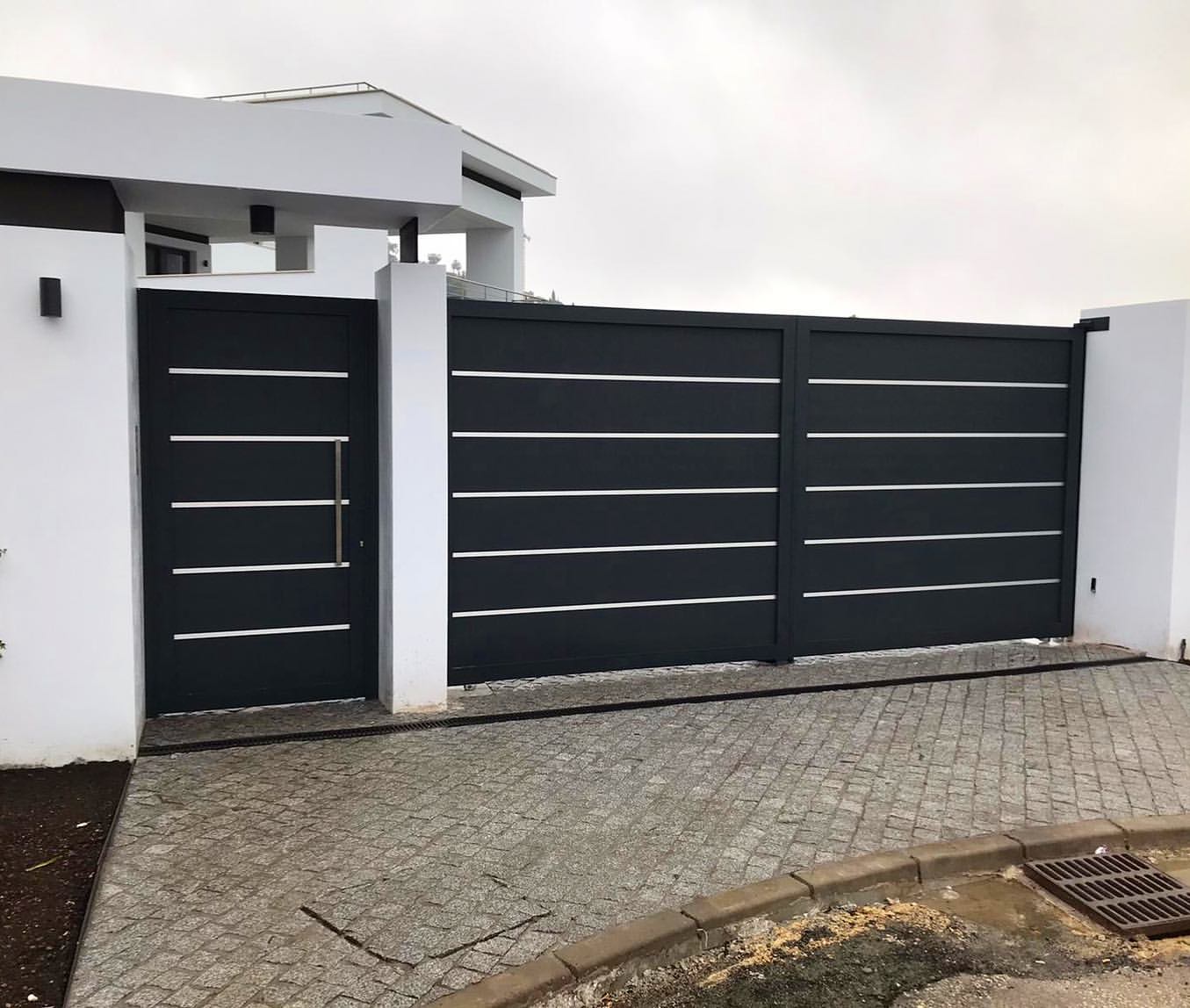
Aluminium also gives designers freedom. Clean horizontal slats, vertical rails, solid privacy panels, decorative cut-outs and mixed styles can all be made to measure. For homeowners seeking a sharp architectural finish without the recurring burden of timber treatment or metal repainting, it is often the strongest all-round option.
Timber: warm character with a maintenance commitment
Timber gates have enduring appeal, especially beside period homes, rural properties and traditional garden settings. The grain, texture and warmth of natural wood can make an entrance feel established from the first day. However, timber moves as moisture levels change. Without regular sealing, staining or painting, it can fade, split, twist or swell.
This does not make timber the wrong choice. It can be excellent where authentic natural character is the principal design priority and the owner is prepared to maintain it. The important point is to budget for that commitment from the outset. Larger timber gates can also be heavy, which should be considered carefully if the gate will be automated.
Steel: strong and versatile, but reliant on protection
Steel remains a capable choice for ornate, traditional and high-security gate designs. It can be shaped into detailed scrollwork, railings and formal entrance features that suit heritage architecture. Its inherent strength can be useful for demanding commercial applications too.
The trade-off is corrosion protection. Galvanising and high-quality coating systems are essential, particularly around welds, fixings and any point where the finish may be chipped. If moisture reaches unprotected steel, rust can develop and spread beneath the coating. Steel gates can deliver decades of service, but their finish needs inspection and timely repair.
Wrought iron: classic presence, specialist upkeep
The term wrought iron is often used to describe decorative metal gates with an ornamental, traditional appearance. Genuine wrought ironwork brings real craftsmanship and visual weight, making it a natural fit for listed-style homes, formal estates and statement entrances.
As with steel, the priority is protection from corrosion. Detailed designs contain more joints, corners and surfaces where water can sit, so maintenance is rarely optional. Choose this material for its heritage style and artisan detail, rather than expecting the low-maintenance ownership offered by aluminium.
Composite: convenient, but not always fully bespoke
Composite boards are sometimes used within metal gate frames to recreate the look of timber with less maintenance. They can offer useful privacy and a consistent finish, and may be suitable for certain fencing and side-gate applications.
Their limitations depend on the product and construction method. Some options have a more uniform appearance than real timber or premium aluminium, while expansion in changing temperatures must be accommodated correctly. A composite infill can work well, but buyers should look beyond the boards and assess the frame, connections and long-term stability of the complete gate.
Choosing gate materials for your property
Start with the demands of the opening. A narrow pedestrian entrance has different priorities from a six-metre driveway or a commercial access point used throughout the day. Gate width, ground levels, available run-back space and the need for automation will influence which materials and gate formats are sensible.
Then consider the level of privacy required. Open rail designs create visibility and a welcoming frontage, while closely spaced slats or solid panels can screen a driveway or garden. Aluminium is especially adaptable here because it can be fabricated into privacy-led or open designs without losing its crisp, cohesive finish.
Architecture should guide the visual direction, but it should not be the only factor. A period property may suit a heritage-inspired aluminium design as well as traditional metalwork. A modern home may benefit from horizontal aluminium slats, yet a vertical pattern can make a lower frontage appear taller. Made-to-measure fabrication allows the proportions to be tailored to the building instead of forcing the building to accept an off-the-shelf gate.
For commercial sites, security and frequency of use usually lead the specification. The gate material must work with access control, safety features and the chosen opening system. A well-designed aluminium system can provide an authoritative perimeter while avoiding the excessive operating weight associated with some steel alternatives.
Construction matters as much as material
Two gates made from the same material can perform very differently. The quality of fabrication, welding, reinforcement, hinges, posts and finishing process is what turns a good material into a reliable entrance solution.
For aluminium gates, fully welded construction is particularly important. It creates a more rigid, integrated structure than a gate assembled mainly with mechanical joints. This supports clean lines, helps maintain alignment and gives the finished product a substantial feel. It is also worth checking how the gate will be supported, especially on wide openings or sloping driveways, where correct post specification and hinge placement are vital.
The finish should be viewed as part of the protection system, not merely a colour choice. A premium powder-coated surface enhances the design while helping the gate withstand weathering. Coordinating the gate with fencing, panels and access control creates a considered frontage rather than a collection of separate additions.
Factor in maintenance before you buy
Low maintenance does not mean no care at all. Any gate benefits from occasional cleaning, checking moving parts and ensuring tracks or drainage areas remain clear. Automated gates should also be serviced in line with their system requirements.
The difference lies in the scale of ownership. Timber may require regular treatment. Steel and decorative ironwork may need attention to chips and early signs of corrosion. Powder-coated aluminium generally needs only a wash with mild soapy water to remove surface dirt, helping it retain its appearance without sanding, staining or repainting.
That reduced upkeep has a real value. It protects the appearance of the entrance, limits disruption and makes aluminium a compelling choice for busy households, rental properties and commercial premises where maintenance time is better spent elsewhere.
Specify for the life of the gate
A gate is not a short-term decorative purchase. It is a working part of the property boundary, used in all seasons and seen every day. The right specification should account for how the entrance will be used now, as well as changes that may come later, such as automation, new fencing or upgraded access control.
At Alu-Gate, each system is designed around the individual opening, property style and practical requirement, with precision-welded aluminium construction and a 20-year guarantee. The result is an entrance designed to impress, built to last and made for the way the property is actually used.
Choose a gate material that earns its place over time. When strength, finish and fabrication are specified together, the entrance becomes a lasting statement of security, style and considered investment.