
A boundary should do more than mark where your property ends. It should screen overlooked areas, strengthen security and give the front or rear garden a considered finish. Aluminium panels for privacy offer all three, without the warping, regular staining and gradual deterioration associated with many timber solutions.
For homeowners refining a driveway, patio or garden boundary, the appeal is clear: clean lines, enduring colour and a design made around the property rather than selected from a standard-size shelf. For commercial sites, the same qualities create a professional perimeter that is easier to maintain and harder to compromise.
Why aluminium is suited to private boundaries
Privacy panels have a demanding job. They must block sightlines without making an outdoor space feel enclosed, withstand the British weather and complement the architecture around them. Aluminium is particularly well suited because it combines strength with a lighter weight than steel, allowing for substantial-looking screens that remain practical to handle, install and support.
Unlike timber, aluminium does not absorb moisture. It will not rot, split or swell after repeated rain and frost. It also avoids the corrosion concerns that can affect untreated or poorly finished steel. A premium powder-coated finish provides a durable outer layer, helping the panel retain its colour and refined appearance with minimal ongoing attention.
That low-maintenance ownership matters. A simple wash with mild soapy water is generally enough to remove surface dirt and keep the finish looking its best. There is no annual sanding, painting or preservative treatment to schedule.
Privacy without compromising the design
Complete screening is not always the right answer. A solid panel can create valuable seclusion beside a seating area, around a hot tub or along a boundary exposed to neighbouring windows. Yet on a driveway or street-facing elevation, a little visual relief may produce a more welcoming result.
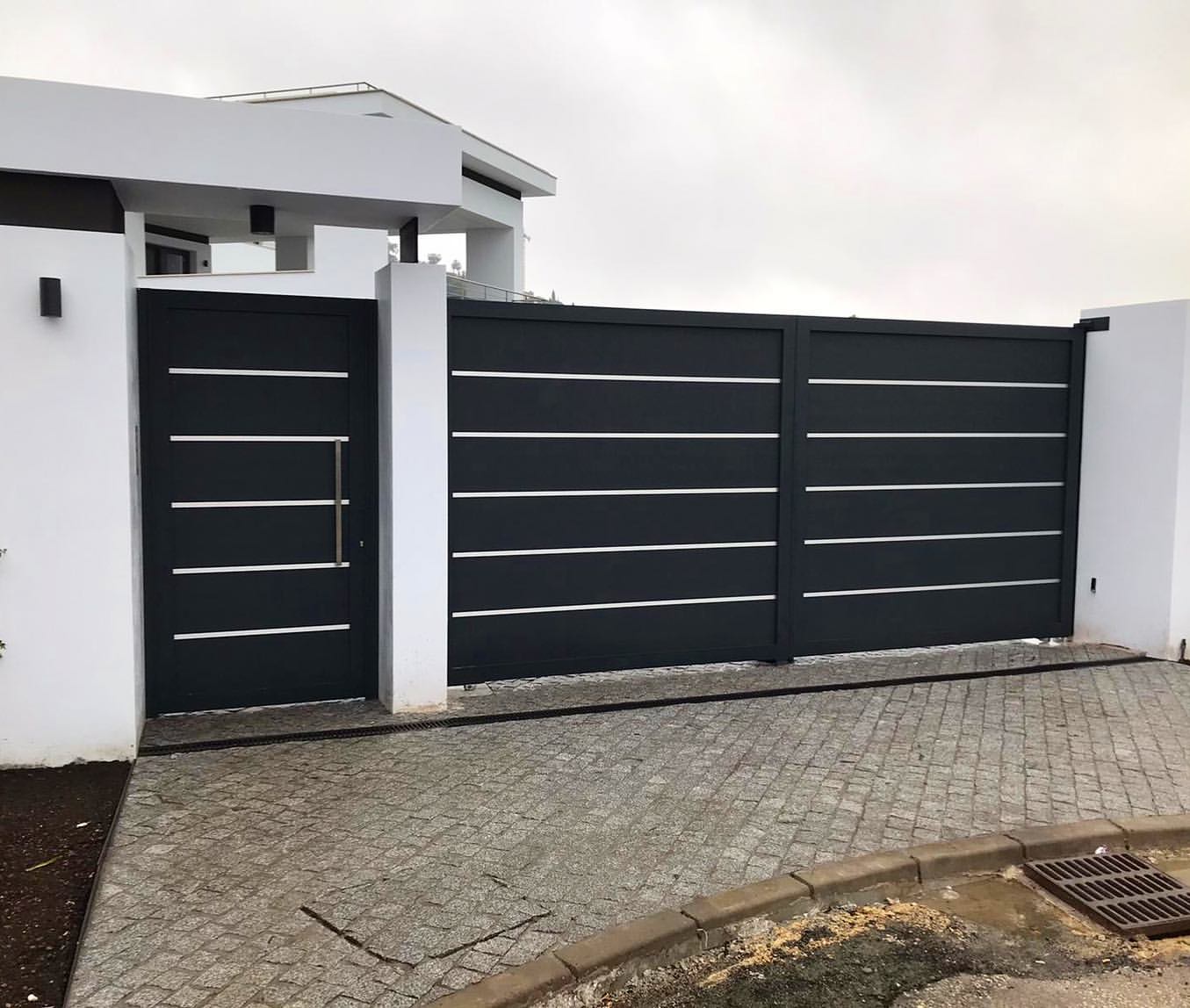
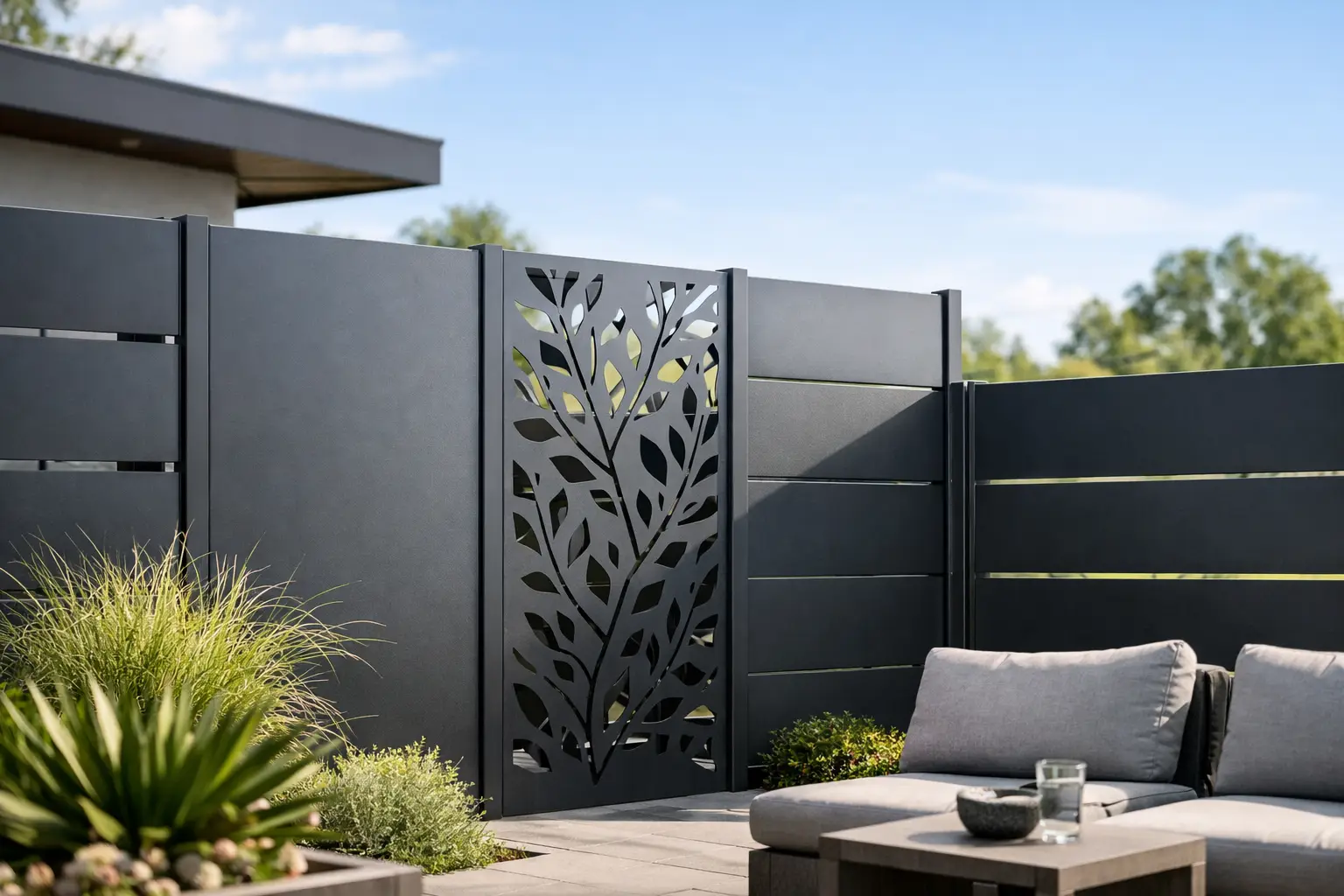
The advantage of bespoke aluminium panels is choice. Horizontal slatted designs can provide a contemporary, architectural look while controlling views through the boundary. Tighter gaps increase privacy; wider spacing introduces lightness and visibility. Solid infill creates a stronger visual barrier, while decorative cut-out patterns can add character where full screening is not essential.
The best specification depends on what the panel needs to achieve. A rear garden overlooking neighbouring properties may call for full-height solid infill. A side return may benefit from slatted panels that improve privacy but still allow air and daylight to pass through. At the front of a property, coordinated fencing and gates can create a secure boundary without presenting an unbroken wall to the street.
Made-to-measure panels create a better finish
Standard panel sizes can leave awkward gaps, uneven heights and improvised infills, particularly on older properties or sloping sites. These details are often what make a boundary look like an afterthought rather than a planned part of the exterior.
Made-to-measure aluminium panels allow dimensions, post positions and layouts to respond to the site. The result can align with existing walls, brick piers, rendered surfaces and gate openings, creating a consistent line across the property. Panels can also be specified to work alongside a pedestrian gate, driveway gate or access-control point, rather than competing with them.
This approach is especially valuable where privacy requirements change across a boundary. You may want taller screening around a seating area, lower panels near a driveway entrance and a matching garden gate between the two. Designing the system as one coordinated scheme produces a more polished outcome than mixing unrelated products.
Choosing the right height and layout
Height is one of the first practical decisions. A panel that is too low will not address overlooking; one that is too high may feel heavy or raise planning considerations. For many rear and side boundaries, the right height depends on ground levels, the position of neighbouring windows and whether the screen is attached to an existing fence, wall or free-standing framework.
Before ordering, assess the view from both sides of the boundary. Stand in the intended seating area and look towards neighbouring gardens, upper windows, public paths and access points. Then consider how the proposed panel will appear from the road or adjacent property. Privacy works best when it is purposeful rather than excessive.
For front boundaries, local planning rules may affect what can be installed, particularly beside a highway, footpath or driveway access. Listed buildings, conservation areas and properties with specific planning conditions may have further restrictions. A professional design conversation early in the project helps prevent a costly rethink later.
Security is part of the specification
A private boundary should not create an easy route into the property. Aluminium panels can form part of a stronger perimeter strategy when paired with secure posts, appropriate fixings and well-designed access points.
Fully welded construction is a key consideration. It creates a more rigid, refined panel than systems reliant on loosely assembled components, and supports a clean finish with fewer visible weaknesses. The supporting structure matters just as much: posts must be correctly sized, securely fixed and suited to the ground conditions.
Where a panel connects with a gate, think beyond appearance. A side entrance may benefit from a matching lockable pedestrian gate. A driveway boundary may be paired with swing, sliding, bi-folding or telescopic gates, depending on available space and vehicle access. Intercom and access-control systems can then be integrated into the overall entrance design, giving residents or site managers greater control over who enters.
Colour and finish make the boundary feel bespoke
Anthracite grey remains a popular choice for modern UK properties, but it is not the only route to a premium finish. Black creates striking contrast against pale render and stone. Softer greys can sit comfortably with traditional brickwork. Wood-effect finishes offer the warmth of timber with the practical benefits of aluminium, while bespoke colours can tie the boundary into window frames, doors or existing architectural details.
Finish should be selected with the whole elevation in mind. Consider the roof colour, brick or render tone, garage door, railings and external lighting. A well-chosen panel does not need to demand attention. It gives the property a sense of order, depth and quality.
Texture can also change the effect. A matt finish often suits contemporary schemes and reduces glare in bright conditions. A carefully selected textured coating can add visual depth and help everyday marks show less readily. The right choice depends on the setting, how much sun the boundary receives and the desired level of contrast.
What affects the cost of aluminium privacy panels?
Cost is influenced by more than the overall width and height. Custom dimensions, panel style, finish, framework, post requirements and site complexity all shape the final specification. A straightforward run on level ground is different from a stepped boundary with multiple returns, changes in height and integrated gates.
It is tempting to compare panels only by initial price, but this can overlook the value of construction quality and long-term upkeep. Cheaper alternatives may need painting, repairing or replacing sooner. A premium aluminium system is an investment in an exterior feature that should continue to perform and look considered for years.
At Alu-Gate, bespoke aluminium systems are fabricated with precision welding, premium finishes and a 20-year guarantee, giving property owners confidence in both the design and the durability behind it.
Plan the whole boundary, not just the screen
The strongest results come from considering privacy panels as part of a complete entrance and perimeter scheme. Match the panel profile to the gate design, repeat the same colour across fencing and posts, and decide where visitors will enter before finalising the layout. Small decisions – such as aligning panel rails with a gate frame or placing an intercom at a natural approach point – make a noticeable difference.
A private space should still feel like your property, not a barrier placed around it. With the right proportions, finish and fabrication quality, aluminium panels can provide the calm, security and lasting kerb appeal that make an exterior upgrade feel worthwhile every time you come home.