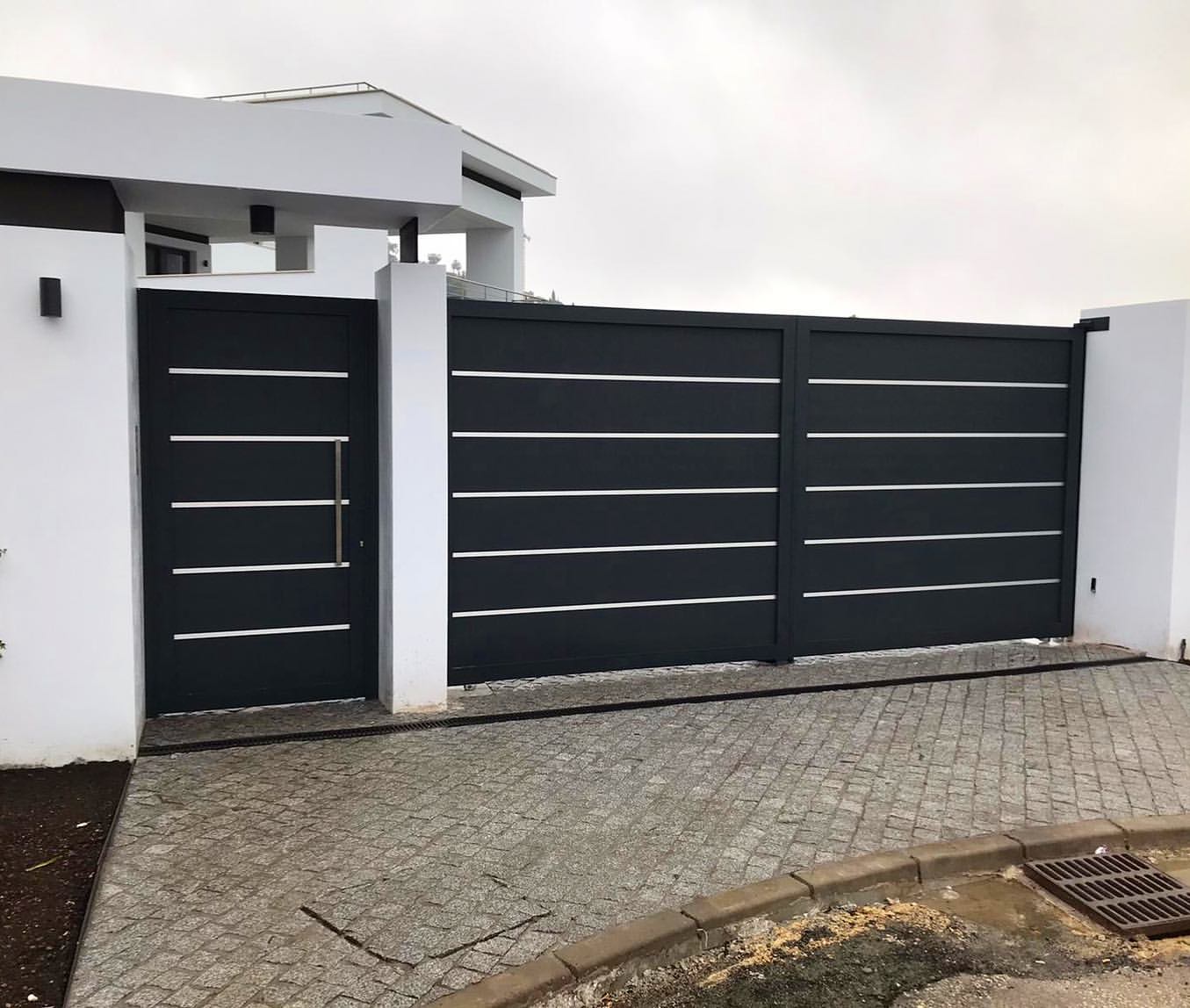

A gate quote can look competitive until you discover it covers only the gate leaf, not the posts, automation, controls, fitting or groundwork needed to make it operate safely. Knowing how to compare gate quotes is less about finding the lowest figure and more about confirming that every supplier is pricing the same standard of design, construction and service.
For a premium driveway or pedestrian entrance, the right choice should enhance security and kerb appeal for years, not create unexpected costs before installation is complete. A well-prepared quote gives you the clarity to invest with confidence.
Start with a like-for-like specification
Before comparing prices, check whether each supplier has quoted for the same type of gate and the same level of finish. A made-to-measure aluminium sliding gate, for example, has very different engineering requirements from a pair of manual swing gates. Even two gates with a similar appearance may differ substantially in weight, frame strength, hardware and expected lifespan.
Confirm the opening width and height, whether the quoted dimensions are clear opening sizes or overall sizes, and whether posts are included. Also establish the gate configuration: sliding, swing, bi-folding, telescopic or pedestrian. If your property has a slope, restricted driveway depth or an unusual entrance layout, the proposed solution should address it rather than simply offer a standard format.
Design details matter too. Compare the style, privacy level, spacing between slats or infill, matching fencing and colour finish. A lower price may reflect a simplified design, smaller sections or an assumption that certain features will be agreed later. That can make an initial quote appear attractive while reducing the quality of the finished entrance.
How to compare gate quotes fairly
Ask each supplier to separate the cost of the gate system from optional items and site work. This makes it easier to see what is included, what is provisional and where a quote could change. The total should be clear, but so should the route to that total.
A useful comparison considers five areas together:
- the gate’s material, frame construction and finish
- posts, hinges, tracks, rollers and other supporting hardware
- automation, safety equipment and access control
- delivery, installation, electrical work and civil works
- warranty terms, lead time and after-sales support
Do not assume that “supply and fit” means the same thing from every company. One installer may include removal of an existing gate and accurate setting-out, while another may price only the final installation to prepared foundations. Likewise, cabling, power supplies, trenching, drainage adjustments and brickwork repairs can sit outside a headline price.
Where a quote includes an allowance, ask what could cause that allowance to rise. Ground conditions, unknown services, unsuitable existing posts and difficult access are all genuine site variables. The important point is that they are identified early and explained plainly.
Look beyond aluminium and examine construction
Aluminium is valued for its corrosion resistance, clean appearance and low-maintenance ownership, but not all aluminium gates are built alike. The quality lies in the detail: section size, internal reinforcement where required, welding, alignment and the way components are finished.
Ask whether the gate is fully welded or assembled from mechanically fixed sections. A fully welded construction is typically a stronger, more refined solution for a bespoke entrance, with fewer visible joints and less opportunity for movement over time. It is particularly relevant for larger driveway gates, automated systems and exposed locations where the gate will work hard every day.
The frame should be engineered for the span and weight of the design, not selected simply because it is the most economical profile available. Wide gates, solid privacy panels and wind-exposed sites place greater demands on the structure and supporting hardware. A supplier should be able to explain how their proposed gate has been specified for your opening.
Also compare the coating process and colour specification. Premium powder-coated finishes offer long-lasting colour and protection, but the preparation, coating quality and care taken during fabrication all affect the result. If a particular RAL colour, textured finish or coordinated fence panel is important to your project, make sure it is stated in writing.
Check the hardware that makes the gate work
A beautiful gate is only as dependable as its hinges, track, rollers, locking and fixings. These details are easy to overlook in a quotation, yet they have a direct effect on security, smooth operation and maintenance requirements.
For swing gates, check the hinge type, drop bolts, gate stops and locking arrangement. For sliding gates, establish whether the system is tracked or cantilevered, what support structure is included and how the track area will be prepared. The best option depends on the site. A tracked sliding gate can be an excellent solution on a suitable, level entrance, while a cantilever arrangement may be preferable where ground debris or drainage would interfere with a track.
For manually operated gates, ask how the gate will be secured when closed and held safely when open. For automated gates, hardware must be selected as part of the complete system, rather than treated as an afterthought.
Compare automation as a complete safety system
Automation is one of the biggest reasons gate quotes vary. A basic motor price does not tell you whether the system includes the safety and convenience features needed for reliable daily use.
Check the operator brand and model, whether it is suitable for the gate’s size and weight, and the controls included. Remote fobs, keypads, vehicle exit loops, GSM control and video intercoms can all be specified around the way you use your property. An Akuvox intercom, for instance, can provide a more considered visitor-access solution than a simple audio call point, but it should be quoted with the required power, cabling and commissioning.
Safety should be clearly defined. Depending on the gate type and site, this can include photocells, safety edges, warning lights, emergency release and force settings. A professionally specified automated gate should be designed around safe operation, not merely movement at the press of a button.
Ask who will commission the system, demonstrate its use and provide the handover information. This is especially valuable for commercial sites, shared entrances and homes where several people will use the gate.
Read the warranty and exclusions carefully
A long guarantee is meaningful only when you understand what it covers. Compare the warranty on the gate structure, powder coating, automation equipment and installation separately. Motors and electronic components often carry different terms from the fabricated gate itself.
Look for exclusions relating to accidental damage, misuse, coastal exposure, lack of maintenance, electrical faults or alterations made by third parties. These are not necessarily warning signs. Clear exclusions can show that a supplier has thought carefully about real-world ownership. What matters is that the terms are transparent before you proceed.
At Alu-Gate, the focus is on made-to-measure, fully welded aluminium systems backed by a 20-year guarantee, giving property owners a clearer view of the long-term value behind the specification.
Factor in installation quality and project management
A gate is not a product you simply place at an entrance. Accurate measurements, secure foundations, correct post alignment and precise adjustment all influence how it performs. A quote should make clear whether there has been a site survey and who is responsible for final dimensions.
Find out who will manage the project if the gate, fencing, access control and electrical works are being coordinated together. One point of responsibility can reduce avoidable delays and ensure the design remains consistent from the driveway entrance to the pedestrian access point.
Lead time also deserves attention. Bespoke fabrication takes longer than an off-the-shelf gate, but it delivers a result tailored to the property. Ask when the final specification must be signed off, when manufacture begins and what conditions could affect the fitting date.
Choose value that remains visible
The lowest quote can be the right decision when the scope, materials and installation standard are genuinely equivalent. Often, however, a meaningful price difference reveals a difference in fabrication, included works, automation quality or warranty protection.
Give each supplier the opportunity to clarify their proposal in writing. The company that asks considered questions about your entrance, listens to how you intend to use it and specifies the details without ambiguity is more likely to deliver an entrance that feels right every time you arrive home. Designed to impress. Built to last.