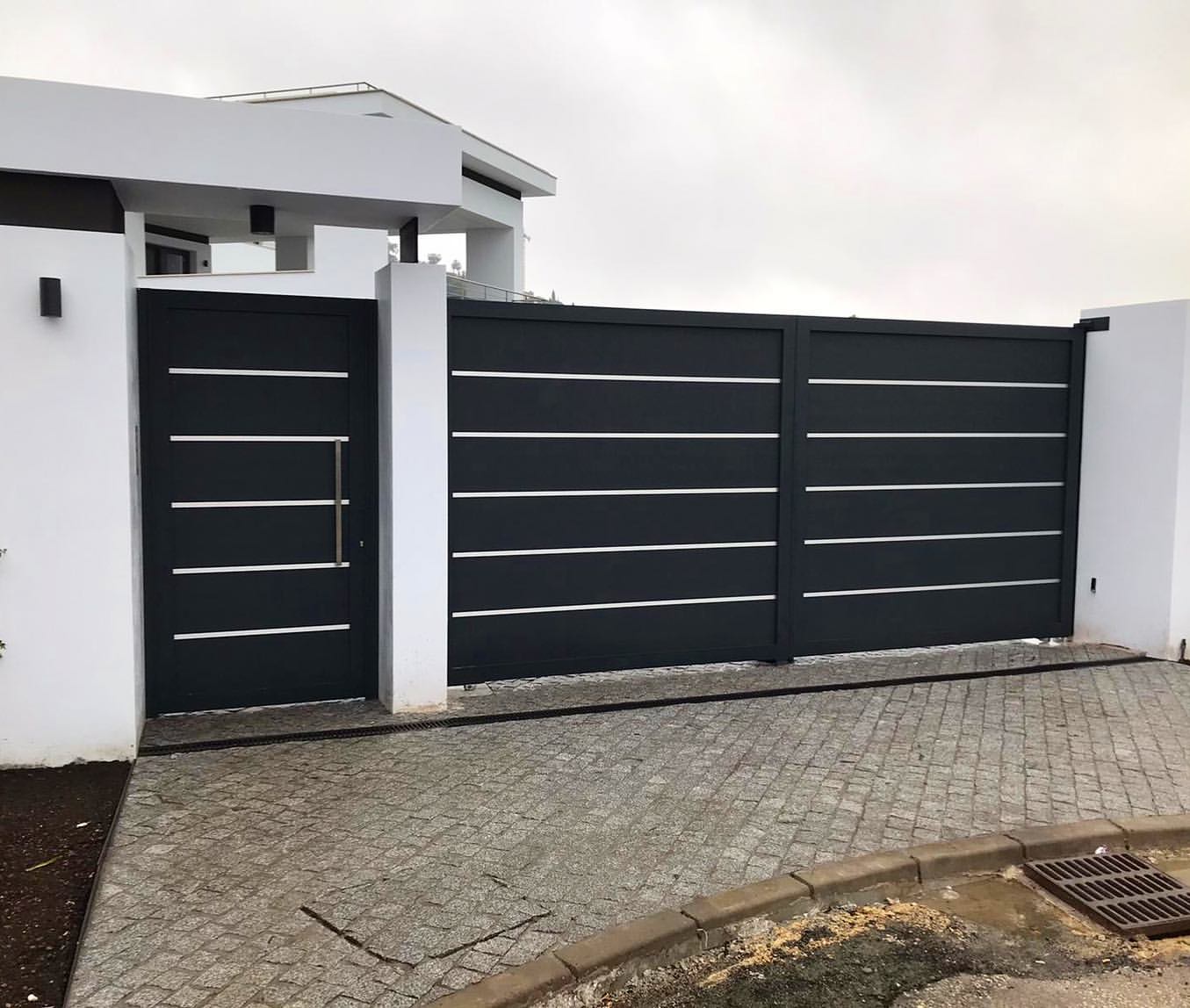

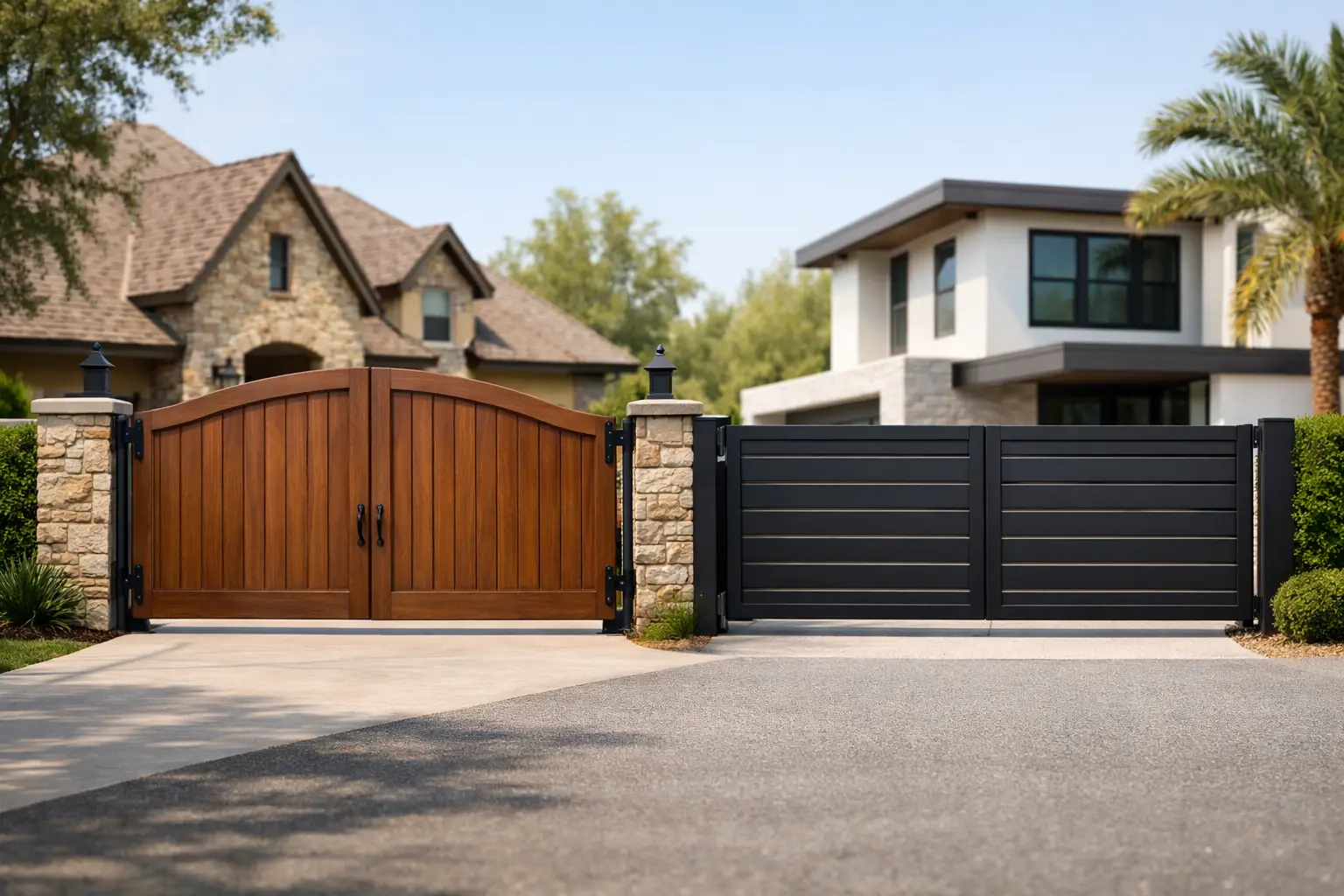
A driveway gate can look perfectly proportioned in a photograph yet feel frustratingly tight the first time a delivery vehicle turns in. The answer to what size driveway gate you need is not simply the width between two boundary walls. It is the usable opening, the vehicles that need to pass through it, the gate’s operating method and the space available around the entrance.
For a premium entrance, getting the dimensions right at the outset protects both the appearance and the daily practicality of your investment. A made-to-measure aluminium gate gives you the freedom to specify an entrance that suits the property, rather than forcing the property to suit a standard panel size.
What Size Driveway Gate Do Most Homes Need?
For many UK homes, a clear opening of 3.0 to 3.6 metres is a practical starting point for a driveway gate. A 3.0-metre opening can work well for a straightforward single-car entrance with a generous approach. However, 3.6 metres is often the more comfortable choice for family cars, SUVs and visitors who may not know the turning angle of the driveway.
Where space allows, a 4.0-metre-plus opening creates a more generous arrival and is particularly effective on larger properties. It can also reduce the chance of wheels clipping kerbs, gate posts or planting beds when vehicles enter at an angle.
The crucial detail is that these figures refer to the clear opening: the unobstructed space available when the gates are fully open. It is not necessarily the same as the distance from post to post, nor the overall width of the gates themselves. Hinges, posts, latches and safety clearances all need to be allowed for during design.
A gate that is technically wide enough can still be inconvenient if the driveway meets a narrow road, a sharp bend or a steep entrance. That is why measurements should always be considered alongside the vehicle’s real route through the opening.
Start With the Vehicles, Not the Gate
A typical car may be under two metres wide including mirrors, but it needs considerably more room to enter comfortably. Drivers do not approach every driveway perfectly straight, especially when turning off a busy road or negotiating parked cars.
Consider the widest vehicle likely to use the entrance regularly. This may be an SUV, a van, a horsebox, a motorhome or a contractor’s vehicle during renovation work. Also think ahead. If the property is likely to have an electric vehicle charger, a larger family car or frequent trade access in future, a slightly wider gate now can avoid an expensive alteration later.
As a practical guide, assess these four areas before settling on a width:
- the widest vehicle and its mirrors
- the road width and approach angle outside the property
- room to turn once inside the boundary
- access required for refuse, deliveries, maintenance and emergency services
A narrow opening may enhance privacy or suit a compact frontage, but it can make every arrival feel less refined. A properly proportioned entrance should feel controlled and secure without demanding precision driving each day.
Measure the Clear Opening Correctly
Take the measurement at the narrowest usable point, usually between the inside faces of the proposed gate posts, piers or walls. If existing masonry is uneven, damaged or out of plumb, do not assume the measurement at ground level will match the measurement higher up.
Measure at several heights and record the smallest figure. You should also check for obstacles that reduce usable width, such as drainpipes, light fittings, brick projections, kerbs or an inward-opening pedestrian gate.
The driveway surface deserves equal attention. A sloping drive changes the swing path of a gate, while a rising threshold can limit the clearance beneath each leaf. On uneven ground, the gate may require a stepped bottom rail, a carefully set ground level or a different operating system altogether.
For automated gates, the final specification must account for the equipment as well as the gate leaves. Safety devices, stop positions, hinges and actuator placement all affect the finished arrangement. Professional site assessment prevents a handsome design becoming an awkward fit.
Gate Height: Security, Privacy and Proportion
Width gets most of the attention, but gate height has a major effect on security and kerb appeal. Residential driveway gates commonly sit between 1.2 and 1.8 metres high. The right choice depends on the level of privacy required, the architecture of the property and the surrounding boundary treatment.
A lower gate can preserve views and create a more open, welcoming frontage. Taller gates offer greater screening and a stronger visual boundary, particularly where the house sits close to a public road. Yet height should be balanced with the width of the entrance. A tall, solid gate across a narrow opening can look heavy, while a very low gate across a broad drive may lack presence.
Aluminium is especially well suited to this balance. It allows for slim, clean profiles and contemporary infill designs without the excessive weight associated with some traditional materials. Fully welded construction brings the strength and precision expected of a premium entrance, while durable finishes help maintain the intended appearance over time.
Planning requirements can also affect the height and position of a gate, particularly beside a highway, in a conservation area or at a listed property. Check the relevant local authority guidance before committing to a design. Visibility for drivers leaving the property should never be compromised by a high solid boundary at the road edge.
Choose a Gate Style That Fits the Space
The correct driveway gate size is inseparable from how it opens. A pair of swing gates needs clear space inside the property for both leaves to travel. For example, a 3.6-metre opening with equal leaves requires approximately 1.8 metres of clear swing area behind each leaf, plus sensible clearance for hinges and stops.
Inward-opening swing gates are a popular choice because they avoid opening over a public footway or carriageway. They are ideal where the driveway is reasonably level and there is sufficient internal depth. On shallow or sloping drives, however, they may not be the best solution.
Sliding gates are often the answer where driveway depth is limited. They need side room for the gate to travel when open, known as run-back space. A sliding gate for a 4.0-metre opening generally requires more than four metres of clear space alongside the opening, depending on the design, overlap and support system. This is an excellent option for busy roads, steep approaches and wide entrances, but only if the boundary provides the necessary lateral room.
Bi-folding and telescopic gates reduce the amount of run-back or swing space required. They can be highly effective on compact sites, although they introduce more moving components and need careful engineering. The best format is the one that gives reliable movement without compromising the clean, composed look of the entrance.
Allow for Posts, Piers and Automation
When discussing dimensions, distinguish between the opening width and the overall entrance width. A 3.6-metre clear opening may require a significantly wider total span once aluminium posts, masonry piers, hinges and tolerances are included.
Existing brick piers need checking for both condition and size. Premium gates place substantial forces on their support points, particularly when automated or exposed to wind. A pier that looks solid may still need reinforcement, or a purpose-designed aluminium post may provide the more dependable solution.
Automation also benefits from a considered layout. Underground motors can preserve a minimalist appearance but need suitable groundwork and drainage. Above-ground rams are practical and effective, yet their location must not restrict the opening or interrupt vehicle manoeuvring. Intercoms, keypads and access control should be positioned where visitors can reach them safely without blocking the road.
Why Made-to-Measure Is Worth It
Off-the-shelf gate sizes can appear economical, but compromises tend to show at the edges: awkward infill panels, oversized posts, restricted access or proportions that do not suit the home. A bespoke aluminium gate is designed around the exact opening, ground conditions, operating method and desired level of privacy.
That means the width can accommodate the way you actually drive, the height can align with neighbouring fencing, and the style can complement the property rather than merely fill a gap. For commercial entrances, the same approach allows for service vehicles, access frequency, security requirements and site-specific safety measures.
At Alu-Gate, every made-to-measure system is considered as part of the whole entrance, from the gate structure and finish to coordinated fencing and access control. Precision fabrication and fully welded construction are not decorative details. They support a gate that remains strong, aligned and impressive through years of daily use.
Before choosing a number, stand at the entrance and picture the least confident driver, the widest vehicle and the worst weather. The right driveway gate size is the one that makes access feel effortless while giving your property the security, presence and lasting quality it deserves.