
A new gate has a greater effect on a property than almost any other exterior upgrade. It frames the approach, defines the boundary and gives visitors their first impression of the home or site behind it. The strongest modern gate design trends are not simply about a particular pattern or colour. They bring together architectural proportion, dependable security, practical access and materials that continue to look exceptional year after year.
For UK homeowners and commercial property buyers, aluminium has become central to this shift. It offers crisp, contemporary forms without the routine sanding, staining or painting associated with timber, while allowing a made-to-measure design that suits the character of the building. The result should feel considered rather than fashionable for fashion’s sake: designed to impress, built to last.
Modern gate design trends that are shaping entrances
Clean horizontal lines and slatted detailing
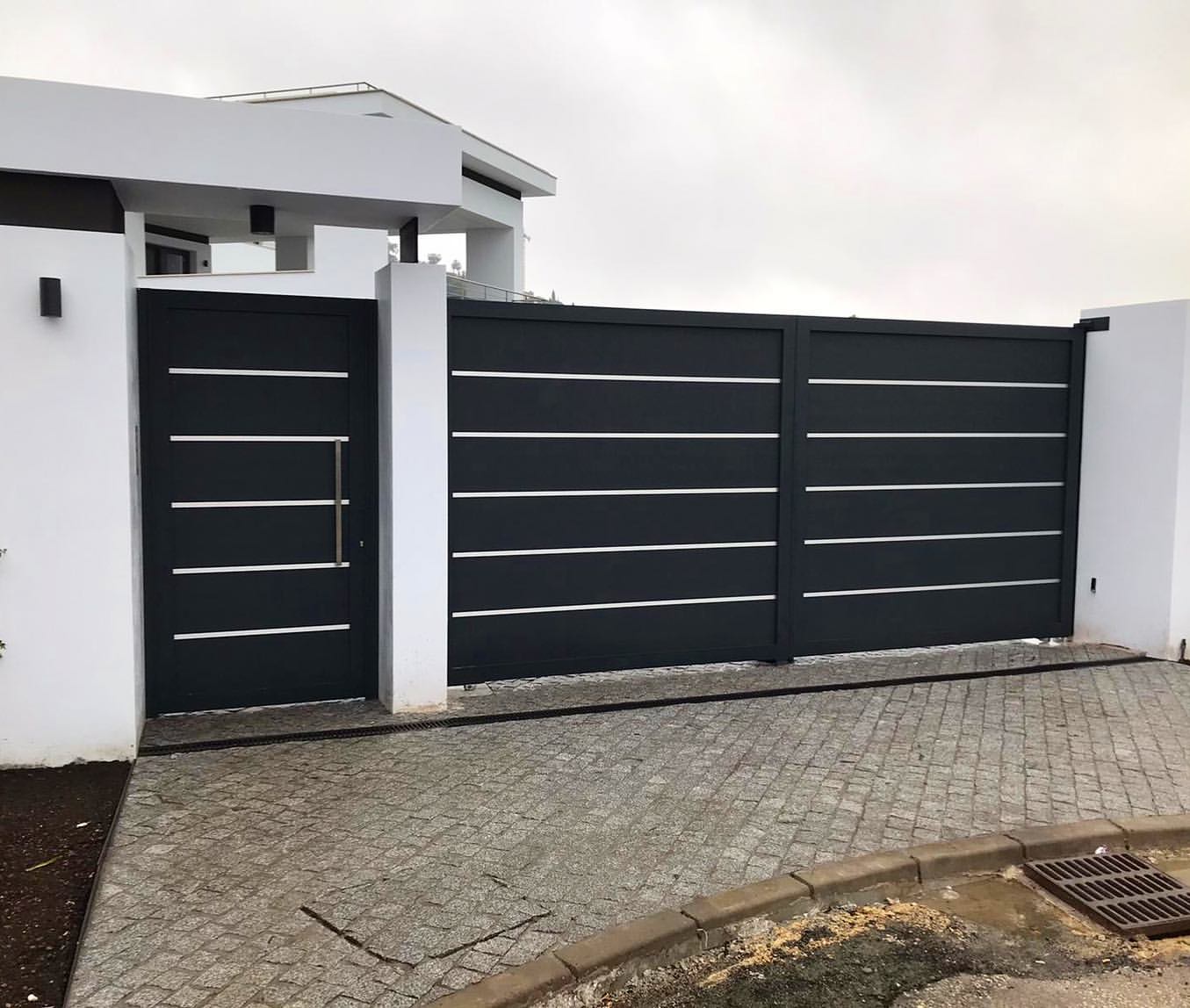
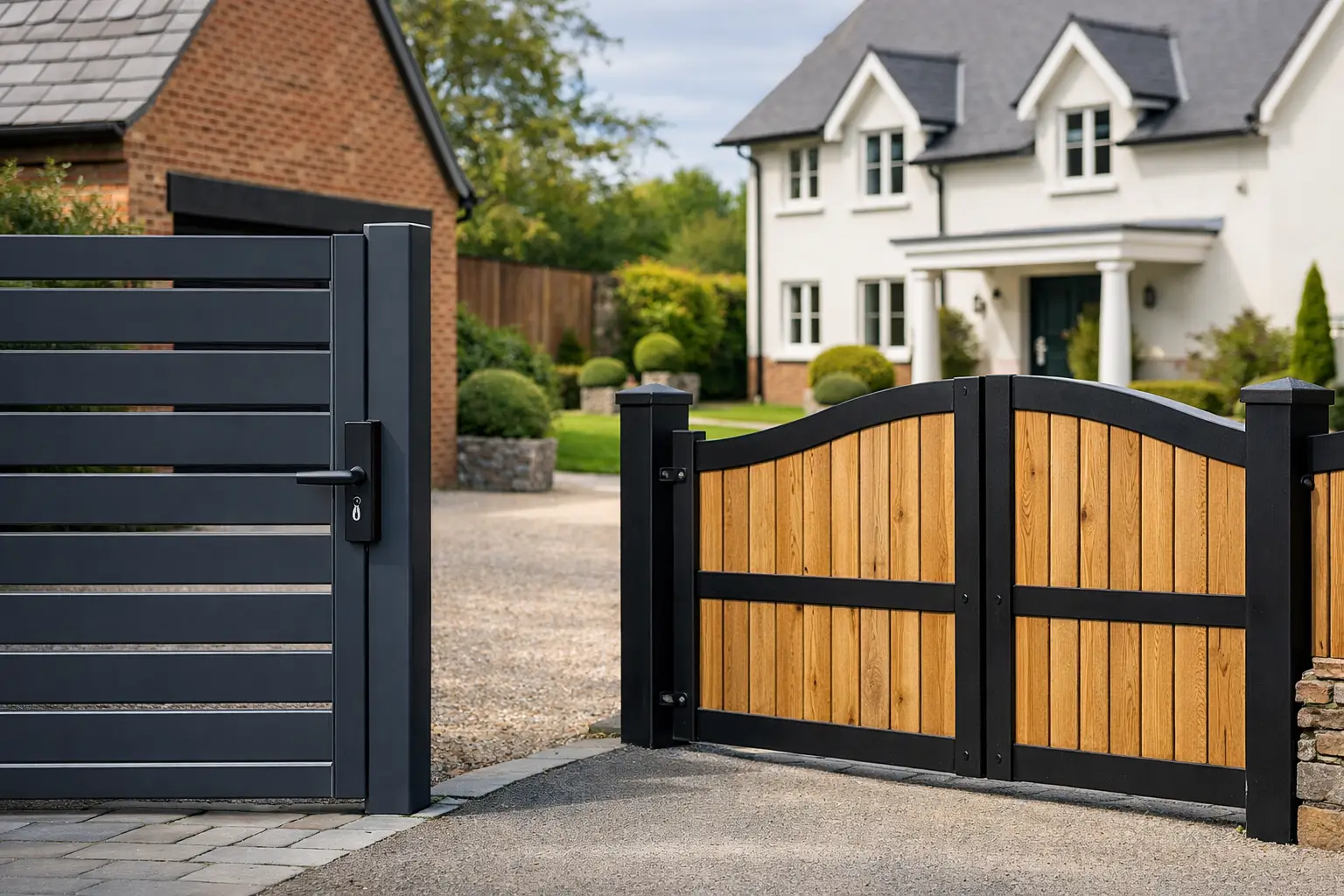
Horizontal slats remain a defining feature of contemporary driveway and pedestrian gates. Their linear profile can make a narrow entrance feel wider and gives a clean visual connection to modern cladding, brickwork and aluminium windows. The spacing is where a bespoke design earns its value. Wider gaps create a lighter, more open frontage, while tighter spacing adds privacy and reduces direct views into the property.
Slatted aluminium gates are not limited to one style of home. A slim, evenly spaced profile can complement a new-build scheme, while a deeper slat or a more substantial frame can sit confidently alongside a renovated period property. The key is matching the scale of the gate to the boundary, pillars and driveway. An overly delicate gate can disappear against large masonry piers; one that is too heavy can overwhelm a modest frontage.
Privacy without a blank wall
Many owners want a secure boundary without making their property feel closed off. This has increased demand for solid-panel and semi-solid gate designs, often balanced with carefully positioned shadow gaps, perforated sections or inset details. These options protect privacy while retaining depth and visual interest.
A full-height solid design is particularly effective where a driveway faces a busy road or neighbouring homes. Conversely, a gate with partial openings can preserve sightlines and allow more natural light into the entrance. There is no universal answer: privacy, planning constraints, wind exposure and the desired street presence all influence the right specification.
Coordinated gates, fencing and side access
The entrance is increasingly being treated as a complete exterior scheme rather than a standalone gate purchase. Coordinated driveway gates, pedestrian gates, fencing panels and bin-store screens create a consistent finish across the full boundary. This is especially valuable on self-build projects and major renovations, where mismatched materials can undermine an otherwise well-resolved façade.
Aluminium makes this approach practical because the same profile, frame detail and powder-coated finish can be carried from a sliding driveway gate to a side gate or garden screen. It also gives commercial premises a more professional, purposeful frontage without relying on generic steel palisade solutions.
Architectural colours and refined finishes
Anthracite grey remains a popular choice for good reason. It works with many brick tones, render colours and contemporary window systems. Yet the broader trend is towards more deliberate colour selection rather than defaulting automatically to grey. Deep black, textured dark finishes, warm metallic shades and colours selected to complement the property’s joinery are all being specified with greater confidence.
A premium powder-coated finish should be chosen for more than appearance. Texture can soften reflections and disguise everyday marks, while the right colour can either make a gate a strong architectural feature or allow it to recede into the boundary. Lighter shades may suit coastal or rural settings, but they can show road grime more readily. Darker colours feel striking and formal, although they may be less forgiving of dust in exposed locations.
Automation designed into the gate, not added later
Automation is now expected on many premium driveway gates, but the most successful installations begin with the opening method. A gate should never be selected on appearance alone if the driveway cannot accommodate its travel, weight or clearance requirements.
Swing gates offer a classic arrival sequence and work well where there is sufficient clear space inside the property boundary. Sliding gates are often the preferred choice for shorter or sloping driveways because they do not sweep across the entrance. Bi-folding and telescopic configurations offer another solution where opening speed or limited run-back space matters, making them valuable for busy commercial entrances as well as constrained residential sites.
Concealed or discreetly integrated automation is a clear design priority. Visible motors and poorly placed cabling can distract from an otherwise elegant entrance. More importantly, components must remain accessible for servicing. A polished installation balances minimal visual clutter with sensible long-term maintenance access.
Security that looks considered
A modern gate should create a genuine first line of defence, not merely the impression of one. Fully welded aluminium construction, well-engineered frames, secure hinges or running gear and reliable locking arrangements all matter. The gate’s security is only as strong as its supporting posts, foundations and access strategy.
Access control has also moved beyond a basic keypad on a nearby wall. Video intercom systems, including options such as Akuvox, allow owners to identify and communicate with visitors before granting entry. This is useful for families, deliveries, remote workers and commercial sites alike. The best system is not necessarily the one with the longest feature list. It is the one that suits how the property is used, with controls that residents, staff and visitors can operate confidently.
For commercial buyers, access requirements may include higher usage cycles, timed entry, separate pedestrian access and integration with wider site security. These considerations should be established at the design stage, not after fabrication has begun.
Why aluminium fits the direction of travel
The appeal of aluminium is closely tied to the wider preference for low-maintenance, long-life exterior materials. Unlike timber, it will not rot, split or require regular repainting. Unlike untreated steel, it does not rust. That does not mean every aluminium gate is equal. Material grade, wall thickness, fabrication quality, welding and finishing all influence its strength, alignment and appearance over time.
Fully welded construction is particularly important for a premium gate. It creates a more rigid, unified structure than a collection of mechanically fixed components, helping the gate withstand daily operation and the changing British weather. Precision fabrication also allows details such as consistent slat spacing, clean corners and tailored dimensions to remain accurate across the finished installation.
The environmental argument also deserves a measured view. Aluminium is highly recyclable and a durable gate can avoid repeated replacement, but longevity depends on specifying a quality product and maintaining the moving parts correctly. Choosing a gate that will suit the property for decades is more valuable than replacing a cheaper design when its finish, structure or mechanism falls short.
How to choose a trend that will still look right in ten years
The most enduring entrances use current design ideas with restraint. Start with the property rather than a social-media image. Consider the building’s lines, the width of the opening, the height of surrounding walls and the level of privacy required. Then decide whether the gate should make a statement or form a quieter part of a coordinated boundary.
It is also worth considering the daily experience. How will cars enter and leave? Is there room to wait safely off the road? Will pedestrians need independent access? Does the entrance receive strong wind, or does it need to accommodate deliveries and refuse collections? These practical questions often determine whether a sliding, swing, bi-folding or telescopic format is the better investment.
A consultation-led approach gives these choices the attention they deserve. At Alu-Gate, made-to-measure aluminium gates are specified around the property, access requirements and desired finish, rather than forcing a standard product into an individual opening. That is the difference between a gate that looks good in a photograph and an entrance that performs beautifully every day.
Choose a design with disciplined proportions, quality construction and the right opening system, and it will do more than follow a trend. It will give the property a stronger, smarter and more welcoming sense of arrival for years to come.