
A boundary fence has to do more than fill a gap between posts. It frames the property, affects privacy, withstands British weather and should feel consistent with the quality of the home behind it. When weighing up aluminium fencing vs composite, the right answer depends on what you expect from the boundary over the next 10, 15 or 20 years – not simply what looks most appealing on day one.
Both materials offer a contemporary alternative to timber and both can be used to create a smart, low-maintenance perimeter. Yet they perform very differently in areas such as structural strength, fade resistance, bespoke design and long-term ownership. For a premium driveway, garden or commercial frontage, those differences matter.
Aluminium fencing vs composite: the key difference
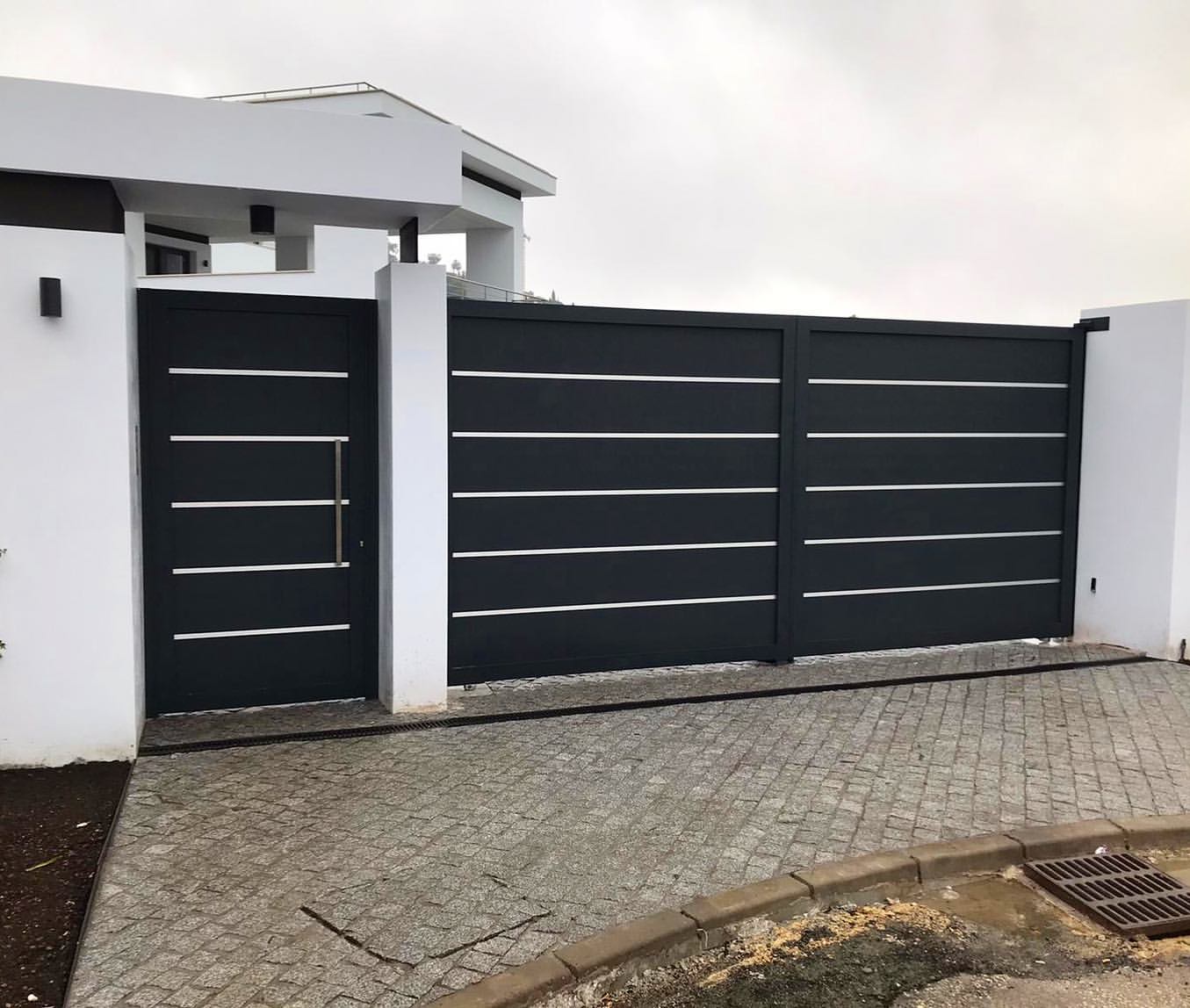
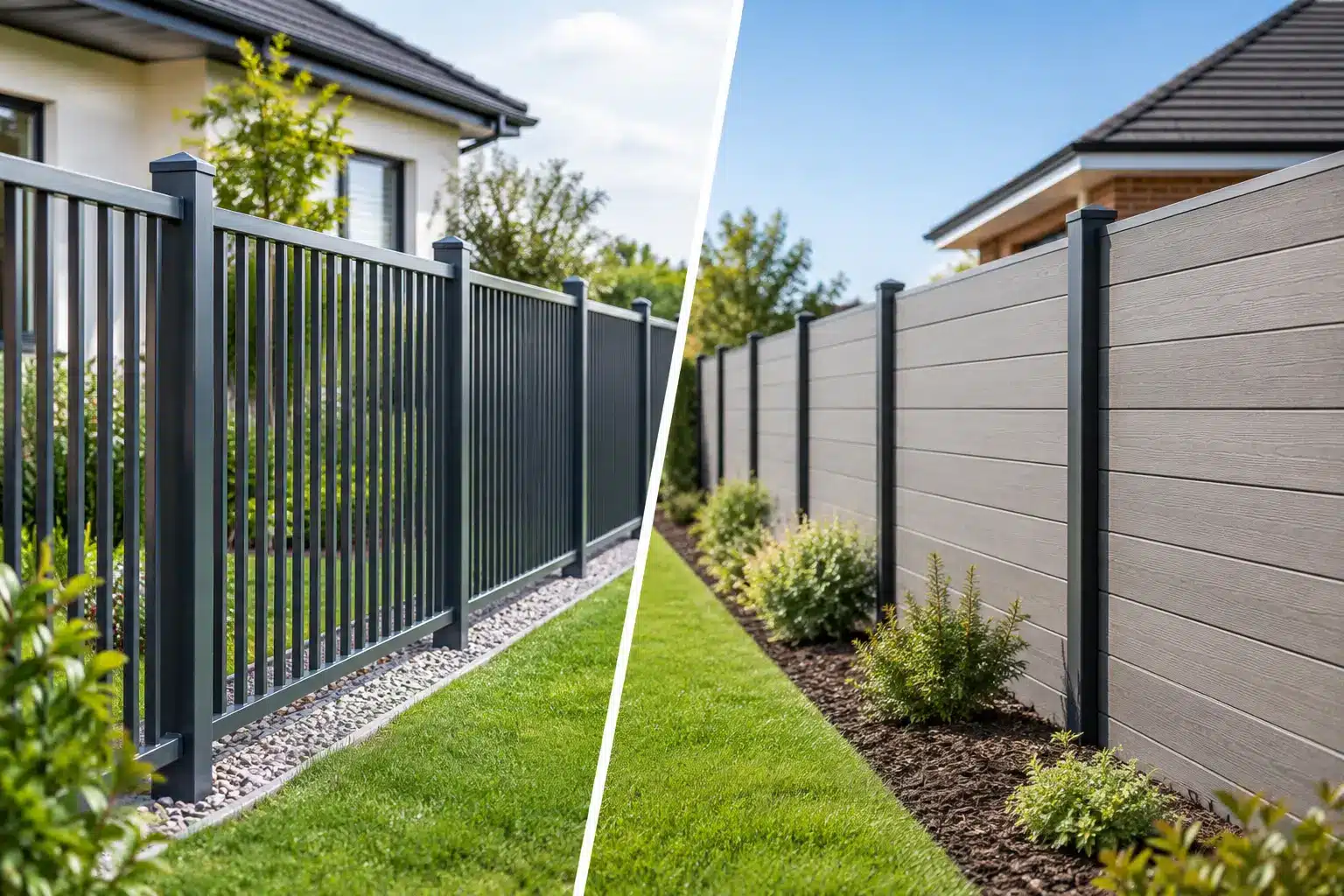
Aluminium fencing is fabricated from metal sections, often powder coated in a chosen colour and configured as horizontal slats, vertical bars, privacy panels or architectural screens. It has a crisp, precise appearance and can be made to suit exact dimensions, gradients and boundary layouts.
Composite fencing boards are generally made from a blend of recycled wood fibres and plastic polymers. They are fitted into a frame system to create a solid or near-solid screen. Their appeal is clear: a timber-inspired finish without the recurring staining, painting and rot associated with natural wood.
Composite is often selected for a softer, more textured garden setting. Aluminium suits homeowners and commercial buyers looking for sharper lines, a more architectural finish and a boundary that can be coordinated closely with gates, railings and access control.
Appearance and design freedom
The visual result is usually the first decision point. Composite boards commonly come in a set range of colours, grain effects and board sizes. These can look effective around patios and gardens, particularly where a warm, timber-like style is the aim. However, the repeating boards, posts and caps can make the system feel more modular on a large or prominent frontage.
Aluminium offers greater scope to design around the property rather than work around standard board dimensions. Slat spacing can be adjusted to balance privacy with light and airflow. Panels can be specified in horizontal or vertical arrangements, with solid sections where screening is needed and more open sections where sightlines are useful.
This flexibility is especially valuable at the front of a property. A driveway gate and fence should read as one considered entrance system, not as separate products installed at different times. Aluminium makes it easier to match profiles, colours and detailing across pedestrian gates, driveway gates and fencing.
Powder coating also provides a broad choice of refined finishes. Anthracite grey remains popular, but black, white, bronze and bespoke RAL colours can be selected to complement window frames, brickwork or cladding. The finish is consistent across the installation, helping the boundary retain a premium, cohesive appearance.
Privacy without closing in the garden
A solid composite fence gives immediate screening, which is useful where neighbouring windows overlook a seating area. The trade-off is that it can reduce light and air movement, particularly in narrower gardens.
Aluminium slatted fencing gives more control. Narrow gaps can obscure direct views while still allowing daylight through, and wider spacing can create a lighter boundary where privacy is less critical. This is not always the best choice for a completely private boundary, but it is often the more elegant one where the aim is to screen without creating a wall.
Durability in UK weather
The British climate is demanding on external materials. Rain, frost, coastal air, urban pollution and strong sunlight all take their toll over time.
Quality aluminium does not rust. A properly prepared and powder-coated aluminium fence is highly resistant to corrosion, which makes it a strong choice for exposed sites and coastal locations. It will not absorb water, swell, split or rot. Its dimensional stability also helps it keep clean lines through changes in temperature and moisture.
Composite does not rot in the same way as timber, but it is not entirely maintenance-free or unaffected by weather. The exact performance varies considerably between products and their composition. Lower-quality boards may be more prone to fading, surface staining, scratching or movement as temperatures change. In shaded or damp areas, surface mould and algae can still develop and require cleaning.
A further consideration is impact resistance. Composite boards can mark or chip if struck by garden equipment, bicycles or careless deliveries. Individual boards may be replaceable, but achieving a perfect colour match after several years of weathering is not always straightforward. Aluminium is also capable of being dented by a severe impact, yet a premium, well-engineered system offers a more rigid and secure-feeling perimeter.
Maintenance: low effort is not no effort
Neither aluminium nor composite should demand the cycle of sanding, painting and treating associated with timber. That is a major advantage for busy homeowners and property managers.
Aluminium fencing normally needs little more than a wash with warm water and a mild detergent to remove dirt and atmospheric deposits. On coastal properties or beside busy roads, more frequent rinsing is sensible to keep the coating looking its best. Avoid abrasive pads and aggressive cleaners, as these can dull the surface.
Composite fencing also benefits from routine washing. Textured wood-grain finishes can hold dust, pollen and organic debris more readily than a smooth metal surface. Depending on the product, a soft brush may be needed for stubborn marks. It is a manageable task, but it should be allowed for when comparing the two materials.
For owners who want a crisp, uniform finish with minimal seasonal attention, aluminium usually has the edge. Its smooth powder-coated surface is simple to clean and does not rely on a wood-effect texture to create its appearance.
Strength, security and fixing details
A fence is only as dependable as its posts, foundations and fixings. Material choice matters, but specification matters just as much. A lightweight panel fitted to shallow posts will not provide the reassurance expected around a valuable home or commercial site.
Aluminium fencing can be designed as part of a substantial perimeter system, with engineered posts, secure fixings and purpose-made panels. It is particularly suited to integrating with entrance gates, intercoms and controlled access points. Where a boundary must direct visitors, protect a driveway or form part of a wider security strategy, this joined-up approach is valuable.
Composite fencing is primarily a privacy solution rather than a security barrier. Its boards and frame systems are well suited to a garden division, but they may be less appropriate where the fence is expected to deter climbing, resist force or match the presence of a premium metal gate.
For either material, discuss ground conditions, wind exposure, fence height and local planning requirements before finalising a design. Taller, more solid runs catch more wind, while slatted aluminium can reduce wind loading depending on the spacing. A good specification considers the site rather than applying the same panel everywhere.
Cost and long-term value
Composite fencing can have a lower initial price in some standard installations, especially when comparing basic modular panels with made-to-measure aluminium. That can make it an attractive choice for a large rear garden where privacy is the main priority and the visual connection to the entrance is less important.
However, purchase price is only one part of the decision. Aluminium can offer stronger long-term value when its lifespan, low upkeep and retained appearance are considered. It is also less likely to require the periodic refinishing associated with timber or the board-by-board replacement that can arise with damaged composite systems.
The premium becomes easier to justify on highly visible boundaries. The front elevation, driveway and main approach influence kerb appeal every day. A precisely fabricated aluminium fence that matches the gate can elevate the whole property and create a clear sense of quality before anyone reaches the door.
At Alu-Gate, bespoke aluminium systems are designed around the property, with precision-welded construction, premium finishes and a 20-year guarantee. This is a different proposition from choosing a generic panel from a shelf: the aim is a boundary solution that fits, performs and looks intentional for years to come.
Which fencing material is right for your project?
Choose composite fencing when you want a warm timber-style look, high privacy and a practical solution for a garden boundary. It can work well behind the property, around a patio or where a softer visual finish is more important than matching a metal entrance system.
Choose aluminium fencing when clean contemporary design, strength, colour consistency and long-term appearance lead the brief. It is particularly effective for front boundaries, driveways, commercial approaches and properties where gates, fencing and access control need to work together visually and practically.
There is also room for a considered combination. Composite may suit a secluded rear boundary, while aluminium can define the front elevation and entrance. What matters is specifying each area for its purpose rather than treating every side of the plot the same.
The best boundary should feel like part of the architecture, not an afterthought. Start with how you want the property to look, how private it needs to be and how the fence must perform over time – then choose the material that meets that standard with confidence.