
A gate that needs opening by hand soon becomes an inconvenience, particularly in rain, darkness or heavy traffic. Learning how to automate existing gates begins with a more important question: is the gate and its supporting structure genuinely ready for automation? A high-quality motor can only perform as well as the gate it is asked to move.
For many UK properties, retrofitting automation is an excellent way to improve security, convenience and kerb appeal without replacing the complete entrance. But the right result depends on careful assessment, precise specification and professionally installed safety equipment. Designed to impress. Built to last. That principle applies to the automation system as much as the gate itself.
How to automate existing gates safely
Existing swing and sliding gates can often be automated successfully, whether they are aluminium, steel, timber or composite. The condition of every moving and structural element must be checked first. Automation adds controlled force and repeated daily operation, which can quickly expose weak hinges, poor alignment or inadequate foundations.
A specialist should assess the gate leaves, posts, track or guide system, hinge positions, ground levels and available opening space. They will also establish the gate weight, width and wind loading. A wide solid-panel gate, for example, can act like a sail in exposed weather, so it may need a more powerful operator and especially secure fixing points.
The gate should open and close smoothly by hand before a motor is considered. If it drags, catches, drops or requires force to move, those faults need resolving first. Fitting automation to a misaligned gate does not fix the underlying issue. It can lead to premature wear, unreliable movement and unnecessary strain on the motor.
Start with the gate type
The mechanism should suit the way your entrance works, rather than forcing a preferred motor onto an unsuitable layout.
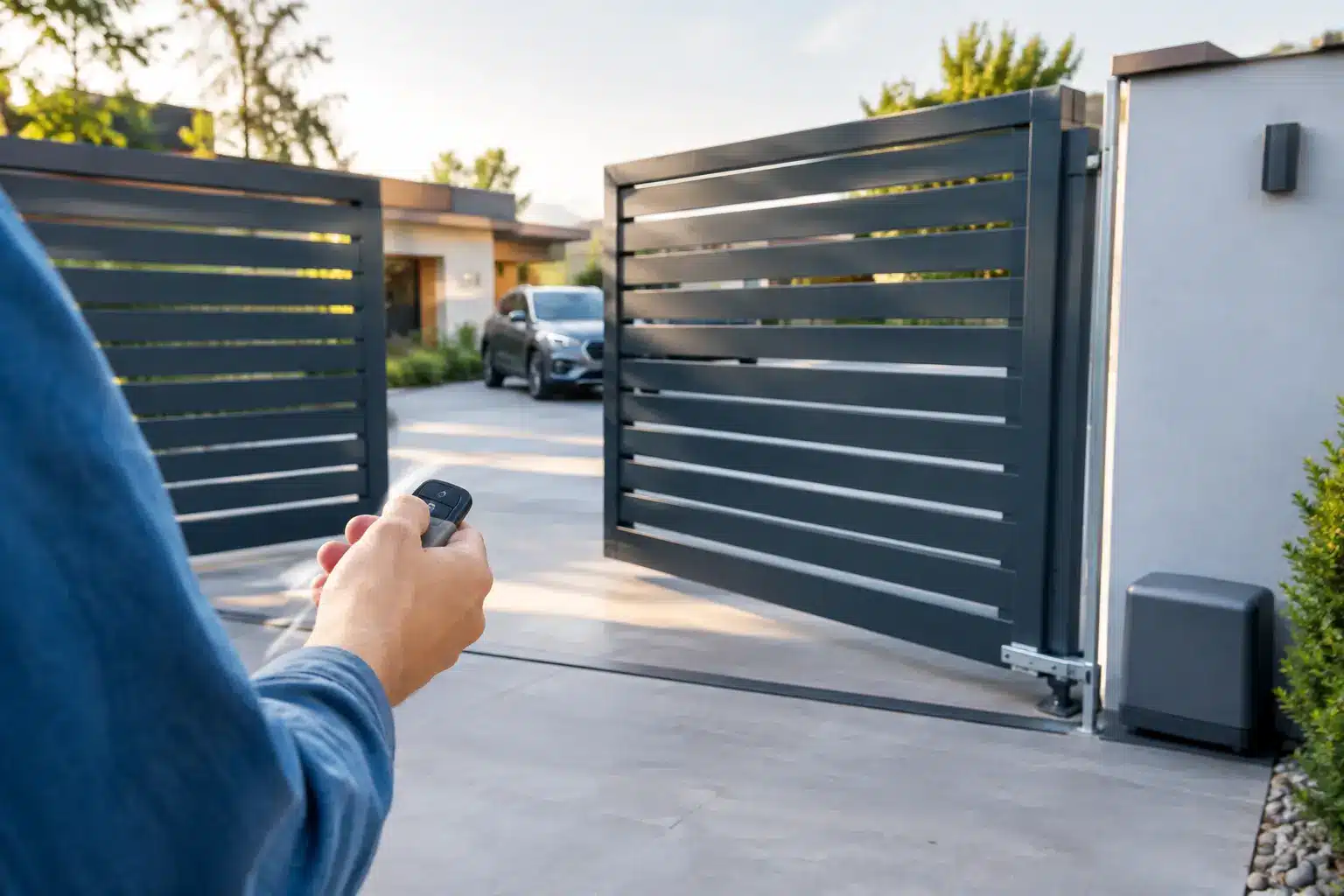
Swing gates are commonly automated with underground motors, articulated arm operators or linear rams. Underground automation gives a refined, discreet finish because the mechanism is concealed below each gate leaf. It is well suited to premium residential entrances, although drainage, groundworks and future access for servicing must be considered. Above-ground arms and rams can be an effective option where ground conditions make underground units impractical.
Sliding gates need a dedicated sliding gate motor, with either a tracked or cantilever arrangement. A tracked system runs on wheels along a ground rail and needs a clean, level route. Cantilever gates avoid a track across the driveway, which can be advantageous where debris, uneven ground or frequent vehicle movements would make a rail less practical. They do, however, require more space to one side for the gate to travel when open.
Bi-folding and telescopic gates require coordinated systems engineered for their particular movement. These designs can be ideal where opening space is restricted and rapid access is needed, but they are not a generic retrofit. The hinges, guides, motors and controls need to work as one considered system.
Check the structure before choosing a motor
Motors are selected by more than gate weight. Leaf length, opening speed, duty cycle, exposure to wind, gradient and frequency of use all affect the specification. A driveway gate used a few times a day has very different demands from a commercial entrance serving staff, visitors and deliveries throughout the day.
Pay particular attention to posts and foundations. Timber posts may have deteriorated below ground, while metal posts can suffer corrosion around their base. Brick or stone piers should be stable enough to carry both the gate load and the leverage created during automated movement. In some cases, reinforcing or replacing the support structure is the sensible route to long-term reliability.
The gate itself may also need alteration. Existing hinges might be upgraded, a sliding gate may need a new track and rollers, or a closing edge may require safety protection. These are not cosmetic extras. They form part of a system that must operate predictably every time.
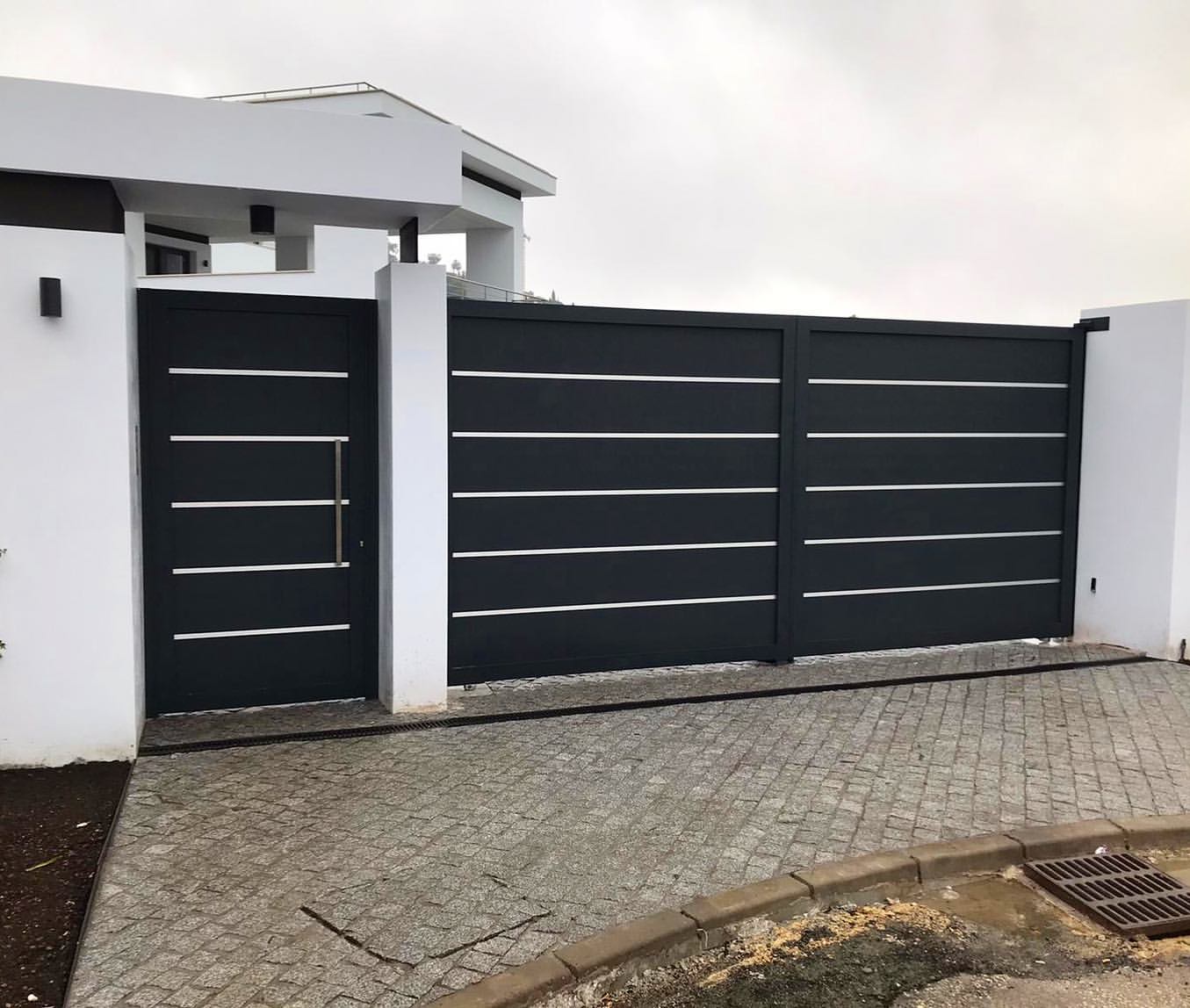
If an older gate is beyond economic repair, replacement can offer better value than adapting it. A made-to-measure aluminium gate is naturally suited to automation: it is strong without excessive weight, resistant to corrosion and engineered around the exact opening, motor position and access requirements. It also avoids investing in machinery for a gate nearing the end of its serviceable life.
Safety systems are part of the installation
An automated gate is a powered machine, not simply a manual gate with a remote control. It needs appropriate safety features to detect people, vehicles and obstructions within its travel path. The exact design depends on the site, but a professional installation may include photocells, safety edges, force limitation and clearly positioned controls.
Photocells create an invisible beam across the entrance. If that beam is interrupted, the gate should not close or should stop and reverse as specified. Safety edges provide contact protection on leading or closing edges. They are particularly relevant where there are pinch points, reduced visibility or a risk of someone being trapped between the gate and a fixed structure.
A site risk assessment is essential, especially where children, pedestrians, visitors or staff use the entrance. Gates close to a public pavement, shared driveway or road need additional thought. It is not enough for the gate to look secure. It must be designed and installed to operate safely in its real environment.
Emergency release is equally important. Every automated gate should have a means of manual operation in the event of a power failure or fault. Homeowners should know where it is, how to use it and how to secure the gate afterwards. For commercial premises, clear procedures and staff awareness are just as valuable as the hardware itself.
Plan power and controls early
A reliable electrical supply is normally the preferred choice for driveway gate automation. Cabling should be planned before landscaping, block paving or resurfacing work begins, as retrofitting power after the driveway is finished can add avoidable disruption and cost.
Solar power can be a useful alternative for remote entrances or locations where trenching a cable is difficult. Its suitability depends on local light levels, panel orientation, gate usage and the power required by the motor and accessories. A solar system should be designed with realistic winter performance in mind, rather than judged solely on sunny-day output.
The control method should reflect how the property is used. Remote fobs are straightforward for family members and regular users. Keypads suit controlled visitor access, while GSM and app-based systems allow a gate to be operated from a phone. Video intercoms add another level of reassurance by allowing you to see and speak to a caller before granting entry.
For a premium entrance, access control should be considered alongside the gate design. An Akuvox intercom, for example, can create a more composed and secure arrival experience than a separate, afterthought control box. For commercial sites, it may be appropriate to integrate keypads, fobs, timed access or vehicle exit detection according to operational needs.
Do not overlook clearance and daily use
A well-specified automated gate should work around the life of the property, not create a new obstacle. Consider how delivery drivers, pedestrians, cyclists and refuse collections will interact with the entrance. A separate pedestrian gate is often the safest and most convenient solution, avoiding the need to operate large driveway leaves for someone on foot.
Opening direction matters too. Swing gates should not open outwards across a public footway or highway. For sloping driveways, ground clearance and the direction of travel must be checked carefully. Even a modest gradient can affect a swing gate’s movement and the type of operator required.
Think about vehicle sizes now and in the future. The clear drive-through width needs to accommodate everyday cars comfortably, but larger vans, tradespeople and emergency access may also influence the final arrangement. At a commercial property, the needs of delivery vehicles can determine whether sliding, swing or telescopic operation is the more practical choice.
Choose professional installation and planned maintenance
Gate automation is not a suitable area for guesswork. Correct brackets, cable protection, safety settings, commissioning and testing all matter. A professionally specified system should be installed in line with applicable UK safety requirements and supplied with clear operating guidance.
Like any mechanical system exposed to the British weather, automated gates benefit from routine inspection and maintenance. Leaves should remain aligned, hinges and rollers should move freely, tracks should be kept clear, and safety devices should be tested. A gate that begins to hesitate, make unusual noise or fail to close consistently should be inspected promptly rather than repeatedly reset.
At Alu-Gate, the strongest projects start with a detailed understanding of the entrance, the property and the way it will be used. A proper survey can establish whether your current gate is a sound candidate for automation or whether a tailored aluminium replacement will deliver greater reliability, security and long-term value.
The best automated gate is not simply the one that opens at the press of a button. It is the one that looks right, moves with confidence and protects the people and property behind it for years to come.