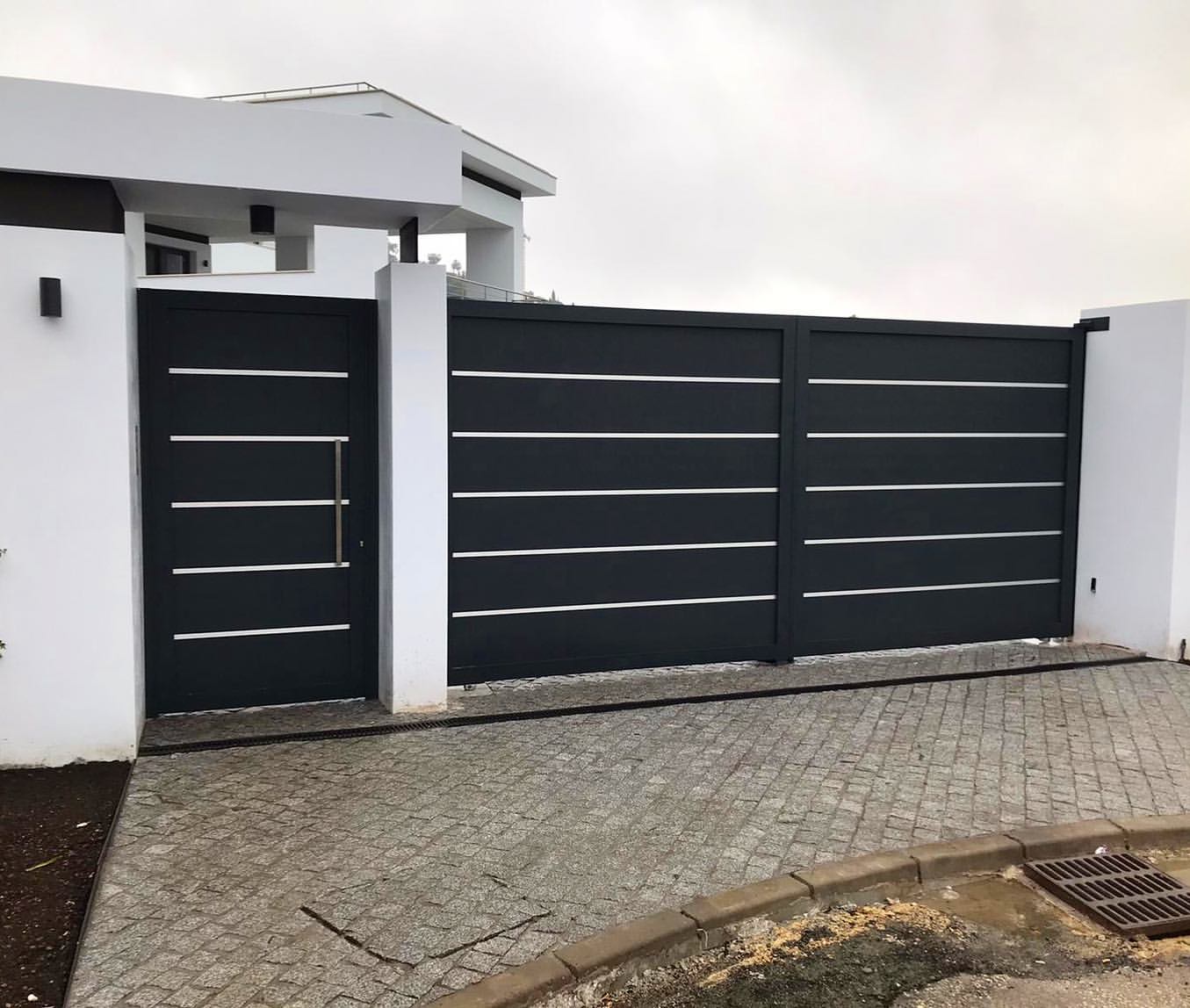

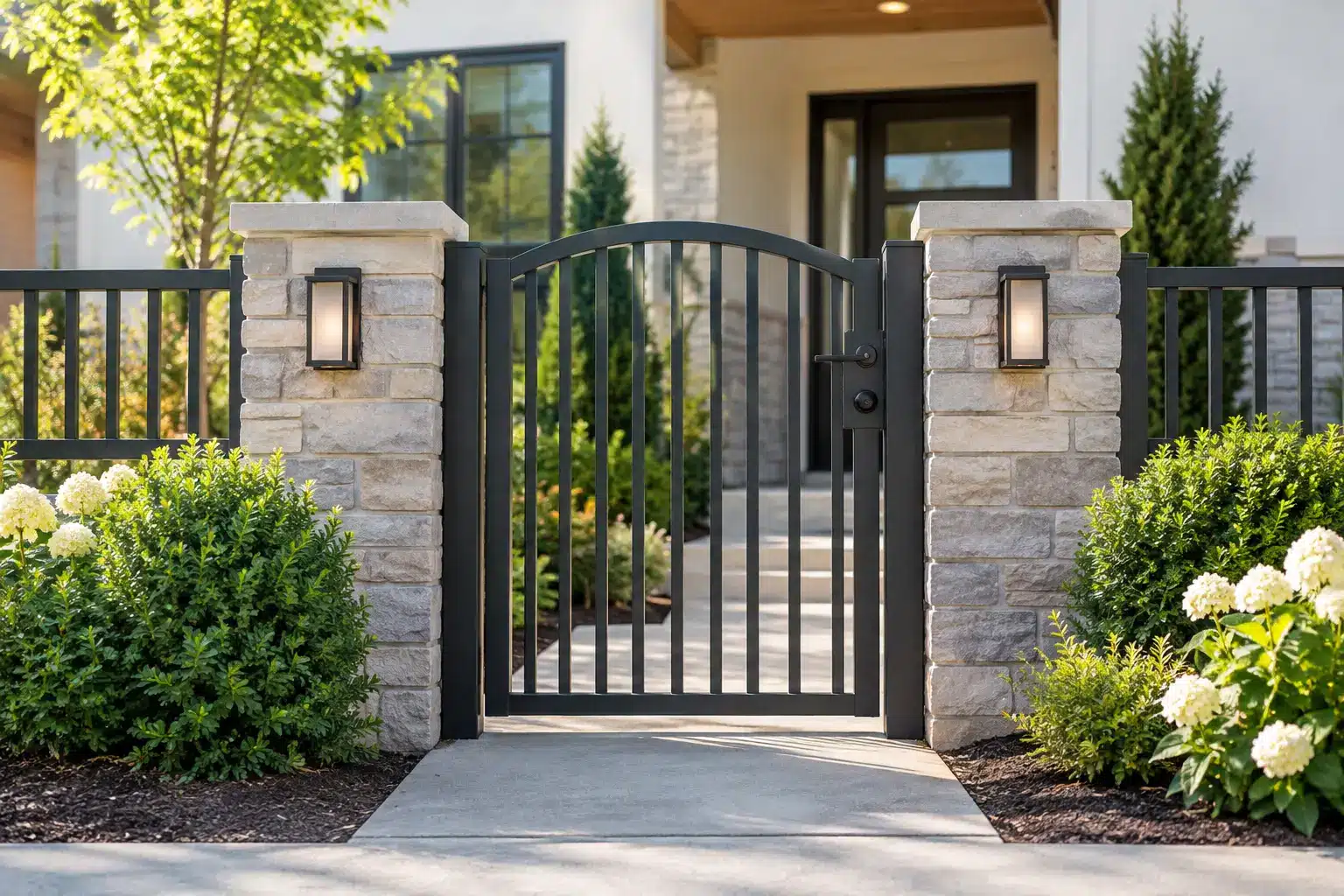
A driveway gate may make the first impression, but pedestrian gates are often the entrance used most. They guide family, guests, deliveries and tradespeople through the boundary without opening the main gates, while giving the whole frontage a more deliberate, secure finish.
For a premium property entrance, a pedestrian gate should never feel like an afterthought. Its proportions, infill design, colour, hardware and access control should work with the driveway gates and fencing around it. When specified properly, it becomes the practical everyday route and a defining part of the architecture.
Why Pedestrian Gates Matter
A separate access gate brings order to how a property is used. Rather than asking someone to operate wide driveway gates on foot, a pedestrian entrance creates a clear route in and out. That is useful for busy households, side passages, garden access and commercial premises where different people need different levels of entry.
Security is equally important. A well-designed gate closes a vulnerable opening in the boundary and helps direct visitors to the right point of access. Combined with a lock, keypad, intercom or video entry system, it gives the property owner more control over who enters and when.
There is also a visual reason to invest in a coordinated design. An isolated timber side gate beside contemporary aluminium driveway gates can make an otherwise considered frontage feel unfinished. Matching aluminium pedestrian gates, fencing and entrance panels create continuity across the entire boundary. The result is cleaner, more valuable-looking kerb appeal.
Choosing the Right Pedestrian Gate Design
The right design begins with the setting, not a catalogue image. A compact urban frontage may need a slim gate that maximises the usable opening without overwhelming the elevation. A large country home may suit a taller, more substantial gate that aligns with the scale of the driveway entrance and perimeter fencing.
Privacy is one of the first decisions. Solid or closely spaced horizontal aluminium slats provide a more enclosed feel, making them a strong choice for side access, garden boundaries and homes close to the pavement. Wider spacing allows more light and visibility through the gate, which can suit a modern frontage where openness matters as much as definition.
Horizontal slats remain a popular choice because they complement contemporary architecture and can be tailored in width and spacing. Vertical designs can create a more traditional rhythm or visually increase the sense of height. Decorative laser-cut panels offer another route, particularly where clients want an entrance with a more individual character. The key is restraint: an intricate pattern needs enough surrounding space to be appreciated and should still support the property’s wider design language.
Height and width deserve careful thought. A gate must be comfortable to pass through with shopping, bins, bicycles or garden equipment, but wider is not always better. An oversized leaf can become heavy in use and place greater demand on posts, hinges and ground conditions. A made-to-measure design allows the opening, frame and hardware to be specified as one system rather than forcing a standard-size gate into an awkward space.
Match the Gate to the Boundary
The strongest entrances treat gates and fencing as one composition. Aligning top lines, slat spacing and colours helps the boundary look intentional from every angle. This matters particularly on corner plots, long driveways and commercial sites, where the pedestrian entrance may be seen before the main gate.
For properties with automated driveway gates, the pedestrian gate should provide an equally polished route for callers. A coordinated intercom panel, letterbox detail or house number can be integrated into an adjacent entrance panel, keeping the gate leaf uncluttered and improving the visitor experience.
Why Aluminium Is Suited to Everyday Use
Pedestrian gates are opened, closed, pushed, leaned on and exposed to the British weather every day. Material choice therefore has a direct effect on both appearance and ownership costs.
Premium aluminium is naturally resistant to corrosion, making it particularly well suited to rain, frost and coastal environments. Unlike timber, it will not absorb moisture, swell, split or require regular staining and painting to maintain its appearance. Unlike untreated steel, it does not rely on constant attention to guard against rust.
That does not mean all aluminium gates are equal. The quality of fabrication matters. Fully welded aluminium construction creates a more rigid, durable frame than a gate assembled from multiple visible mechanical fixings. Precision welding helps the gate retain its shape, supports a refined finish and gives the finished entrance the substantial feel expected from a premium installation.
A high-quality powder-coated finish adds colour, protection and consistency. Anthracite grey remains a confident choice for contemporary homes, while black creates crisp contrast against pale render, stone and brick. Softer greys, greens and bespoke shades can be equally effective where the gate needs to sit quietly within a landscaped setting. Choose the colour in relation to windows, doors, metalwork and fencing, rather than selecting it in isolation.
The benefit is low-maintenance ownership, not no-maintenance ownership. Occasional washing with mild soapy water removes surface dirt, especially in urban or coastal locations. Hinges, closers and locks should also be checked periodically to ensure the gate continues to operate correctly.
Security Starts With the Structure
A secure pedestrian gate is more than a tall panel and a lock. It relies on a strong frame, properly engineered posts, dependable hinges and a closing arrangement that resists sagging and misuse over time.
The specification should account for the gate’s size, weight, exposure to wind and frequency of use. A sheltered side gate used by one household has different demands from an entrance at a shared development or business premises. In higher-traffic settings, self-closing hardware and commercial-grade locking can help maintain security without relying on every visitor to shut the gate properly.
Privacy can support security, but it should be balanced against sightlines. A fully solid design reduces visibility into the property, yet some clients prefer a degree of openness around an entrance so they can see who is outside. The best answer depends on the property’s location, its relationship to the street and how access will be managed.
Access Control That Fits Your Routine
A conventional key lock may be entirely right for a garden side gate. For a front boundary gate used daily by visitors, a keypad, fob reader or video intercom can offer a more convenient and controlled solution. Akuvox intercom systems, for example, can be specified as part of a considered entrance arrangement where visual verification and remote access are required.
Access control should be planned early. Retrofitting cabling, mounting panels or power supplies after a gate is installed can compromise the clean finish and increase cost. At the design stage, consider where visitors will stand, whether the controls are comfortably reachable and how parcels will be delivered without weakening the security of the boundary.
Details That Separate a Premium Installation
The difference between an ordinary gate and a considered entrance is often found in the details. Clean frame lines, concealed or discreet fixings, carefully positioned hinges and a flush latch arrangement all contribute to the final appearance. So does the way the gate meets the paving, wall, fencing or entrance posts around it.
Ground levels must be surveyed accurately. A sloping drive or uneven path may affect the clearance beneath the gate and the direction in which it can open. Drainage, planting and existing walls also influence the final specification. These are practical matters, but they determine whether the gate feels effortless to use for years or becomes an irritation from day one.
For homeowners replacing an older timber gate, it is worth reassessing the whole entrance rather than simply matching the previous dimensions. The original layout may not have allowed enough clearance for bins, prams or mobility needs. It may also lack a proper visitor access point. A bespoke solution creates an opportunity to correct those everyday frustrations while improving the property’s appearance.
Alu-Gate designs made-to-measure aluminium entrance systems around these real conditions, combining fully welded construction, tailored finishes and a 20-year guarantee. The aim is not simply to fill an opening, but to create an entrance that looks composed, feels secure and continues to perform.
A pedestrian gate earns its place every time someone arrives on foot. Specify it with the same care as the driveway gates beside it, and the entire boundary will feel stronger, smarter and properly complete.