
A boundary should do more than mark the edge of a property. It should strengthen privacy, frame the architecture and make the approach to your home feel considered from the first glance. The best aluminium fencing styles achieve all three, combining crisp design with a level of durability that timber and steel alternatives often struggle to match.
For homeowners investing in a driveway, garden renovation or complete exterior scheme, aluminium offers a premium, low-maintenance route to a more secure and cohesive boundary. The right style depends on what the fence needs to do: screen a busy road, complement a contemporary gate, contain a garden or add definition without closing off light and views.
1. Horizontal slatted fencing
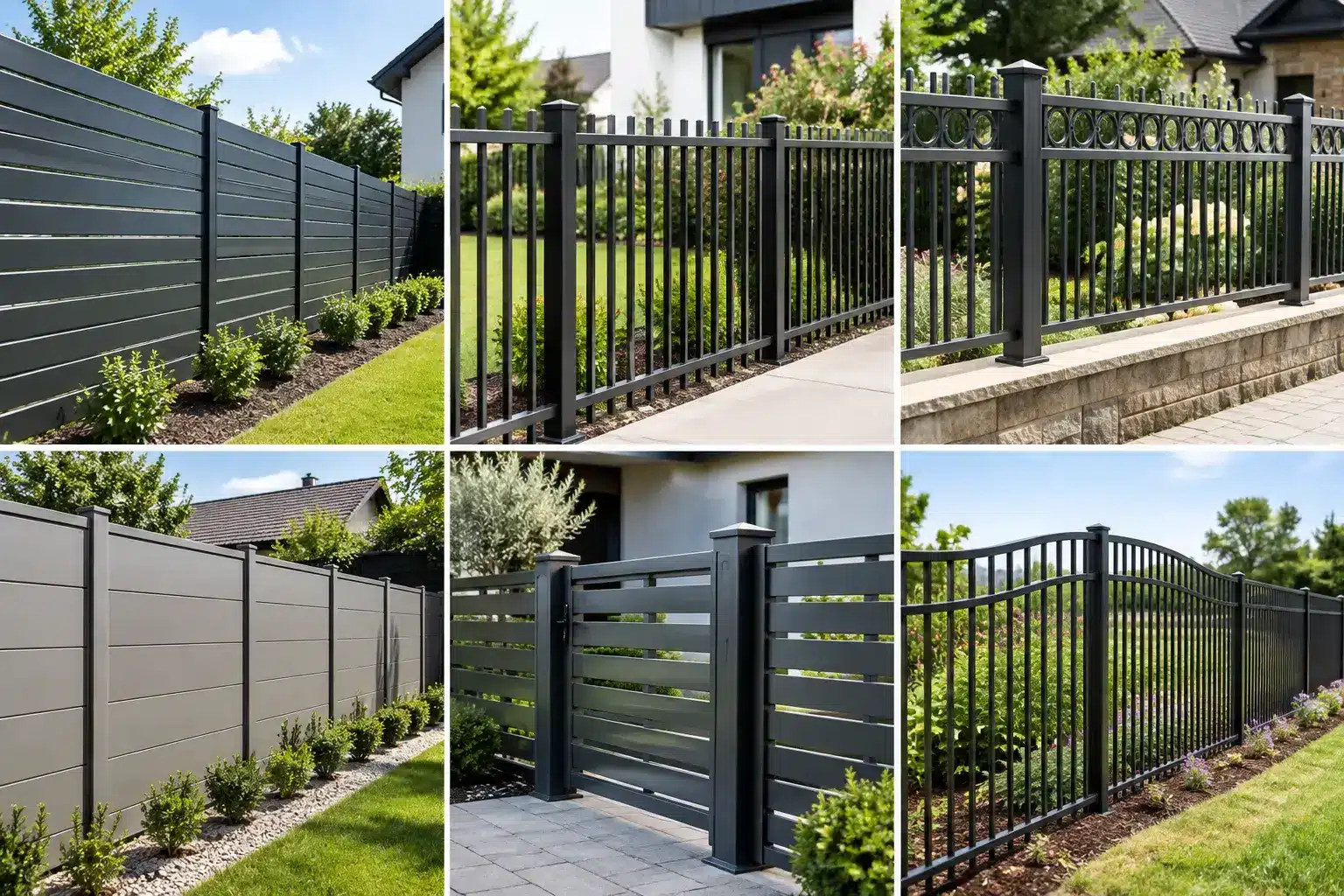
Horizontal slatted fencing is one of the most popular choices for contemporary UK properties. Its long, clean lines visually widen a frontage or garden, making it particularly effective along driveways, side boundaries and modern extensions. The spacing between slats can be specified to create anything from a lightly screened boundary to a near-solid privacy wall.
A narrow gap allows air and daylight through while limiting sightlines into the property. A closer arrangement offers greater privacy, but can make a small garden feel more enclosed. This is where made-to-measure fabrication matters: panel widths, slat proportions and post positions can be designed around the scale of the site rather than forced into standard sizes.
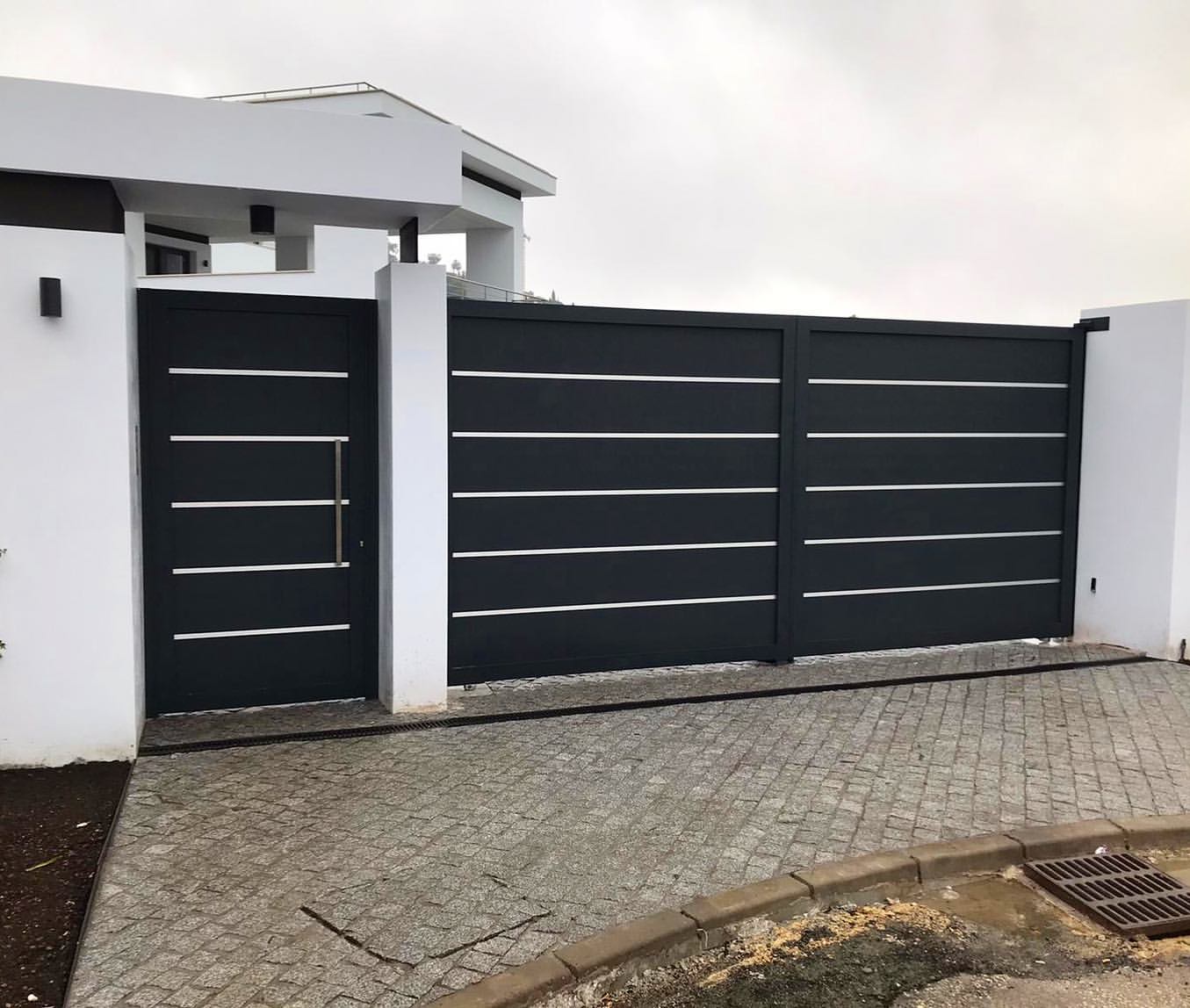
Horizontal slats coordinate naturally with aluminium sliding gates, swing gates and pedestrian gates. Choosing the same profile and powder-coated finish across each element creates an entrance that looks designed as one system, rather than assembled in stages.
2. Vertical slatted fencing
Vertical aluminium slats give a boundary a more architectural, upright appearance. They suit tall or narrow elevations particularly well, drawing the eye upwards and adding a sense of height. This makes them a strong option beside townhouses, new-build homes and properties where the fence needs to sit comfortably alongside brick pillars or taller gate posts.
The style can be formal and refined, especially in darker finishes such as anthracite grey, black or deep bronze. Wider spacing produces a lighter, more open effect, while closely set slats create a sharper privacy screen. Unlike timber, aluminium slats will not warp, split or require regular staining to retain their clean lines.
Vertical fencing is also worth considering where climbing plants are part of the garden plan. It provides a disciplined backdrop for softer planting, allowing greenery to add texture without making the boundary feel untidy.
3. Full privacy aluminium panels
Where overlooking, road noise or exposed boundaries are the priority, full privacy panels are among the best aluminium fencing styles available. These solid or near-solid designs create a confident visual barrier, making them well suited to rear gardens, hot tub areas, bin storage, service yards and properties on busy routes.
The most successful privacy fencing does not simply block a view. It considers height, proportions and finish so the boundary still feels elegant. Tall, uninterrupted panels can look imposing on a compact plot, so introducing a change in panel orientation, a contrasting inset or a planted section can soften the overall effect.
For a premium result, specify fully welded construction rather than loosely assembled components. Welded panels offer a cleaner appearance, greater rigidity and fewer areas that may work loose over time. This matters on exposed sites, where a fence must withstand regular wind loading as well as daily use.
4. Louvre-style fencing
Louvre-style aluminium fencing brings privacy and airflow together. Angled blades obscure direct views while allowing breezes to pass through, making this style particularly useful in sheltered garden seating areas, pool surrounds and side passages where ventilation is welcome.
The angle of the louvres changes how the panel performs. A tighter angle offers stronger screening, while a more open profile introduces more light and a lighter visual feel. It is a style that rewards careful positioning. Facing the blades in the right direction can shield a neighbouring window or road while preserving views from within the garden.
Louvre fencing has a distinctly modern character, but it can work equally well with traditional brickwork when the finish is chosen thoughtfully. A textured black, muted grey or warm metallic tone can give the design depth without appearing overly industrial.
5. Decorative feature panels
Decorative aluminium panels are ideal when a fence needs a focal point rather than a continuous screen. Laser-cut patterns, geometric designs and bespoke motifs can be used as a single statement panel between plainer sections, near a gate entrance or as a backdrop to planting and outdoor seating.
Used with restraint, decorative panels add personality without compromising the premium look of the boundary. They are particularly effective at breaking up a long run of solid fencing or creating a memorable pedestrian entrance. The pattern should be selected with both privacy and maintenance in mind: very intricate designs can look striking, but a larger-scale pattern is often more visible from a distance and easier to keep clear of leaves.
For commercial premises, decorative panels can also incorporate a subtle visual identity while retaining a secure, durable perimeter. The key is to avoid treating them as an afterthought. Their dimensions, colour and placement should relate to the surrounding gates and fencing.
6. Aluminium railings and open-bar fencing
Not every property needs complete privacy. Open-bar aluminium fencing and railings provide clear boundary definition while preserving views, natural light and the openness of the frontage. This style is often suited to period homes, communal grounds, commercial sites and front gardens where visibility is part of the security strategy.
The design can be traditional with vertical bars and finials, or more contemporary with flat-top bars and simplified profiles. Aluminium delivers the crisp finish associated with metal railings without the recurring risk of rust that comes with poorly protected steel.
Open-bar fencing is a sensible choice when you want a property to feel accessible rather than concealed. However, it will not offer the privacy of slatted or solid panels. Many homeowners combine it with denser fencing at the side and rear, using railings only at the front where kerb appeal and sightlines matter most.
7. Mixed-material and mixed-profile fencing
The most distinctive schemes often combine styles rather than relying on one panel design throughout. Aluminium fencing can sit alongside rendered walls, brick piers, stonework and timber-effect elements to create a boundary with texture and depth. A horizontal slatted run may meet a solid privacy section by a patio, for example, while a decorative panel marks the transition to a garden gate.
Mixed-profile fencing is especially useful on irregular plots. It allows each area of the boundary to respond to a specific requirement, such as screening a neighbour, retaining a view or matching the height of an existing wall. The result can feel highly bespoke, provided the colour palette and detailing are kept consistent.
This approach needs careful design discipline. Too many finishes or panel types can make a frontage appear fragmented. Restrict the scheme to one main colour, one secondary material and a clear repeating detail, such as matching post caps or gate frames.
Choosing the right aluminium fencing style
Start with function before appearance. Consider where privacy is genuinely required, where you need visibility for vehicles or pedestrians, and whether wind exposure could influence panel choice. Then look at the property itself. A minimalist new-build often benefits from horizontal slats or louvres, while a period property may suit contemporary railings or a restrained vertical-bar design.
Colour has a major influence on the final result. Anthracite grey remains a versatile choice, particularly when windows, doors and roof details already use darker tones. Black provides definition and contrast, while bespoke powder-coated colours can be specified to complement brickwork, render or existing architectural metalwork. A quality powder-coated finish should retain its appearance with routine cleaning rather than seasonal repainting.
Finally, consider the fence as part of a complete entrance system. Coordinating fencing with a driveway gate, pedestrian gate, access control and posts produces a more valuable, finished result. It also allows the security, opening requirements and visual proportions to be planned together rather than compromised later.
A well-specified aluminium boundary is designed to impress long after installation day. Whether the priority is a private garden retreat, a sharper driveway entrance or a durable commercial perimeter, expert guidance will help turn a preferred style into a fencing system that fits the property precisely. Alu-Gate can help you assess the design, dimensions and finish needed for a made-to-measure solution built for the long term.