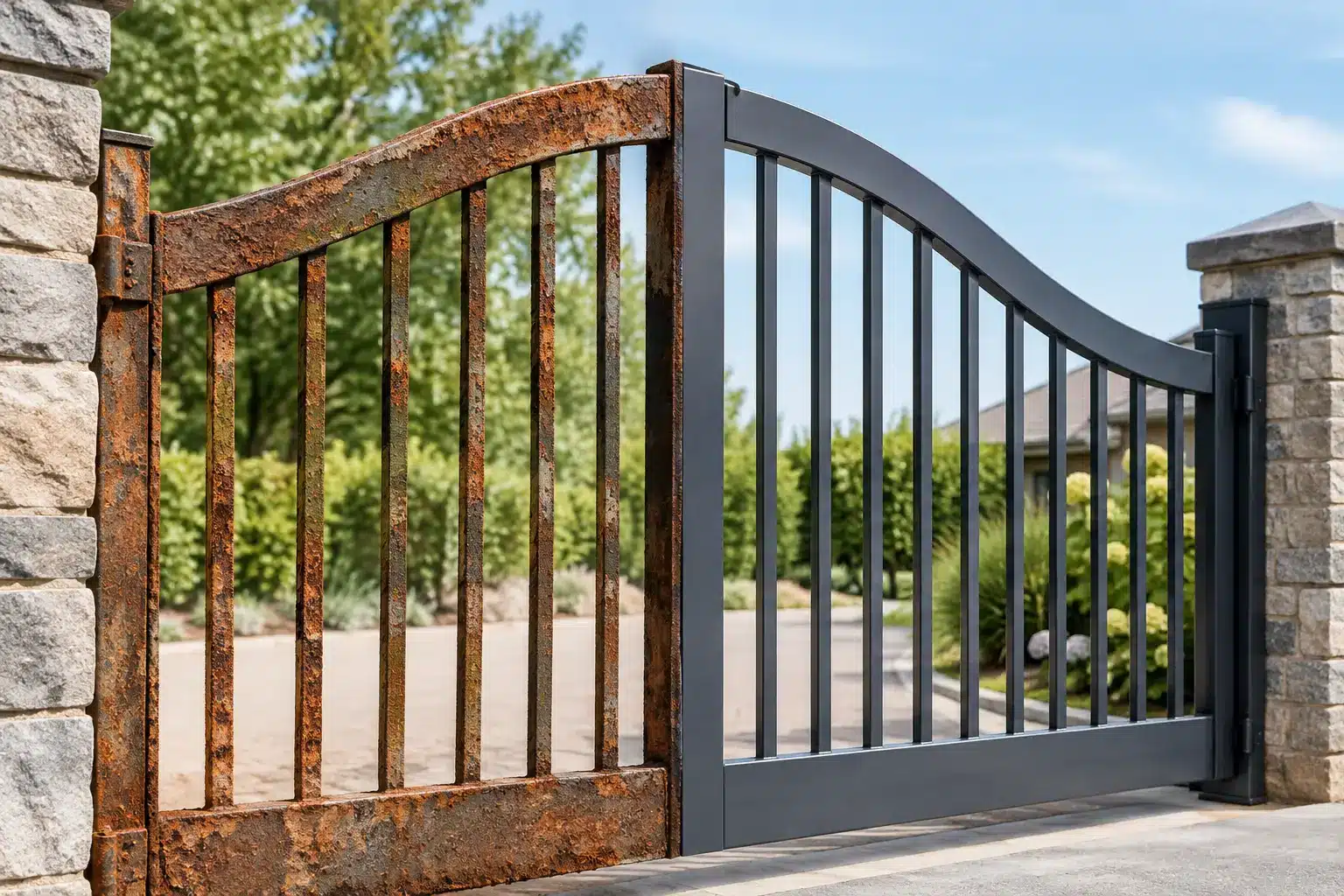
A gate can look immaculate on the day it is fitted, then begin showing its age where rainwater sits, coatings chip or dissimilar metals meet. So, do gates corrode? Many do – but the speed, severity and visibility depend heavily on the material, construction quality, finish and exposure at your property.
For homeowners and commercial buyers, this is more than a cosmetic concern. Corrosion can stain paving, weaken joints, affect moving parts and turn a feature entrance into a regular maintenance task. Choosing the right gate material at the outset protects both kerb appeal and long-term value.
Do Gates Corrode in the British Climate?
The UK climate gives exterior gates a demanding job. Persistent rainfall, winter frost, damp air and airborne pollution all create favourable conditions for corrosion. Properties near the coast face an additional challenge: salt in the air can accelerate corrosion, even where a gate is not directly exposed to sea spray.
Corrosion is the gradual breakdown of a metal caused by its reaction with moisture, oxygen or other substances. Rust is the familiar reddish-brown form of corrosion associated with iron and steel. Not all metals rust in this way, however. Aluminium, for example, forms a thin oxide layer that helps protect the metal beneath it.
The practical question is not simply whether a gate can corrode. It is how well its material and finish resist the conditions it will face over many years.
Why Steel and Iron Gates Rust
Traditional wrought iron and mild steel gates remain popular for their weight, presence and decorative potential. Yet both contain iron, which means both are vulnerable to rust when moisture reaches the bare metal.
A painted steel gate is only as protected as its coating. Small chips from everyday use, stone impact, overgrown planting or a careless delivery can expose the substrate. Water then works beneath the paint film, often causing bubbling, flaking and spreading rust. The bottom rails, joints, hinges and areas close to the ground are especially prone because they retain moisture and collect debris.
Galvanising improves steel’s resistance by applying a zinc coating. This is a worthwhile protection measure, particularly when combined with a quality powder-coated finish. Even so, galvanised steel is not maintenance-free. Cut edges, drilled holes, damaged coatings and poorly detailed welds still require attention. Over time, galvanised surfaces can weather and may develop white corrosion products in persistently damp conditions.
Steel and iron can be an appropriate choice where a traditional aesthetic is central to the project and the owner accepts ongoing maintenance. Regular inspection, prompt paint repairs and periodic recoating should be part of the ownership plan, rather than an afterthought.
Aluminium Gates: A Different Response to Weather
Aluminium does not contain iron, so it does not rust. When exposed to air, it naturally forms an aluminium oxide layer. This tightly bonded layer slows further oxidation and is one reason aluminium is widely used in exterior architectural applications.
That does not mean aluminium is invincible. It can still oxidise, become marked by contamination or suffer surface damage in harsh environments. In coastal locations, for instance, salt deposits should be washed away periodically. But aluminium avoids the expanding red rust that can compromise the appearance and structure of untreated or damaged ferrous gates.
For a premium driveway, garden or pedestrian gate, the difference is significant. A properly specified aluminium system offers a clean, stable appearance without the recurring sanding, priming and repainting associated with steel or timber. It is also considerably lighter than steel, reducing strain on posts, hinges and automation components when the gate is correctly engineered.
At Alu-Gate, fully welded aluminium construction is designed around this long-term advantage. Rather than relying on multiple mechanical connections that can loosen or create moisture traps, a precision-welded frame provides strength, clean lines and dependable performance.
The Finish Matters as Much as the Metal
Material selection is only half the decision. The finish is the gate’s first line of defence against weathering, dirt and daily use.
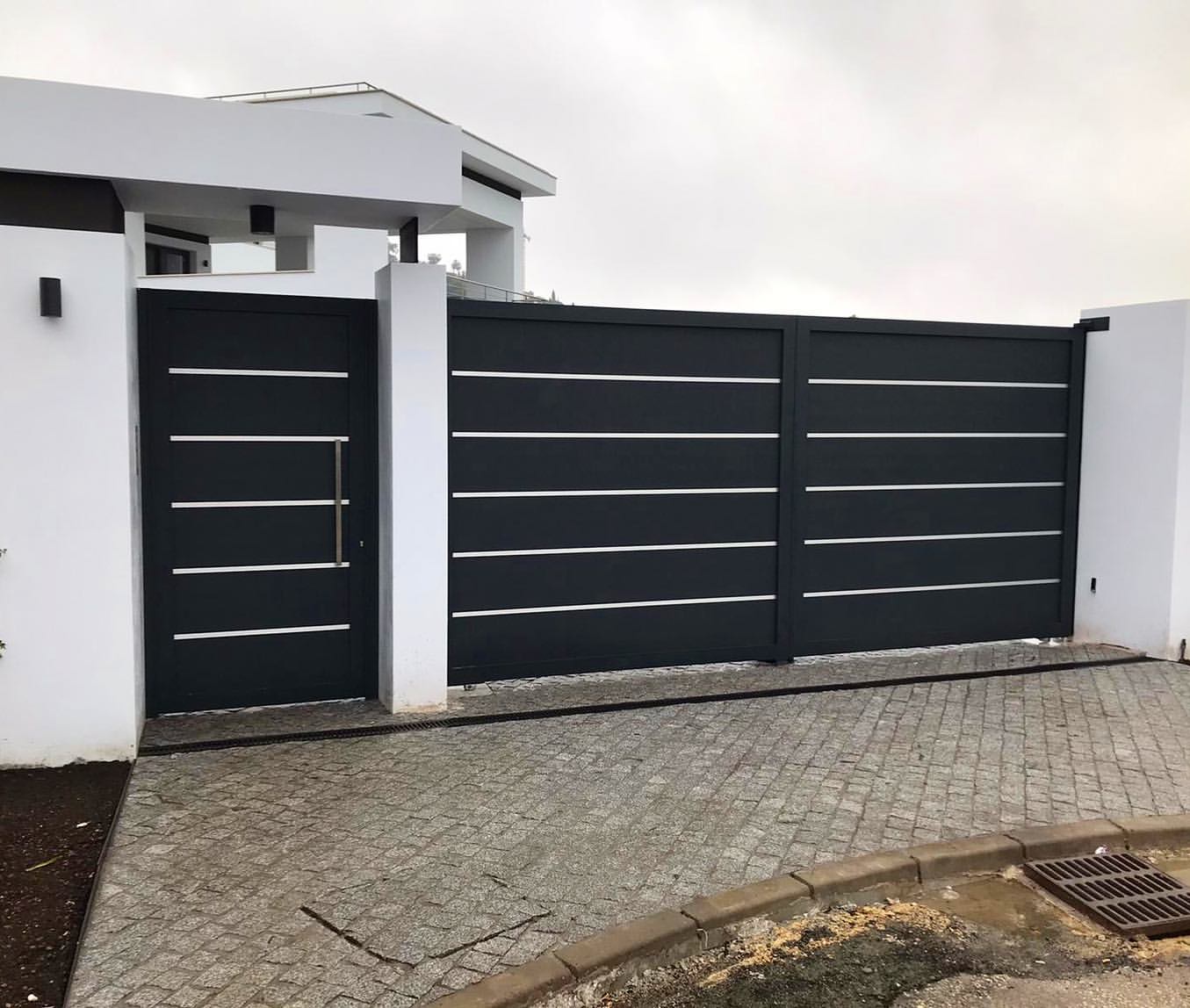
A high-quality powder-coated finish gives aluminium an additional protective barrier and the freedom to achieve a tailored colour and style. Unlike a basic painted surface, powder coating is applied in controlled conditions and cured to create an even, durable finish. The result is a refined appearance suited to contemporary slatted gates, solid privacy panels and more traditional entrance designs.
Quality preparation is crucial. Poor surface preparation, uneven application or inadequate curing can undermine even the best material choice. For that reason, buyers should look beyond a colour chart and ask how the gate is fabricated, prepared and finished.
Dark colours can show dust, pollen and water spotting more readily than mid-tones, while textured finishes can help disguise minor marks. This is an aesthetic trade-off rather than a corrosion issue, but it is worth considering when specifying a prominent driveway entrance.
The Weak Points That Cause Premature Corrosion
A gate can be made from a corrosion-resistant material and still have vulnerable components. Hinges, bolts, fixings, locks, tracks and automation hardware must be selected to match the gate, location and intended usage.
One concern is galvanic corrosion. This can occur when two different metals are in contact in the presence of moisture, creating an electrochemical reaction. It is not a reason to avoid aluminium gates, but it is a reason to insist on thoughtful specification. Suitable fixings, isolating components and compatible hardware help prevent unnecessary issues.
Water management also matters. Flat surfaces, unsealed joints and poorly positioned drainage points can hold water and debris. A well-designed gate should allow water to drain away rather than collect inside rails, around hinges or at the base of posts.
Automation introduces further considerations. Electric gates need correctly sized hinges or running gear, protected cabling and reliable safety equipment. A heavy, corroding gate can place increasing load on motors over time. A lighter aluminium gate can be a practical advantage, provided the system is designed for the opening type, span and wind exposure.
Coastal, Rural and Urban Properties Need Different Thinking
There is no single gate specification that suits every setting. The correct solution depends on where the property is and how the gate will be used.
Coastal homes should prioritise highly corrosion-resistant materials, premium coatings and compatible stainless steel or protected hardware. Routine rinsing is sensible, particularly after periods of strong onshore wind. In rural locations, mud, leaf debris and standing water can affect lower sections and moving parts. Urban properties may face grime, road salt and greater day-to-day use from vehicles, deliveries and visitors.
Exposure is not always obvious. A sheltered side gate beside dense planting may stay damp for longer than an open driveway gate. Likewise, a north-facing entrance can dry slowly through winter. A proper site-led consultation identifies these details before the design is finalised.
How to Keep a Gate Looking Its Best
Low maintenance does not mean no maintenance. Even aluminium gates benefit from simple care, and regular attention prevents minor issues becoming costly ones.
Wash the gate occasionally with clean water and a mild, non-abrasive detergent, particularly after winter or in coastal areas. Avoid harsh solvents, wire brushes and aggressive cleaners that could damage the finish. Clear leaves, soil and debris from the gate base, hinges, tracks and drainage areas so moisture is not held against components.
Check moving hardware periodically. Hinges, locks, sliding-gate tracks and automation systems should operate smoothly and be serviced in line with the manufacturer’s guidance. If the powder-coated finish is deeply scratched, arrange a suitable repair promptly to preserve the appearance and protection of the surface.
For steel gates, this routine needs to go further. Inspect paintwork carefully for chips, blisters and rust staining, then treat and repaint affected areas before corrosion travels beneath the coating.
Choosing a Gate for Long-Term Value
The lowest initial price does not always represent the best value. A steel gate may appear cost-effective at installation, but repainting, rust repairs and replacement hardware can add up over its lifetime. Timber offers warmth and character, yet it can warp, split, fade and require regular treatment in exposed conditions.
Aluminium typically carries a higher initial investment than basic timber or steel alternatives, but it offers a compelling balance of strength, design flexibility, low weight and resistance to rust. For property owners seeking a tailored entrance that continues to look considered year after year, that reduced maintenance burden is often decisive.
The right choice should also reflect the gate’s purpose. A tall privacy gate, a statement driveway gate, a secure commercial entrance and a compact pedestrian gate all place different demands on materials and hardware. Bespoke sizing, proper post design and a finish chosen for the environment matter as much as the style of the infill.
A gate should enhance an entrance, not create a maintenance schedule. Specify the material, construction and finish with the same care you would apply to the rest of your property, and it can remain a strong, refined first impression for decades.