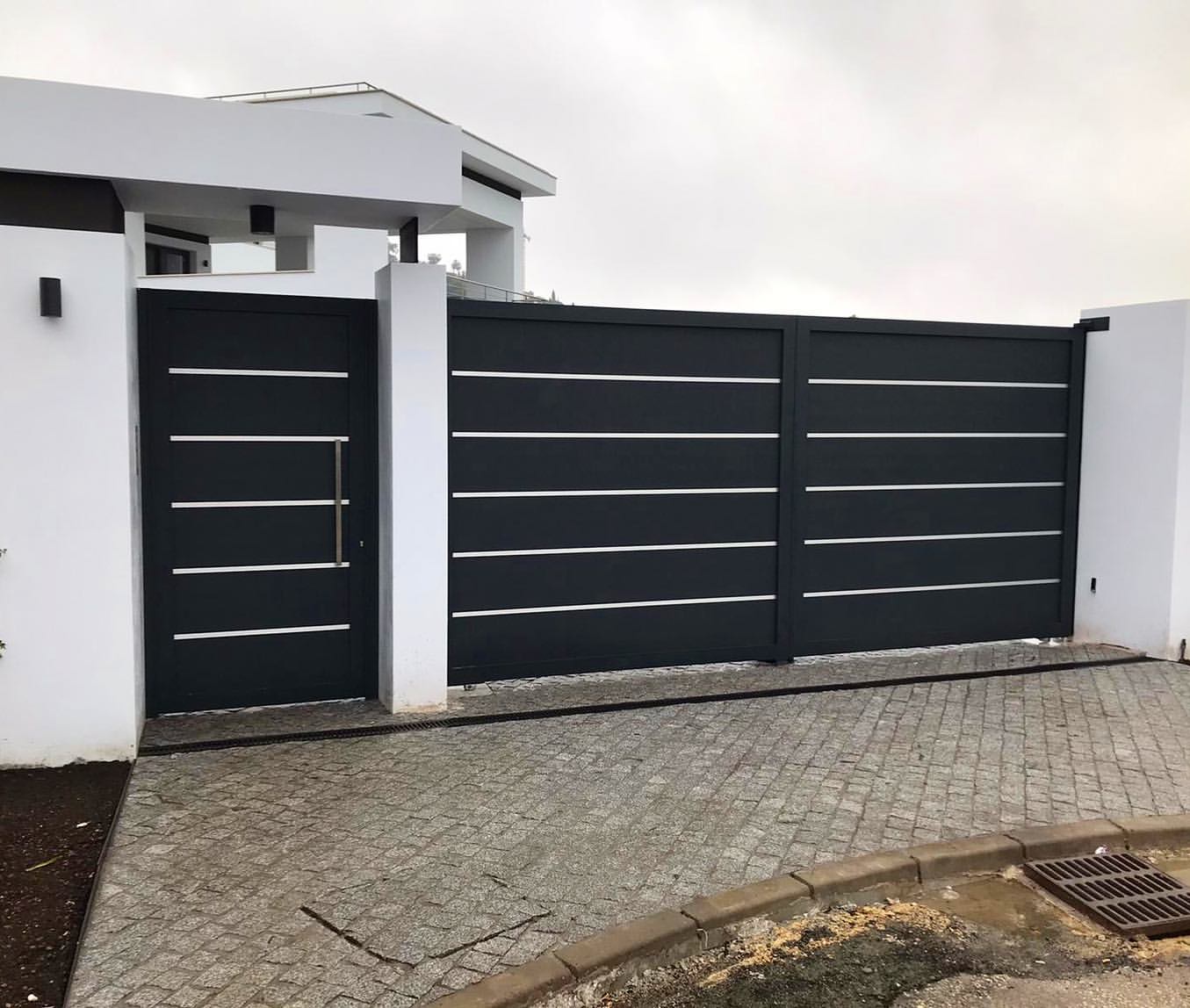

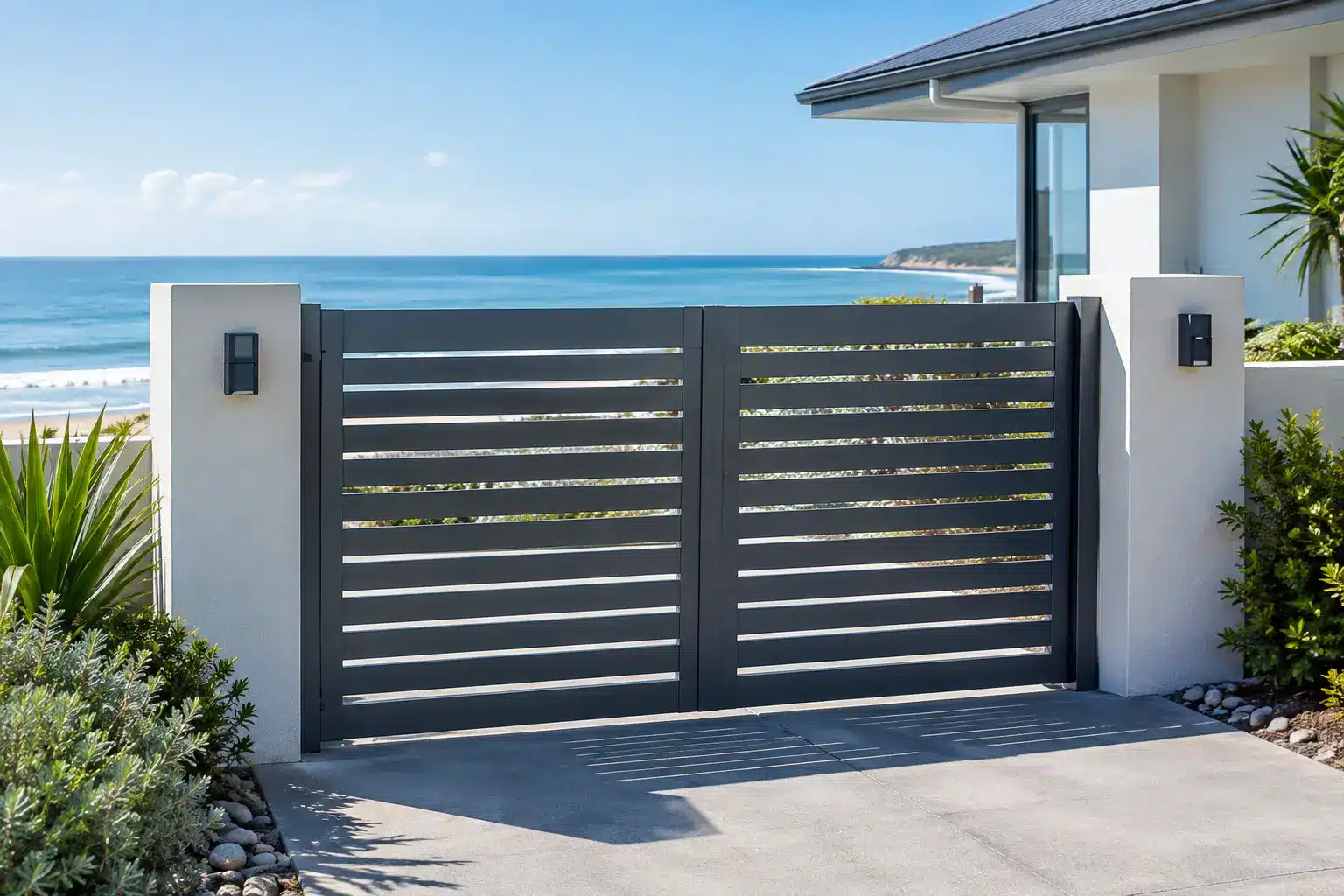
Salt carried on the wind does not stop at the shoreline. It settles on driveways, gate hardware, walls and every exposed surface around a property. For homeowners near the sea, aluminium gates for coastal homes offer a considered answer: a made-to-measure entrance that brings privacy, security and striking kerb appeal without demanding constant repair or repainting.
The right specification matters as much as the material itself. A coastal gate must be designed for wind exposure, salt-laden air, reliable movement and the character of the property. Get those details right and your entrance can look as impressive in year ten as it does on installation day.
Why aluminium suits coastal properties
Timber can look beautiful, but repeated wetting, drying and salt exposure can leave it vulnerable to swelling, splitting and finish deterioration. Steel is exceptionally strong, yet any damage to a protective coating needs prompt attention to prevent corrosion taking hold. Both materials can work in coastal settings, but they ask more of the owner over time.
Aluminium does not rust in the way ferrous metals do. It naturally forms a protective oxide layer, making it an excellent foundation for a gate exposed to rain and sea air. Combined with a high-quality powder-coated finish, it provides the clean, architectural appearance many coastal homes call for, from contemporary new builds to renovated period properties.
It is also comparatively lightweight. This reduces strain on posts, hinges and automated systems, particularly useful for wide driveway openings. Lightweight should not be confused with flimsy. A properly engineered, fully welded aluminium gate is built around its intended opening, use and environmental conditions rather than simply cut from a standard panel.
Aluminium gates for coastal homes need the right specification
Not all aluminium gates are equal, and coastal conditions quickly expose shortcuts in materials and fabrication. The visible gate leaf is only one part of the system. Posts, fixings, hinges, latches, motors and access controls all need to be chosen with the same care.
Fully welded construction brings lasting strength
A premium aluminium gate should feel solid, close cleanly and hold its alignment. Fully welded construction creates a stable frame and avoids the movement that can develop in mechanically assembled designs. It also gives the gate a neater, more refined finish, with proportions tailored to the property rather than constrained by standard sizes.
This is particularly relevant on exposed sites. A gate that catches prevailing winds needs suitable bracing, appropriate post foundations and a design that manages air flow. Solid privacy panels may be ideal for a sheltered driveway, but a slatted or perforated design can be the wiser choice where gusts are frequent. The best solution depends on the location, opening width and level of shelter around the entrance.
Finish quality is more than a colour choice
Powder coating gives aluminium gates their colour and provides an additional protective barrier. For coastal homes, finish preparation and coating quality deserve close attention. A premium coating should be even, durable and suited to external use, including around cut edges and welded areas.
Anthracite grey and black remain popular for modern coastal architecture, while softer greys, warm neutrals and bespoke colours can complement rendered walls, natural stone or weathered timber cladding. The aim is not simply to choose a fashionable shade. It is to create an entrance that belongs to the property and will continue to do so as exterior materials mature.
Do not overlook the hardware
Salt air affects more than gate panels. Hinges, bolts, locks and ground catches are often the first components to reveal a poor specification. High-quality, corrosion-resistant hardware is essential, as is avoiding incompatible metal combinations that may cause corrosion where they meet.
For automated gates, ask how the motor, control cabinet, safety equipment and cabling will be protected from water and salt. Good installation planning includes drainage, sensible placement of electrical components and accessible maintenance points. A beautiful gate is only as dependable as the system that operates it.
Choose a design that works with the setting
Coastal homes vary widely. A clifftop contemporary property may suit broad horizontal slats and a flush, minimal frame. A cottage near the harbour may call for vertical detailing, softer colours and a more traditional rhythm. Bespoke manufacture makes it possible to respond to those differences without compromising security or practicality.
Sliding gates are often an excellent option where a steep drive, limited swing space or strong winds make traditional opening leaves less suitable. They can also create a particularly clean frontage on wider plots. Swing gates remain a popular choice for driveways with adequate clear space, offering a classic, balanced arrival.
For pedestrian access, a coordinated side gate can carry the same profile, colour and finish as the driveway gate and fencing. This creates a purposeful boundary rather than a collection of unrelated products. Matching aluminium fencing or privacy panels can be especially effective where a coastal plot needs screening from footpaths, neighbouring properties or passing traffic.
Privacy is a common priority, but complete visual enclosure is not always the answer. Consider sightlines when leaving the driveway, the amount of wind pressure the gate will receive and whether the local setting benefits from a more open design. A design consultation should resolve these practical questions before fabrication begins.
Security without compromising kerb appeal
A coastal entrance should feel welcoming from the road while clearly defining a private property. Aluminium gates can be configured with close-spaced slats, solid infill, secure locking and access control to provide that reassurance without making the frontage feel heavy.
Automation adds day-to-day convenience, particularly in poor weather. Paired with an intercom or video entry system, it allows residents to manage visitors and deliveries without walking to the gate. For second homes or properties that may be unoccupied for periods, this additional control can be valuable.
Security should be designed into the complete system. Gate height, gaps between slats, hinge protection, lock position, post strength and access arrangements all influence performance. A decorative gate fitted with unsuitable hardware is a missed opportunity. A bespoke entrance system considers each element together.
Low maintenance still needs a routine
Aluminium is chosen partly because it avoids the cycle of sanding, staining and repainting associated with timber. That does not mean it should be ignored. Coastal deposits can build up on any exterior finish, and regular care protects the appearance of the gate and helps identify minor issues early.
A simple fresh-water rinse at intervals is often enough to remove salt and airborne grime, with more frequent cleaning on properties directly exposed to the sea. Use a soft cloth or sponge and mild, non-abrasive detergent where needed. Avoid harsh chemicals, wire brushes and abrasive pads that could mark the powder-coated surface.
It is sensible to inspect hinges, locks and automation components periodically, particularly after severe weather. Clear leaves, grit and standing water from tracks and drainage points. If the gate is automated, arrange servicing in line with the system manufacturer’s recommendations. These small measures support smooth operation and protect the investment made in a premium entrance.
Plan for the long term, not the first season
The least expensive gate is rarely the lowest-cost choice for a coastal property. Repeated repairs, recoating, replacement hardware and time spent managing deterioration soon change the calculation. A made-to-measure aluminium system costs more upfront than a basic off-the-shelf alternative, but it offers stronger long-term value when it is fabricated well and correctly specified.
Look beyond a brochure image when comparing suppliers. Ask how the gates are constructed, whether dimensions are genuinely tailored, what finish and hardware are included, and how wind exposure will be assessed. Confirm the guarantee and understand what maintenance is expected. At Alu-Gate, bespoke aluminium gates are precision welded and supplied with a 20-year guarantee, giving property owners confidence in an entrance designed to endure.
A coastal property deserves more than a gate that merely survives the weather. Choose an aluminium entrance that suits the architecture, handles the conditions and makes arriving home feel considered every time.