
A pedestrian entrance is often the most frequently used point on a property boundary. It is where family, visitors, deliveries and contractors arrive, but it can also be the easiest point for an unauthorised person to test. Knowing how to secure pedestrian entrances means looking beyond a lock alone. The gate, frame, fencing, access control and everyday use all need to work as one considered system.
For a home, that may mean a discreet side gate that prevents access to the rear garden without making the frontage feel closed off. For commercial premises, it may mean controlling staff and visitor movement while retaining a professional, welcoming appearance. The right solution is tailored to the property, the level of risk and how people genuinely use the entrance.
Start with the route, not the gate
Before selecting a pedestrian gate, examine what it is protecting and how someone would approach it. A side passage leading to a rear garden, a shared access path and a pedestrian entrance beside vehicle gates each present different risks. The objective is not simply to make entry harder. It is to remove obvious weak points and make authorised access straightforward.
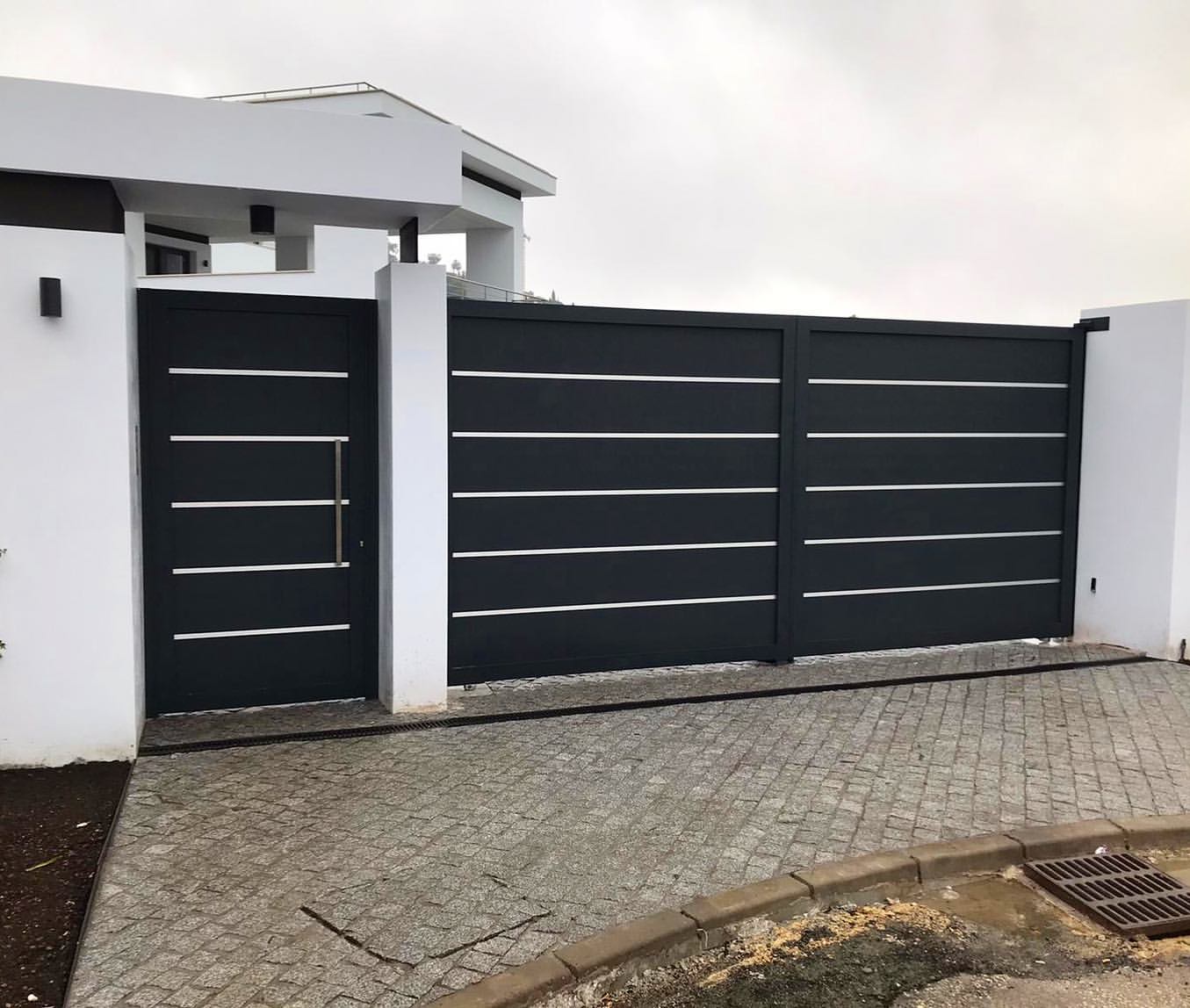
Consider sightlines from the pavement, driveway and house. A visible entrance can deter opportunistic intrusion, especially when the gate is clearly substantial and well maintained. Yet some properties need more privacy, particularly where a path gives direct access to a garden or ground-floor windows. Slatted aluminium designs can offer a useful middle ground, admitting light and airflow while limiting views through the boundary.
The surrounding fence and walls matter just as much as the gate. A premium pedestrian gate fitted between weak timber panels or poorly secured posts creates an imbalance in the boundary. Coordinated aluminium fencing and purpose-designed posts produce a stronger, more coherent perimeter, with no obvious route around the entrance.
Choose a gate built for security and daily use
A pedestrian gate should feel solid every time it closes. That depends on the construction beneath the finish: the strength of the frame, the quality of the welds, the rigidity of the infill and the way the gate is fixed to its posts.
Fully welded aluminium construction is particularly well suited to entrances exposed to British weather. Unlike a gate assembled from multiple bolted sections, a fully welded frame reduces movement at key joints and provides a clean, precise finish. Aluminium will not rot like timber or rust like untreated steel, making it a sensible long-term choice for a side entrance that may be opened several times a day.
Gate height and infill design should reflect the setting. A low, open-style gate can define a front boundary and control casual access, but it will not provide the same deterrent as a taller, more private design. Where security is a priority, avoid large gaps that allow a hand to reach the latch or release mechanism from outside.
Hinges deserve close attention. Security hinges should be designed to resist lifting or removal when the gate is closed, and they must be appropriately matched to the gate’s size and weight. The latch side also needs protection. A lockable, enclosed keep and a handle arrangement that cannot easily be manipulated through gaps in the gate will make a material difference.
Specify the locking method around your routine
The most secure lock is of little value if it is routinely left unlatched because it is inconvenient. Choose the locking method according to who needs access, how often they enter and whether the property is occupied throughout the day.
A keyed mechanical lock can suit a simple side entrance used by a small household. It is dependable, requires no power and gives the owner direct control over keys. The compromise is key management: keys can be copied, lost or passed on, and locks should be changed if control over them is uncertain.
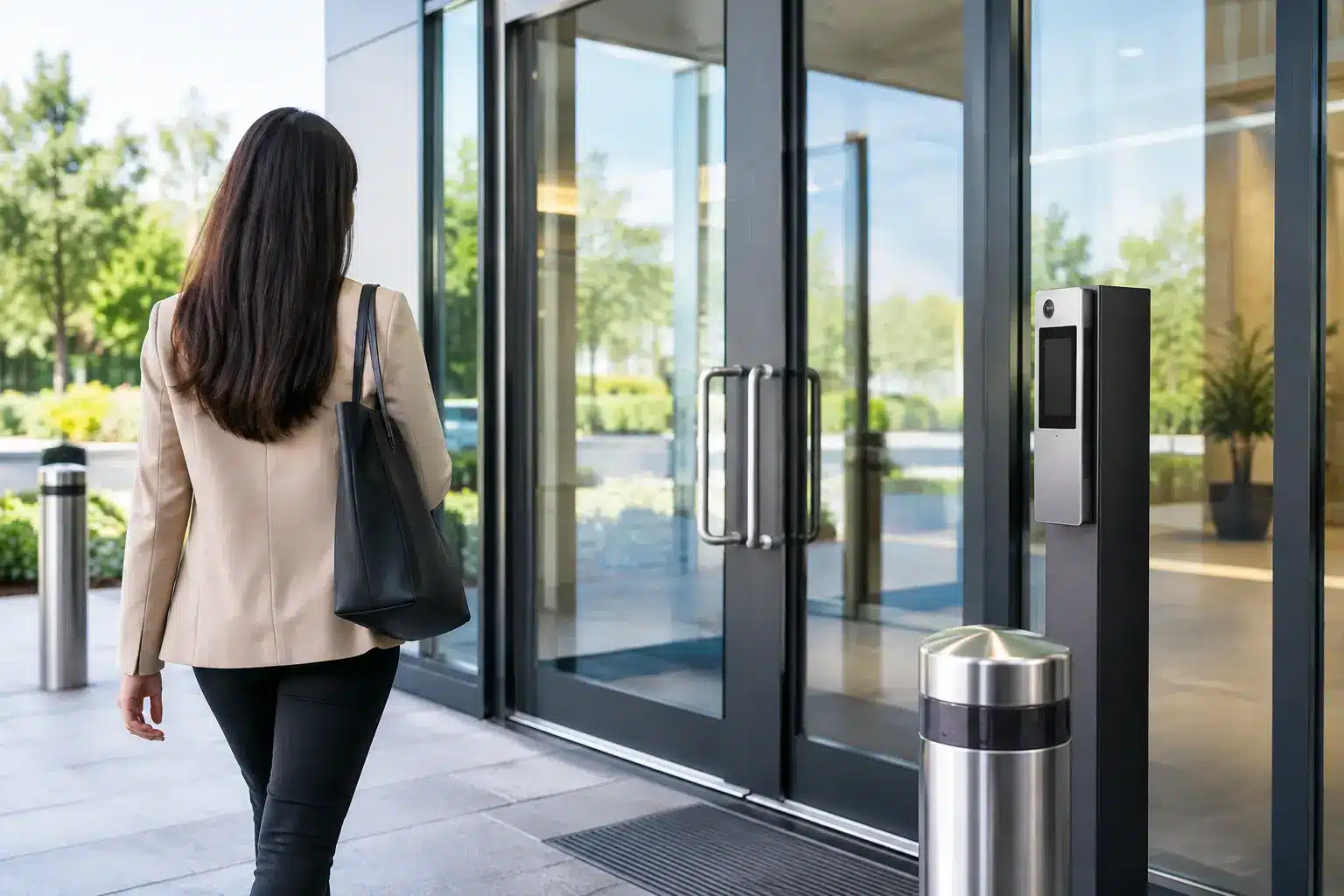
For entrances used regularly by staff, residents or approved visitors, electronic access control provides greater flexibility. A keypad, fob reader or video intercom can release the gate without handing out physical keys. Systems such as an Akuvox intercom also allow the occupier to see and speak to a visitor before granting access, which is valuable for gated homes, offices and managed sites.
Electronic systems should be specified as part of the gate design, not added as an afterthought. The cabling route, lock type, release button, power supply and weather protection need planning from the outset. For a commercial site, consider audit trails, timed access permissions and integration with existing door-entry arrangements. For a home, simplicity is often the better choice: a reliable intercom and secure latch may offer more value than features no one will use.
How to secure pedestrian entrances without creating a weak point
A pedestrian gate works best when it is integrated into the full perimeter. The most common security failures occur at the edges: a gap beneath the gate, a loose post, a fence panel that can be lifted out, or a latch positioned within easy reach from the other side.
Set the gate and posts on suitable foundations so they remain aligned over time. A sagging gate can prevent the lock engaging properly and encourages users to leave it on the latch rather than close it fully. Professional measurement is especially valuable on sloping ground, uneven driveways and narrow side passages, where small errors quickly affect operation.
The opening direction also needs care. A gate should not swing out across a public footway or create an obstruction for people passing the property. Where space is limited, the gate can be designed to open inward or configured with carefully selected hardware. There must also be a safe escape route in an emergency. Security should never prevent occupants from leaving the property quickly.
For higher-risk locations, consider these additional measures as part of one specification:
- anti-lift hinges and tamper-resistant fixings;
- a guarded lock keep and restricted reach to internal release hardware;
- lighting that covers the entrance, approach path and side passage;
- CCTV positioned to identify callers without leaving blind spots; and
- signage and clear visitor instructions where access is controlled.
Lighting is particularly effective when it supports, rather than replaces, physical security. A well-lit gate makes access easier for genuine visitors and makes suspicious activity more visible. Avoid placing lights where they create glare for cameras or neighbours.
Balance privacy, kerb appeal and protection
Security does not require an industrial-looking entrance. For many homeowners, the pedestrian gate sits in clear view of the street and needs to complement the driveway gates, fencing, brickwork and architectural style of the house. Bespoke aluminium gives far greater freedom than standard off-the-shelf sizes, allowing the proportions, slat spacing, colour and hardware to be selected around the property.
A solid-panel gate offers the greatest privacy, but it can make a narrow frontage feel enclosed. Horizontal slats, vertical bars or contemporary laser-cut details can soften the appearance while preserving a secure boundary. The best choice depends on the level of privacy needed, the height of the surrounding boundary and whether the entrance faces a busy public area.
Be realistic about height too. Planning rules can apply to gates and fences, particularly beside a highway. In many cases, a boundary next to a road or footpath has more restrictive height limits than one elsewhere on the property. Check the relevant requirements before finalising a design, rather than discovering that a preferred specification needs alteration after installation.
Do not overlook installation and maintenance
A premium gate can only perform as intended when it is correctly installed. Posts must be accurately set, clearances must allow for movement, and the latch and hinges must align precisely. This is where made-to-measure fabrication has clear advantages: the gate is designed for the real opening, not forced to fit it.
Aluminium is a low-maintenance material, not a no-attention material. Periodically check that hinges, latches and closers operate smoothly; remove debris from the threshold area; and inspect the gate after severe weather or accidental impact. Access-control equipment should also be tested, including remote release, intercom audio and any backup release arrangement.
Alu-Gate designs bespoke aluminium pedestrian entrances to create that balance of strength, precise fit and considered style. With fully welded construction, premium finishes and a 20-year guarantee, the focus is on an entrance that continues to protect and impress long after installation.
The strongest pedestrian entrance is the one people can use confidently every day: properly measured, difficult to defeat, easy to secure and designed as a natural part of the property rather than an afterthought.