
A side passage is often the least considered part of a property boundary, yet it can be the easiest route to a garden, bin store, rear entrance or commercial yard. A made-to-measure side access aluminium gate turns that vulnerable gap into a secure, considered feature that matches the standard of the rest of your exterior.
For homeowners, it may be the final detail that brings driveway gates, fencing and landscaping together. For commercial premises, it can create a more controlled boundary without introducing a finish that looks purely functional. The right specification is not simply about closing an opening. It is about getting the width, privacy, security and everyday use right from the outset.
What makes a side access aluminium gate a worthwhile upgrade?
Timber side gates can look attractive when first installed, but regular exposure to rain, frost and strong sunlight takes its toll. Movement, splitting, peeling paint and a gate that catches on the ground are familiar frustrations. Steel alternatives can offer strength, although corrosion protection and ongoing finishing need careful consideration.
Aluminium offers a different ownership experience. It does not rust, it is lightweight enough for comfortable daily use, and a quality powder-coated finish maintains its appearance with minimal upkeep. For a side entrance that may be used several times a day, that combination matters.
A premium aluminium gate should also feel substantial. Fully welded construction creates a clean, rigid frame with no loose corner joints to work over time. This gives the gate a more precise appearance and provides the strength needed to support chosen infill panels, hinges, locks and access control equipment. At Alu-Gate, each gate is fabricated to suit the individual opening rather than adapted from a standard stock size.
The long-term value is especially clear when the gate is part of a wider exterior project. Coordinating the gate colour, board profile and fence panels creates a unified boundary, rather than a side entrance that looks like an afterthought.
Start with how the gate will be used
The best design begins with the route behind the gate. A narrow passage used only for taking bins out has different requirements from a rear access point for bikes, garden machinery or regular deliveries. Think about the widest item that must pass through comfortably, not just whether a person can walk through it.
A pedestrian gate is commonly designed around a clear opening that feels natural to use, but the required width depends on the site. Wheelie bins, mobility equipment, lawn machinery and cycles all need allowance. If the opening is limited, a carefully planned gate leaf, post arrangement and hinge position can make a meaningful difference to usable space.
Opening direction is equally important. An inward-opening gate may protect the public pavement on a front or side boundary, while an outward-opening gate could be more practical where the internal passage is tight. It must not obstruct a shared access route, pavement or neighbouring property. Consider where the handle will sit, whether the gate will hit a wall or planting bed, and how wind will affect it when opened.
Check the opening, levels and fixing points
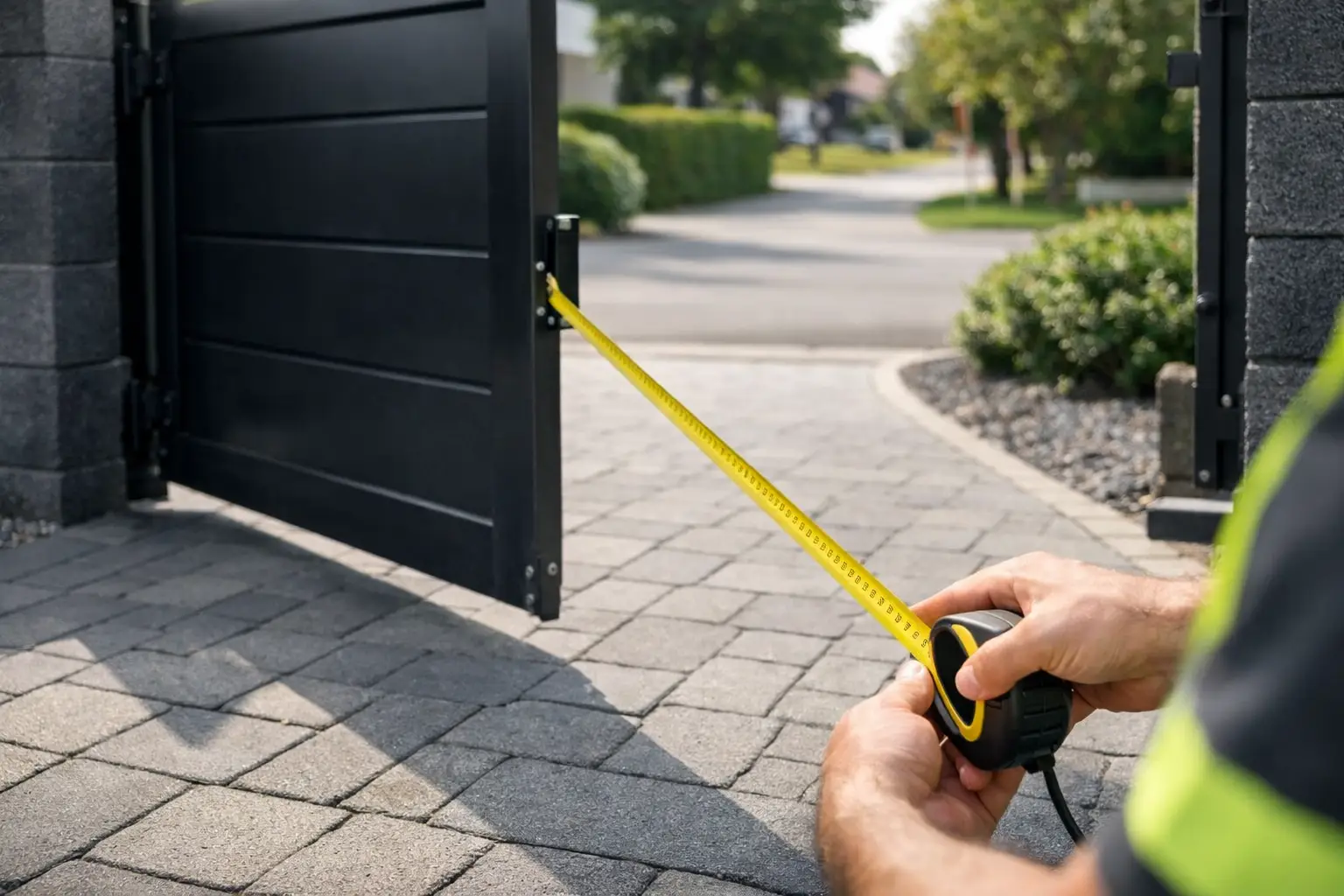
A bespoke gate is only as good as the information used to specify it. The width should be measured at more than one point because older brickwork, render and boundary walls are rarely perfectly parallel. Height and ground levels also need close attention. A sloping drive or uneven paving may require a tailored bottom gap, a stepped arrangement or changes to the gate design.
The gate needs secure fixing points too. Strong posts, sound masonry or purpose-designed steelwork are essential to hinge performance. A site with a soft verge, a lightweight timber fence or deteriorating brick pillars may need additional preparation before installation. Addressing that early is far better than forcing a high-quality gate onto inadequate supports.
Choose the right level of privacy and light
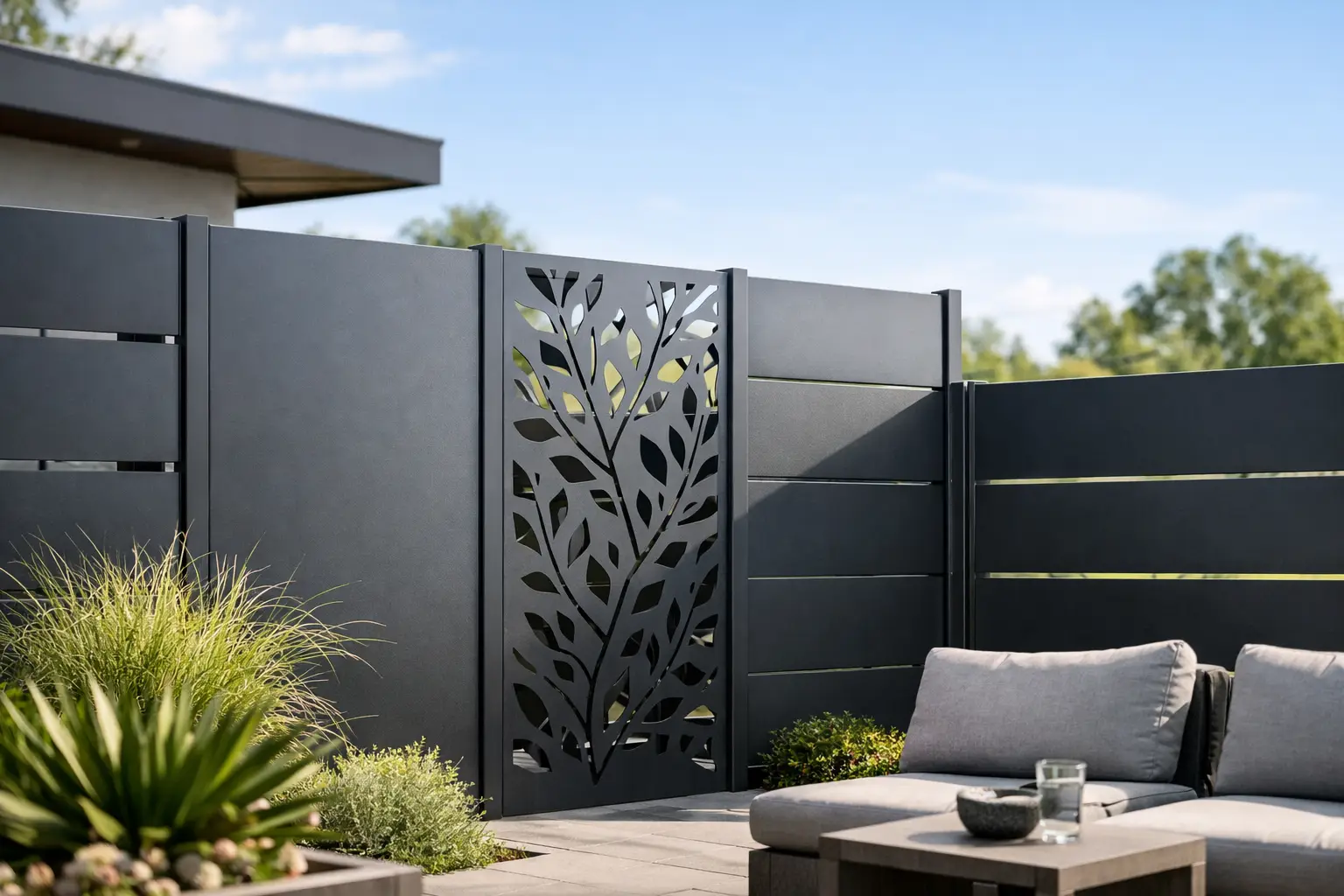
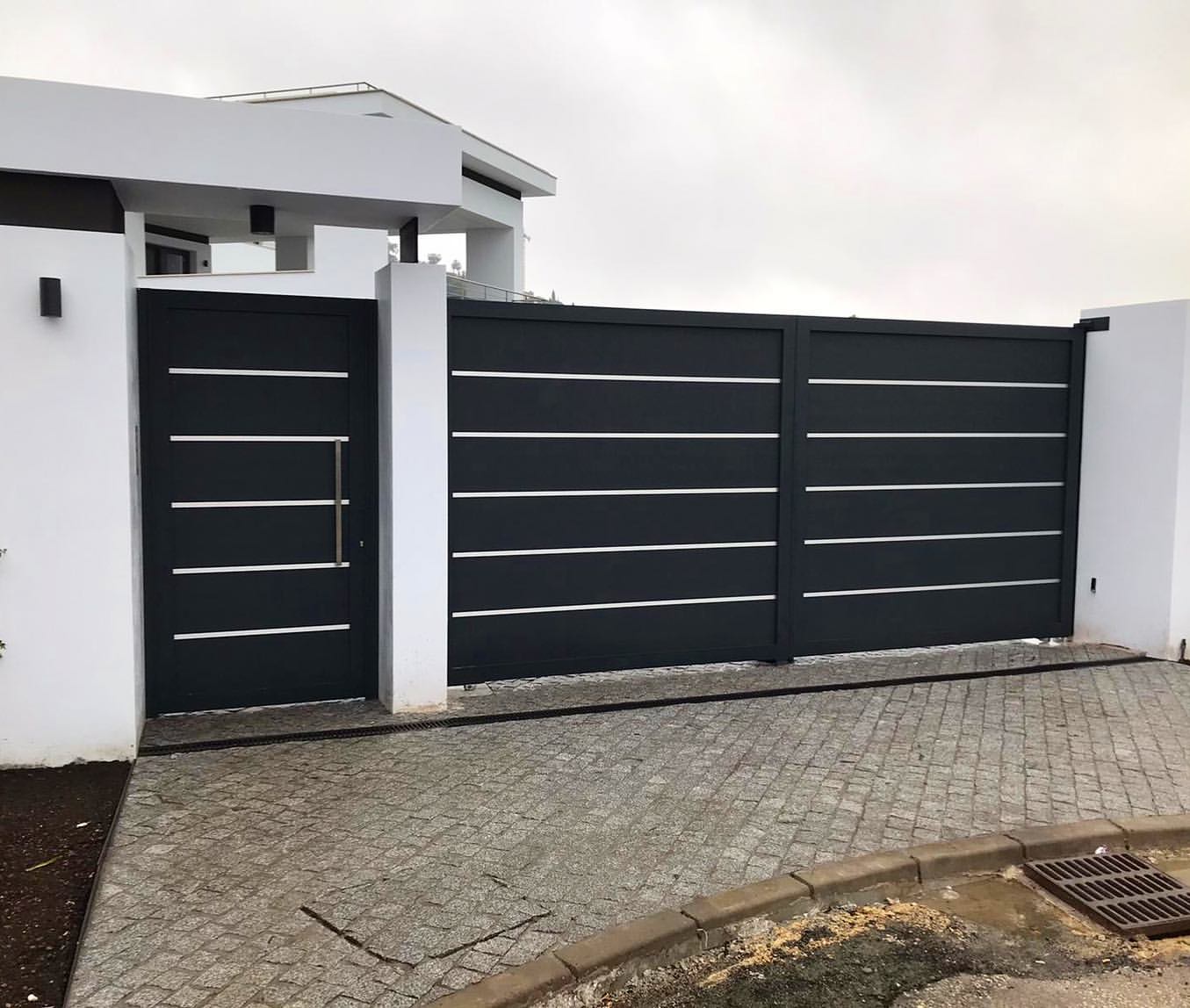
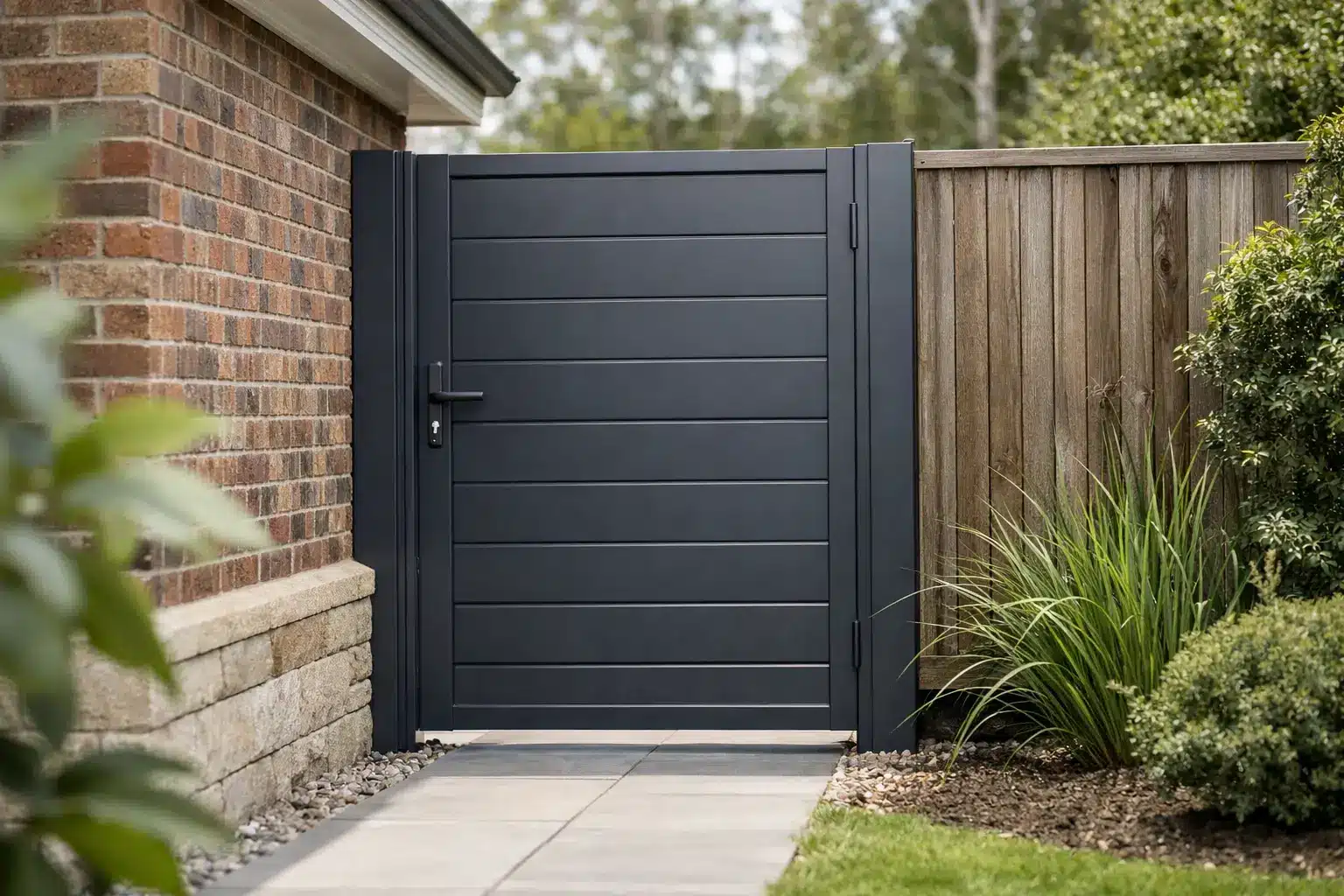
The infill style dictates much of the gate’s character. Horizontal aluminium boards offer a contemporary, architectural finish and can be arranged with small gaps for airflow or fitted more closely for privacy. Vertical profiles can suit narrower side passages by drawing the eye upwards, while decorative laser-cut panels provide an opportunity to introduce a distinctive pattern without sacrificing the gate’s practical role.
A fully solid design gives the greatest visual screening, which may be useful beside a kitchen window, patio or storage area. However, it can make a confined side passage feel enclosed and can increase wind loading. A small spacing between boards allows air and light through, softens the visual weight and can be a sensible choice in exposed locations.
There is no universal answer. Privacy from a neighbouring path may be the priority in one property, while visibility and ventilation matter more at another. The most successful side gates resolve both the practical condition and the look of the building.
Security is built into the specification
A side gate should create a clear physical and visual barrier, but security is about more than the panel infill. The frame, hinges, locking point and closing action all play a part. Quality adjustable hinges help keep the gate correctly aligned, while a dependable latch or lock allows it to close positively every time.
For many homes, a key-operated lock and internal thumb turn provide a straightforward balance of control and convenience. Gates serving commercial yards, shared access areas or higher-security properties may benefit from a more considered access arrangement, such as keypad entry, electric release or an intercom system. An Akuvox intercom can be incorporated where visitors need to request access without entering the property.
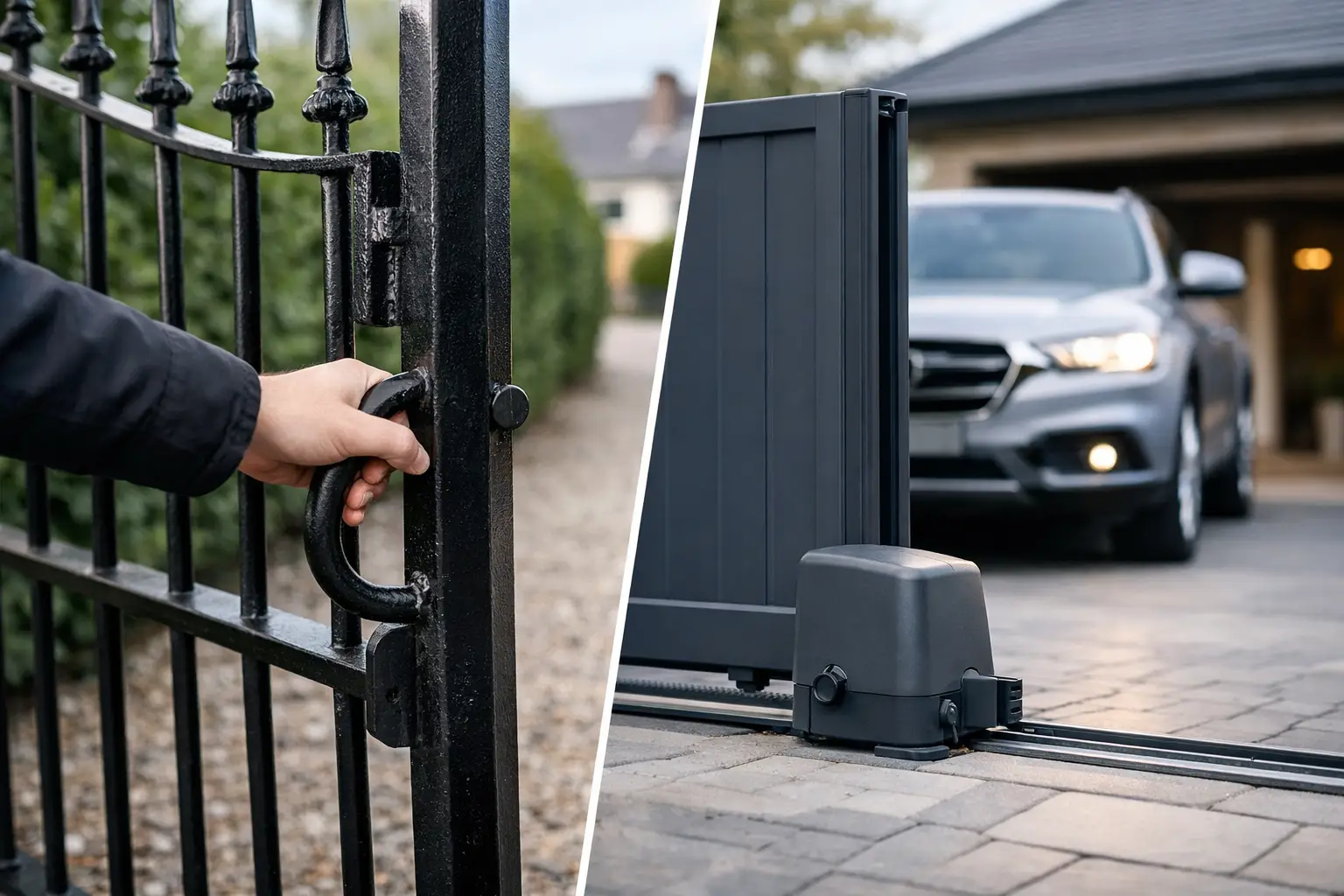
Avoid treating automation as an automatic requirement. A manually operated pedestrian gate is often the simplest and most reliable choice for a low-traffic side entrance. Electrified access can be valuable where the gate is used frequently, forms part of a managed site, or needs to integrate with an existing entrance system. The decision should follow the way the entrance is actually used.
Finish and detail make the gate feel bespoke
Powder coating gives aluminium its clean, durable colour finish. Popular choices such as anthracite grey, black and dark bronze work well with modern windows, roofing and cladding, while lighter shades can give a more understated appearance against traditional brickwork or rendered walls. Matching the gate to existing driveway gates and fencing is often the most effective route to a coherent result.
Colour is only one part of the visual detail. Board orientation, spacing, frame visibility, handle style and whether the posts are exposed or integrated into a wall all influence the final look. A flush, minimalist gate may suit a contemporary self-build, while a more framed design can sit comfortably beside older brickwork.
This is where off-the-shelf products tend to compromise. A standard panel may leave uneven gaps at each side, require filler pieces or force a design that does not align with nearby fencing. Made-to-measure fabrication allows proportions to be set for the opening, so the result looks intentional from every angle.
Plan for the boundary, not just the gate
A side access gate rarely stands alone. It connects walls, fencing, a driveway, a garden path and sometimes a side return that is highly visible from the street. Looking at these elements as one scheme helps prevent mismatched colours, awkward transitions and differing heights.
If a new gate changes the height or character of a boundary, check whether planning restrictions apply before ordering. This can be particularly relevant near a highway, in conservation areas, or at listed properties. Requirements vary by location and project, so confirmation from the relevant local authority is the sensible approach.
Also consider what happens on both sides of the gate. A clear internal path, good drainage and lighting can improve the daily experience as much as the gate itself. If bins are stored behind it, ensure there is room to manoeuvre them without scraping the finished surface. If the route is used after dark, lighting and a visible lock make access more comfortable and secure.
Invest in a gate designed for the long term
A premium side gate should not demand a weekend of sanding, staining or repainting every year. Routine care is usually limited to washing away accumulated dirt with mild soapy water and occasionally checking that hinges and locks operate as intended. Avoid harsh abrasives that could damage the powder-coated finish.
Durability comes from the whole system, not a material label alone. Precision welding, suitable fixings, correct hinge selection and professional measurement all contribute to a gate that continues to close cleanly through changing seasons. A 20-year guarantee provides added confidence that the investment is intended to last.
The strongest choice is one that makes the side of your property feel as purposeful as the front. Specify the access route carefully, choose a design that belongs with the building, and give the gate the quality its everyday role deserves.