
A driveway entrance should not be designed from a catalogue image alone. The width of the opening, the slope of the drive, turning space, existing pillars and how people use the property all affect the result. A considered custom entrance gate process turns those details into an entrance that looks right, operates reliably and strengthens the security of the property.
For a premium residential or commercial scheme, the goal is not simply to fill an opening. It is to create a made-to-measure system that feels integral to the building and boundary. That means resolving practical decisions early, before fabrication begins.
The custom entrance gate process starts with the site
Every successful gate begins with an accurate understanding of the entrance. A clear opening measurement is essential, but it is only one part of the picture. The ground levels on either side of the entrance matter just as much, particularly where a driveway rises, falls or has a cross-slope.
Existing brickwork, steel posts and walls should be assessed for condition, alignment and their ability to support the chosen gate format. A handsome pair of swing gates can be the right visual choice, for example, but heavy or poorly constructed gate leaves can place unnecessary load on old pillars. Fully welded aluminium construction offers strength without the weight and maintenance demands associated with many traditional materials, yet the supporting structure must still be suitable.
The consultation should also consider how vehicles approach and leave the site. A gate that opens inwards needs adequate clear space on the driveway. A sliding gate needs a clear run-back area beside the opening. For commercial premises, delivery vehicles, peak traffic periods and emergency access may influence the specification.
This is also the point to identify constraints that can alter the design. Properties in conservation areas, listed settings or locations with particular planning conditions may need additional checks. Gate height, placement and the relationship to a public highway can all be relevant. Early clarity avoids investing time in a design that later needs to change.
Define how the entrance needs to work
The most attractive gate is not necessarily the most appropriate one. The right format depends on available space, frequency of use, desired privacy and the character of the property.
Swing gates suit many driveways and offer a balanced, classic sense of arrival. They can be configured as a single leaf or a pair, depending on the opening and practical access requirements. Sliding gates are often preferable where there is limited room behind the entrance, a sloping drive or a requirement to keep the gate clear of vehicle manoeuvring space. Telescopic and bi-folding designs can provide solutions where a conventional sliding gate has insufficient run-back room.
Pedestrian access deserves the same attention. A coordinated garden or pedestrian gate can prevent people from opening the main driveway gate unnecessarily, while creating a safer and more convenient route for visitors, family members and staff. When fencing, side panels and gates are designed together, the entire boundary has a more deliberate, premium finish.
Automation should be considered at this stage rather than treated as an afterthought. The location of power, control equipment, safety devices and access controls can affect the gate layout and the groundwork required. A video intercom such as an Akuvox unit may be appropriate for a home that receives regular visitors or a commercial site that needs controlled access. Remote controls, keypad entry, vehicle detection and timed opening can be specified around the way the entrance will actually be used.
There are trade-offs. Solid infill panels increase privacy and create a strong architectural look, but they can catch more wind than an open design. A more open arrangement can reduce wind loading and maintain sightlines, while offering less screening. The best choice reflects the exposure of the site, the security brief and the appearance of the property.
Design for proportion, privacy and a lasting finish
Bespoke design is where a gate moves beyond a standard boundary product. Dimensions can be tailored to the opening, but proportion is equally important. Rail spacing, panel widths, frame depth and the relationship between gate leaves all influence whether an entrance feels refined or awkward.
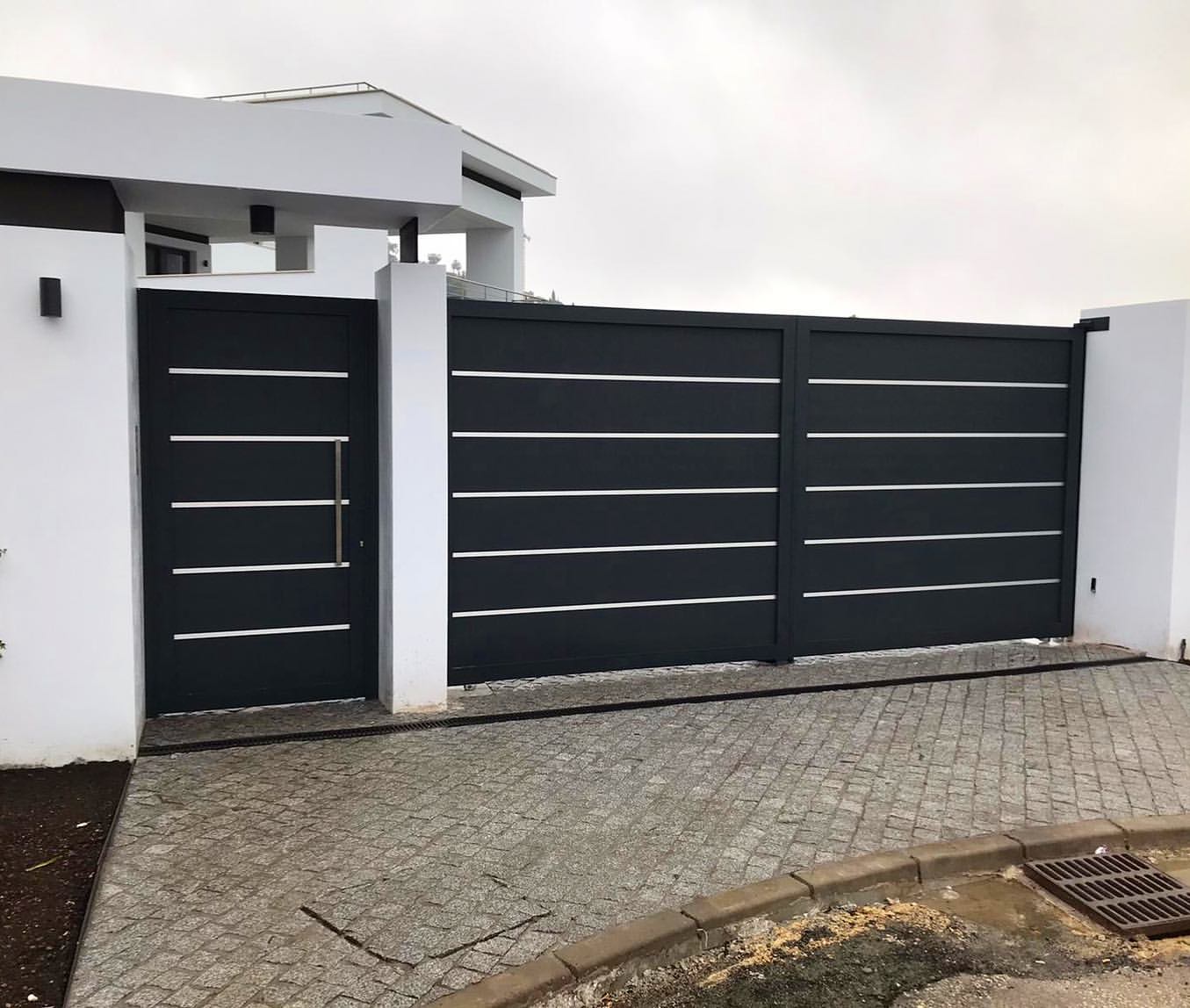
For contemporary homes, horizontal aluminium slats, flush panels or clean linear detailing can complement modern architecture. More traditional properties may benefit from vertical rhythms, shaped tops or design details that reflect the existing boundary. Colour should work with window frames, cladding, brickwork, front doors and exterior metalwork rather than compete with them.
Premium powder-coated aluminium provides a crisp, consistent finish with none of the regular staining, swelling, rotting or repainting associated with timber. It is a practical material for the British climate, particularly when paired with precision fabrication and fully welded corners. The low-maintenance benefit is significant, but aluminium should not be viewed as maintenance-free. Periodic cleaning and sensible care of moving parts, automation and drainage areas will help retain performance and appearance.
Security is designed into the details too. Gate height, infill spacing, concealed fixings, hinge arrangements and locking points should all be considered as part of the overall system. A gate should look composed from the street while making unauthorised access more difficult.
From approved specification to precision fabrication
Once the design, measurements and operation are agreed, the specification can be finalised. This is the stage to confirm the gate type, opening direction, finished size, colour, infill style, post or pillar arrangement, automation allowances and access control requirements. Clear sign-off protects the customer and ensures every party is working to the same brief.
Made-to-measure fabrication offers an advantage over cutting down a standard product to fit an awkward opening. The frame, infill and structural details are produced for the precise dimensions of the project. That allows the finished gate to retain balanced proportions rather than looking like a compromise.
At Alu-Gate, bespoke aluminium gates are built around premium-grade materials and precision welding, with a 20-year guarantee providing confidence in long-term ownership. This level of construction matters most at the areas that experience daily use: corners, hinges, latching points and interfaces with posts or automation equipment.
Lead times can vary according to design complexity, finish and the wider site programme. It is sensible to coordinate the gate order with driveway works, new walls, electrical installation and landscaping. Ordering before posts are set or finished levels are confirmed can introduce avoidable risk. Conversely, leaving the gate until the very end of a renovation can delay the security and privacy the entrance is intended to provide.
Prepare the site for installation and commissioning
A premium gate can only perform as well as the site preparation allows. Posts or pillars need to be true, secure and correctly positioned. For automated systems, the installer will need suitable power provision, correctly routed cabling and space for control components. Drainage should be considered around tracks, foundations and low points so standing water does not interfere with the system over time.
The installation team should set and align the gate carefully, checking clearances across its full travel. On swing gates, this includes the gap above the finished driveway surface and the opening arc. On sliding systems, it includes track alignment or the required support arrangement, run-back clearance and secure end stops.
Automation commissioning is a safety-critical part of the work. Gates must respond correctly to controls and safety devices, stop or reverse where required, and be fitted with an appropriate manual release for a power failure. Commercial entrances may require a more detailed access strategy, including separate pedestrian routes and procedures for regular users.
Before handover, take time to understand the system. Know how to operate the manual release, who holds the controls, how visitors call through and what routine care is recommended. This is especially valuable where several family members, tenants or members of staff will use the entrance.
Protect the investment after handover
Aluminium makes ownership refreshingly straightforward, but regular attention remains worthwhile. Wash the gate with mild soapy water to remove road film, salt, dust and organic deposits. Avoid abrasive pads or aggressive cleaners that could mark the powder-coated surface. Keep sliding tracks and drainage channels free from leaves, grit and compacted debris.
Automated components should be serviced in line with the equipment manufacturer’s guidance, especially on gates used multiple times each day. If a gate begins to make an unfamiliar noise, moves unevenly or no longer closes consistently, arrange inspection promptly rather than forcing it to operate.
A bespoke entrance is a long-term feature of the property. Give the early decisions the attention they deserve, and the finished gate will do more than mark a boundary: it will provide a confident daily arrival, year after year.