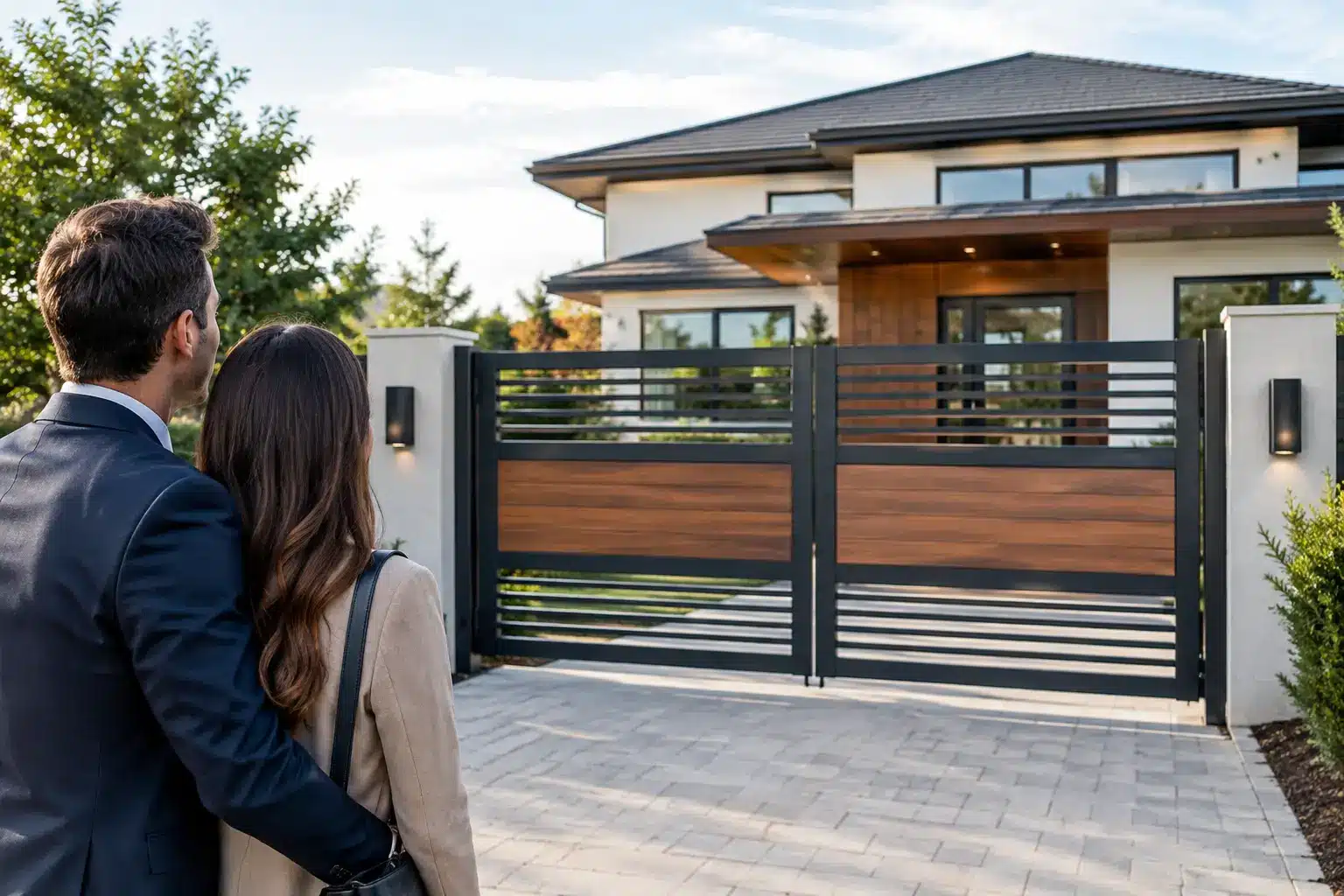
A tired timber gate that sags on its hinges, exposes the driveway and clashes with a carefully maintained frontage can quietly undermine a property’s first impression. So, can gates increase property value? They can – provided the gate is well designed, properly specified and appropriate for the property. A premium entrance is not a guaranteed pound-for-pound return, but it can make a home or commercial site more appealing, more secure and easier to remember when it matters.
For buyers, the approach to a property sets expectations before they reach the front door. A made-to-measure aluminium gate and coordinated boundary treatment signal care, permanence and considered investment. Conversely, a poorly fitted or overly imposing gate may create work, concern or visual clutter. The difference lies in quality, proportion and purpose.
Can gates increase property value in practice?
Gates tend to influence value indirectly. They improve the factors that shape a buyer’s perception of a property: kerb appeal, privacy, security and the quality of the overall exterior. On a competitive street, these details can help a property stand apart in photographs, viewings and the final decision-making process.
A gate is especially likely to add perceived value where it resolves an obvious shortcoming. Perhaps the driveway is open to the road, children or pets need a more secure boundary, or the existing entrance has deteriorated beyond economical repair. A strong, attractive solution turns a weakness into a feature.
The value is not solely financial. For an owner, a well-specified gate can bring daily reassurance, controlled access and a more polished arrival home. For commercial premises, it can define a professional boundary while supporting site management and security. These benefits may not appear as a separate line on a valuation, but they can strengthen the overall proposition of the property.
Kerb appeal that looks intentional
A driveway gate occupies a prominent position. It frames the house, garden or site entrance, often from the public road. This makes material, finish and proportion particularly important.
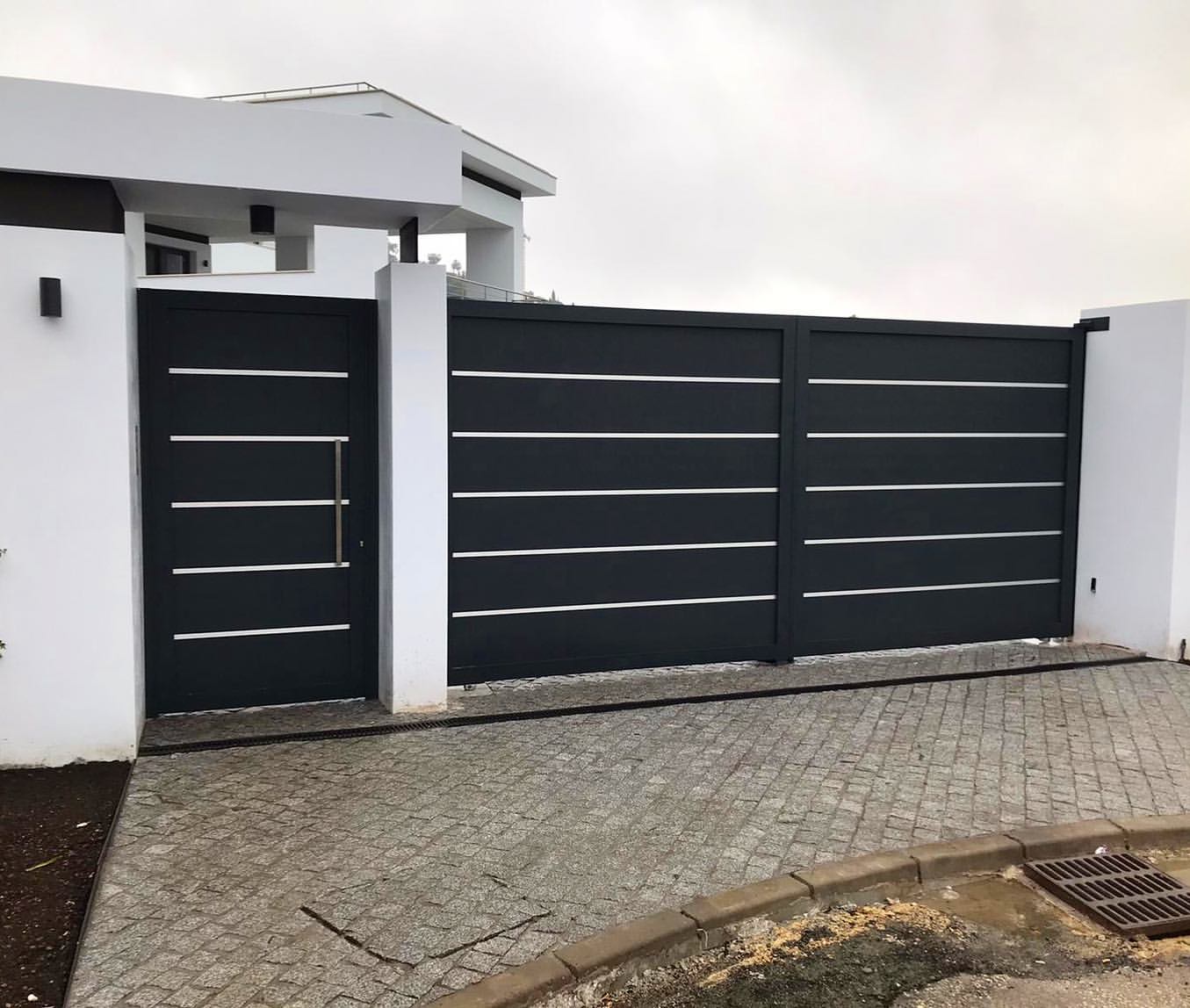
Bespoke aluminium gates offer a crisp, architectural appearance that suits both contemporary builds and more traditional properties when the design is chosen carefully. Horizontal slats can create a clean modern frontage. Vertical bars may complement period proportions. Privacy infill can screen a driveway without making the elevation feel heavy.
The strongest result is rarely the most decorative one. It is the design that feels native to the property: the right height, the right spacing, and a colour that works with the brickwork, render, window frames and fencing. Coordinated aluminium fencing and pedestrian gates can carry that visual discipline across the entire boundary.
Security buyers can see
Visible security has genuine appeal, particularly on properties with off-road parking, valuable vehicles, private gardens or side access. A gate creates a clear physical and psychological boundary between public space and private property.
However, security only adds confidence when the system appears dependable. Lightweight panels, loose fittings and makeshift automation can have the opposite effect. Buyers may see future maintenance, not added protection.
A fully welded aluminium gate, built to the precise opening and supported by suitable posts, hinges or tracking, presents a different standard. Combined with controlled access – such as an intercom, keypad or vehicle access system – it gives owners practical control without compromising the entrance’s appearance.
The gate specification affects perceived value
Not all gates contribute equally. A generic, poorly installed product is unlikely to create the same impression as a tailored entrance system. When assessing whether a gate is worth the investment, focus on the elements buyers and valuers are likely to notice over time.
Material and long-term condition
Timber has warmth, but it requires regular treatment and can warp, split or fade in Britain’s changing weather. Steel can be strong, yet may demand ongoing attention to prevent corrosion where coatings are damaged.
Premium aluminium is a compelling choice for owners seeking a refined finish with lower maintenance requirements. It will not rust, is well suited to outdoor use and can retain its appearance with routine cleaning. A durable powder-coated finish also gives broad scope to complement the property’s colour palette.
Longevity matters because a gate should look like an improvement several years after installation, not an item waiting to be replaced. At Alu-Gate, fully welded construction and a 20-year guarantee are designed to give that confidence – a considered investment in quality rather than a short-term cosmetic fix.
The right operating style
The layout of the driveway should lead the decision. Swing gates suit many conventional entrances and can provide an elegant, balanced look. Sliding gates are valuable where space behind the entrance is limited or a slope makes swinging impractical. Bi-folding and telescopic configurations can be effective where opening speed or restricted run-back space is a priority.
Choosing the wrong style can erode convenience. For example, swing gates need sufficient clear space to open safely, while a sliding system needs room alongside the opening or a carefully planned telescopic arrangement. Automation should be specified around real use: vehicle size, turning space, pedestrian access, gradients and how frequently the gate will operate.
A practical system feels like a permanent enhancement. One that obstructs manoeuvring or creates avoidable delays can become a frustration, regardless of how good it looks.
Privacy without shutting out the property
Privacy is attractive, but too much enclosure can make a frontage feel closed off. This is particularly relevant on smaller plots, where tall solid gates may dominate the house or block valuable natural light.
Slatted aluminium designs offer a useful middle ground. The spacing and angle can be tailored to provide screening while retaining a lighter visual rhythm. For homes facing a busy road, this can make the driveway and garden feel more private without turning the entrance into a blank wall.
Local character also matters. A gate that suits a rural property may look out of place on a compact suburban road, and planning restrictions or conservation-area considerations may affect height, design and placement. Early advice avoids investing in a scheme that needs to be altered later.
When gates may not add as much value
There are situations where a gate will have limited impact on sale value. If a property needs major repair work, a premium entrance will not distract buyers from a failing roof, poor drainage or an outdated kitchen. Exterior improvements work best as part of a well-maintained whole.
Overcapitalisation is another consideration. An elaborate automated gate system may not achieve a matching return on a modest property where comparable homes do not have similar features. That does not make it a poor choice if security, privacy and personal enjoyment are the priorities, but it is sensible to be clear about the reason for the investment.
Poor installation can also reduce the benefit. Uneven groundworks, undersized posts, awkward access controls and gates that do not align cleanly will be noticed. A bespoke survey and design process are valuable because they address the details that determine performance as well as appearance.
How to make a gate investment count
Start with the property rather than a catalogue image. Consider what the entrance needs to achieve: secure parking, safer pedestrian access, greater privacy, a more cohesive frontage or all four. Measure the usable opening, assess the ground levels and think about daily movement in and out of the driveway.
Then choose a design with a long view. A finish that works with planned window replacements, landscaping or fencing will continue to feel considered as the property evolves. Specify automation and access control where they solve a real need, rather than adding complexity for its own sake.
Finally, prioritise fabrication and installation quality. Precision welding, durable finishes and correctly matched hardware are not hidden luxuries. They are what keep a gate operating smoothly and looking impressive through years of weather, use and changing ownership.
A well-designed gate should do more than mark a boundary. It should make the property feel safer, more complete and more desirable from the moment someone arrives – which is often where value begins.