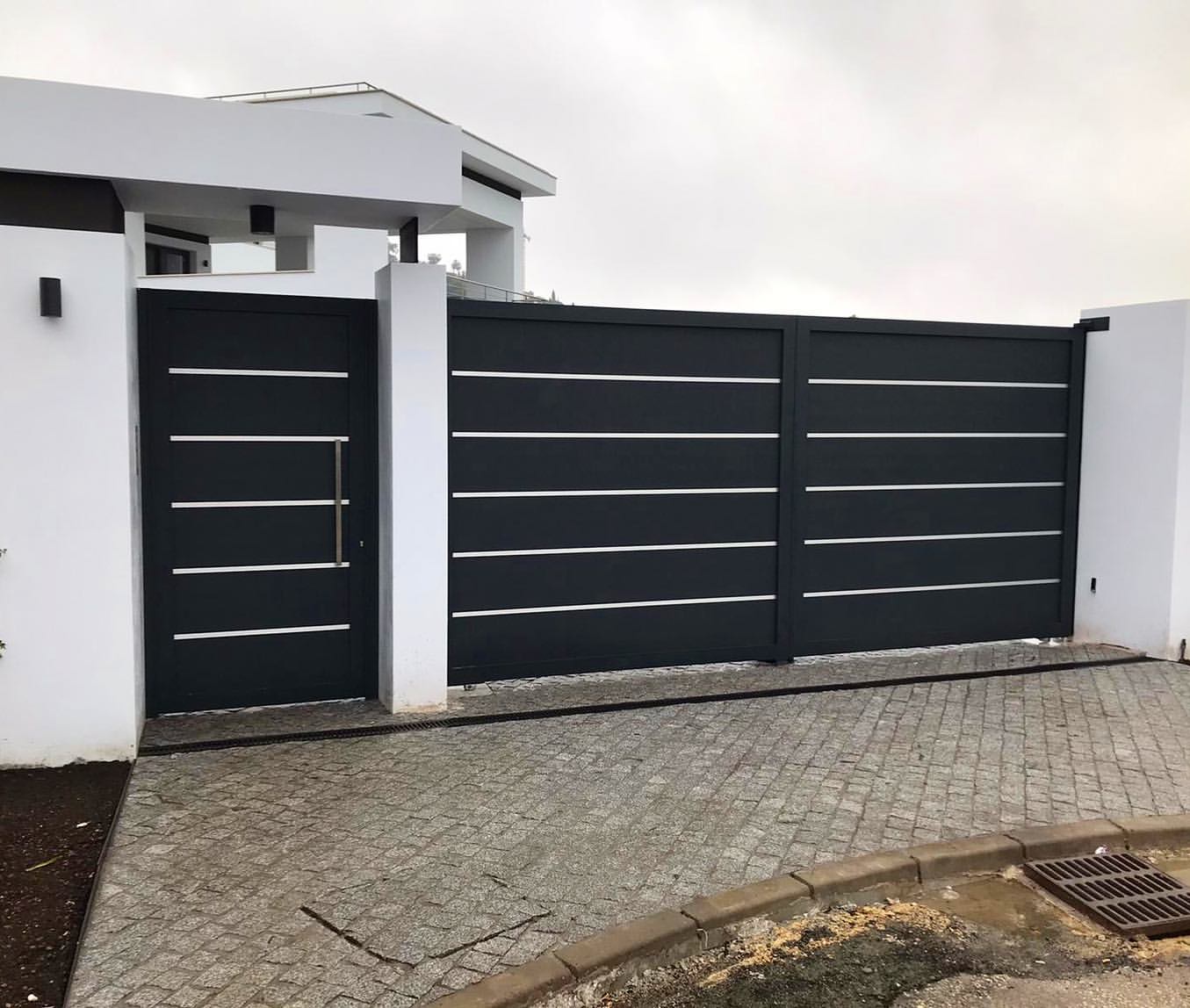
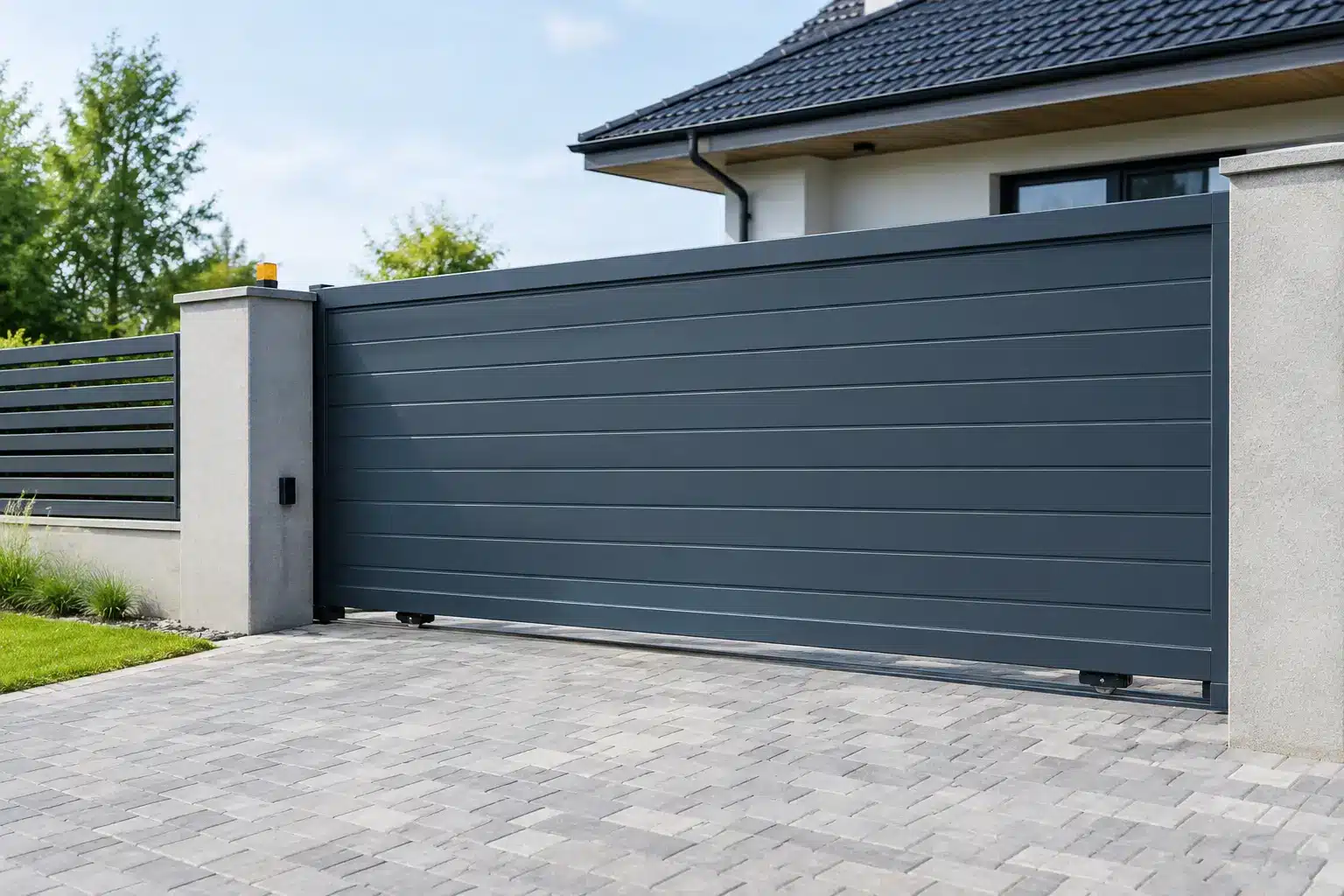
A driveway entrance should not force you to choose between usable space, security and a strong first impression. Sliding gates are often the most effective answer where a swinging gate would take up too much of the drive, meet a slope or interrupt day-to-day parking. When designed around the site rather than selected from a standard size, they create a controlled, elegant entrance that works as well as it looks.
For homeowners, that may mean a clean-lined aluminium gate that complements contemporary architecture and needs very little upkeep. For commercial sites, it may mean dependable access management at a busy entrance. The principle is the same: the gate, track, automation and safety system must be specified as one considered solution.
Why choose sliding gates?
The defining advantage of a sliding gate is its movement. Rather than opening into or out of the driveway, the gate travels sideways along the boundary line. This preserves valuable parking and turning space, particularly on shorter driveways or properties where vehicles sit close to the entrance.
They are also well suited to wide openings. A single sliding leaf can cover an entrance that would be impractical for a pair of swing gates, while maintaining a calm, uncluttered frontage. With the right automation and access control, residents can enter without leaving the vehicle, and commercial users can manage access with greater consistency.
That does not make sliding gates the automatic choice for every property. They need enough clear run-back space for the gate to travel when open. A 4-metre opening, for example, generally requires at least that length of available boundary space, plus allowance for the supporting structure. Where this is limited, a telescopic gate may offer a more practical route. The best format follows the geometry of the site, not simply the appearance of a preferred gate style.
The first decision: tracked or cantilever sliding gates
Most sliding gate systems fall into two categories. A tracked gate runs on wheels over a ground track, while a cantilever gate is supported above the driveway by a carefully engineered roller system.
A tracked system can be a refined, cost-effective solution for a level, well-prepared driveway. Its track needs to remain clear of leaves, gravel, ice and debris, however. At a rural property, a busy commercial yard or an entrance exposed to dirt and runoff, that routine attention can become a meaningful consideration.
Cantilever sliding gates avoid a track across the entrance entirely. The gate sits above the ground and glides past the opening, making it particularly useful where the surface is uneven or where debris could interfere with a tracked system. It does require a longer gate leaf and substantial foundations to counterbalance the opening, so the available side space and ground conditions matter greatly.
Neither system is inherently better. The right choice depends on the driveway surface, gradient, opening width, local conditions and how frequently the gate will operate. A site-led specification prevents compromises that only become apparent after installation.
Made-to-measure aluminium makes the difference
A gate is a prominent architectural feature. It should relate to the property, not look added as an afterthought. Bespoke aluminium sliding gates can be manufactured in horizontal slatted, vertical infill, privacy-panel or more open designs, allowing the balance between screening, airflow and visibility to be set with purpose.
Aluminium is especially well suited to this application because it is strong without carrying the weight of many traditional materials. Lower gate weight can support efficient automation and reduces the burden on moving components, provided the frame and engineering are correctly designed. Unlike timber, it will not rot, warp or demand regular staining. Unlike untreated steel, it does not rely on continual attention to avoid corrosion.
Construction quality remains crucial. A premium gate should be fully welded and fabricated for its final dimensions, rather than assembled from lightweight components that may loosen over time. Precision welding creates a cleaner appearance and a more stable structure, particularly important on a large moving leaf exposed to wind and daily use.
Finish is equally important. A high-quality powder-coated finish gives aluminium gates their crisp, consistent colour and provides durable protection against the British weather. Anthracite grey remains popular for modern homes, but black, white, bronze and bespoke colours can be chosen to coordinate with window frames, fencing, cladding or brickwork. The aim is not to follow a trend blindly, but to create an entrance that will still look considered years from now.
Security is designed into the whole entrance
A sliding gate creates a physical boundary, but genuine security comes from the complete system. Gate height, infill spacing, locking arrangements, automation and access credentials all influence how secure an entrance feels and performs.
For a private home, this may include a keypad, remote controls, video intercom and pedestrian gate access. An integrated intercom allows visitors to be identified before entry is granted, avoiding unnecessary trips to the driveway. For a commercial setting, access can be tailored around authorised users, delivery arrangements and operating hours.
Automation should never be treated as an optional extra added at the end. The motor must be matched to the size, weight and expected duty cycle of the gate. A domestic entrance used several times a day has different demands from a shared development or business premises with frequent traffic. Safety devices, including photocells and obstacle detection, need to be planned into the system from the outset.
It is also wise to consider what happens during a power cut. A properly specified automated sliding gate includes a manual release arrangement so the entrance can still be operated when necessary. This detail is easily overlooked until it is needed.
What to assess before specifying a sliding gate
The most successful projects start with accurate information. The opening width is only one measurement. Ground level, side clearance, driveway material, existing walls or posts, drainage and the route for power all affect the final design.
Sightlines deserve particular care where a gate sits near a road. Drivers need safe visibility when leaving the property, and the gate should not open across a public highway. Planning requirements can also apply, particularly for listed buildings, conservation areas, new developments or gates above certain heights beside a highway. A professional consultation helps identify these issues early, before fabrication begins.
Think about the gate in use rather than only when it is closed. Where will visitors stop while using the intercom? Is there enough room for a delivery vehicle to wait without obstructing the road? Will a pedestrian gate provide a safer, more convenient route for daily foot traffic? These questions shape an entrance that feels effortless rather than over-engineered.
A coordinated boundary creates a stronger result
A sliding gate rarely stands alone. Matching aluminium fencing, side panels and a pedestrian gate can turn a functional entrance into a coherent boundary treatment. This is especially valuable on wider plots, where an impressive gate can lose impact if it is joined to mismatched timber panels, tired brick piers or unrelated metalwork.
Coordination is not just aesthetic. Consistent materials and finishes simplify long-term care and ensure privacy levels are maintained across the whole frontage. For properties with an existing wall, bespoke infill panels can bridge awkward spaces cleanly instead of relying on off-the-shelf sections that never quite fit.
At Alu-Gate, the focus is on manufacturing the gate system around the property’s dimensions, style and practical demands. That means considering the structural details, movement, finish and access requirements together, with fully welded aluminium construction and a 20-year guarantee supporting long-term confidence.
The value of choosing well once
A sliding gate is a long-term investment in the way a property looks, feels and functions. The lowest initial quotation can become costly if it overlooks foundations, automation capacity, safety equipment or the quality of the gate itself. Equally, an elaborate design is not worthwhile if it creates maintenance demands that do not suit the site.
Choose a system with the right travel method, a well-engineered structure and a finish that belongs with the property. When those elements are resolved before manufacture, the finished entrance does more than secure a boundary. It gives every arrival the sense that the property has been designed with care.