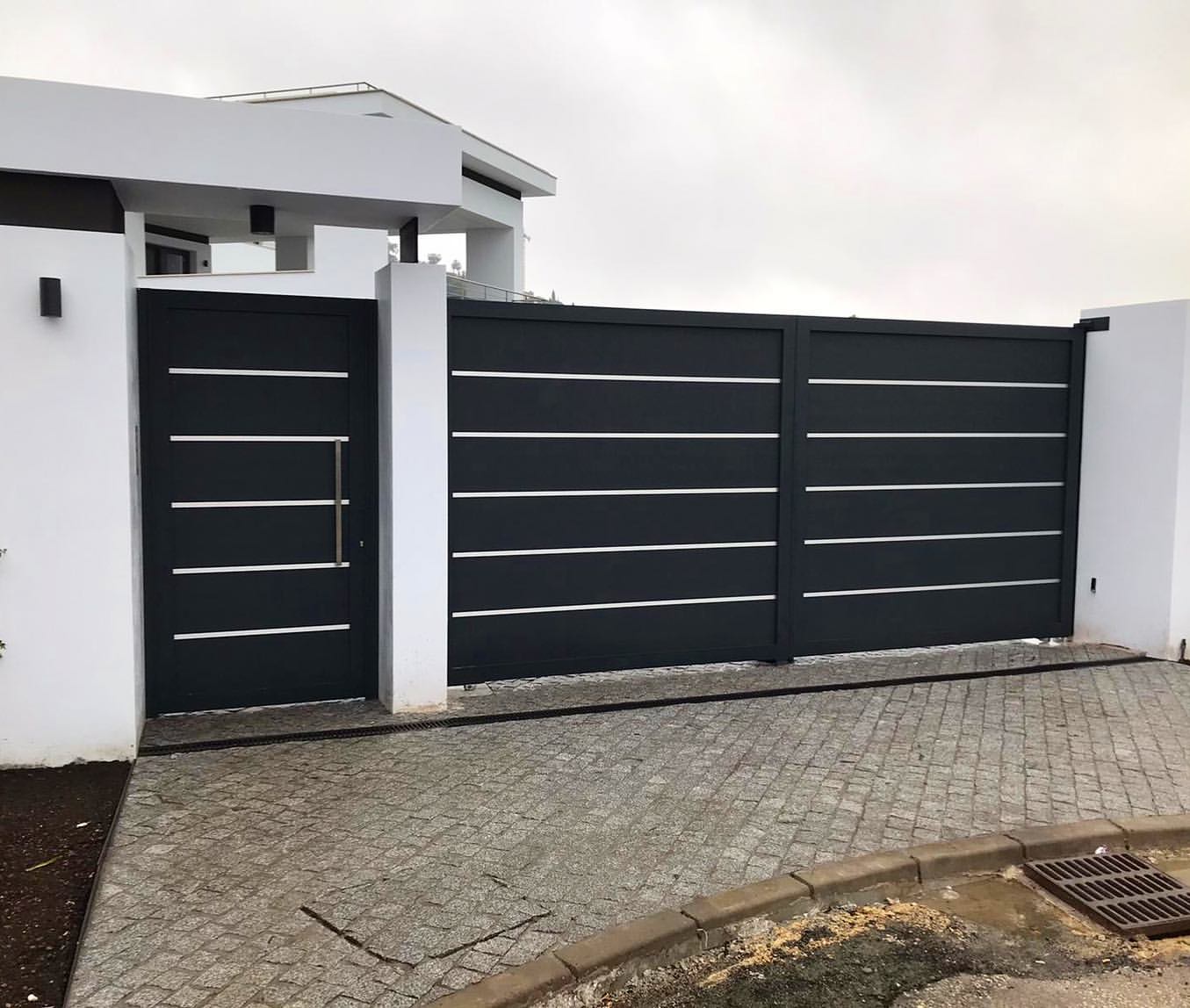

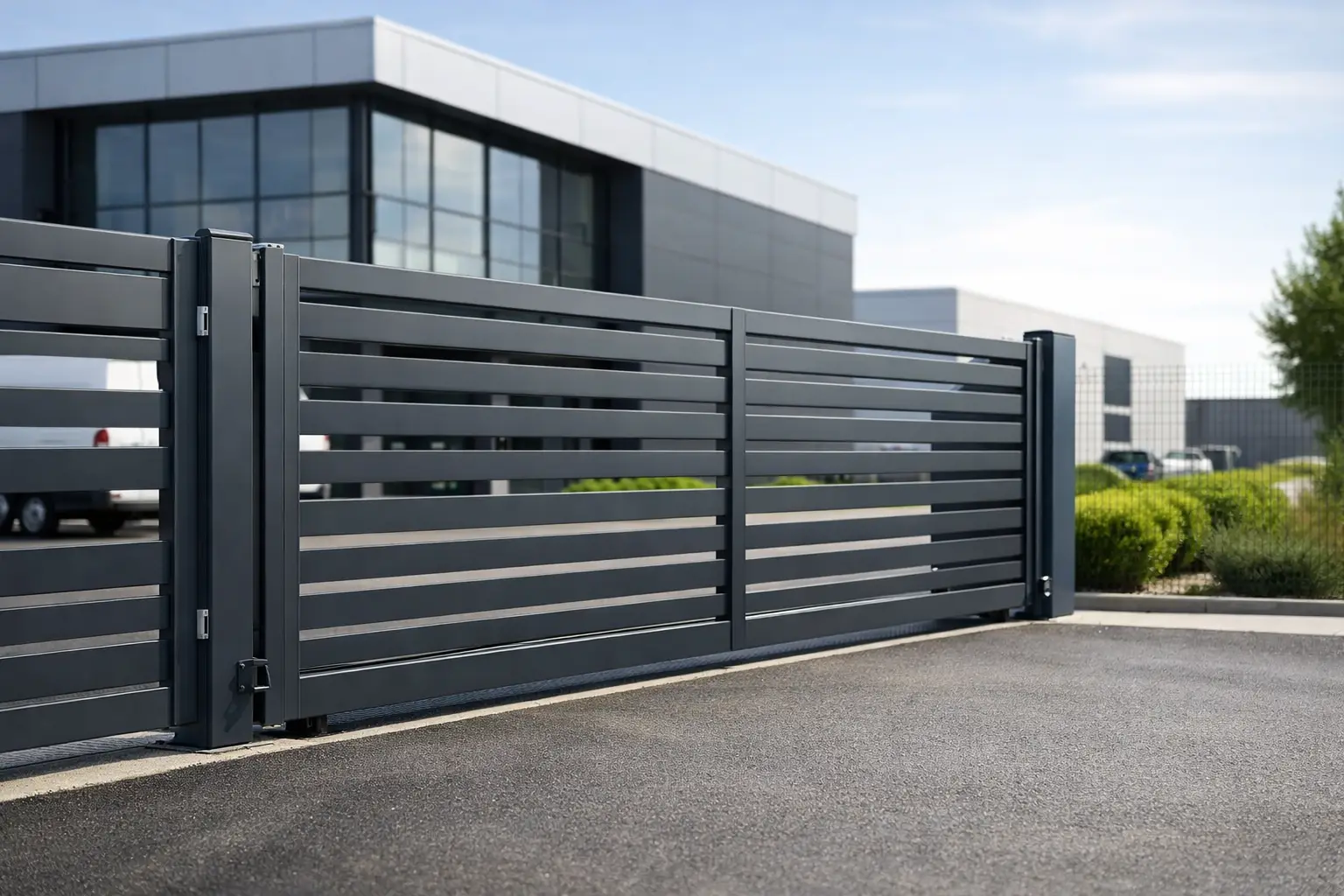
A commercial entrance has to do more than close a gap in the boundary. Aluminium gates for businesses set expectations before a visitor reaches reception: the site is secure, access is considered and the property is professionally managed. For premises that need dependable perimeter protection without the upkeep associated with timber or untreated steel, a made-to-measure aluminium system is a long-term investment in both security and appearance.
Whether the site is an office, flat development, school, warehouse, private estate or trade premises, the right gate must suit the way people and vehicles actually move through it. That begins with a specification built around the property, not an off-the-shelf product adapted as an afterthought.
Why aluminium is suited to commercial entrances
Commercial gates face constant demands. They may open several times a day, be exposed to road dirt and weather, and need to retain a smart appearance for clients, residents and staff. Aluminium offers an excellent balance of strength, corrosion resistance and manageable weight.
Unlike timber, it will not rot, split or require regular staining. Unlike conventional steel, it does not rust, reducing the risk of deteriorating surfaces and ongoing repainting. A quality powder-coated finish provides a consistent, contemporary appearance and can be chosen to complement cladding, windows, fencing, signage or the wider architectural palette.
The lighter weight of aluminium also has a practical benefit for automation. A well-engineered gate places less strain on motors, hinges and supporting structures than a heavier alternative, helping to create a more responsive access system. Strength still depends on the design, fabrication and installation specification, which is why fully welded construction and correctly sized posts matter as much as the material itself.
Aluminium gates for businesses: start with site use
The most attractive gate will underperform if it obstructs deliveries, creates queues at busy times or leaves a vulnerable pedestrian route. Before choosing a style, assess how the entrance is used throughout a normal week.
Consider the width of the opening, the turning circle of vehicles and whether vans, refuse lorries or emergency services require regular access. Look at the available space behind and beside the gate line, the slope of the driveway, visibility from the road and the location of existing walls, services and drainage. A gate system should also separate pedestrian and vehicle movement where possible, rather than asking everyone to use the same entrance.
For a small office car park, a pair of automated swing gates may offer the right combination of presence and practicality. For a busy industrial yard with limited room behind the entrance, a sliding gate can keep the carriageway clear. Developments where space is restricted may benefit from telescopic or bi-folding configurations, which open more quickly and require less run-back space than a conventional sliding design.
The correct choice is not always the largest or most imposing gate. It is the one that provides controlled access without disrupting the daily operation of the site.
Swing, sliding or bi-folding?
Swing gates create a strong, balanced entrance and work particularly well at offices, private commercial estates and lower-traffic premises. They require sufficient clear space to open safely and should be planned carefully on sloping approaches.
Sliding gates are often preferred where frequent vehicle access, wider openings or restricted internal space are priorities. They can be supplied as tracked or cantilever systems, depending on the ground conditions, opening width and required operation.
Bi-folding and telescopic gates are useful where speed and compact operation are essential. Their more complex mechanism makes specification especially important, but they can be an effective solution for constrained sites that cannot accommodate the full travel of a standard sliding gate.
Security should be designed into the whole system
A gate is only one part of a secure perimeter. The surrounding fencing, side returns, posts, locking arrangement and access controls should work together so there is no obvious weak point beside or beneath the gate.
The visual design also affects security. Closely spaced aluminium slats or solid-style infill panels can limit views into a site, while spaced slats allow airflow and visibility for locations where passive surveillance is preferred. The right balance depends on the setting. A logistics compound may need privacy around stored equipment, whereas an office entrance may benefit from a more open, welcoming frontage.
Automation should be specified around real users. Keypads, fobs, proximity credentials and video intercoms can allow authorised entry without leaving a vehicle. An Akuvox intercom system, for example, can give staff or site managers clearer visitor communication and controlled release from an appropriate location. For multi-occupancy or managed properties, access permissions can be organised around tenants, employees and contractors rather than relying on a shared key.
Safety is equally essential. Automated gates need suitable safety devices, clear controls and professional commissioning. Photocells, safety edges, force limitation and correctly planned pedestrian routes are not optional finishing touches. They are fundamental to responsible operation, particularly where visitors, staff and the public may be present.
Choose fabrication that matches the investment
Not all aluminium gates are built to the same standard. Thin sections, weak joints and bolted assemblies may appear attractive at first, but they can compromise rigidity and create areas that loosen or collect moisture over time. Commercial buyers should look beyond a product photograph and ask how the gate is made.
A bespoke, fully welded aluminium gate is fabricated to the precise opening and intended use. Its proportions can be adjusted to suit the scale of the building, while rails, frames and infill are engineered as a cohesive structure. This creates a cleaner finish and the solid feel expected at a premium entrance.
Made-to-measure fabrication also allows the design to carry through the wider boundary. Coordinated pedestrian gates, fencing panels and side screens can turn a collection of security elements into a considered frontage. This matters at client-facing sites, residential developments and high-value premises where kerb appeal supports the perception of the business.
A long guarantee is another useful indication of confidence, but it should sit alongside clear information about materials, finish, workmanship and the expected care of automated components. At Alu-Gate, premium aluminium gates are backed by a 20-year guarantee, providing reassurance that the system is designed for lasting ownership rather than a short-term visual upgrade.
Plan for maintenance, not constant maintenance
Low maintenance does not mean no maintenance. Aluminium avoids many of the demanding tasks associated with timber and steel, yet a commercial entrance still benefits from sensible care. Periodic washing with mild soapy water removes grime and helps retain the appearance of the powder-coated finish, particularly near busy roads or coastal areas.
Moving parts and automation equipment should be inspected and serviced at intervals recommended for the system and its level of use. Leaves, grit and standing water should not be allowed to build up around tracks, hinges or drainage channels. Managers should also ensure that safety devices remain clean, correctly aligned and tested.
This is a favourable trade-off for most businesses. Instead of budgeting for frequent refinishing or corrosion repairs, maintenance can focus on preserving smooth operation and checking the access system. The result is a smarter entrance with more predictable lifecycle costs.
A considered process avoids expensive compromises
Commercial gates are rarely a simple purchase. The best outcomes come from early consultation, accurate measurement and a clear understanding of traffic flow, access requirements and design priorities. This allows practical details such as post positions, power supply, ground preparation and emergency release to be resolved before fabrication begins.
It is also wise to check whether planning permission, landlord approval, conservation-area restrictions or site-specific requirements may apply. Requirements vary by location and property type, so assumptions can lead to delays. For larger or more complex projects, involving the relevant facilities, security and operations teams early helps avoid a gate that looks right but causes friction once the site is live.
A commercial entrance should feel effortless for authorised users and uninviting to everyone else. With a precisely fabricated aluminium gate system, that confidence is built into the first interaction people have with your business.