
A sliding gate can transform a driveway entrance, but its performance is decided well before the gate is manufactured. In the cantilever versus tracked gates decision, the key question is not simply which design looks best. It is whether the driveway, ground conditions, opening width and available run-back space will support the system properly for years to come.
For a premium aluminium entrance, both options can deliver a clean, secure and highly tailored result. The right choice comes down to how the gate moves, where its weight is carried and what the site demands from it every day.
How cantilever and tracked gates work
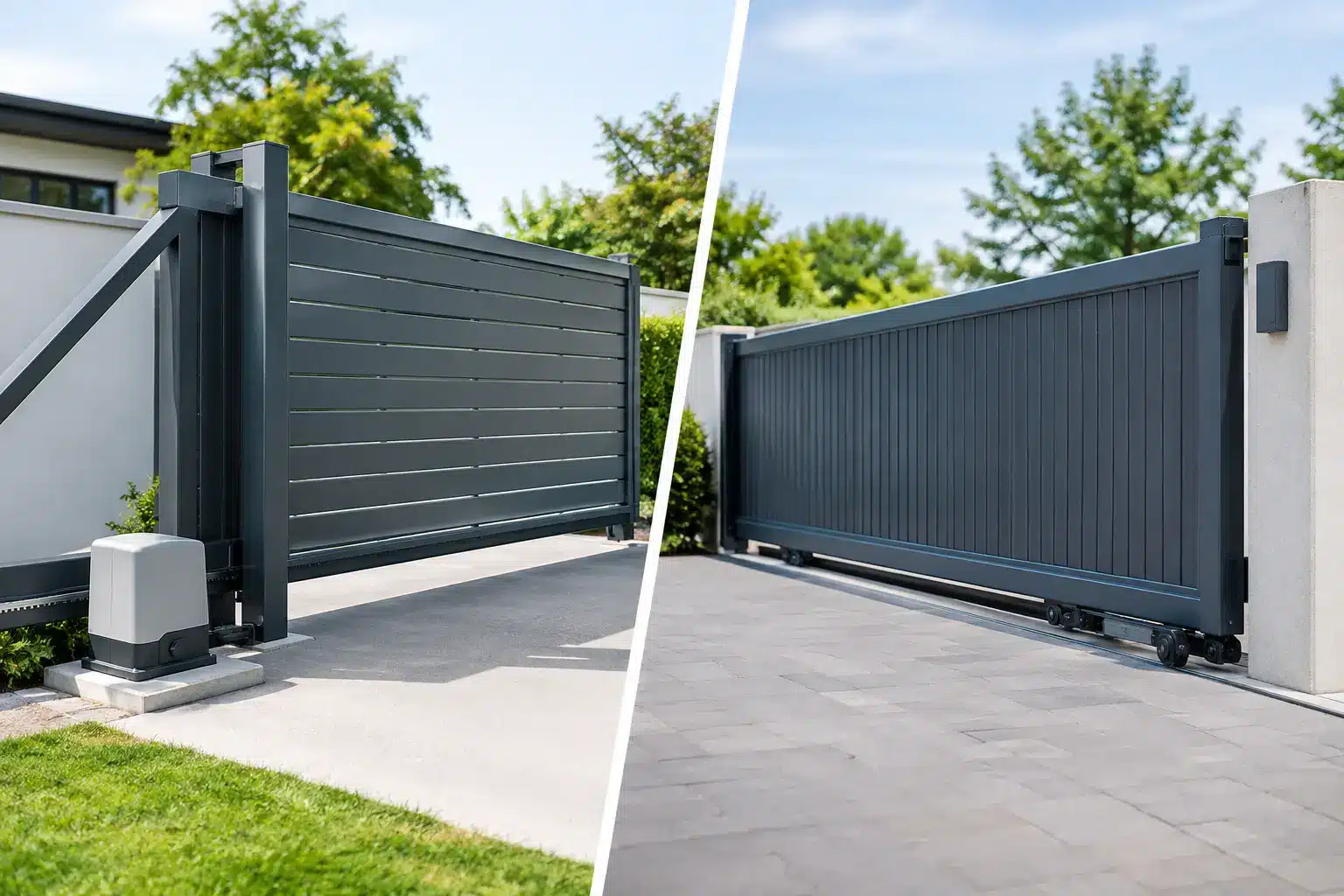
A cantilever sliding gate travels sideways without touching the driveway surface. It is supported by a series of precision rollers mounted on substantial posts or a foundation structure at one side of the opening. The gate includes an extended counterbalance section, usually concealed within the design, which allows it to remain suspended as it passes across the entrance.
A tracked sliding gate runs on wheels along a track fixed into or onto the driveway. Guide rollers at the top keep the gate upright, while the wheels carry its weight along the ground-level rail. It is a familiar, efficient format that can be particularly effective where space behind the gate opening is limited.
Both systems can be automated, integrated with intercom access and fabricated in aluminium to complement fencing, pedestrian gates and the wider architecture of the property. Their differences are practical rather than purely visual.
Cantilever versus tracked gates: the space question
Available side room is often the deciding factor. A cantilever gate needs a longer clear run-back area than the width of the opening because of its counterbalance tail. As a guide, a 4-metre opening may require around 6 metres or more of clear space to one side, depending on the gate design, height and engineering requirements.
That additional length must remain free of walls, planting, parking bays, service boxes and changes in level. On a broad frontage or commercial site, this is often easy to accommodate. On a compact residential driveway, it may rule out a cantilever arrangement before design preferences enter the conversation.
Tracked gates usually require less run-back length. The gate leaf generally needs space equivalent to the clear opening, plus a modest allowance for posts and safety positions. This can make a tracked system attractive where a driveway has limited lateral space but enough room for the gate to slide behind a boundary line.
Neither format suits every plot. A detailed site assessment should consider the full travel path, not just the entrance itself. The position of parked vehicles, turning circles, bin storage and pedestrian access can all affect the best solution.
Ground conditions make a real difference
This is where cantilever gates can show a clear advantage. Because the leaf is suspended above the driveway, there is no ground track to collect leaves, grit, mud or surface water. On rural properties, exposed entrances and driveways that regularly see debris from trees or passing traffic, that can mean fewer interruptions and less routine cleaning.
A cantilever system also avoids the issue of a track crossing an uneven or sloping surface. The supporting structure still requires carefully designed foundations, but the opening itself remains clear at ground level. This is useful where drainage channels, block paving movement or frost could affect a conventional rail.
Tracked gates need a sound, level route for the wheels. A well-installed track performs reliably, but it does require attention. Debris should be cleared, drainage considered and the rail kept correctly aligned. This is not a reason to dismiss tracked gates. On a clean, well-finished driveway with appropriate installation, they are a highly practical choice. It simply means the track should be specified as part of the entrance system, not treated as an afterthought.
For properties on a gradient, the detail matters even more. Sliding gates need a level travel path, so a sloped driveway may require local ground works, a levelled gate zone or a different gate configuration. A site survey provides the answer far more reliably than measurements taken from a photograph.
Strength, security and daily use
A well-engineered gate is only as dependable as its support system, posts, foundations and automation. Cantilever gates are often specified for wider openings and frequent use because the load is managed through substantial roller assemblies rather than wheels travelling over a rail. They are widely suited to commercial premises, flat developments and larger private driveways where dependable operation is essential.
Tracked gates can also provide excellent security and stability. Their weight is supported directly beneath the gate, and they can be designed for substantial residential and commercial applications. For many homeowners, a tracked gate is the most proportionate solution: secure, elegant and space-efficient.
In either case, gate height, infill style and sightlines deserve careful consideration. A solid or closely spaced aluminium design can strengthen privacy and boundary definition, while slatted configurations offer a more open architectural appearance. The best design balances the level of privacy you want with wind exposure, the character of the property and the views from inside the site.
Automation must be matched to the gate’s weight, travel and anticipated usage. It should include appropriate safety features, controlled access and a reliable manual release for power interruptions. Pairing the system with an Akuvox intercom can bring calls, video and controlled entry together at the driveway, without compromising the clean appearance of the gate.
Maintenance: less effort is not no effort
Aluminium is an excellent material for sliding gates because it will not rot, warp or require the regular repainting associated with timber. A premium powder-coated finish retains its appearance with simple washing, while fully welded construction removes many of the weak points found in assembled gate frames.
Cantilever systems reduce the ongoing task of cleaning a ground track, yet they still need periodic inspection of roller assemblies, guides, safety devices and automated components. Tracked systems benefit from the same checks, alongside clearing the track and ensuring drainage remains effective.
The practical difference is this: cantilever gates tend to reduce maintenance caused by what happens on the driveway surface, while tracked gates ask for slightly more housekeeping at ground level. Neither should feel demanding when specified and installed correctly, but buyers should choose with their setting in mind.
Appearance and design freedom
From the street, both gate types can look equally refined. The mechanism is largely secondary to the quality of the gate itself: its proportions, frame construction, finish, alignment and relationship with adjoining fencing or walls.
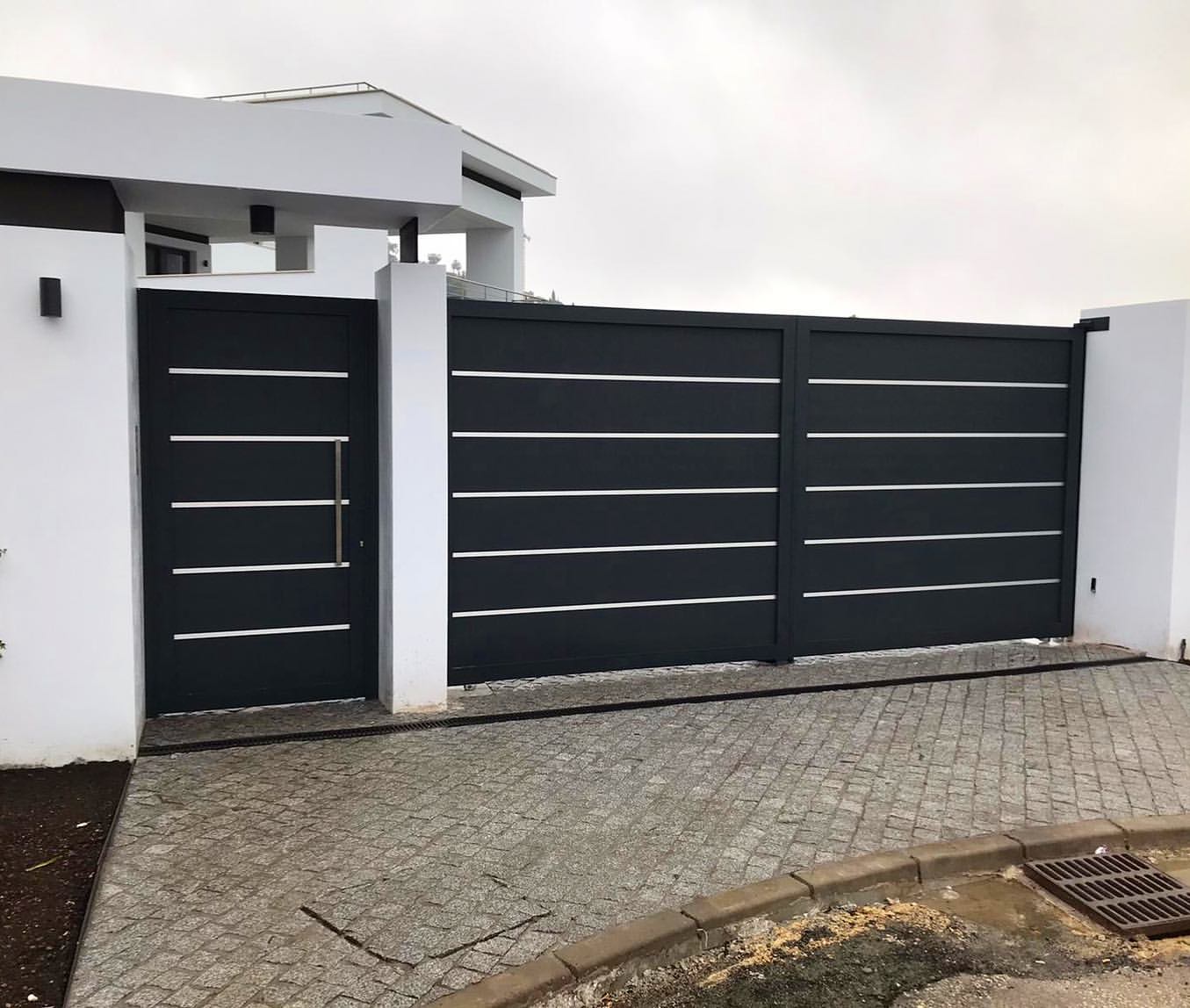
Aluminium offers considerable freedom here. A horizontal slatted gate can create a crisp contemporary frontage. Vertical profiles can add height and rhythm, while a solid-panel design provides privacy with a more architectural feel. Matching side panels, pedestrian gates and fencing produce a considered boundary rather than a collection of separate products.
Cantilever gates do require a counterbalance section, which affects the overall leaf length. A skilled designer will integrate this into the layout so it looks intentional rather than oversized. With a tracked gate, the leaf can be closer to the opening width, which may suit certain elevations or constrained spaces.
Colour also matters. Anthracite grey remains a popular choice, but black, textured finishes and selected bespoke shades can either blend the gate into its surroundings or make it a defining feature of the frontage. The right finish should work with brickwork, window frames, render and landscaping, not compete with them.
When each gate is likely to be the better choice
Choose a cantilever gate when the site has generous run-back space, the driveway is exposed to debris or uneven conditions, and you want the opening kept clear at ground level. It is especially compelling for wider entrances, high-use sites and properties where long-term operational reliability is the priority.
Choose a tracked gate when side room is tighter, the driveway can accommodate a level track, and a shorter overall gate leaf is advantageous. It can be an excellent premium residential solution where the entrance is clean, well-drained and carefully planned.
Cost should be considered in context rather than as a single headline figure. Cantilever systems often require more steelwork, longer gate leaves and more substantial foundations, which can increase the initial investment. A tracked system may be simpler to fabricate and install, but any drainage, surface preparation or track integration should be included in the comparison. The most economical option is the one that suits the site first time and continues to operate as intended.
Specify the system around the property
The strongest gate projects begin with the physical details: opening width, levels, ground surface, side clearance, wind exposure, power supply and how people use the entrance. From there, the design can be shaped around security, privacy and kerb appeal rather than forced into a standard format.
At Alu-Gate, made-to-measure aluminium gates are designed around those exact requirements, with precision-welded construction, premium finishes and a 20-year guarantee. A considered survey and specification will give you more than an attractive entrance – it will give you a gate that feels right every time it opens.