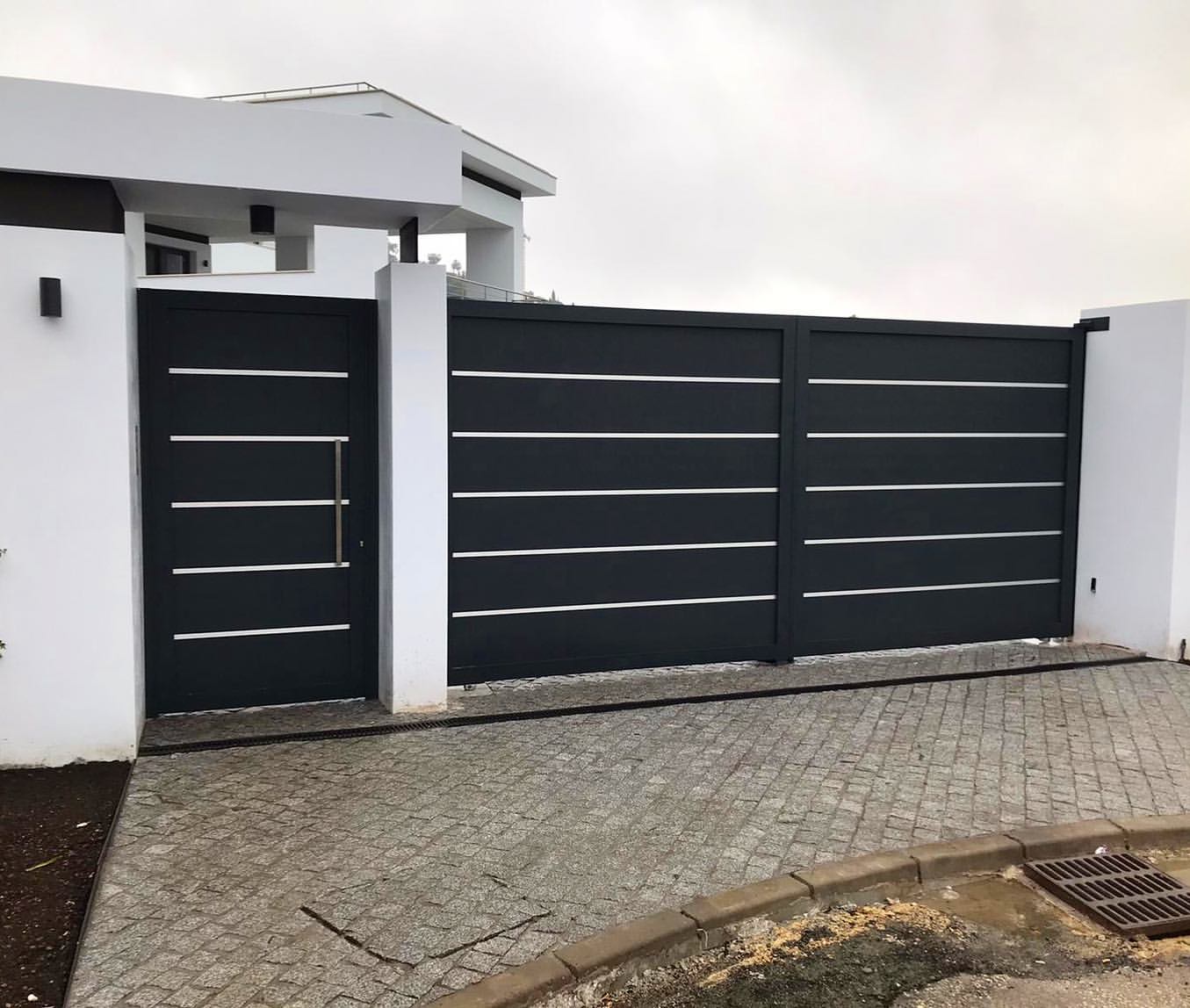

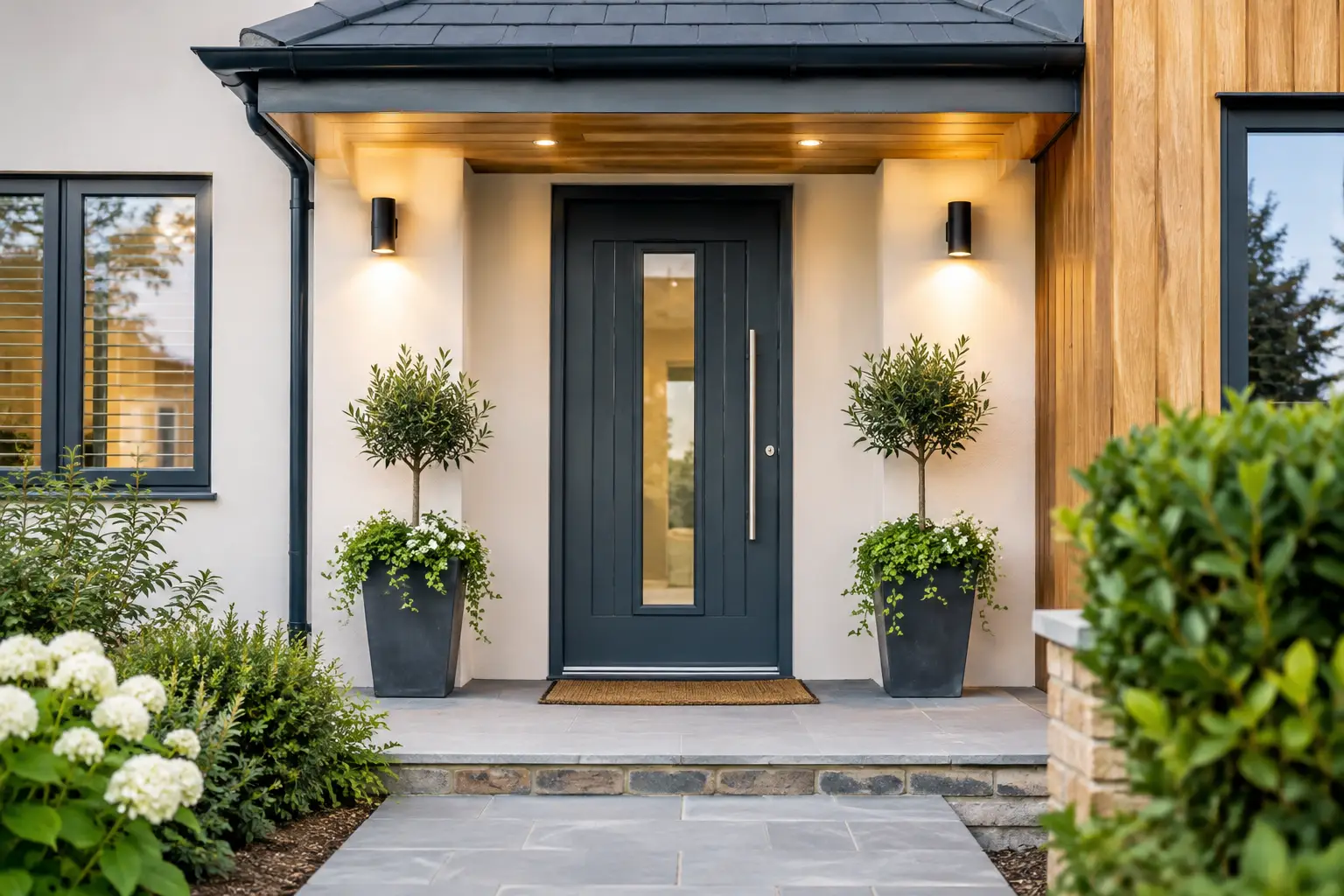
The approach to your driveway should make a clear statement before anyone reaches the front door. A considered residential entrance design guide begins with more than choosing a gate style: it considers how the property is used, how it should feel on arrival, and how confidently it protects the boundary every day.
For many UK homeowners, the entrance is the final piece of a larger renovation, self-build or landscaping project. It has to sit comfortably alongside brickwork, render, planting, paving and lighting, while solving practical questions around vehicles, pedestrians and visitors. The strongest results come from planning the whole entrance as one coordinated system.
Start with the way your entrance needs to work
Design should follow the everyday reality of the property. A wide, level driveway with generous space behind the boundary can suit automated swing gates beautifully. A sloping drive, a road-facing opening or limited return space may call for a sliding, telescopic or bi-folding gate instead.
Think about who uses the entrance and when. A family home may need frequent vehicle access, a separate pedestrian route for daily convenience, and reliable entry for deliveries. A rural property may prioritise a long, secure boundary, while a town property may need to protect privacy without making the frontage feel closed in.
Before selecting a design, establish the key site information:
- The clear width and height of the opening, including any uneven ground
- Available space for gates to swing, slide or stack when open
- The position of vehicles, footpaths, roads, drainage and existing walls
- Power, cabling and access-control requirements
- Whether a separate garden or pedestrian gate would improve daily use
These details influence what is possible, but they also determine whether an entrance feels effortless once installed. A beautiful gate that obstructs parking or opens into a public footway is not a successful specification.
Choose the right gate configuration
There is no single best gate type. The right format depends on space, usage and the visual character of the property.
Swing gates for a formal arrival
Double swing gates remain a popular choice for traditional and contemporary homes alike. They create a balanced, architectural entrance and work especially well between masonry pillars or substantial posts. They need adequate clear space inside the boundary to open safely, and the gradient of the drive must be assessed carefully.
For a grander frontage, taller swing gates can deliver privacy and presence. Open-profile designs, meanwhile, retain sightlines and make smaller plots feel less enclosed. Automation adds everyday convenience, but it should be specified around the gate weight, wind exposure and frequency of use rather than treated as an afterthought.
Sliding gates for compact or difficult sites
Sliding gates are often the best answer where swing clearance is limited. They travel parallel to the fence line and can be an excellent solution for sloping driveways, shorter forecourts or entrances close to a road. A cantilever sliding gate avoids a ground track across the driveway, which can be particularly valuable where leaves, gravel or surface water are concerns.
The trade-off is lateral run-back space. The gate needs somewhere to travel when open, so the available boundary length matters as much as the driveway opening. Telescopic and bi-folding systems can reduce this requirement where space is tight, although their additional engineering makes careful specification essential.
Pedestrian gates that complete the scheme
A separate pedestrian gate avoids opening the main driveway gate for every visitor, dog walk or trip to the bins. It also gives the entrance a more polished, practical rhythm. Matching its design, frame depth, colour and hardware to the driveway gate is a simple way to make the entire boundary feel purpose-built rather than assembled over time.
Residential entrance design guide: style, privacy and proportion
A premium entrance should complement the building rather than compete with it. That begins with proportion. Gate height, rail spacing, panel width and post size should relate to the scale of the home and the boundary. A low, horizontal design can visually widen a modern frontage; vertical fins can introduce height and privacy on a narrow plot.
Solid aluminium infill offers a clean, private appearance and is well suited to homes facing busy roads or neighbouring properties. Slatted and louvre-style designs introduce texture while allowing airflow. Open designs, such as framed bars or spaced slats, can feel lighter and preserve views, but naturally offer less screening.
Colour has a major effect on the finished result. Deep anthracite and black remain strong choices for contemporary properties, particularly alongside aluminium windows and doors. Softer greys, textured finishes and carefully selected bespoke colours can be more sympathetic to stone, heritage brick or rural settings. The right finish should connect with existing architectural details without trying to match every surface exactly.
Coordinated fencing panels are often what turn a gate installation into a complete entrance design. They extend the visual language along the boundary, conceal awkward level changes and create a considered backdrop for planting, house numbers and lighting.
Specify materials for long-term ownership
Timber has warmth, but it requires regular treatment and can move, split or fade in the British climate. Steel is strong, though it needs effective corrosion protection and periodic attention where coatings are damaged. Aluminium offers a compelling balance for homeowners seeking a premium, low-maintenance entrance.
Quality matters here. Fully welded aluminium construction provides a rigid, cleanly engineered frame, rather than relying on visible mechanical fixings that can interrupt the design. A durable powder-coated finish resists weathering and reduces the routine upkeep associated with painted timber or untreated metal.
That does not mean aluminium is maintenance-free. Gates should still be cleaned periodically, moving components checked, and automation serviced in line with the manufacturer’s guidance. The difference is that the owner is preserving a high-quality system, not constantly repairing a material that is struggling with the elements.
At Alu-Gate, made-to-measure fabrication and precision welding allow the gate, fencing and access points to be designed as a coherent solution, with a 20-year guarantee supporting long-term confidence.
Build security into the design, not onto it later
Security is most effective when it is integrated from the start. The height and opacity of a gate affect privacy, while strong frames, dependable hinges or sliding hardware, and correctly designed locking all affect resistance to forced entry. Posts and foundations are equally important: a high-specification gate is only as secure as the structure carrying it.
Access control should suit the people using the property. A video intercom allows residents to identify visitors before granting access, which is particularly useful on larger plots or where the house sits back from the road. Systems such as Akuvox intercoms can bring calling, video and gate release into one refined point of control.
For automated gates, safety is non-negotiable. Correctly positioned safety devices, force settings and professional commissioning protect people, vehicles and the gate itself. A gate should never close blindly into an obstacle, and manual release must be considered for power cuts or emergency access.
Do not overlook planning, groundworks and installation
Many entrance projects are delayed not by the gate itself but by overlooked site conditions. Existing pillars may be unsuitable, buried services may affect excavation, and drainage can become a problem if new thresholds or tracks alter water flow. Early checks prevent expensive changes later.
Planning rules vary by property and location. Height, position relative to a highway, listed-building status, conservation areas and previous planning conditions can all be relevant. If there is any uncertainty, seek advice before committing to a final design or beginning groundworks.
Installation quality protects the investment. Accurate measurements, level foundations, correctly aligned posts and properly routed cables all contribute to a gate that operates quietly and reliably. This is particularly significant for wide, automated or exposed gates, where poor alignment can place unnecessary load on motors and moving parts.
Create an entrance that still feels right in ten years
Trends are useful for inspiration, but an entrance is a long-term architectural feature. The most successful choices are not necessarily the most elaborate. They are proportionate to the property, appropriate to the site and made from materials capable of retaining their finish and performance.
Picture the approach at night as well as in daylight. Consider where a visitor pauses, where a vehicle waits, how the gate appears when open, and whether the route to the front door feels clear and welcoming. When security, access and design are planned together, the result is an entrance that looks assured from the street and works just as confidently every day.