
A boundary fence does far more than mark where your property ends. It shapes the first impression from the road, affects privacy in the garden and can make an entrance feel either exposed or properly considered. Knowing how to choose aluminium fencing means balancing those priorities with the practical realities of your site, rather than selecting a panel simply because it looks good in a photograph.
Premium aluminium fencing offers a compelling alternative to timber, steel and composite systems. It can be made to suit the exact dimensions and character of a property, withstand the British climate without the regular treatment timber requires, and coordinate precisely with driveway or pedestrian gates. The right specification should look effortless once installed, but it is the detail behind it that delivers lasting value.
Start with the role your fence needs to perform
Before considering colours, slat spacing or decorative details, decide what the fencing must achieve. A front boundary beside a busy road may need privacy and a stronger sense of security. A garden division may benefit from a more open design that preserves light and views. At a commercial property, the priority may be defining the perimeter clearly while creating an entrance that reflects the standard of the business.
Most projects involve a combination of four requirements: privacy, security, appearance and boundary definition. The balance between them matters. Closely spaced horizontal slats create a contemporary, private screen, while open vertical bars can offer a lighter visual presence and clear sightlines. Neither is automatically better. A solid-looking fence can feel substantial and secluded, but an open design may be the more suitable choice where visibility from the house or street is part of the security strategy.
Think about the approach to your property as well. Fencing, gates, posts, retaining walls and access control should read as one considered scheme. A beautiful driveway gate can lose impact if it is paired with unrelated boundary panels, mismatched finishes or poorly positioned posts.
How to choose aluminium fencing by design
Aluminium is highly adaptable, which is a major advantage when a property has non-standard levels, angled boundaries or a particular architectural style. The design should complement the building rather than compete with it.
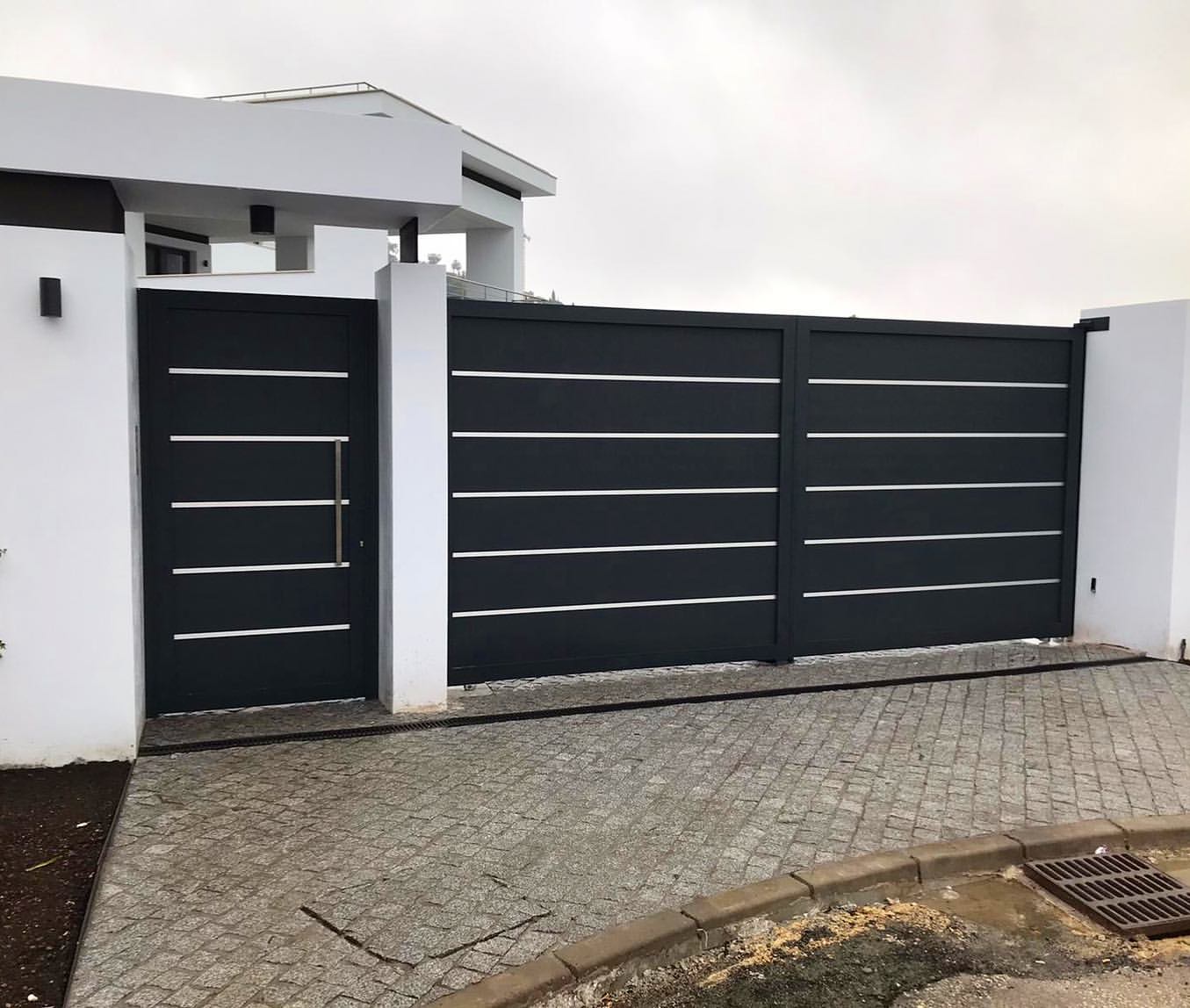
For modern homes, horizontal slatted fencing is often chosen for its clean lines and strong architectural finish. Wider slats can make a broad frontage feel more refined, while narrower spacing introduces more privacy and visual rhythm. Vertical designs suit both traditional and contemporary settings, particularly where a taller, more formal appearance is wanted. Decorative laser-cut panels can provide a focal point, although they are generally most effective when used selectively rather than across every boundary.
Consider proportion carefully. Very tall, dense fencing on a modest frontage can feel imposing, while low open panels may not provide enough presence beside a substantial driveway gate. The width of bays, the scale of posts and the height of the fence should all relate to the property and the view from the road.
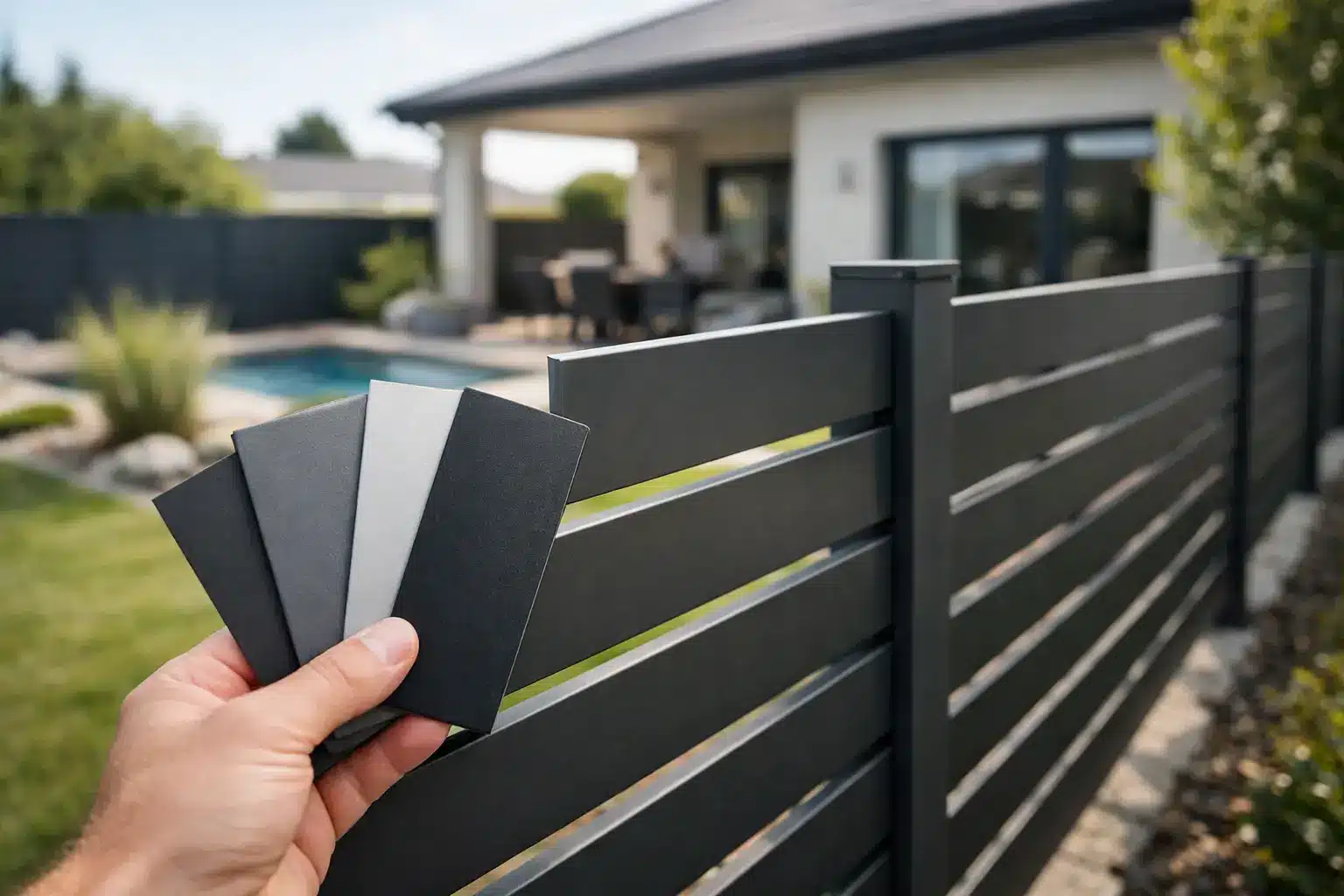
Colour plays a defining role too. Anthracite grey, black and darker architectural finishes remain popular because they give aluminium fencing a crisp, premium appearance and sit comfortably alongside modern windows, brickwork and paving. A bespoke powder-coated colour may be the stronger choice where gates need to match existing metalwork or a specific exterior palette. Look at samples outdoors where possible: natural light, surrounding foliage and paving can change how a finish appears.
Prioritise construction, not just appearance
Not all aluminium fencing is manufactured to the same standard. A similar-looking panel can differ significantly in its strength, finish quality and long-term performance. This is where a premium, made-to-measure system earns its place.
Ask how the panels and frames are constructed. Fully welded fabrication provides a clean, rigid structure designed for daily use and changing weather conditions. It avoids the reliance on multiple visible fixings found in some modular or flat-pack systems, and it helps maintain a more refined finish across the whole installation.
The thickness and profile of the aluminium sections should be appropriate for the panel size, location and likely exposure. A long run on an open site, for example, places different demands on fencing than a sheltered side boundary. Posts and fixings are equally important. They need to be specified for the ground conditions, panel height and wind loading, not treated as an afterthought.
Powder coating is another key consideration. A high-quality finish protects the aluminium and gives the fencing its consistent colour and texture. Unlike timber, aluminium does not require regular staining, sealing or painting to remain presentable. That does not mean it needs no care at all: an occasional wash with mild soapy water removes traffic film, salt deposits and garden debris, particularly in coastal or urban locations.
Measure the site and plan for levels
Made-to-measure fencing is particularly valuable when boundaries are rarely straight, level or evenly spaced. Sloping gardens, existing walls, drainage covers, mature trees and changes in paving level can all affect how panels are designed and fitted.
A stepped fence follows changes in ground level in defined sections, creating a structured, geometric appearance. A raked design follows the slope more closely and can give a smoother visual line. The most suitable option depends on the gradient, fencing style and desired finish. Horizontal slats can make a slope more noticeable if the layout is not carefully planned, whereas vertical elements may handle a changing level more discreetly.
Do not overlook practical clearance. Gates need room to swing, slide or fold without conflicting with fencing, kerbs, planting or parked vehicles. If you are combining a gate with an intercom, keypad or other access control, establish the location of power supplies, cabling and visitor access early. Planning these details at the outset prevents compromises later.
Check privacy, security and local requirements
Fencing can improve security by making a boundary harder to cross and by directing visitors towards a controlled entrance. However, the best solution is rarely just the tallest possible panel. A considered layout may include secure side access, coordinated pedestrian gates, suitable locks and clear visibility around the main entrance.
Privacy deserves a similarly measured approach. Solid or closely spaced aluminium panels are effective for screening seating areas, patios and overlooked boundaries. Yet complete screening across a front boundary may not suit every property, especially where you value visibility or want the frontage to feel open and welcoming. A combination of more private side panels and an open front design can provide the right compromise.
Before finalising height and placement, check the boundary position and any relevant planning restrictions. In the UK, permissions can depend on factors such as whether fencing sits beside a highway, exceeds certain heights, falls within a conservation area or relates to a listed property. Covenants and estate rules may also apply. Your local planning authority can confirm requirements for your specific address.
Choose a system that works with your gates
The most accomplished entrance schemes are designed as a whole. Coordinating aluminium fencing with a driveway gate, garden gate or pedestrian gate creates consistency in line, colour, slat size and overall quality. It also allows posts, infill panels and access points to be positioned with purpose.
If vehicles enter regularly, consider how fencing supports the gate arrangement. Swing gates require clear opening space, while sliding, bi-folding and telescopic gates can be useful where drive depth is limited. A pedestrian gate integrated into the same fencing run offers everyday convenience and reduces the need to open the main driveway gate for deliveries or visitors.
For higher-security residential or commercial sites, access control should be part of the original specification. Video intercoms, keypads and controlled entry systems work best when their position, wiring and mounting are planned alongside the gate and fence fabrication, not retrofitted as a separate layer.
Look beyond the initial price
The cheapest quote rarely reflects the whole cost of ownership. Timber fencing may appear less expensive at first, but it can require repeated painting, treatment, repairs and eventual replacement. Steel may be strong but can need careful protection against corrosion. Aluminium combines a premium appearance with low-maintenance performance, making it a strong long-term investment when properly manufactured and installed.
Compare quotations on a like-for-like basis. Confirm whether the price includes bespoke surveying, posts, fixings, powder coating, delivery, installation and any required groundwork. Ask about fabrication methods, finish guarantees and the supplier’s experience with properties similar to yours. A clear specification is more valuable than a vague low figure that leaves key details unresolved.
At Alu-Gate, bespoke aluminium fencing is designed to coordinate with the wider entrance solution, with precision-welded construction and a 20-year guarantee supporting the investment. That level of assurance matters when your fencing is expected to perform and look exceptional for years, not merely through the first season.
The best aluminium fencing should feel like it belongs to the property from day one. Choose a design that answers your need for privacy and security, insist on construction that justifies the finish, and allow enough time for the details that turn a boundary into a lasting entrance statement.