
Driveway Gate Colour Options for Every Home

Driveway Gate Colour Options for Every Home

A driveway gate is one of the first features visitors notice, often before they see the front door. The right driveway gate colour options can sharpen a contemporary façade, bring warmth to a period property or give a commercial entrance a more assured, professional presence. The wrong choice can make even a beautifully made gate feel disconnected from its setting.

For a made-to-measure aluminium gate, colour is not an afterthought. It is part of the design decision, alongside gate style, opening method, privacy level and access control. A considered finish helps your entrance look intentional for years to come – not just on installation day.

Why driveway gate colour options matter

Colour influences how substantial, private and welcoming your entrance feels. Dark shades tend to make gates appear more architectural and discreet, particularly when set against pale render or natural stone. Lighter finishes can soften a boundary and suit homes with cream brickwork, coastal settings or a more traditional character.

It also affects how well the gate integrates with the wider scheme. Window frames, garage doors, fencing, railings, exterior lighting and intercom posts all create visual reference points. A coordinated gate colour can bring these elements together without making the frontage feel overly matched.

For aluminium driveway gates, a premium powder-coated finish offers a crisp, consistent surface that is designed for everyday exposure to the British weather. Unlike timber, it does not need regular staining or painting to maintain its appearance. The best colour is therefore one you will be happy to live with over the long term, rather than a short-lived trend chosen in isolation.

Classic driveway gate colour options

Black: confident, timeless and versatile

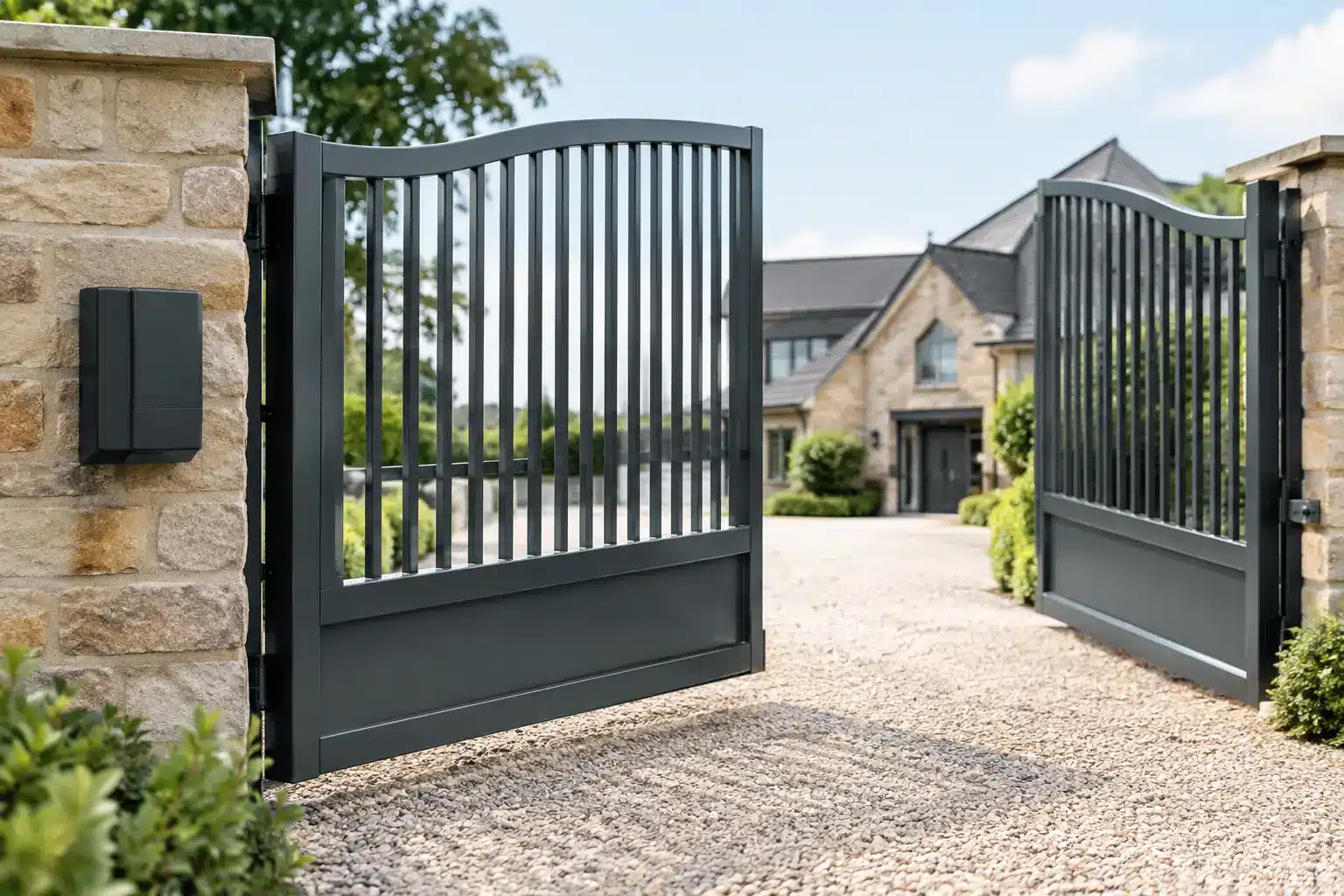
Black remains a leading choice for driveway gates because it works across so many property styles. A matt or fine-textured black gate creates a strong outline against brick, stone and planting, while also sitting naturally alongside black window frames, lanterns and contemporary hardware.

It is particularly effective for properties where you want the gate to provide security without becoming visually dominant. On a larger entrance, black can make a wide sliding or double swing gate feel elegant rather than imposing. Bear in mind that very dark colours can show dust, pollen and water marks more clearly in certain locations, although a quality powder-coated aluminium finish remains straightforward to clean.

Anthracite grey: the modern favourite

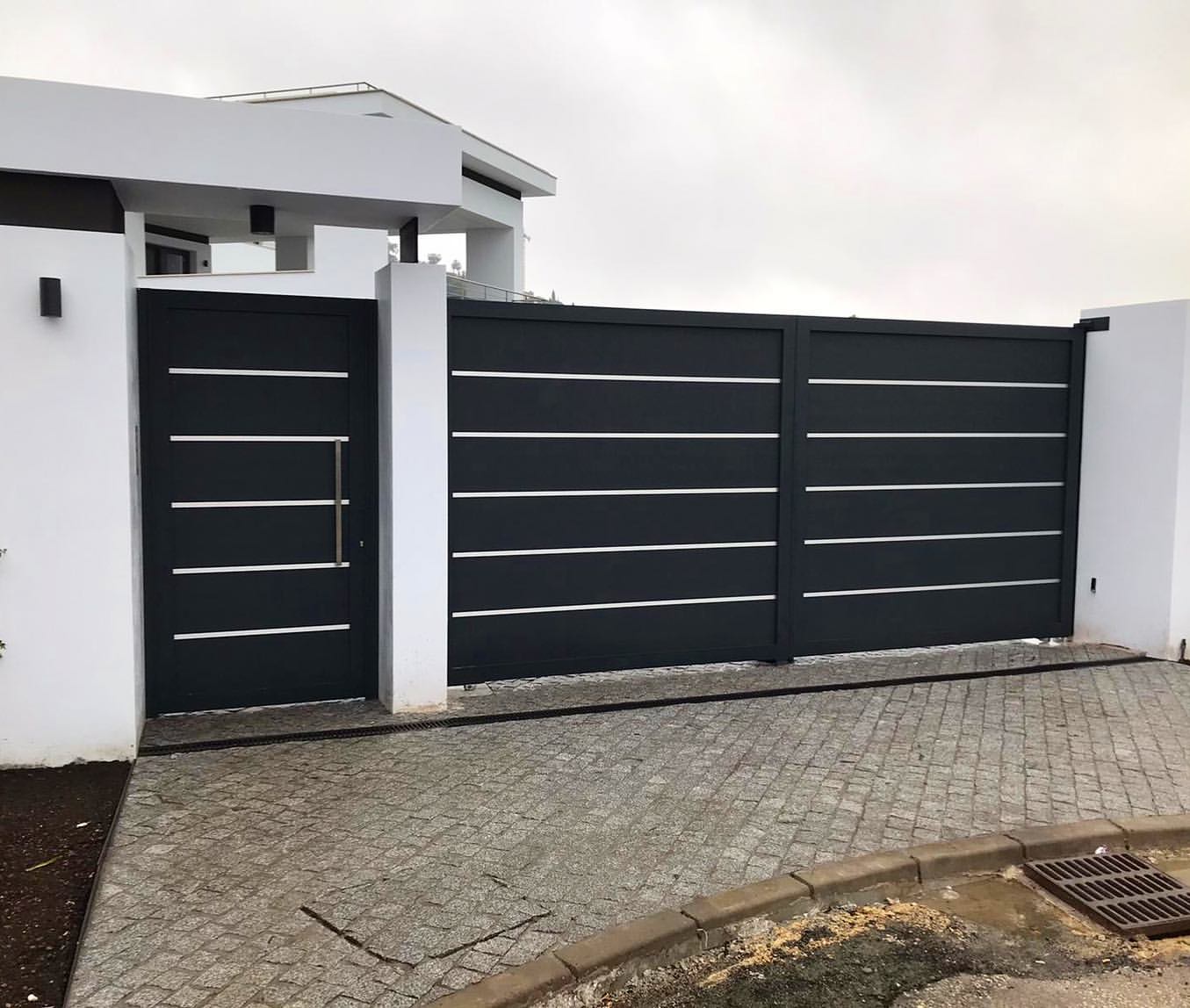
Anthracite grey has become a familiar choice for modern UK homes, largely because it pairs so well with grey window and door frames. It is softer than black yet still delivers a premium, architectural feel. It works especially well with white or light render, porcelain paving, zinc-effect details and clean-lined landscaping.

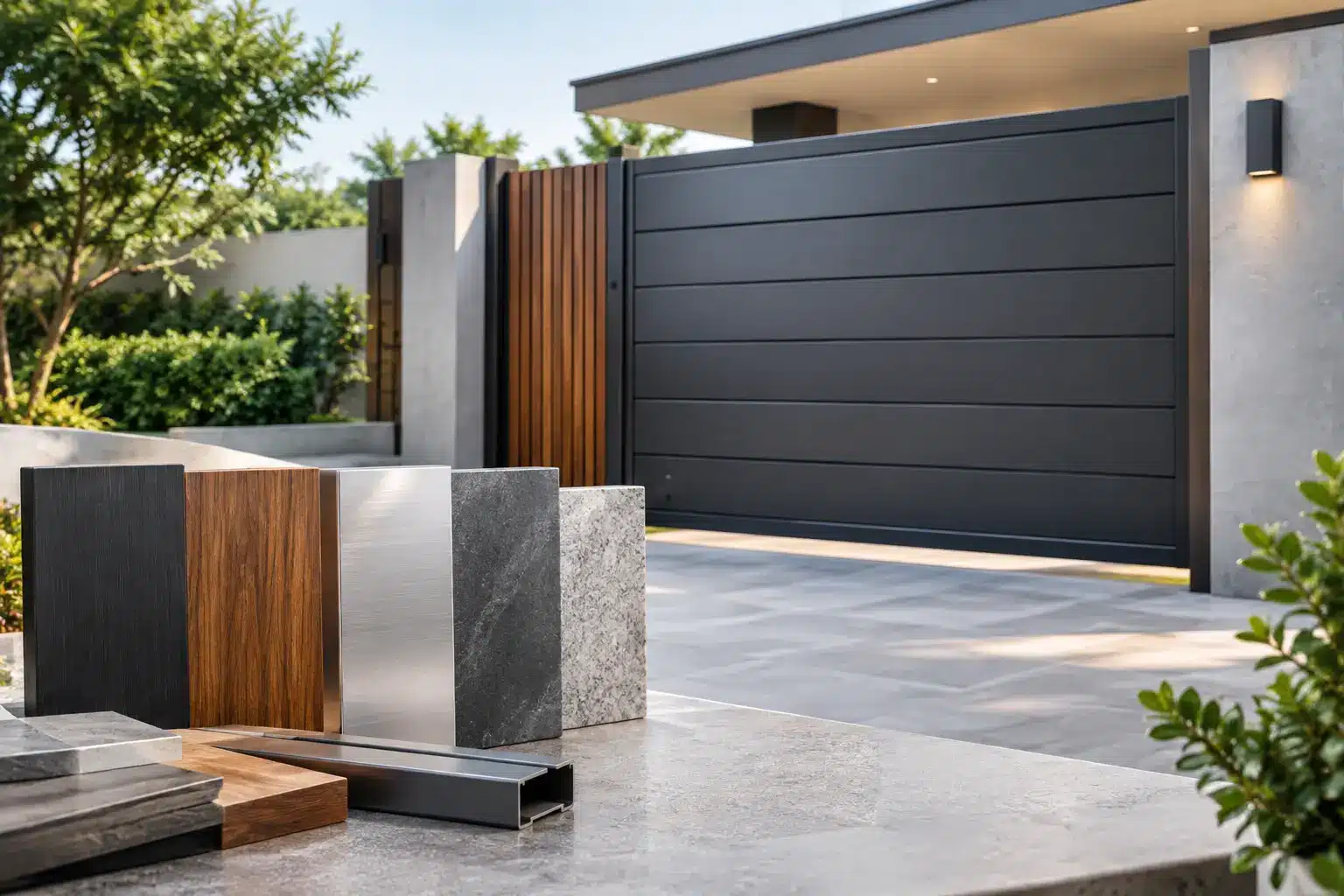
The key is checking the precise shade. “Anthracite” is often used broadly, but the tone can vary between products and surrounding features. Comparing a physical sample against your windows, garage door and masonry is far more reliable than choosing from a screen image.

Mid-grey and silver tones: refined without the contrast

Mid-grey, aluminium grey and selected silver tones offer a lighter alternative where black or anthracite would feel too severe. These colours can complement pale stone, soft grey render and contemporary cladding, while retaining the smart, precise appearance expected from an aluminium entrance system.

They are often a considered option for commercial premises too. A mid-grey gate can look professional and well specified without drawing unnecessary attention to a boundary or service entrance.

White and light neutral finishes: clean but considered

White, off-white and light neutral gates can look striking on the right property. They suit crisp, minimalist architecture and can echo white-framed windows or rendered walls. However, a bright gate will naturally show roadside grime, splashback and organic marks sooner than a darker finish.

This does not rule out light colours. It simply means they are best specified with a realistic view of the driveway’s surroundings and a willingness to give the surface an occasional wash. Warm whites and soft greys are often more forgiving than a brilliant white.

Add warmth with wood-effect aluminium gates

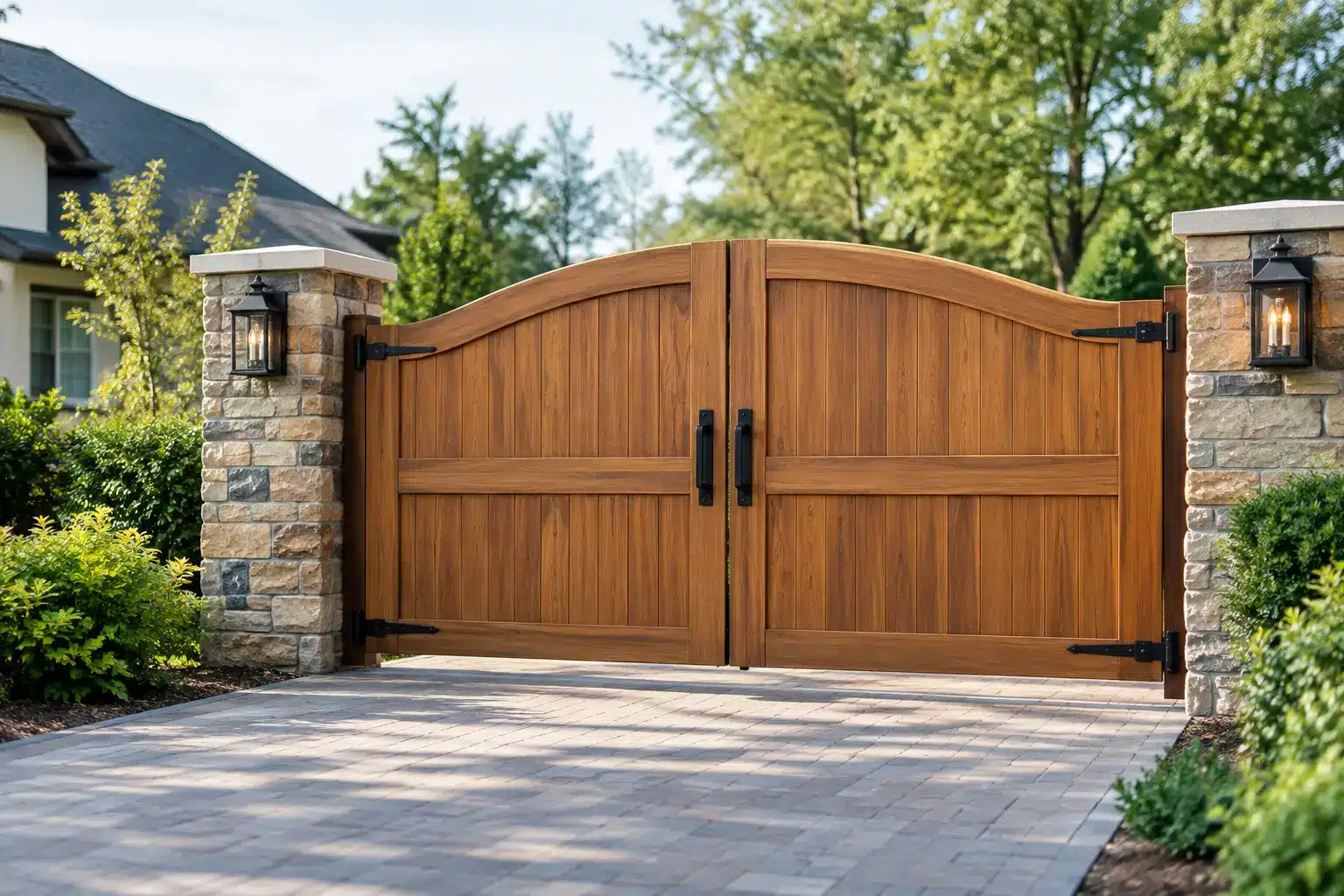
For homeowners who like the character of timber but not the recurring maintenance, wood-effect aluminium provides a compelling middle ground. A convincing wood-effect finish can introduce warmth to a modern frontage, soften stone or render, and connect the gate to timber cladding, garden structures or internal joinery visible from the entrance.

Oak-inspired tones tend to feel lighter and more contemporary, while richer walnut-style finishes bring depth and formality. The design of the gate matters here. Horizontal aluminium slats in a wood-effect finish can create a polished, modern look; a more traditional profile may be better suited to a period or rural setting.

There is a trade-off. Wood-effect gates make more of a visual statement than plain black or grey, so they benefit from restraint elsewhere. If the home already has varied brickwork, busy paving and prominent planting, a simple solid colour may create a calmer result.

Match the colour to your property, not just a trend

A useful starting point is to identify the element your gate should relate to most closely. At a contemporary home, that may be anthracite window frames. On a period property, it could be the dark tone of roof tiles, heritage-style railings or a painted front door. For a rural property, warm timber-effect tones or deep greens can sit comfortably within a softer landscape.

Brick colour also deserves close attention. Red brick generally works well with black, charcoal, deep green and darker wood effects. Buff and honey-coloured brick can suit bronze, brown, olive and warmer timber shades. Grey or white render provides a flexible backdrop, although it makes contrasting colours appear stronger.

Do not overlook the driveway surface. Block paving, resin-bound gravel, tarmac and porcelain all alter how a colour reads. A gate sample should be viewed outside, next to the actual materials where possible, in both direct daylight and shade.

Choose a finish that supports everyday use

The sheen and texture of the coating matter almost as much as the colour itself. A matt finish gives a contemporary, understated result and reduces reflections. Fine-textured coatings add subtle depth, can feel more tactile and are often forgiving of minor surface marks. Smoother finishes offer a clean, sleek appearance that can suit formal or highly modern designs.

For busy driveways, especially those close to a road, darker textured finishes are often practical choices. They can disguise the light dust and minor marks that accumulate between cleans. In sheltered, design-led settings, a smoother finish or lighter shade may be entirely appropriate.

A premium aluminium gate should be fabricated and welded for strength before it receives its protective finish. This is not simply about appearance. A properly specified coating helps preserve the gate’s finish through rain, frost and strong sunlight, supporting the low-maintenance ownership aluminium is valued for.

Coordinate gates, fencing and access control

A driveway entrance rarely stands alone. Matching pedestrian gates, side panels and aluminium fencing in the same colour creates a far more considered perimeter. It also prevents the piecemeal appearance that can arise when separate elements are selected at different times.

Access control should be included in the design conversation early. An intercom, keypad, letterbox or gate-mounted lighting can either blend in or provide deliberate contrast. Black and anthracite are particularly easy to coordinate with modern intercom systems, while a wood-effect gate may look best with discreet black or dark bronze accessories.

At Alu-Gate, colour selection is part of a wider made-to-measure consultation, ensuring the finish suits the gate format, property architecture and practical demands of the entrance. A fully welded aluminium system, finished to a high standard and backed by a 20-year guarantee, is designed to retain that first impression for the long term.

Ask for samples before you specify

Digital images are useful for inspiration, but they cannot show the true undertone, texture or sheen of a powder-coated finish. Request samples and place them against the house, driveway and existing external joinery. Look at them in morning light, on an overcast afternoon and under exterior lighting if your entrance is used frequently after dark.

It is also worth considering the view from inside the property. A gate may look excellent from the road but feel too dominant when seen through a front window or from a home office. The most successful choice balances kerb appeal with the everyday experience of arriving home.

Choose a colour with confidence, but allow the architecture and surroundings to lead. A gate built precisely for your entrance deserves a finish that feels equally considered – strong in character, easy to live with and right for the property from every angle.

Modern Driveway Gate Trends for UK Homes

Modern Driveway Gate Trends for UK Homes

A driveway gate is no longer just a boundary marker. It is often the first architectural feature visitors see, the point where security becomes visible, and a daily-use system that must work reliably in British weather. The strongest modern driveway gate trends bring those demands together: clean design, tailored proportions, intelligent access and materials chosen for decades of service rather than a short-lived visual upgrade.

For homeowners, self-builders and commercial property managers, the shift is clear. Off-the-shelf gates are giving way to made-to-measure entrance systems that complement the building, make access easier and create a stronger sense of arrival.

Modern Driveway Gate Trends That Add Lasting Value

The defining trend is not one particular colour, profile or opening mechanism. It is considered specification. A gate should suit the width and slope of the driveway, the available run-back space, the level of privacy required and the character of the property.

Contemporary homes often suit crisp horizontal lines, framed panels and understated finishes. Traditional stone, brick or rendered properties can benefit from the same materials with softer details, vertical profiles or a carefully selected colour. The objective is not to force a fashionable look onto a property. It is to create an entrance that feels designed as part of it.

Aluminium has become central to this movement. It offers a premium appearance without the ongoing cycle of sanding, staining and repainting associated with timber. Unlike steel, it does not rust, making it particularly well suited to exposed UK locations and properties near the coast. Quality still matters, however. The strength of the frame, the precision of the welds, the coating process and the gate’s engineering determine whether the finished result continues to look refined after years of use.

Linear slats remain a leading choice

Horizontal aluminium slats are one of the most requested contemporary gate styles, and for good reason. They create a calm, architectural rhythm while allowing the level of privacy to be adjusted. Narrow gaps can soften the elevation and let light through; closer spacing gives a more private, more secure boundary.

This is where bespoke fabrication makes a visible difference. The slat spacing, frame depth and overall proportion should be considered in relation to the driveway opening, adjoining fencing and the scale of the house. A wide gate with poorly judged profiles can look flat and heavy. A properly proportioned design has presence without overwhelming the frontage.

Vertical slats are also gaining ground, especially where homeowners want to make a narrow frontage feel taller or introduce a more traditional visual rhythm. Both layouts can be highly contemporary. The decision comes down to the architecture, sightlines and the effect you want from the road.

Dark Finishes, Warm Neutrals and Coordinated Boundaries

Anthracite grey remains a popular choice for modern driveway gates because it works confidently with pale render, brick, timber cladding and black-framed glazing. It is not the only option. Black offers a sharper, more formal appearance, while muted greens, bronzes and warm neutral tones can sit more naturally alongside rural materials and established planting.

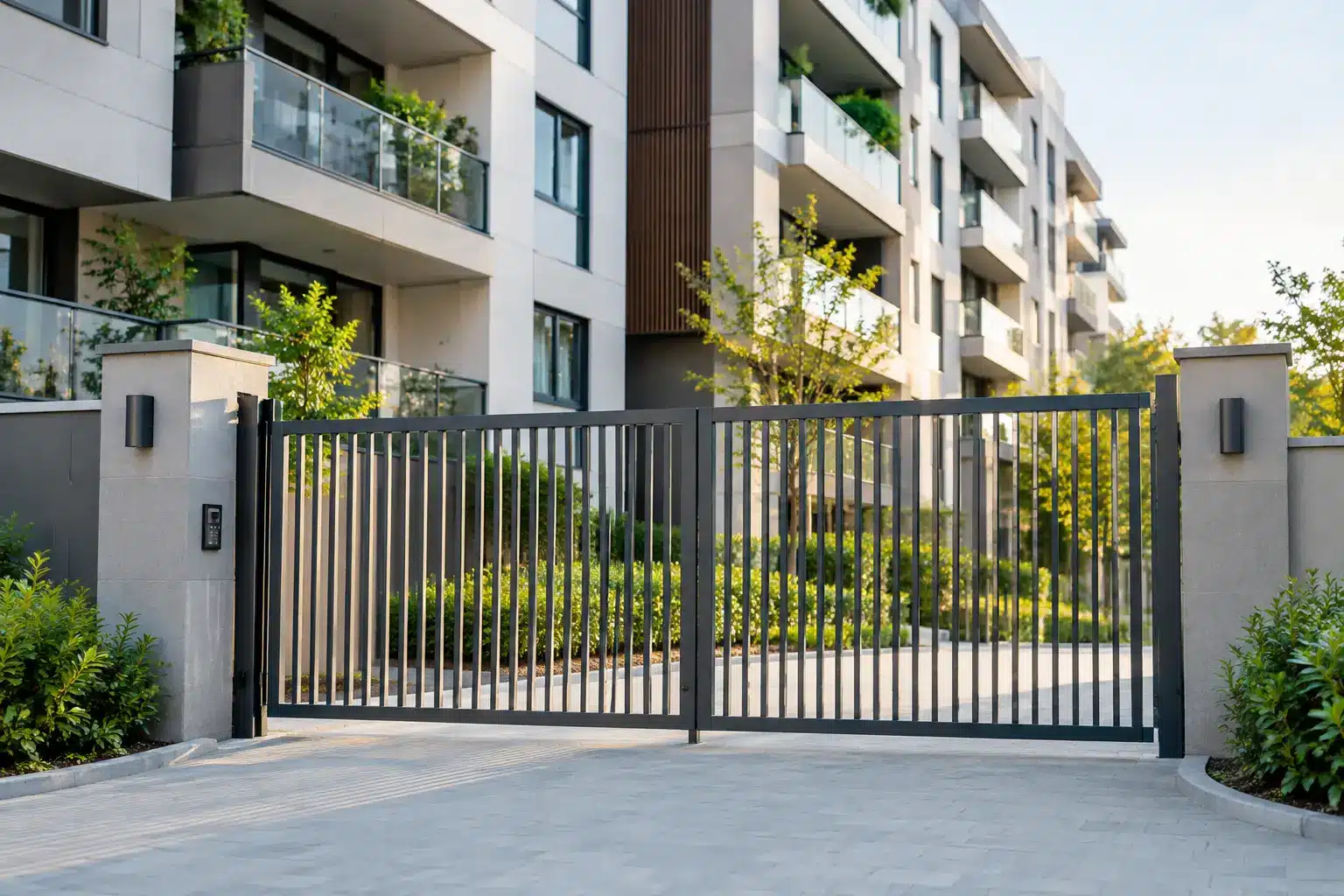
The most polished schemes treat the gate, pedestrian entrance, fencing panels and posts as one coordinated composition. This avoids the common issue of a premium gate being paired with mismatched boundary elements. Repeating a profile or finish across the frontage creates visual continuity and makes even a complex entrance feel ordered.

Wood-effect aluminium is another considered option. It brings warmth to a minimalist elevation without the maintenance demands of natural timber. The trade-off is stylistic: a convincing wood finish can soften a contemporary scheme, but a single powder-coated colour may be the better choice where the aim is a crisp, distinctly modern statement.

Concealed details create a cleaner result

Modern design is increasingly defined by what is not immediately visible. Concealed fixings, integrated handles, discreet hinges and carefully positioned automation equipment all reduce visual clutter. These details should never compromise access for maintenance or safe operation, but when planned properly they give the entrance a far more resolved finish.

Posts deserve equal attention. They can be designed to match the gate, finished in a contrasting colour or incorporated into masonry piers. Where access control is required, a purpose-designed post can neatly house an intercom, keypad, lighting and cabling rather than adding separate units as an afterthought.

Sliding, Swing and Bi-Folding Gate Design

The best opening format is driven by the site, not by fashion. Sliding gates are increasingly specified for driveways that rise towards the property, where swing gates may be impractical, or where owners want to avoid a leaf opening into the usable driveway area. They create a controlled, efficient entrance and suit broad openings particularly well, provided there is sufficient space alongside the opening for the gate to travel.

Cantilever sliding gates offer a clean solution where a ground track would be undesirable, such as uneven surfaces, gravel driveways or areas prone to debris. They require more structural planning and a longer run-back area, so they are not automatically the right answer for every site.

Swing gates retain considerable appeal. They can frame a driveway beautifully, work well with traditional gate piers and usually require less lateral space than a sliding system. For restricted sites, bi-folding or telescopic gate configurations can reduce the space needed for opening. These formats are particularly valuable where a full sliding gate is not possible but speed and compact operation are priorities.

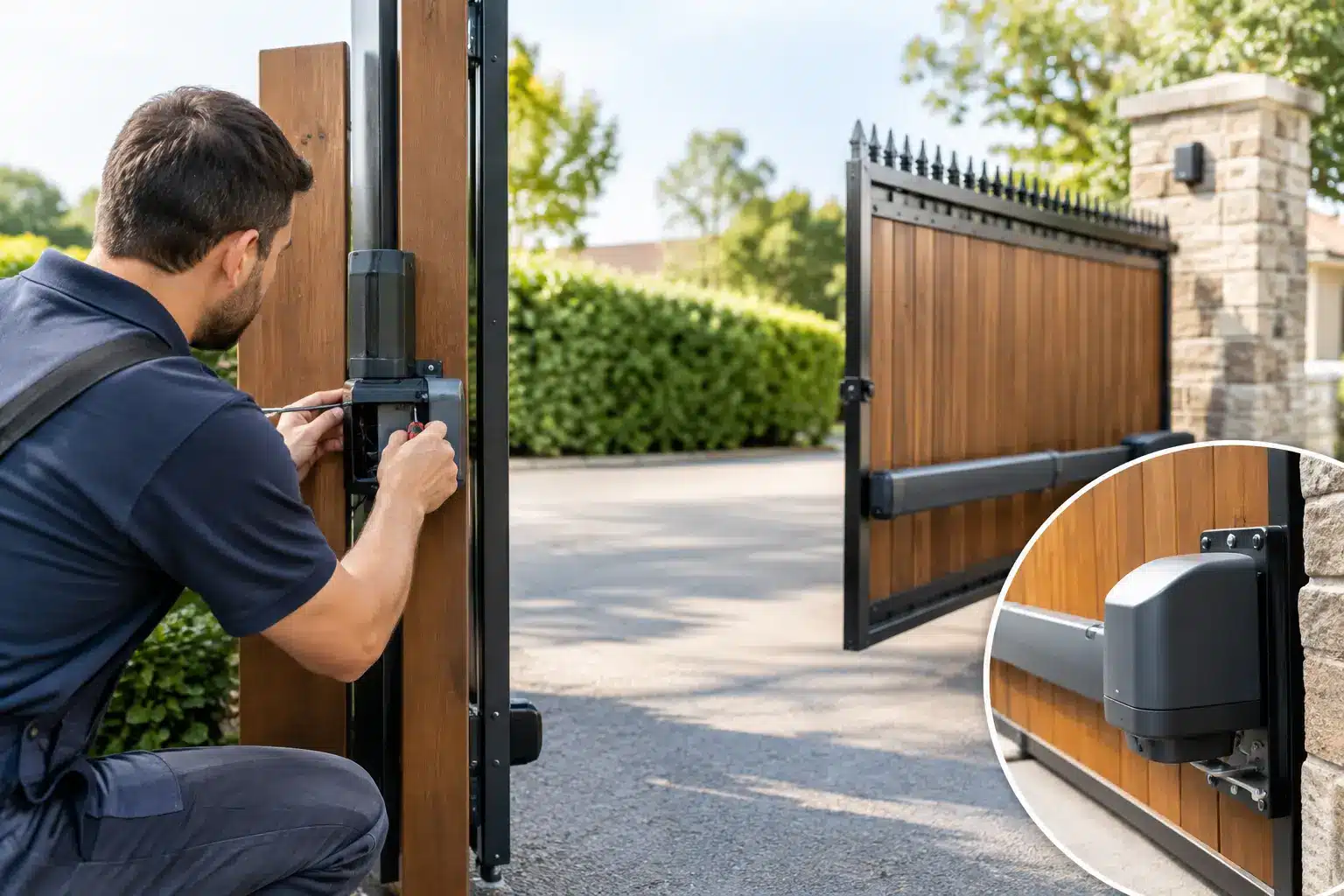
Automation should be considered at the design stage, not added at the end. The gate weight, hinge arrangement, opening geometry, wind exposure and daily usage all influence the correct system. A premium automated gate should open smoothly, stop safely and remain dependable through regular use. Correct installation, safety devices and commissioning are essential, especially for commercial entrances and shared access points.

Smart Access Without a Cluttered Entrance

Access control is moving from simple key fobs towards flexible, connected systems. Video intercoms allow occupants to see and speak with visitors before granting entry, whether they are at home, in the garden or away from the property. Keypads, proximity readers and app-based controls can also make access easier for family members, deliveries, staff and approved contractors.

The benefit is not technology for its own sake. It is greater control over who enters the site and how. A well-specified system can reduce the need to leave the house to open the gate, provide clearer visitor verification and give commercial managers a more practical way to manage regular access.

There are sensible limits. Reliable connectivity, thoughtful cabling and a clear plan for manual release during a power cut matter as much as the intercom screen or app. For many homes, a high-quality video intercom and safe automated operation will offer more lasting value than an unnecessarily complicated collection of devices.

Security That Still Looks Refined

A solid boundary is a visual deterrent, but real security is built into the complete system. Gate height, infill design, locking points, hinges, automation controls and the resilience of posts all affect performance. Gaps should be selected with privacy and security in mind, while still allowing safe visibility where vehicles join a public road.

Fully welded aluminium construction is a key marker of quality. It creates a rigid, cleanly finished structure that is suited to regular operation and avoids the weaker visual and structural compromises that can come with heavily assembled designs. Combined with a durable powder-coated finish, it provides an entrance solution engineered for low-maintenance ownership.

For commercial sites, the specification may need to account for higher traffic, access permissions, delivery vehicles and stronger perimeter requirements. Residential projects can place more emphasis on kerb appeal and privacy. In both cases, the right answer comes from assessing how the entrance will actually be used.

Choose a Trend That Suits Your Property

The most successful gate designs will still look right when short-lived fashions have moved on. Start with the practical constraints: driveway width, gradients, parking patterns, available opening space and desired level of privacy. Then consider the architecture, existing boundary treatment and how visitors will gain access.

A bespoke aluminium gate gives you the freedom to make those decisions deliberately, rather than accepting the limitations of a standard size or generic design. At Alu-Gate, that means looking beyond the gate itself to create an entrance with the right proportions, operation and finish for the property.

Choose a design that earns its place every time you arrive home: precise in its detail, reassuring in its security and built to retain its presence for years to come.

Akuvox Intercom Review UK for Premium Gates

Akuvox Intercom Review UK for Premium Gates

A gate should do more than mark the edge of your property. It should give you a clear, controlled way to welcome visitors, receive deliveries and protect what matters without undermining the appearance of the entrance. This Akuvox intercom review UK buyers can use focuses on that practical balance: whether an Akuvox system delivers the security, presentation and day-to-day convenience expected from a premium automated gate.

Akuvox is not the cheapest route to gate entry. Nor is it intended to be. Its appeal lies in combining video calling, mobile access, traditional indoor monitors and gate-release functions within a system that can be specified around the property. For homeowners and commercial sites investing in bespoke aluminium gates, that flexibility has real value.

What Akuvox brings to a gate entrance

Akuvox manufactures IP-based door entry and access-control equipment. In straightforward terms, the intercom can connect to a home network and allow visitors at the gate to call an internal screen, a mobile phone or both. Depending on the chosen equipment, residents may see and speak to the visitor, release the pedestrian or driveway gate, and use options such as PIN codes, RFID credentials, Bluetooth or QR access.

That broad product range is one of the brand’s strongest points. A modest side-gate installation may only need a neat video door station and a reliable release button. A large driveway entrance may need a camera with a wide viewing angle, a separate keypad, vehicle gate controls and calls routed to several household members. Commercial premises may need timed access rights, multiple entrances or a reception desk arrangement.

Rather than forcing all of those requirements into one off-the-shelf kit, Akuvox allows the system to be built around the way the entrance will actually be used. That is particularly relevant when the gate itself is made to measure. Access control should be part of the entrance design, not an afterthought fitted once the gate is in place.

Akuvox intercom review UK: the strengths

For most buyers, video quality and call handling are the first tests. An intercom must let you identify a visitor quickly in the changing light and weather of a British driveway. Akuvox video door stations are designed for clear two-way communication and visual verification before a gate is opened. In a well-specified installation, the ability to answer from an internal monitor or mobile phone is a major improvement on relying solely on a gate-side keypad or audio handset.

The mobile element is especially useful for deliveries and tradespeople. If you are working upstairs, out in the garden or away from the property, you can see who is calling and decide whether to grant access. That convenience is not simply a luxury. It reduces unnecessary trips to the entrance and means a secure gate remains useful rather than becoming a barrier to everyday routines.

Appearance is another positive. Premium aluminium gates are often selected for their clean lines, durable powder-coated finish and architectural presence. A bulky, poorly positioned intercom can spoil that result. Akuvox offers contemporary door-entry units that can be integrated into a gate post, wall, pedestal or coordinated entrance panel with a far more considered finish than a basic plastic call button.

There is also a compelling argument for future flexibility. Families change, staff arrangements change and security expectations change. A system that supports different access methods can be adapted more readily than a standalone keypad. You may initially use video calls and a keypad, then later add credentials for regular contractors or introduce access permissions for a commercial team.

Where buyers should be more selective

An Akuvox intercom is only as good as the design and installation around it. That is the essential caveat in any honest review. IP door entry has more capability than a basic wired audio unit, but it also requires careful planning of network connectivity, cable routes, power provision and gate automation interfaces.

Wi-Fi can be suitable in some circumstances, particularly where an intercom is close to the house and signal strength is proven. At a long driveway entrance, however, relying on a weak wireless connection can create frustrating call delays or unreliable video. A hard-wired network connection, or a properly designed network extension, is often the stronger long-term choice. It is worth resolving this before groundworks, gate posts and finished surfaces make cable runs harder to alter.

Buyers should also distinguish between remote control and a complete access strategy. Opening a gate from a mobile phone is convenient, but it does not remove the need for safe gate automation, correctly positioned safety devices, manual release provisions and a suitable pedestrian access arrangement. The intercom controls entry. It should be specified to work intelligently with the gate system, not treated as a substitute for it.

App-based functionality can introduce another consideration: household confidence with technology. The best system is one everyone can use. For that reason, many premium installations combine mobile calling with a dedicated internal monitor and familiar physical access methods. This provides convenience for tech-confident users while keeping gate operation simple for children, guests, relatives and staff.

Finally, the price will be higher than a basic audio intercom or single-purpose keypad. Whether that is worthwhile depends on the property. For a short, rarely used garden entrance, it may be unnecessary. For a principal driveway gate, a large home, a development entrance or a commercial site, the additional control, verification and finish can represent excellent long-term value.

Choosing the right Akuvox specification

The most successful systems begin with the entrance layout, not a product code. Consider where a visitor will stand, what the camera needs to see, how far the gate is from the building and whether callers should reach one person or several. Think about routine access too: family members arriving by car, pedestrians entering on foot, cleaners, gardeners, deliveries and emergency access.

A driveway entrance often benefits from an intercom position that gives visitors a clear place to stop without obstructing the road or gate travel. The camera should be mounted at a practical height and angled to capture faces reliably, rather than merely the top of a vehicle. If a separate pedestrian gate is present, decide whether it needs its own calling point or whether a single entrance panel can serve both routes.

For homes, a video door station with an internal monitor and mobile calling is frequently the right starting point. Add a keypad or credential reader where regular users need independent access. For commercial sites, the brief may extend to named users, timed permissions, reception calling and a more formal visitor process.

A professional survey can also identify details that are easy to miss: glare from low sun, rain exposure, vehicle approach angles, cellular or network coverage, and the most discreet way to conceal cables within posts or walls. These decisions shape reliability as much as the intercom itself.

Installation quality matters as much as the equipment

Premium gate systems reward joined-up planning. The intercom, automation controls, safety systems, power supply, gate structure and surrounding masonry should all be considered together. A beautifully fabricated gate with a poorly located intercom will feel compromised every time someone visits.

This is where a consultation-led approach makes a difference. The gate design can incorporate a purpose-made intercom aperture or an integrated panel, with finishes coordinated to the aluminium gate and fencing. Fully welded construction and considered detailing help create an entrance that looks intentional from every angle, while the access equipment remains protected and accessible for servicing.

At Alu-Gate, this means assessing access control as part of the wider entrance solution, alongside the gate format, opening method and property requirements. The aim is not simply to add technology, but to create a secure entrance that retains its strength, style and ease of use over time.

Is Akuvox worth it for a UK property?

For a premium residential or commercial entrance, Akuvox is a strong choice when video verification, flexible access and a refined appearance matter. Its real advantage is not one headline feature. It is the ability to create a system that works for the property today and can adapt as needs develop.

It is less compelling where the requirement is limited to a simple call button and occasional gate release. In that situation, a less sophisticated system may be perfectly adequate. But where a bespoke aluminium gate is central to security and kerb appeal, a well-planned Akuvox installation is easier to justify. It supports a better visitor experience while giving owners more confidence over who enters.

Before choosing a model, start with how your entrance needs to work on an ordinary weekday, not just how it should look on completion day. That conversation will lead to a gate and intercom specification designed to impress, built to last and practical to live with.

Are Sliding Gates Secure? What Really Matters

Are Sliding Gates Secure? What Really Matters

A driveway entrance is only as secure as the point where someone can get through it. That is why homeowners and commercial buyers often ask, are sliding gates secure? The answer is yes, when the system is properly designed, professionally specified and matched to the way the property is used. A sliding gate can create a highly effective physical and visual boundary, but its security does not come from its movement alone.

For a premium property, the goal is not simply to install a gate that closes. It is to create a controlled entrance that looks considered from the street, stands up to daily use and gives unauthorised visitors as few opportunities as possible.

Are sliding gates secure for driveways?

A well-built sliding gate is one of the more secure driveway gate formats available. Unlike a swing gate, which opens into or across a driveway, a sliding gate moves laterally behind the boundary line. This makes it particularly suitable where space is limited, the entrance is on a slope, or there is a need to secure a wider opening without taking up room inside the drive.

Security depends on several connected decisions: the strength of the gate leaf and supporting structure, the quality of the track or cantilever system, the locking arrangement, access control, automation and the surrounding fencing. A weak fence line or an easy route around the side of the gate can undermine an otherwise excellent entrance system.

The right specification creates a meaningful barrier. It also signals that the property is cared for and access is managed, which can discourage opportunistic intrusion before a person ever reaches the gate.

The gate construction matters first

A sliding gate should feel substantial because it is substantial. Lightweight, loosely assembled gates can flex, rattle and become vulnerable around fixings over time. By contrast, fully welded aluminium construction provides a rigid, clean-lined gate leaf that is designed to retain its form through regular operation and changing weather.

Aluminium is especially well suited to modern driveway gates. It does not rust in the way steel can, and it avoids the swelling, splitting and recurring treatment associated with timber. That low-maintenance advantage is also a security advantage: a gate that continues to close, align and latch correctly is far more dependable than one left to deteriorate.

The frame, infill design and posts must be specified as a complete system. Wider entrances, exposed locations and solid privacy panels can all increase wind loading. A secure gate needs adequate structural support to resist that force without movement or distortion. Precision fabrication and correct installation are not cosmetic details here. They determine whether the gate remains reliable years after it is fitted.

Privacy panels versus open designs

Solid or closely spaced aluminium infill can improve privacy by limiting views of vehicles, doors and activity within the property. For many homes, this is an attractive first layer of security. It can also give a driveway a more architectural, private appearance.

However, a completely solid design is not automatically right for every site. On an exposed driveway, it may catch more wind, calling for a stronger supporting arrangement. Open slatted designs can offer a balance between privacy, airflow and a lighter visual presence. The best choice depends on the property, frontage and level of privacy required, rather than a one-size-fits-all rule.

Locking and automation are where security becomes practical

An automated sliding gate should close positively and remain held in position when shut. Depending on the system, this may involve the inherent holding force of the operator, a mechanical lock, or a combination of both. The appropriate arrangement depends on gate size, usage levels, exposure and the level of security required.

A professional system should not rely on a basic domestic latch as its main line of defence. The gate, motor and locking components need to work together. This is particularly relevant for larger openings and commercial premises, where frequent use and greater gate weight place more demand on every moving part.

Automation also removes a common weakness in day-to-day behaviour: leaving the gate open. With timed closing, residents and staff are less likely to forget to secure the entrance after driving through. That said, the close timer should be configured thoughtfully. Too short can inconvenience users and create safety issues; too long leaves the opening exposed for longer than necessary.

A manual release is essential for safe operation during a power cut or fault. It should be secure, protected from casual access and understood by authorised users. This is one of the details worth discussing at the design stage, rather than discovering when access is needed urgently.

Access control should suit the people using the entrance

The strongest gate can be compromised by an overly simple method of entry. A keyed control may suit a small, low-traffic driveway, but keys can be copied, lost or passed on. For a home with regular visitors, deliveries or tradespeople, an intercom system gives the owner the ability to identify a caller before granting access.

Video intercoms, such as Akuvox systems, add another useful layer. They allow residents to see and speak with a visitor at the gate, rather than opening it on assumption. This is valuable for busy family homes and properties where the main entrance is set back from the road.

Commercial sites often need more structured control. Keypads, fobs, remote controls and managed user permissions can be selected according to staff numbers and operational needs. The principle is straightforward: only authorised people should be able to operate the gate, and access should be easy to remove when circumstances change.

Do not overlook pedestrian access. If people regularly climb, squeeze around or wait for the driveway gate to open, the entrance is being used against its design. A coordinated pedestrian gate with its own secure latch or access control can improve convenience and reduce unnecessary operation of the main sliding gate.

A sliding gate must not create a side route

Gate security is perimeter security. A sliding gate can be expertly made, but it cannot protect a boundary that is open at the sides, low enough to step over or interrupted by poorly secured panels.

The return fencing, walling and posts should meet the gate cleanly, without gaps that invite access. The gate should also be designed with sensible clearances around the opening and closing edge. Excessive gaps can weaken privacy and create a temptation to reach through to controls. Too little clearance, meanwhile, risks poor operation or damage. This is why made-to-measure design is preferable to adapting a standard-sized product to an awkward entrance.

Consider the full arrival route as well. Clear house numbering, suitable lighting and a well-positioned intercom help legitimate visitors use the entrance correctly. Lighting can make it easier for cameras to capture useful footage and makes a property feel less vulnerable after dark. Cameras and alarms can complement a sliding gate, but they do not replace a strong physical boundary.

Track-mounted and cantilever gates have different security considerations

Track-mounted sliding gates run on a ground track. They can provide a precise, stable solution, but the track needs to be kept clear of leaves, gravel, ice and debris. Poor maintenance may stop a gate closing fully, which is a security issue as much as an inconvenience.

Cantilever sliding gates travel above the driveway surface, supported by a counterbalanced structure. With no track across the entrance, they are often well suited to uneven surfaces, busy commercial access points or locations where debris is likely. They require additional run-back space and carefully engineered support, so they are not the answer for every driveway.

Neither option is automatically more secure in every situation. The best system is the one that can be installed correctly, operate consistently and close securely in the conditions it will actually face.

Safety and security must work together

A secure automated gate must also be safe. Safety devices, force settings, emergency release arrangements and professional commissioning are essential. A gate should respond appropriately to an obstruction and should never be specified in a way that creates avoidable risk to children, visitors, vehicles or pets.

This is also where quality pays back over time. A gate that is correctly aligned, sensibly automated and maintained will deliver a more dependable level of security than a cheaper system that repeatedly sticks, misaligns or requires improvised repairs. Regular checks of the gate’s travel, safety devices, fixings and access controls help identify small issues before they affect performance.

A secure sliding gate is not about making a property feel closed off. It is about creating an entrance that is controlled, composed and built around how you live or work. For a made-to-measure solution, Alu-Gate can help define the right gate format, finish, access control and perimeter detail before fabrication begins – so the finished entrance protects the property as confidently as it enhances it.

Secure Gates for Side Access That Protect Property

Secure Gates for Side Access That Protect Property

A side passage is often the least visible route onto a property – and, for that reason, one of the first places an intruder may test. Secure gates for side access close this overlooked gap while giving the boundary a considered, high-quality finish. The right gate should feel like a natural extension of the property, not an afterthought fitted only because there was an opening to fill.

For many UK homes, the side access is used every day for bins, bicycles, garden equipment and access to the rear garden. It needs to be convenient for the people who live there, difficult for anyone who should not be there, and capable of standing up to years of British weather. That calls for more than a standard timber panel and a lightweight latch.

Why side access deserves proper security

A side gate can protect far more than a narrow passage. It can reduce access to rear doors and windows, screen valuable items from view, define the boundary clearly and help keep children and pets within the property. On commercial premises, it may also control access to service yards, storage areas and staff-only spaces.

The challenge is that side access usually comes with constraints. The passage may be narrow, uneven or overlooked. There may be a wall on one side and a fence on the other, limited room for a gate to swing, or a need to retain easy access for refuse collections and garden maintenance. A secure solution starts with understanding these practical details rather than choosing a gate from a standard size chart.

Aluminium is particularly well suited to this role. It does not rot, warp or require the routine sanding and repainting associated with timber. When fabricated to measure with a fully welded frame, it provides a strong, stable structure with crisp lines and a premium powder-coated finish. The result is security that continues to look the part long after installation.

What makes a side access gate genuinely secure?

Security is created by the whole assembly, not by the gate leaf alone. A thick-looking gate with weak posts, exposed hinges or a poor lock can still be a vulnerable point. Every component needs to work together.

A made-to-measure fit

Gaps around a gate are more than an aesthetic issue. Excessive clearance can make a gate easier to force, reach through or climb around. A bespoke gate is designed around the actual opening, accounting for walls, posts, ground levels and any changes in level across the passage.

This matters particularly in older properties, where walls are rarely perfectly square. A measured solution allows the gate to close cleanly, operate reliably and maintain a neat, secure perimeter line.

Fully welded aluminium construction

The frame is the foundation of a high-quality side gate. Fully welded aluminium construction creates a rigid, durable structure that is far less susceptible to movement than loosely assembled systems. It supports the infill panels, hinges and locking hardware properly, helping the gate remain aligned through repeated daily use.

For a gate exposed to wind or fitted at the end of a long side passage, this strength is especially valuable. A gate should not rattle, sag or begin catching on the ground after a season of use. Precision fabrication pays for itself in dependable operation and a more refined appearance.

Locking that suits how you use the gate

A lock must be secure, but it must also be practical. A pedestrian side gate often benefits from key-operated access from the outside and convenient release from inside the property. Where the gate forms part of a more controlled entrance, keypad, intercom or electronic access options can be specified.

The best choice depends on who needs regular access. A family home may prioritise a simple, reliable key lock, while a shared development, office or commercial yard may need controlled entry for staff, visitors or contractors. Akuvox intercom systems can add visual verification and remote access where the layout and security requirements justify it.

Avoid treating a lock as a last-minute add-on. Its placement, handle style, strike arrangement and compatibility with the gate frame should be considered during design. This produces a cleaner finish and a more reliable system.

Secure posts, hinges and fixings

A gate is only as strong as the structure holding it. Posts must be correctly specified for the gate’s size, weight and location, then fixed securely to the ground or existing masonry. Hinges should be substantial, correctly aligned and positioned to discourage tampering from the public side.

This is where a consultation-led approach matters. A gate fitted between solid brick piers has different requirements from one mounted to a timber fence line or purpose-made aluminium posts. An experienced supplier will assess the mounting points before confirming the final design.

Choosing the right design for secure side access

A secure gate does not need to make a property feel closed off. The most successful designs balance privacy, light, airflow and architectural character.

For maximum screening, a solid or closely spaced horizontal aluminium infill prevents direct views into the side passage and rear garden. This is a strong choice where bins, bicycles or outdoor equipment are stored behind the gate. Slatted designs offer a more contemporary appearance and can be configured with narrow gaps where some light and ventilation are useful without sacrificing meaningful privacy.

If the side boundary is visible from the front of the house, coordinate the gate with driveway gates, fencing and exterior details. Matching colours, panel styles and lines create a coherent entrance rather than a collection of unrelated products. Popular darker finishes can give a crisp modern contrast, while lighter and textured tones may sit more naturally alongside brick, stone or rendered elevations.

Height needs careful thought. A taller gate can improve privacy and discourage opportunistic access, but planning considerations, neighbouring sightlines and local requirements may apply. In some locations, particularly beside a highway, height limits can be relevant. Checking the position and intended height before manufacture avoids costly changes later.

Swing gates, sliding options and restricted spaces

Most side passages use a single-leaf swing gate because it is simple, effective and economical with space. The important question is which way it should open. Opening inward normally keeps the gate from obstructing a pavement or shared route, but the passage must have enough clear room for the leaf to move freely.

Where an inward-opening gate would conflict with steps, bins, planting or a parked vehicle, an alternative configuration may be possible. A bi-folding or sliding arrangement can help in specific layouts, although these systems require more hardware and detailed planning. They are not automatically the best option for a narrow domestic side passage, but they can be highly effective where conventional swing clearance is limited.

Ground conditions also affect the decision. A swinging gate needs appropriate clearance above the finished surface, especially where gravel, sloping paving or drainage channels are present. The aim is a gate that remains easy to operate year-round, not one that catches after heavy rain or as the surface settles.

Security without sacrificing everyday convenience

The strongest gate is of limited value if it is left open because it is awkward to use. Think through daily routines before finalising the specification. Will you need to wheel a bicycle through? Does a gardener require access? Is the passage used to move bins? Will children need to operate the gate safely?

Clear opening width is often more valuable than homeowners first expect. A gate can be designed to fit a restricted opening, but narrowing it unnecessarily may turn a useful route into an inconvenience. Likewise, a self-closing mechanism can be worthwhile where the gate must not be accidentally left open, though it should be selected carefully so that it does not make access frustrating for regular users.

Security should work alongside broader property protection. Good lighting, sensible storage and secure rear doors and windows all have a role. A side gate creates an effective first line of defence and reduces easy access, but it performs best as part of a well-considered boundary and home security plan.

A long-term investment in the property boundary

A premium aluminium side gate offers a different proposition from a temporary fence-panel replacement. It is fabricated for the opening, finished to complement the property and built for years of low-maintenance ownership. With no need for regular staining or painting, more time can be spent enjoying the garden rather than maintaining the boundary.

At Alu-Gate, every made-to-measure aluminium gate is designed around the property, the access route and the level of security required. Fully welded construction, premium finishes and a 20-year guarantee provide confidence that the result is designed to impress and built to last.

The best side gate is one you scarcely need to think about after it is installed: it closes with confidence, looks right from every angle and protects the route to the part of your property that should remain private.

Secure Commercial Entrances That Work Harder

Secure Commercial Entrances That Work Harder

A commercial entrance has to perform under pressure. It may control vehicle movements at the start of a busy shift, protect stock and equipment after hours, welcome visitors, and present the right image to clients in the same working day. Secure commercial entrances should do more than close off a boundary. They should give the site owner control, stand up to regular use and look appropriate for the business behind them.

For warehouses, offices, schools, private estates, industrial yards and multi-unit developments, the right entrance system starts with an honest assessment of how the site operates. A gate that is strong but slows delivery traffic creates a daily frustration. An attractive entrance without properly considered access control can leave a weak point in the perimeter. The best specification balances security, flow, durability and design from the outset.

What secure commercial entrances need to achieve

Commercial sites rarely have one type of user. Staff may need fast access at peak times, authorised vehicles may arrive throughout the day, and visitors may need to wait safely until they are verified. At the same time, the entrance must discourage unauthorised access without making the property feel unwelcoming or overly fortified.

This is why a gate should be considered as part of a wider entrance solution, rather than as an isolated product. The gate format, opening direction, infill style, fencing, posts, controls and safety equipment all need to work together. A made-to-measure system can account for the width of the opening, gradient, turning space, vehicle types and the level of privacy or visibility required.

Aluminium is particularly well suited to this role. It offers a premium, clean-lined finish without the ongoing maintenance associated with timber or the risk of corrosion that can affect poorly protected steel. Quality aluminium gates are designed for year-round exposure to British weather, with powder-coated finishes that retain their appearance with minimal upkeep.

Security is more than a locked gate

A lock alone does not make an entrance secure. The physical construction of the gate matters first. Fully welded aluminium frames provide a strong, consistent structure without relying on visible fixings that can loosen over time. The gate should feel solid in operation, sit accurately within its opening and be supported by posts, hinges, tracks or guide systems specified for its size and weight.

The design of the infill also plays a practical part. Closely spaced horizontal slats, solid panels or louvred designs can limit opportunities to climb through or gain a clear view of valuable assets. Where a site benefits from natural surveillance, more open designs may be the better choice. There is no universal answer: a customer-facing business may want a welcoming visual connection to the street, while a storage yard may prioritise privacy.

Perimeter fencing should be coordinated with the gate rather than treated as an afterthought. Mismatched heights, weak side returns or poorly planned pedestrian access can undermine an otherwise secure installation. A continuous, considered boundary gives the entrance greater presence and closes the obvious gaps that opportunistic intruders look for.

Choosing the right commercial gate format

The best gate type depends on the available space and the way vehicles move through the site. A consultation should establish not only the clear opening width, but also how much room exists behind and beside the gate, whether the ground is level, and whether large vehicles need to enter or exit regularly.

Sliding gates for busy or restricted sites

Sliding gates are often a strong choice where a wide opening is required and there is insufficient space for leaves to swing into the site. They move laterally along the boundary, making them practical for commercial yards, business parks and industrial premises. A cantilever sliding gate can be especially useful where a ground track would be unsuitable because of uneven surfaces, loose debris or frequent vehicle traffic.

The trade-off is the space needed along the fence line for the gate to travel when open. This must be planned carefully. A sliding gate also needs a correctly specified motor and safety system, particularly where it will operate frequently throughout the day.

Swing gates for a formal arrival point

Swing gates create a more traditional, architectural entrance and can suit offices, private commercial premises, hotels and managed developments. They are available as single or double-leaf systems and can be designed to complement the building exterior, signage and surrounding fencing.

They do, however, require clear space for the leaves to open. On sloping ground or sites close to a public highway, this can affect the specification. Inward opening is commonly preferred so that gate leaves do not obstruct a pavement or road, but every layout should be assessed individually.

Bi-folding and telescopic gates where speed matters

For high-traffic locations with restricted run-back space, bi-folding or telescopic gates offer a practical alternative. Their opening action allows them to clear the entrance faster than many conventional systems, helping to reduce waiting times and keep traffic moving. They are particularly worth considering for sites with tight internal roads, loading areas or controlled vehicle access points.

These systems contain more moving parts than a simple swing gate, so build quality, professional specification and a maintenance plan are essential. The right solution is not always the simplest looking one. It is the one that performs reliably for the site’s daily demands.

Access control should match the risk and routine

An automated gate becomes significantly more useful when access is simple for authorised people and difficult for everyone else. The level of control should reflect the site’s risk profile, staffing arrangements and visitor volumes.

For a small commercial premises, a keypad, key fob or remote system may be sufficient. For sites receiving regular visitors, deliveries or contractors, an audio and video intercom provides greater confidence. An Akuvox intercom, for example, can allow authorised staff to identify a caller before releasing the gate, helping to keep control at the entrance rather than relying on an unlocked reception area.

Access control should also be convenient. If employees repeatedly have to leave vehicles to operate a gate manually, the system is likely to be bypassed or left open at busy times. Timed opening schedules, managed credentials and appropriately placed call points can make security easier to maintain in practice.

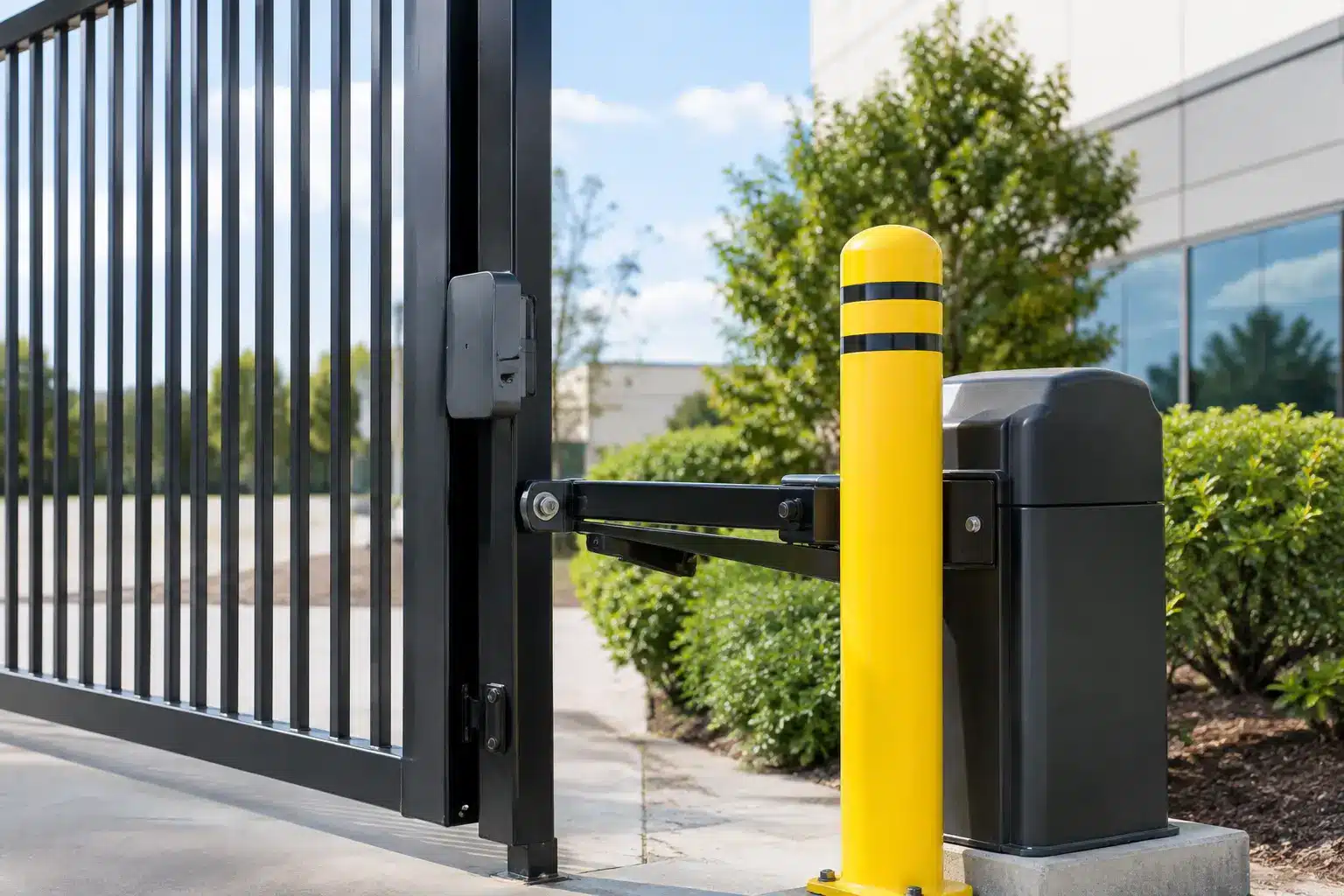
Safety must be built into any powered installation. Features such as photocells, safety edges, warning devices and emergency release arrangements should be selected and positioned according to the site layout. This is particularly important where pedestrians, cyclists, visitors and delivery vehicles share an entrance.

Design still matters at the boundary

Security-led does not need to mean utilitarian. The entrance is often the first physical contact a customer, tenant or visitor has with a business. A poorly finished gate can make even a well-maintained site feel neglected. A precisely fabricated aluminium entrance, in contrast, signals order, investment and attention to detail.

Powder-coated aluminium gives commercial buyers considerable flexibility in colour and finish. A dark contemporary tone can create a crisp, professional boundary, while a colour selected to complement cladding, window frames or signage helps the whole site feel deliberate. Slatted, louvred and solid-panel styles can be tailored to achieve a more open, private or distinctive appearance.

The practical advantage is longevity. Unlike painted timber, aluminium does not require frequent sanding, staining or repainting. Regular washing and occasional checks of moving components are generally all that is needed to maintain a quality finish. Over the life of a commercial property, this lower maintenance requirement can make a premium entrance a more sensible investment than a cheaper system that soon needs attention.

Specify for the years ahead, not just opening day

A commercial entrance is exposed to repeated cycles, weather, vehicle activity and daily contact. It should be selected with future use in mind. If a site expects more deliveries, greater staff numbers or a change in operating hours, allow for that now. Upgrading an undersized gate or underpowered automation later is more disruptive and costly than specifying correctly at the beginning.

Ask clear questions during the design stage: how many opening cycles are expected each day, what is the widest vehicle using the entrance, where will visitors stop, and what happens if power is interrupted? These details turn an attractive gate into a reliable working asset.

At Alu-Gate, bespoke aluminium gates and coordinated entrance solutions are fabricated around the precise requirements of the property, with fully welded construction and a 20-year guarantee for lasting reassurance. That level of tailoring matters when an entrance has to look exceptional and operate without compromise.

A well-planned commercial entrance gives people a clear message before they reach the building: this site is managed, protected and built for the long term. Start with the way your property works, then choose a gate system designed to keep pace with it.