
9 Modern Aluminium Garden Gate Ideas

9 Modern Aluminium Garden Gate Ideas

A tired side gate can quietly drag down the look of an otherwise well-finished property. It is often one of the first details visitors notice, and one of the hardest-working parts of your boundary. The best modern aluminium garden gate ideas solve more than appearance alone. They improve privacy, sharpen kerb appeal, reduce maintenance and give you a gate that still looks right years after installation.

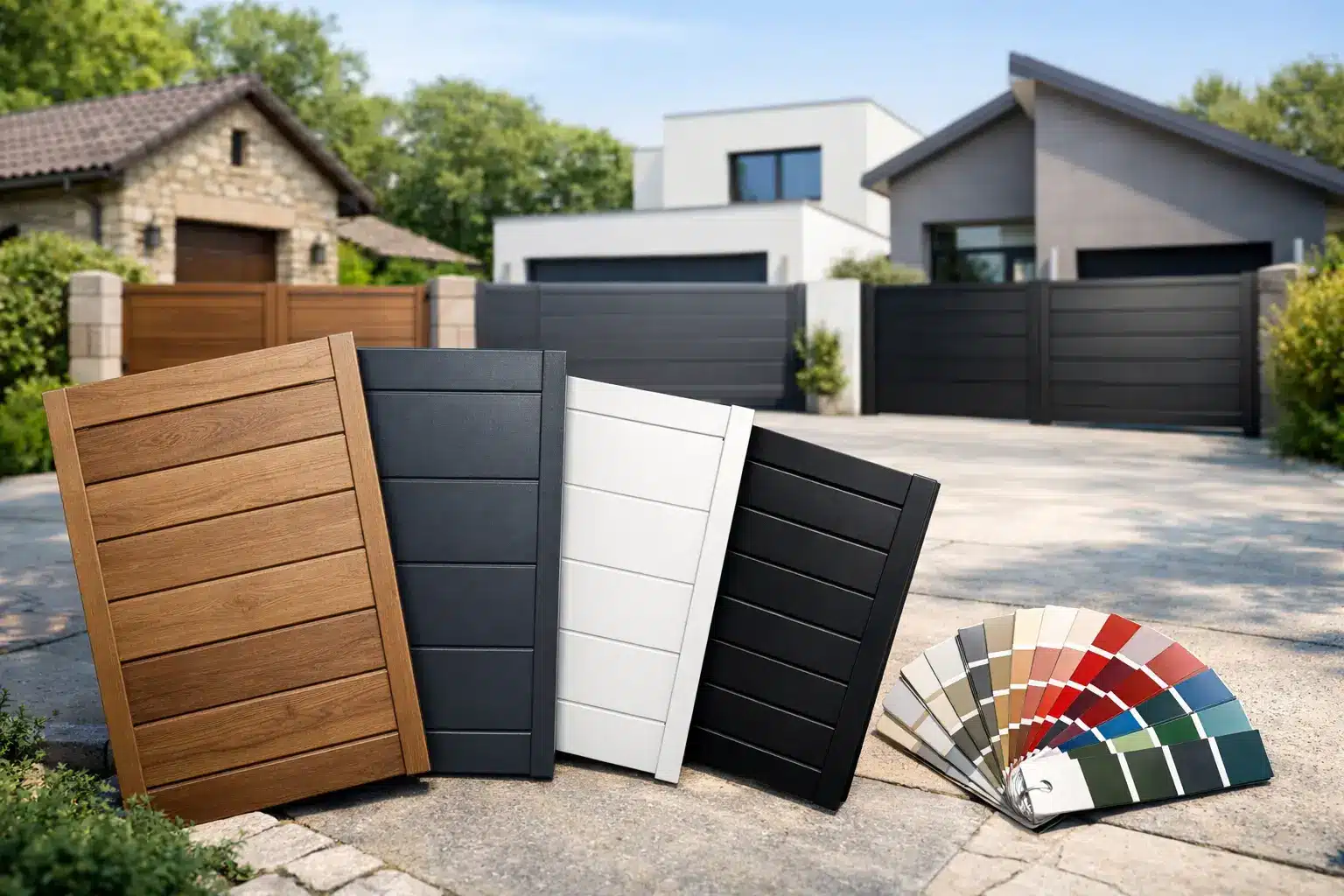
For homeowners planning a renovation, a self-build or a full exterior upgrade, aluminium has become the material of choice for good reason. It offers clean design lines, excellent strength-to-weight performance and a premium finish without the swelling, warping and ongoing upkeep associated with timber. For commercial settings, it also brings consistency, durability and a more polished first impression.

Why modern aluminium garden gates suit contemporary properties

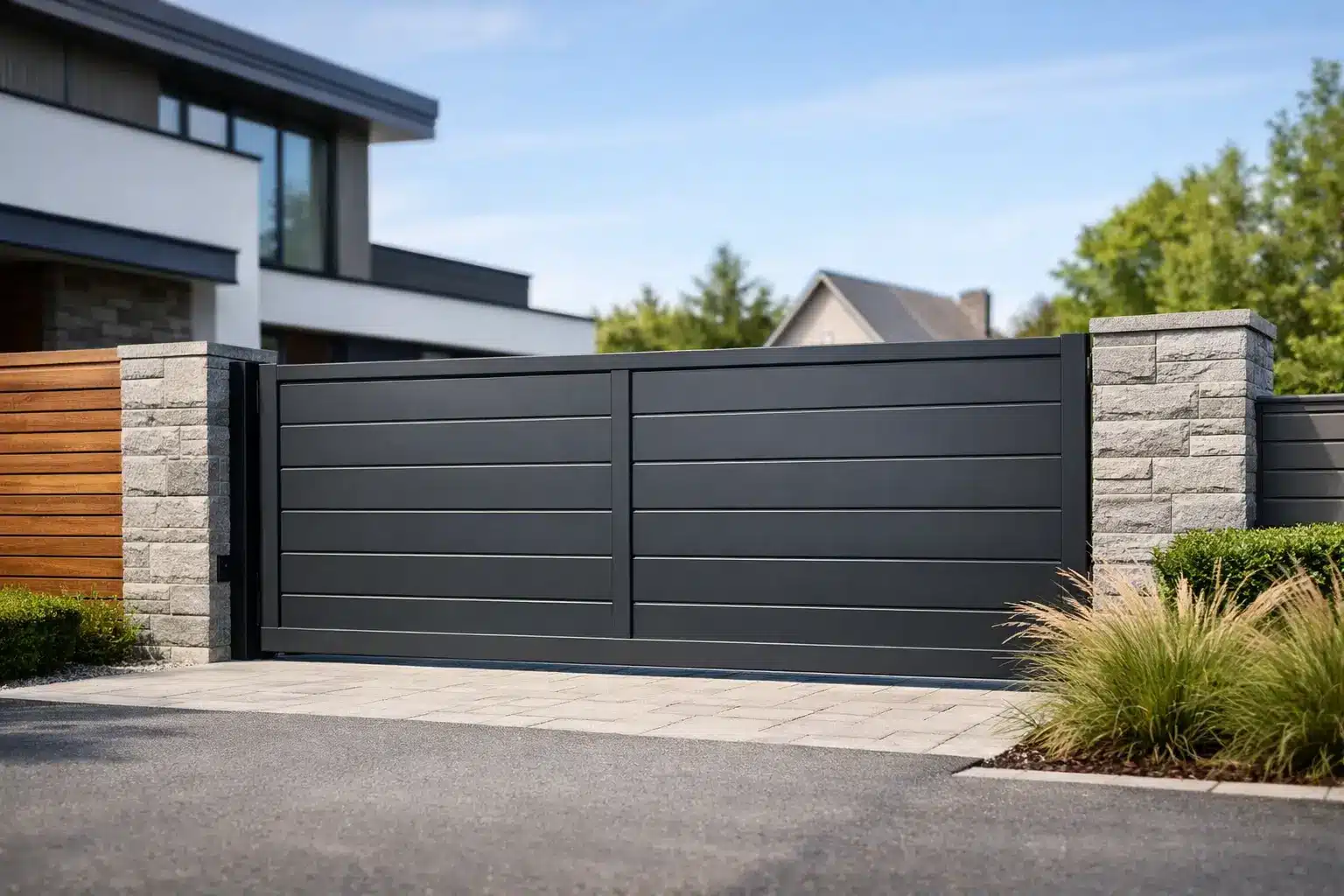
Modern design tends to reward simplicity. That does not mean plain. It means every detail has a job to do. A well-designed aluminium gate can frame a pathway, define a side entrance or complete a wider fencing scheme with a level of precision that older materials often struggle to match.

The appeal is practical as much as visual. Powder-coated aluminium resists corrosion, handles British weather well and requires very little ongoing care. That matters when your gate is exposed to rain, frost and day-to-day use. If you want a gate that keeps its shape, holds its finish and avoids the annual repainting cycle, aluminium is a strong long-term option.

There is also more flexibility in design than many buyers expect. Modern aluminium garden gate ideas now cover everything from minimal slatted styles to more solid privacy-led designs, with bespoke sizing, coordinated panels and access control options where needed.

9 modern aluminium garden gate ideas worth considering

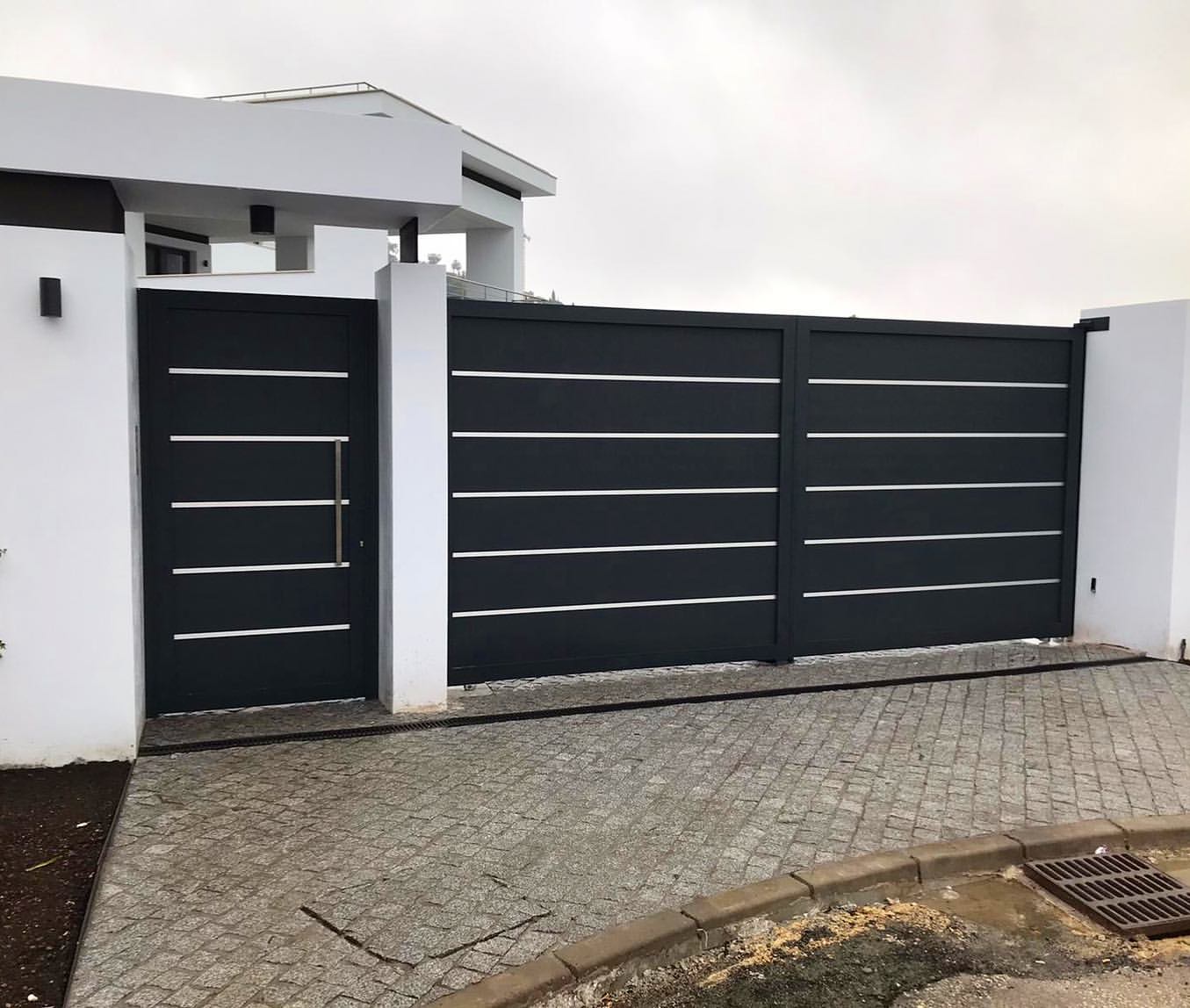
1. Horizontal slatted gates for a clean architectural look

Horizontal slats remain one of the most popular choices for modern homes. The lines feel crisp and current, especially on properties with rendered walls, anthracite windows or contemporary brickwork. Spacing can be adjusted to alter the balance between openness and privacy.

This style works particularly well when you want the gate to feel light and refined rather than bulky. The trade-off is that wider gaps create more visibility, so it is worth deciding early whether your priority is style, screening or a blend of both.

2. Full privacy gates with tightly spaced boards

If the gate secures a side passage, bin storage area or garden entrance close to the pavement, privacy often matters more than visibility. A full privacy aluminium gate gives a cleaner and more permanent-looking solution than timber panels, while still keeping the finish sharp and modern.

This approach suits properties where visual clutter needs to be reduced. It can also make a narrow side access feel more intentional and secure. The key is keeping the design simple so the gate looks premium rather than heavy.

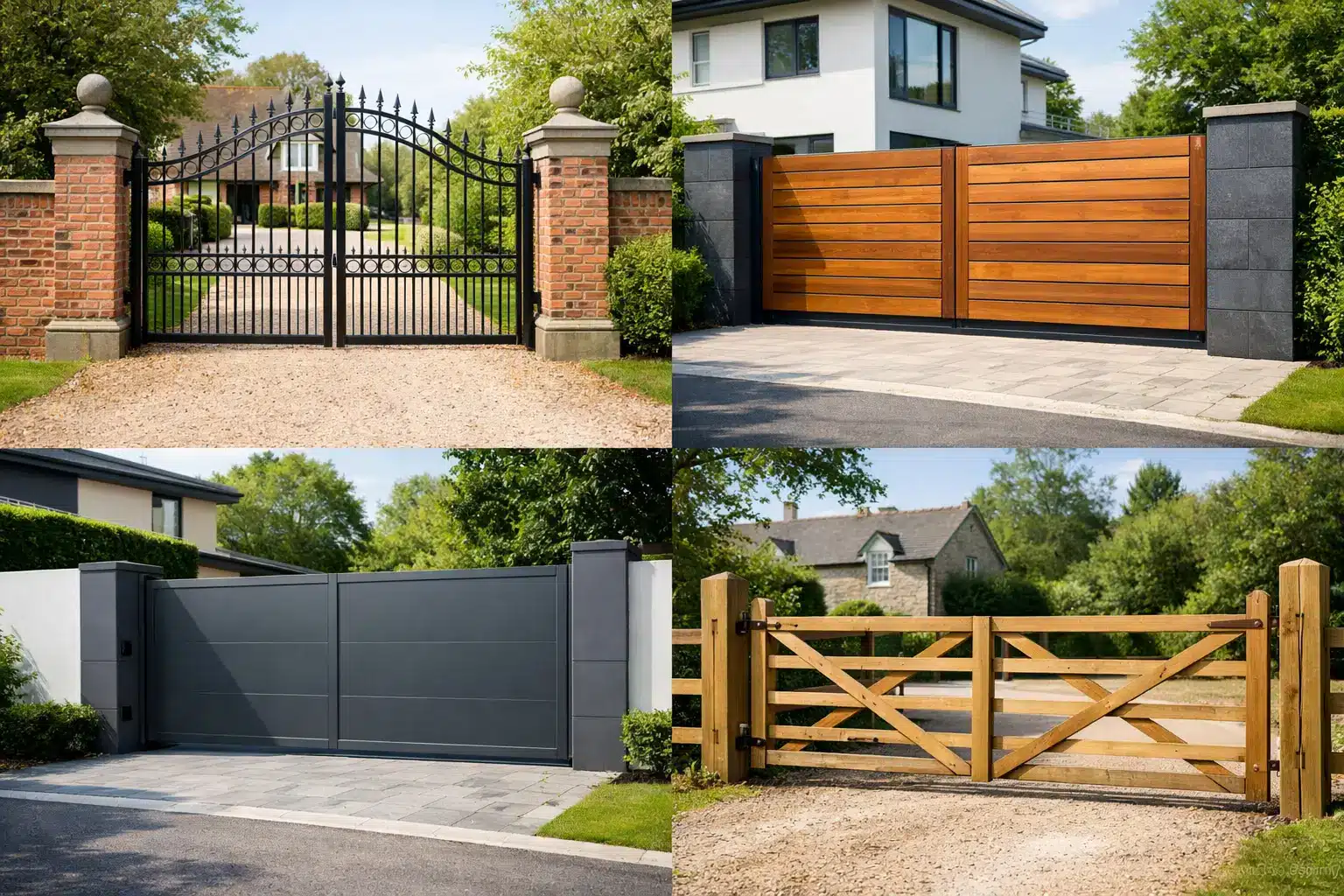
3. Wood-effect aluminium for warmth without the upkeep

Not every modern exterior suits flat monochrome finishes. Some properties benefit from a softer look, particularly where brick, stone or traditional landscaping is part of the setting. Wood-effect aluminium gives the appearance of timber grain with the durability and low-maintenance advantages of metal.

For many buyers, this is the sweet spot. You keep the warmth of natural-looking tones but avoid the fading, splitting and regular treatment that timber demands. It is especially effective on period-renovated homes that want a more contemporary gate without creating a visual clash.

4. Framed minimalist gates with concealed detailing

A minimalist gate does not need to be featureless. In fact, the best examples rely on precision. Slim frames, discreet fixings and carefully proportioned infills can make a simple design feel far more expensive.

This is where made-to-measure fabrication matters. A bespoke gate that fits the opening properly, aligns cleanly with adjacent fencing and closes with confidence will always look stronger than an off-the-shelf option trying to do the same job. Small details make the difference.

5. Matching gate and fencing combinations

One of the strongest modern aluminium garden gate ideas is to stop treating the gate as a standalone product. When the gate is designed to coordinate with fencing, privacy screens or boundary panels, the whole exterior feels more considered.

This approach works particularly well on front and side boundaries where multiple elements sit in the same sightline. Matching slat spacing, frame depth and finish colour can create a cohesive result that lifts the entire property, not just the entrance point.

6. Anthracite grey for a timeless contemporary finish

Anthracite grey remains a leading choice because it works with almost everything. It complements modern glazing, black trims, white render and traditional brick equally well. More importantly, it tends to age gracefully in design terms. It looks current now, and it is unlikely to feel dated in a few years.

That said, grey is not the only answer. Black, textured finishes and selected bespoke colours can all work beautifully depending on the architecture. The right finish should relate to the rest of the property rather than follow a trend for its own sake.

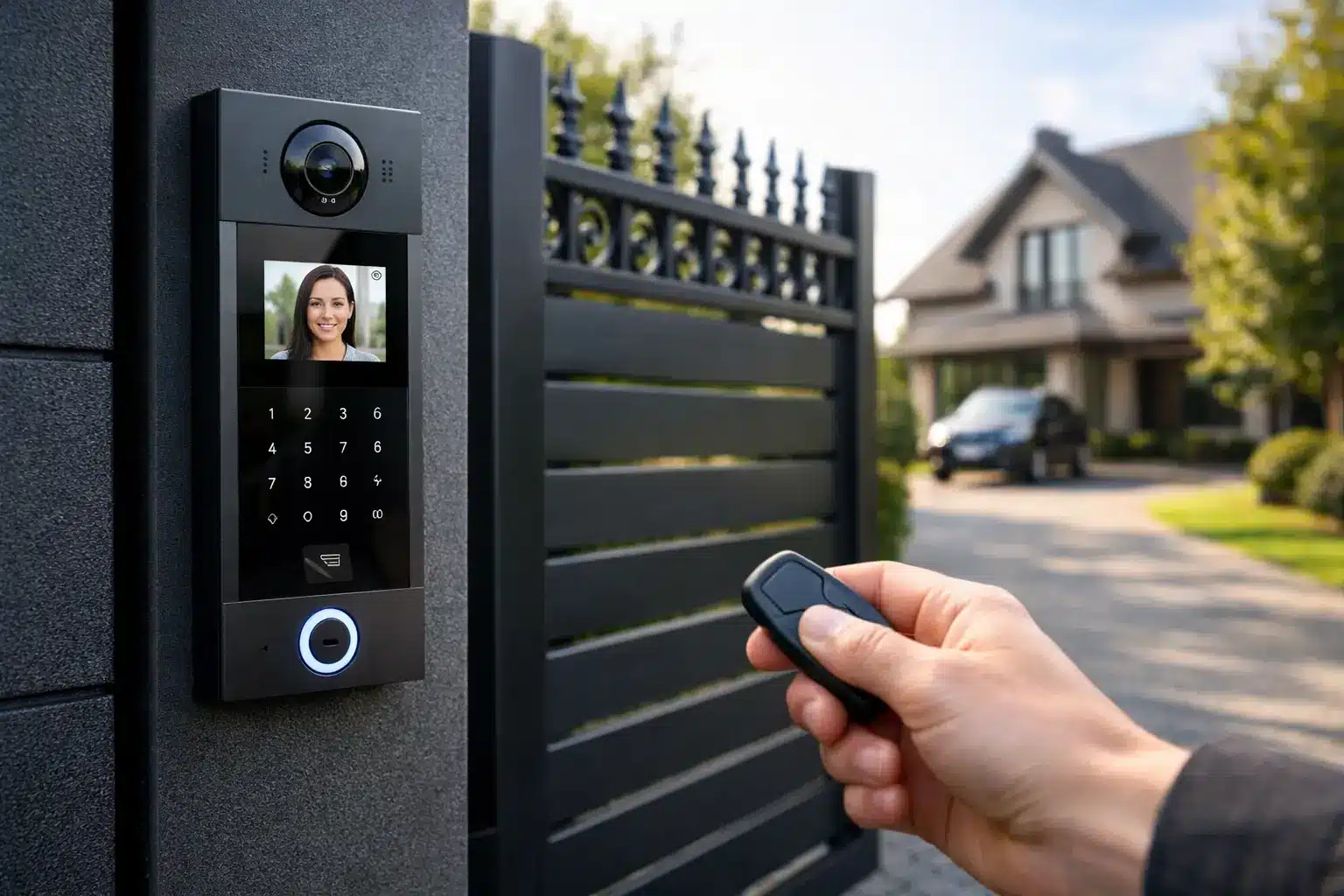
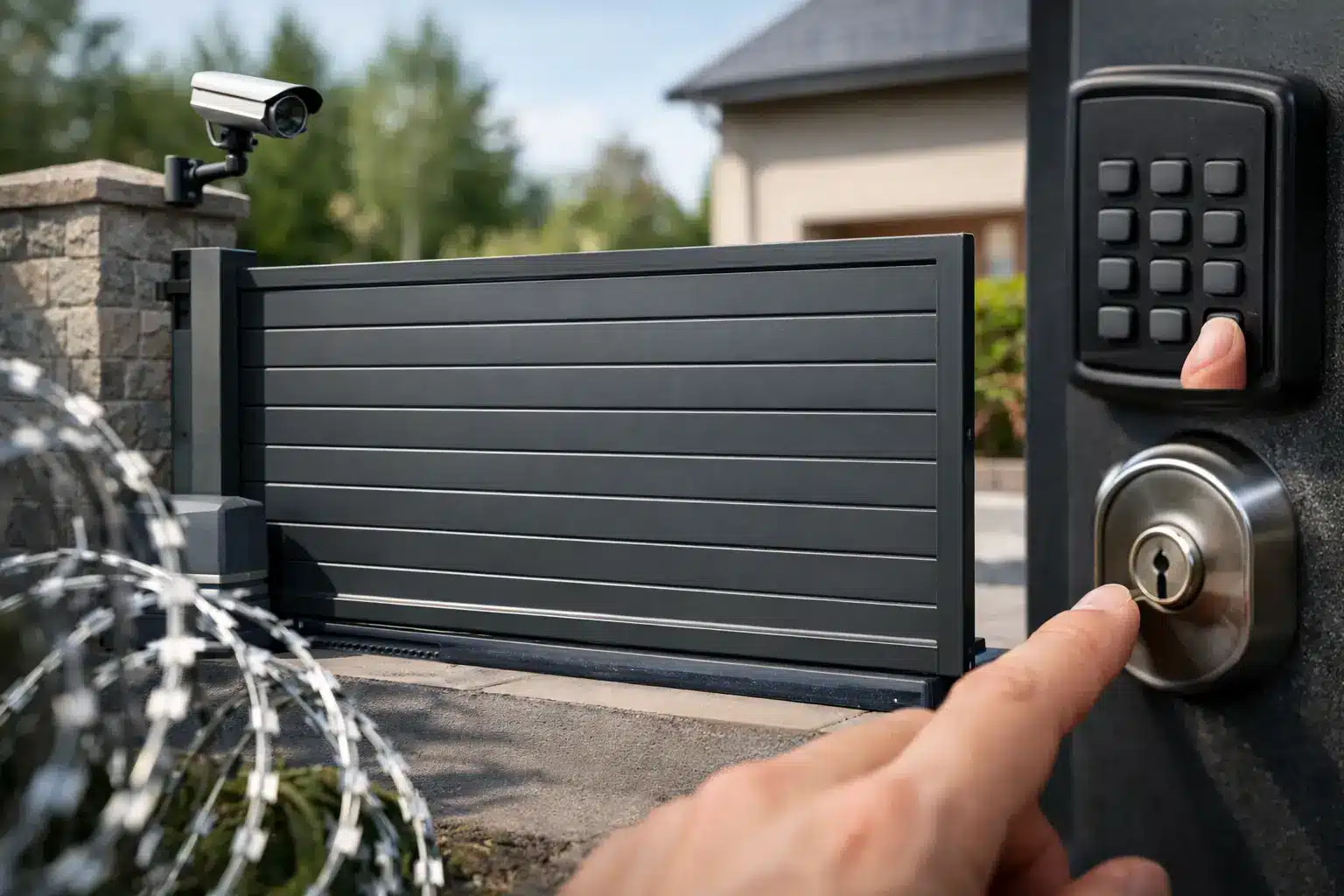
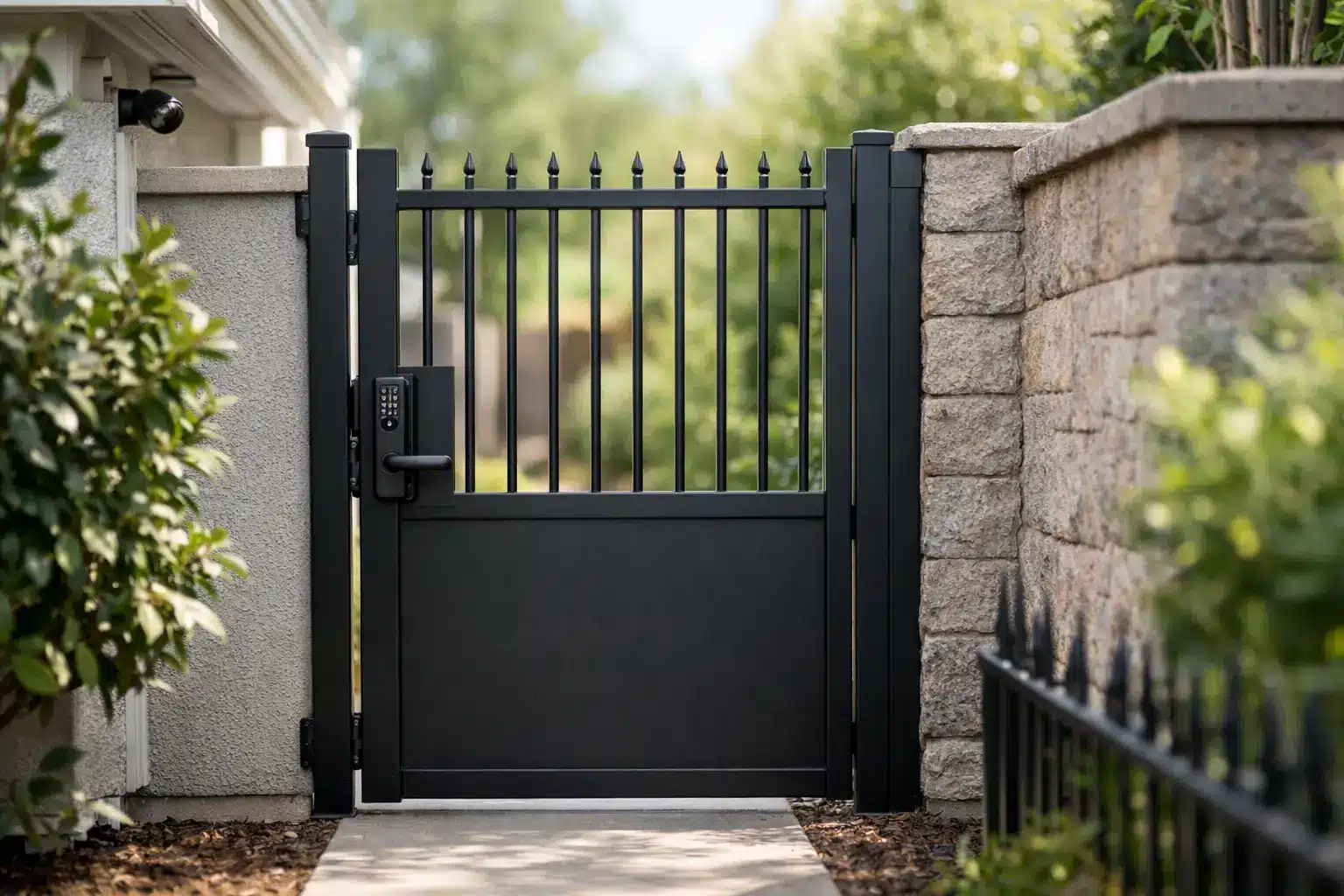
7. Gates with integrated access control

For some side entrances and pedestrian access points, especially on larger homes or mixed residential and commercial sites, a gate can do more than provide a physical barrier. Adding intercom or controlled entry creates a smarter and more secure access point.

This is particularly useful where convenience matters as much as security. If the gate is used regularly by family members, staff or visitors, planning for access control from the outset usually produces a neater result than retrofitting later.

8. Statement pedestrian gates for side access

A pedestrian gate is easy to underestimate. Yet on many properties it is used more often than the driveway gates. That makes it worth specifying with the same level of care.

A taller, design-led side gate can create a stronger sense of arrival, improve privacy and make the boundary feel more secure. It also helps tie together different parts of the exterior scheme. When designed properly, a garden gate stops feeling secondary and starts acting as part of the architecture.

9. Mixed-width slats for a bespoke design edge

For buyers who want something more distinctive, mixed-width slats can give a gate a more tailored character without becoming over-designed. Varying the rhythm of the infill adds interest while keeping the overall form clean and contemporary.

This works best when used with restraint. Too much variation can look busy. The goal is controlled detail that reinforces quality and individuality.

Choosing the right modern aluminium garden gate ideas for your property

The right design depends on how the gate will be used, where it sits and what it needs to achieve day to day. A side passage gate on a narrow urban plot has different demands from a garden gate on a detached home with open landscaping. Commercial properties may place greater emphasis on access frequency, security and coordinated perimeter systems.

Start with function. Do you need privacy, visibility, security or easy access with children, pets or deliveries in mind? Then consider style. The gate should relate to your windows, fencing, walling and overall property character. A sleek slatted design may suit one house perfectly and feel out of place on another.

Size and proportion matter as well. A beautifully finished gate will still look wrong if it is too short, too bulky or poorly aligned with the opening. This is one reason bespoke aluminium systems continue to outperform generic alternatives. Precision fit creates a cleaner appearance and better long-term performance.

What separates a premium aluminium gate from a basic one

On paper, many aluminium gates can appear similar. In reality, build quality varies significantly. Construction method, weld quality, frame strength and finish all affect how the gate feels in use and how well it stands up over time.

A fully welded gate generally offers a more solid, refined result than one built from loosely assembled sections. You notice it in the rigidity, the alignment and the overall impression of strength. Finish quality matters too. A premium powder-coated surface should look even, durable and consistent across the whole gate and any matching panels.

This is where specialist manufacturers stand apart. Consultation-led design, proper fabrication and attention to installation requirements help ensure the gate is not only attractive on day one, but dependable for years. For buyers making a long-term investment in their property, that matters more than a low upfront price.

Modern aluminium garden gate ideas that add lasting value

A garden gate is a practical feature, but it also shapes perception. The right one makes a property feel more secure, more complete and better cared for. That can enhance everyday enjoyment just as much as it supports resale value.

At Alu-Gate, we see the best results when design, durability and fit are considered together rather than in isolation. Whether you prefer bold privacy, warm wood-effect finishes or a crisp architectural slatted style, the strongest choice is the one that suits your property properly and performs without compromise.

If you are weighing up modern aluminium garden gate ideas, think beyond what looks good in a photo. Choose a design that works with your boundary, your routine and the standard of finish you want your home or site to project. A gate should do its job quietly, confidently and for the long term.

When to Choose Bifolding Gates

When to Choose Bifolding Gates

A long driveway can make almost any gate format work. A tight entrance cannot. That is usually the moment when customers start asking when to choose bifolding gates, because the space available on site often matters more than the opening width itself.

Bifolding gates are designed for properties where access needs to be quick, secure and visually refined, but where a full swing arc or long sliding run is not practical. Instead of opening as one large leaf, each side folds back on itself. The result is a gate that clears the entrance quickly while using far less depth than a traditional swing design.

For the right property, that is a major advantage. For the wrong one, another gate format may be more suitable. The key is understanding where bifolding gates genuinely add value.

When to choose bifolding gates for limited space

The clearest reason to choose a bifolding gate is restricted space behind the opening. Standard swing gates need room to travel inward, and that can be a problem if the driveway rises sharply, if vehicles park close to the entrance, or if the usable space behind the gate is shorter than ideal.

A bifolding system reduces that travel area significantly. Because the leaves fold as they open, they require less clearance depth than a conventional swing gate. On urban plots, compact frontages and properties where every metre matters, this can be the difference between a workable automated entrance and a compromise.

This is especially relevant on homes set close to the road. If you want the security and presence of a driveway gate without sacrificing too much internal parking space, bifolding can be the smarter solution.

That said, limited space does not automatically mean bifolding is the answer. If there is no room at all for leaf movement, a sliding or telescopic gate may still be the better fit. The decision depends on the exact layout, gradients and obstructions around the entrance.

Faster access where convenience matters

Bifolding gates are also chosen for speed. Because the panels fold and clear the opening quickly, they can provide noticeably faster operation than many swing systems. That matters on busy residential driveways and even more on commercial sites where regular vehicle movement is part of the day-to-day routine.

For a homeowner, faster opening can simply mean less waiting on the road. For a business, school, flat development or managed site, it can improve traffic flow and reduce hold-ups at peak times. If the entrance is used frequently, speed stops being a nice extra and becomes part of the specification.

This is one of the strongest cases for bifolding gates in commercial settings. A gate that opens efficiently while maintaining security can support a smoother arrival experience for staff, visitors and approved vehicles.

A strong fit for modern design-led properties

Practical performance matters, but so does appearance. Bifolding gates suit contemporary architecture particularly well because they tend to look precise, engineered and clean-lined. In aluminium, they can deliver a strong architectural finish without the maintenance demands that often come with timber or steel.

For design-conscious homeowners, that combination is attractive. You are not only solving an access problem. You are choosing an entrance solution that feels considered and premium from the first impression.

A made-to-measure aluminium bifolding gate can also be coordinated with fencing, pedestrian access and wider boundary design. That matters if you want the front of the property to look cohesive rather than pieced together over time.

When ground conditions make full swing difficult

Driveway gradients often shape the gate choice more than people expect. A full swing gate needs enough clearance to move cleanly across the surface. If the ground rises, drops or changes awkwardly near the entrance, that can limit the practicality of a standard swing arrangement.

Bifolding gates can help in some of these cases because the movement is more compact. They still need careful planning and precise installation allowances, but they can offer a more manageable solution where a full leaf would be restricted.

This is where consultation matters. The right gate is rarely chosen from photographs alone. Site dimensions, levels, hinge positions, vehicle turning space and automation requirements all need to be considered together.

Security without the weight and upkeep of traditional materials

Customers often assume that a secure gate must be heavy and cumbersome. In reality, well-engineered aluminium offers a different kind of advantage. It combines strength, corrosion resistance and low maintenance in a format that is well suited to automation.

That is particularly relevant for bifolding systems, where precise movement and reliable operation are essential. A gate that is excessively heavy can place more demand on components over time. Aluminium helps reduce that burden while still delivering a premium, substantial finish when it is properly fabricated.

For residential buyers replacing ageing timber gates, this can be a decisive factor. You keep the security and visual impact of a driveway gate, but avoid the regular repainting, swelling, warping or rot that often shortens the life of timber systems.

When to choose bifolding gates over swing or sliding

The best way to judge a bifolding gate is to compare it honestly with the alternatives.

Choose bifolding over swing when driveway depth is limited, when faster opening is important, or when a standard arc would interfere with parking or levels. It is often the more efficient option on compact driveways and busy entrances.

Choose bifolding over sliding when there is not enough lateral run for a gate to stack along the boundary. Sliding gates are excellent for many properties, particularly where security and larger openings are priorities, but they do need clear side space. If your boundary walls, planting, level changes or site layout do not allow that, bifolding may be the more practical route.

The trade-off is that bifolding systems are more mechanically involved than simple manual gates, so specification quality matters. The design, fabrication and automation setup all need to be right. On a premium project, that is exactly why bespoke manufacture and expert guidance are worth having from the outset.

Residential and commercial uses

At home, bifolding gates are often selected for front driveways where owners want a refined automated entrance without losing valuable parking space. They suit renovation projects, new builds and premium replacements where kerb appeal matters as much as function.

In commercial settings, the appeal is slightly different. Speed, repeat use and controlled access tend to lead the decision. A bifolding gate can support secure entry while helping sites operate more efficiently, particularly where vehicles need to move in and out regularly.

Not every commercial entrance should use bifolding. Very wide openings, heavy industrial usage or sites with specific vehicle constraints may point towards another format. But for many light commercial and mixed-use environments, bifolding offers an excellent balance of performance and presentation.

The importance of bespoke specification

A bifolding gate is not a product to choose on width alone. Dimensions, infill style, frame construction, automation, access control and finish all affect the final result. So does the quality of fabrication.

This is where premium manufacture stands apart. Fully welded aluminium construction, made-to-measure sizing and carefully specified hardware deliver a gate that feels solid, operates correctly and holds its appearance over time. For buyers investing in a long-term entrance solution, that matters far more than a short-term saving on an off-the-shelf system.

If you are comparing options, look beyond the headline style. Ask how the gate is made, how it is finished, how it is supported, and how it will perform after years of daily use. The right bifolding gate should not only look impressive on day one. It should stay dependable with minimal maintenance.

When bifolding is the right decision

If your entrance needs to open quickly, the available space is restricted, and you want a premium automated gate that complements a modern property, bifolding is often the right answer. It brings together space efficiency, strong visual impact and everyday convenience in a way few other gate formats can.

The best results come from choosing it for the right reasons, not simply because it looks distinctive. A well-specified bifolding gate should respond to the site, the architecture and the way the entrance is used. That is what turns a gate from a boundary feature into a genuine upgrade.

If you are planning a new entrance or replacing an outdated system, start with the layout and let performance lead the design. The right gate should feel effortless to use, precise in its finish and built to hold its standard for years to come.

What Is a Telescopic Gate?

What Is a Telescopic Gate?

A long driveway is useful until your gate design has to work around a short run-back space, a sloping entrance or a layout that simply will not accept a standard sliding gate. That is usually the point where people start asking, what is a telescopic gate, and whether it could solve a problem without compromising on security or appearance.

A telescopic gate is a sliding gate made from two or more panels that travel together in a coordinated motion. Rather than one full-width leaf sliding back into a clear area equal to the entire opening, the gate sections stack as they move. This allows a wide entrance to be secured where side room is limited.

For many residential and commercial properties, that is the difference between forcing a less suitable gate style into place and installing a system designed around the site. A telescopic gate is not a compromise product. When it is specified correctly, it is a precise, high-performance solution for properties where space matters.

What is a telescopic gate and how does it work?

The simplest way to understand a telescopic gate is to compare it with a standard sliding gate. A standard sliding gate uses one single leaf. If your driveway opening is 4 metres wide, you generally need just over 4 metres of space to one side for that gate to slide open.

A telescopic gate reduces that space requirement by dividing the gate into multiple panels, most commonly two. Those panels are linked mechanically so that when the lead panel moves, the second panel follows at a coordinated speed. As the gate opens, the panels gather neatly behind one another instead of requiring one uninterrupted run-back length.

This is achieved through a tracked system, guide arrangement and drive setup designed to keep both panels aligned and moving smoothly. In powered versions, the motor controls the opening and closing movement with the same principle – only the gate footprint is more compact.

The practical advantage is clear. You can secure a wider entrance even when walls, fencing, landscaping, parked vehicles or building lines restrict the available side space.

Why property owners choose telescopic gates

Most buyers are not searching for telescopic gates because they want something unusual. They choose them because the entrance demands a smarter use of space.

On a residential property, this often happens where the driveway opening is generous but the return area is shortened by a garage, boundary line or planting scheme. On commercial sites, it can be due to tighter perimeter layouts, service yards or the need to preserve manoeuvring space.

There is also a design benefit. A telescopic gate can allow you to keep the clean, contemporary look of a sliding gate where a swing gate would be impractical. That matters for homeowners investing in kerb appeal as much as security. The right gate should feel integrated with the property, not like a workaround.

Because the system is made to measure, the proportions, infill style, finish and operating method can all be aligned with the architecture of the site. That is especially important in premium schemes, where visual balance matters just as much as function.

Where telescopic gates work best

Telescopic gates are especially effective on properties with restricted run-back. That might mean a short wall return, a rising driveway edge, an awkward corner or a site where preserving usable frontage is a priority.

They are often well suited to:

  • driveways with wide openings but limited side space
  • residential entrances where swing gates would open into parked cars or a slope
  • commercial yards needing secure automated access in compact layouts
  • developments where a modern sliding gate look is preferred

That said, suitability always depends on the site. A telescopic system still needs proper structural planning, accurate measurements and a clear understanding of how the gate will travel. Ground conditions, track installation, motor positioning and daily usage levels all need to be considered early.

Telescopic gate vs standard sliding gate

If space allows, a standard sliding gate can be the simpler option. It has fewer moving sections and a more straightforward operating path. For some entrances, that is exactly the right answer.

But where side room is tight, a standard sliding gate may be ruled out immediately. That is where telescopic gates stand out. They retain the key benefits of a sliding format – efficient opening, strong perimeter control and suitability for automation – while reducing the run-back needed.

The trade-off is that a telescopic gate is a more specialised system. With additional panels and coordinated movement, the design, fabrication and installation need to be right. This is not an off-the-shelf decision. It needs proper specification.

For buyers focused on long-term value, that is not a reason to avoid the system. It is a reason to choose a gate manufacturer that understands precision engineering, fabrication quality and the realities of how the gate will perform over time.

Telescopic gate vs swing gate

Swing gates remain a strong option for many homes, particularly where there is enough clearance for the leaves to open safely and comfortably. They can be elegant, practical and highly effective.

However, they are not ideal for every entrance. If the driveway slopes upwards towards the property, inward-opening swing gates may not be suitable. If cars are parked close to the opening or the entrance sits directly off a road, the required swing arc can become a problem.

A telescopic gate removes that opening arc because it slides laterally. For properties with limited depth, awkward gradients or frequent vehicle use, that can make access easier and safer.

The right choice depends on how the entrance works day to day. A gate should not only look the part – it should suit the way you arrive, leave and manage the space around it.

Material matters as much as the mechanism

A telescopic design solves a spatial challenge, but the material determines how well the gate performs year after year. This is where aluminium has a clear advantage for many UK properties.

Aluminium offers strength without excessive weight, which is valuable in any moving gate system. It is naturally resistant to rust, requires very little ongoing maintenance and supports clean, precise fabrication. For coastal locations, exposed driveways and high-use entrances, that low-maintenance durability is a serious benefit.

It also allows for a premium finish. Whether the design leans towards contemporary slatted styles, privacy-focused infills or a more architectural look, aluminium supports a refined appearance without the movement, swelling or regular upkeep associated with timber.

For a telescopic gate in particular, build quality matters. Precision welding, accurate alignment and a properly engineered frame all play a part in reliable operation. A premium gate should feel substantial, move correctly and maintain its appearance over the long term.

Is a telescopic gate right for your property?

If your entrance is wide but the side return is limited, a telescopic gate should absolutely be considered. It can offer the security and visual impact of a sliding gate in places where a standard system simply will not fit.

It is also a strong option if you want automation, modern styling and efficient access without sacrificing driveway usability. For both domestic and commercial buyers, that combination is often the deciding factor.

Still, the answer is not always automatic. If your site has ample run-back space, a standard sliding gate may be more straightforward. If the entrance layout comfortably suits a swing gate, that could be the better route. The right gate is the one that matches the property, not just the brochure.

That is why a consultation-led approach matters. Accurate measurements, usage patterns, access needs and design preferences all need to be factored in before a system is specified. Premium entrance solutions are built around the site, not squeezed into it.

What to consider before specifying one

Before choosing a telescopic gate, it is worth looking beyond the opening width alone. Think about how often the gate will be used, whether automation is required, how much privacy you want and what visual style suits the property. You should also consider ground levels, available stacking space and whether the gate needs to integrate with intercoms or access control.

For many buyers, appearance and practicality carry equal weight. A gate is part of the property frontage every day. It needs to secure the entrance, but it also needs to complement the home or site rather than dominate it for the wrong reasons.

A well-designed telescopic gate does both. It solves a spatial problem with precision and presents the entrance properly. That is why it continues to be such a strong option for design-conscious property owners who want more from their gate than a basic barrier.

If you are weighing up gate styles and your site feels tight, the best next step is not to guess. It is to assess the layout carefully and choose a system built around how your entrance actually works.

Sliding or Swing Gate for Driveway?

Sliding or Swing Gate for Driveway?

A gate can transform the front of a property in a single decision. Get it right, and it sharpens security, improves daily access and gives the whole entrance a more considered finish. Get it wrong, and even a premium installation can feel awkward to use. If you are weighing up a sliding or swing gate for driveway access, the best option is rarely about appearance alone. It comes down to space, levels, traffic, automation and how you want the entrance to perform over time.

For some properties, a pair of swing gates is the obvious answer. For others, only a sliding system will work cleanly and reliably. The key is choosing a gate style that suits the site rather than forcing the site to suit the gate.

Sliding or swing gate for driveway – what is the difference?

A swing gate opens inwards or outwards on hinges, much like a traditional door. It can be a single leaf or, more commonly on residential driveways, a pair of gates meeting in the middle. Swing gates are familiar, elegant and often well suited to homes where there is enough clear space for the gates to open without obstruction.

A sliding gate moves sideways along the boundary line instead of opening into the driveway. Depending on the design, it may run on a track or use a cantilever system. This format is especially useful where space in front of or behind the gate is limited, or where the driveway rises sharply.

Both options can be automated, both can be made to measure, and both can deliver excellent security and visual impact. The difference lies in how they interact with the layout of your entrance.

When a swing gate is the better choice

Swing gates remain a popular choice for good reason. They suit a wide range of property styles, from contemporary builds to period homes, and they create a balanced, architectural look across the entrance. On a flat driveway with adequate clearance, they are simple, effective and visually impressive.

If your driveway has room behind the gates for the leaves to open fully, a swing system can feel natural in daily use. It also allows for a clean frontage without the side run-back area a sliding gate requires. For many homeowners, this matters because the gate becomes part of the wider landscaping rather than a purely functional barrier.

There is also a design advantage. Swing gates often lend themselves particularly well to symmetrical layouts, wider entrances and statement driveways. When made in aluminium with a fully welded construction and a premium finish, they offer the traditional appeal of hinged gates without the maintenance burden associated with timber or steel.

That said, swing gates are not right for every site. If the ground slopes up steeply behind the entrance, the gate leaves may catch or require complex adjustments. If cars regularly stop close to the gate line, opening clearance can become a practical annoyance rather than a minor detail.

Best-fit scenarios for swing gates

Swing gates tend to work best where the driveway is level, the entrance is reasonably open, and the property benefits from a classic or formal approach to design. They also suit buyers who want a strong visual statement at the front boundary without needing side space for a sliding mechanism.

When a sliding gate makes more sense

A sliding gate is often the more practical engineering solution. If your driveway climbs immediately after the entrance, a swing gate may simply not operate cleanly. A sliding gate avoids that issue because it moves laterally rather than sweeping across the ground.

It is also an excellent option where space is tight. On shorter driveways, there may be little room for a vehicle to wait while swing leaves open inwardly. If the entrance opens directly onto a road and there is no safe or compliant way for gates to open outwards, sliding can solve the problem neatly.

From a security perspective, sliding gates are often seen as a strong choice because the system is inherently harder to force at the leading edge than some lighter hinged alternatives. In high-use settings, including commercial premises or larger residential entrances, they also offer controlled, consistent operation.

A sliding gate does, however, need enough lateral space for the gate to stack when open. That side run can be overlooked at the planning stage. If there is a wall return, planting scheme, meter box or change in boundary line, the available travel distance may be reduced. This is why accurate site assessment matters so much.

Best-fit scenarios for sliding gates

If your entrance is on a slope, your driveway is short, or your property needs a more space-efficient opening method, sliding is often the stronger choice. It is particularly effective on modern properties and premium driveways where clean lines and controlled access are priorities.

Space, levels and layout matter more than style

Many buyers begin by asking which gate looks better. In practice, the better question is which gate will work properly on the site. A well-designed gate should feel effortless in use. That only happens when the layout has been considered from the beginning.

Ground levels are usually the first deciding factor. Even a modest rise across the swing arc can rule out standard hinged gates. Vehicle movement is the next. If cars need to pull off the road quickly, the opening speed and footprint of the gate become important. Then there is side clearance, boundary walls, pedestrian access and whether you want integrated controls such as an intercom or keypad.

This is where bespoke design makes the difference. A made-to-measure aluminium system allows the gate format, dimensions and detailing to be tailored to the entrance rather than selected from a limited standard range.

Automation, maintenance and long-term ownership

Automation is now expected on many premium driveway gates, but not every gate type behaves the same once motors, safety devices and access control are involved. Swing gates generally use above-ground or underground operators and need consistent opening clearance. Sliding gates rely on a different motor arrangement and are often chosen where automation needs to work efficiently in tighter spaces.

Maintenance is another point worth treating realistically. Any automated gate system benefits from servicing, adjustment and good installation practice. The gate material itself, however, has a major impact on long-term upkeep. Aluminium remains one of the strongest choices for buyers who want lasting performance without the routine sanding, painting or treatment associated with timber.

For residential and commercial properties alike, that low-maintenance ownership model is not just a convenience. It is part of the value equation. A gate should continue to look sharp and operate reliably without becoming a recurring project.

Cost versus value

There is no single answer on price because the specification drives the cost. Opening width, gate height, infill design, automation, access control and site conditions all affect the final figure. A sliding gate can involve more groundwork or a more specialised support arrangement, while a swing gate may require additional consideration on gradients or hinge loading.

The more useful comparison is value over time. A well-specified gate that suits the site, is fabricated properly and is built in a durable material will usually prove more cost-effective than a cheaper option that compromises on fit, finish or operation. Premium entrances are judged every day, both visually and practically. They need to earn that position.

Which gate gives the best kerb appeal?

Both can look exceptional when designed well. Swing gates often bring a sense of proportion and formality, especially on detached homes, country properties and wider plots. Sliding gates tend to create a more contemporary impression, with a cleaner horizontal movement and a strong architectural feel.

The best result comes from matching the gate to the property style and surrounding elements such as fencing, walls, railings and pedestrian access points. Coordination matters. A driveway gate should not feel like an isolated product dropped into place. It should look like part of a complete entrance scheme.

For that reason, many buyers now favour bespoke aluminium solutions in coordinated finishes and made-to-measure designs. It gives far more control over the final appearance, while still delivering strength, precision and long-term durability.

Making the right choice for your property

If your driveway is level and spacious, a swing gate may give you the look and operation you want with a timeless sense of arrival. If your site is constrained, sloping or focused on efficient automated access, a sliding gate may be the smarter answer.

Neither option is universally better. The right choice depends on the entrance. That is why consultation-led design is so valuable. A specialist manufacturer can assess the layout, understand how the gate will be used and recommend a system that balances style, security and practicality without compromise.

At Alu-Gate, that approach sits at the centre of every made-to-measure project. Because when a gate is designed to impress and built to last, the best decision is the one that works beautifully for years, not just the one that looked good on paper.

Best Gate for a Sloping Driveway

Best Gate for a Sloping Driveway

A sloping driveway changes everything. A gate that looks perfect on paper can scrape the ground, leave awkward gaps, or demand far more space than your entrance can realistically give. Choosing the best gate for a sloping driveway is less about picking a style you like and more about selecting a system engineered around the gradient, the opening width and how you use the entrance every day.

That is why the right answer is rarely a one-size-fits-all product. On a level driveway, you can often choose between gate types based mainly on appearance. On a slope, geometry, clearance and automation become the deciding factors. Get those right and your gate feels effortless. Get them wrong and even a premium gate will frustrate you from day one.

What makes the best gate for a sloping driveway?

The best gate for a sloping driveway is the one that opens safely, clears the ground properly and suits the way vehicles and pedestrians move through the entrance. That may sound obvious, but it rules out a surprising number of off-the-shelf solutions.

The steepness of the slope matters first. A gentle incline may still allow for a well-designed swing gate, particularly if the opening direction and hinge arrangement are carefully considered. A steeper rise often pushes the decision towards sliding, bi-folding or other specialist formats that avoid the ground clearance issue altogether.

You also need to think about the visual result. Some gate systems technically work on a slope but create large triangular gaps beneath the gate leaf. For security-conscious homeowners and commercial sites, that compromise can undermine the whole purpose of installing a gate. The best solution balances function, appearance and security rather than sacrificing one for the other.

Why standard swing gates can struggle on slopes

Traditional swing gates are usually the first option people picture for a driveway. They are classic, familiar and often well suited to period and contemporary properties alike. But on a sloping driveway, they need much more careful planning.

If a gate swings inwards and the ground rises immediately behind it, the bottom of the gate can catch on the driveway surface. To prevent that, the gate either needs additional clearance or a design adapted to the slope. More clearance can solve the operational problem, but it may also leave a larger gap underneath than many owners are comfortable with.

There is also the issue of vehicle movement. If the driveway is short or steep near the entrance, cars may not have enough waiting space for a pair of swing gates to open comfortably. Add automation into the mix and the margins become tighter. Safety edges, ram geometry and hinge positioning all need to be considered from the outset, not added as an afterthought.

That does not mean swing gates are unsuitable. It means they must be properly specified. For some properties, a made-to-measure split leaf arrangement or carefully configured hinged system is still the right answer. The detail matters.

Sliding gates are often the strongest option

For many properties, a sliding gate is the best gate for a sloping driveway because it removes the main problem entirely. Instead of swinging across a rising surface, the gate travels laterally along the boundary line. That means no scraping, no need to create exaggerated under-gate gaps, and no awkward compromise between clearance and appearance.

Sliding gates are especially effective where the driveway slope is pronounced near the entrance. They also suit wider openings and properties where security is a priority, as the gate can maintain a more consistent line at the bottom. Visually, the result is usually cleaner and more deliberate.

The trade-off is space. A sliding gate needs sufficient run-back area to one side of the entrance. If boundary walls, planting, level changes or site constraints prevent that, then another format may be better. Installation requirements are also more demanding, as the track or cantilever arrangement and supporting structure must be set up with precision.

For premium residential projects and commercial entrances, though, sliding gates often deliver the most refined combination of practicality, security and design. When fabricated in aluminium, they also avoid the maintenance burden and weight associated with traditional materials.

When bi-folding or telescopic gates make sense

Some sloping driveways have another complication: limited space. You may not have enough depth for a standard swing gate or enough lateral space for a single sliding gate. In those cases, bi-folding or telescopic systems deserve serious attention.

A bi-folding gate reduces the space needed for opening by folding its leaves as it operates. This can be particularly useful on entrances close to the road, where fast opening and compact movement are important. A telescopic gate, meanwhile, splits the sliding action across multiple gate sections, reducing the run-back length required.

These are specialist systems, and they must be manufactured and specified properly to perform reliably. But on the right site, they solve problems that a conventional gate cannot. For design-led properties where every metre counts, they can offer a premium answer without forcing compromises in style.

Material matters as much as gate type

Even the right opening method can disappoint if the material is wrong. On a sloping driveway, gate weight and structural stability have a direct impact on performance. Heavy gates place greater demand on hinges, automation and support posts. Over time, that can affect alignment and reliability.

This is where aluminium stands out. A high-quality aluminium gate offers the strength required for a secure entrance while remaining significantly lighter than many steel or timber alternatives. That lower weight helps the gate operate more efficiently and places less strain on moving parts.

For the owner, the long-term benefits are just as important. Aluminium will not warp, rot or demand the routine repainting associated with timber. For exposed UK driveways dealing with rain, frost and year-round use, low maintenance is not a luxury. It is part of the value proposition. A bespoke aluminium system also allows for cleaner detailing and more precise fabrication, which is particularly important where a gate must be tailored to a difficult gradient.

Design details that affect real-world performance

The best gate for a sloping driveway is rarely decided by gate type alone. Smaller technical details often shape whether the finished result feels premium or problematic.

The gradient profile matters more than many people expect. A driveway may appear to have a simple rise, but changes in pitch near the threshold can alter the available clearance dramatically. The width of the opening matters too, because wider gates create different loading and movement demands. Then there is the question of how the gate will be used. A family home with a few daily movements has different priorities from a commercial entrance with regular traffic and controlled access.

Automation should be considered early. On a slope, motors, safety systems and opening speeds all need to suit the gate format and site layout. Intercoms, access control and vehicle entry planning should work with the gate system rather than being bolted on later. This is one reason a consultation-led approach tends to produce better results than choosing a gate from standard dimensions and hoping it will fit.

How to choose the right solution for your property

If you are deciding on the best gate for a sloping driveway, start by looking at the site honestly rather than starting with a preferred style. Measure the opening, identify where the slope begins and note how much space exists behind and to the side of the entrance. Think about whether vehicles need to stop close to the gate, whether pedestrians use the entrance separately, and how important a flush visual line is at the base of the gate.

From there, the decision usually becomes clearer. If the slope is mild and space allows, a properly designed swing gate may still work very well. If the incline is more severe, a sliding gate is often the stronger choice. If space is restricted in every direction, bi-folding or telescopic formats may offer the best answer.

The crucial point is that sloping driveways reward bespoke design. A premium entrance should be designed around the property, not forced onto it. At Alu-Gate, that means considering the gradient, the structure, the finish and the access requirements as part of one complete specification rather than a series of disconnected choices.

A gate on a slope should not look like a compromise. With the right system, it can feel just as precise, secure and impressive as any entrance on level ground – and often more so, because it has been designed with real intent.

Best Low Maintenance Driveway Gate Options

Best Low Maintenance Driveway Gate Options

You notice it fastest when a gate starts asking too much of you. Timber needs sanding again. Steel has picked up rust around joints and fixings. Paintwork dulls, hardware stiffens, and what should frame the entrance beautifully starts to feel like another job on the list. That is why low maintenance driveway gate options matter so much – not just for convenience, but for long-term appearance, security and value.

For most property owners, the real question is not simply which gate looks good on day one. It is which material and design will still look sharp, operate reliably and suit the property five, ten or twenty years from now without constant upkeep. The right answer depends on your priorities, but some options are clearly better suited to low-maintenance ownership than others.

What makes a driveway gate low maintenance?

A genuinely low-maintenance gate needs more than a durable surface. It should resist corrosion, cope with British weather, retain its finish, and avoid design weaknesses that create ongoing repairs. Material choice matters most, but construction quality, gate format and installation all affect how much attention the gate will need over time.

This is where many buyers get caught out. A gate might be sold as durable, but if it relies on hollow sections that trap moisture, poor coatings, or hardware unsuited to regular use, maintenance will arrive sooner than expected. The easiest gate to live with is one designed from the start for outdoor exposure, repeated operation and a long service life.

Low maintenance driveway gate options by material

Aluminium gates

For most residential and commercial entrances, aluminium is the standout choice among low maintenance driveway gate options. It offers the appearance expected from a premium entrance feature while avoiding many of the issues associated with traditional materials.

Aluminium does not rust, which immediately removes one of the biggest maintenance concerns. With a high-quality powder-coated finish, it holds its colour well, copes with wet conditions and generally needs little more than occasional cleaning to keep it looking right. For busy homeowners and site managers alike, that is a major advantage.

It is also a strong material when engineered properly, particularly in fully welded, made-to-measure systems. That point matters. Not all aluminium gates are equal. Better fabrication delivers a cleaner finish, stronger frame integrity and improved long-term reliability, especially on larger driveway openings or automated systems.

There are trade-offs, of course. Aluminium is a premium product, so the upfront investment is usually higher than a basic timber or mild steel gate. But when you factor in reduced repainting, less remedial work and a longer aesthetic lifespan, the ownership picture often looks far better.

Composite-style infill systems

Some buyers are drawn to the look of timber but want less upkeep. Composite or timber-effect infill designs can be attractive in that scenario, especially when combined with aluminium framing. They can deliver a warmer visual style without the routine staining and treatment real timber demands.

The key is product quality. Lower-grade composite systems may fade unevenly or look less convincing up close, so this route works best when design standards are high and the overall gate is fabricated to a premium specification. For contemporary homes, it can be an effective middle ground between modern durability and a softer architectural finish.

Galvanised and powder-coated steel

Steel can be low maintenance when properly galvanised and finished, and it remains a valid option for certain properties, particularly where a more traditional look or heavier-duty security profile is required. It is strong, familiar and often suited to period or commercial settings.

That said, steel still carries more corrosion risk than aluminium if the finish is compromised. Scratches, exposed edges and wear points need closer attention over time. In practical terms, it can be a durable choice, but it rarely matches aluminium for ease of ownership.

Timber gates

Timber still appeals for its character and natural warmth, especially on rural or heritage-style properties. A well-made hardwood gate can look exceptional. The issue is not whether timber can look premium. It can. The issue is maintenance.

Even quality timber moves with moisture and temperature changes. Finishes need renewing, colour changes over time, and the surface is more vulnerable to weathering. For buyers specifically prioritising low upkeep, timber is usually the wrong fit unless they are happy to commit to regular care.

The best gate styles for low upkeep

Material is the main factor, but style affects maintenance too. Simpler, well-engineered designs tend to perform best over time.

Swing gates

Swing gates are a popular choice for private driveways and often offer a clean, elegant appearance. In low-maintenance terms, they can work very well when the opening is suitable and the hinges, posts and automation are correctly specified. Their relative mechanical simplicity is part of the appeal.

The main consideration is space. Swing gates need room to open safely, and on sloping driveways they may require more careful planning. If the site works for them, they remain a refined and reliable option.

Sliding gates

For wider entrances or properties where internal space is limited, sliding gates can be the more practical solution. They avoid the arc of a swing gate and often suit modern architectural schemes particularly well.

From a maintenance perspective, sliding systems need accurate installation and quality running gear. A poorly planned track or support arrangement creates problems, but a well-built sliding gate can deliver excellent long-term performance with very little intervention beyond routine checks and cleaning.

Bi-folding and telescopic gates

These formats are ideal where access is tight or speed of opening matters. They offer smart solutions for compact sites and can look very polished in contemporary settings.

They do involve more moving parts, which means specification becomes even more important. If low maintenance is the priority, these systems should be supplied by specialists who understand the engineering, not treated as a generic add-on. Done properly, they are practical and impressive. Done badly, they become service-heavy.

Why finish quality matters as much as material

When buyers compare low maintenance driveway gate options, finish quality is often underestimated. A premium finish is not purely cosmetic. It protects the gate, preserves its appearance and reduces the need for corrective work.

Powder coating is typically the preferred finish for aluminium gates because it creates a hard-wearing, consistent surface available in a wide range of colours and textures. Matt contemporary shades are especially popular for modern homes, but the real benefit is durability rather than trend.

Preparation also matters. If the fabrication, pretreatment and coating process are not carried out to a high standard, long-term performance suffers. A gate should not only look refined when installed. It should retain that standard through years of rain, UV exposure and regular use.

Automation and access control without extra hassle

Many buyers assume an automated gate must mean more maintenance. In reality, a professionally specified automated system can improve day-to-day reliability and convenience. The key is matching the motors, controls and safety features to the gate’s size, weight and frequency of use.

Access control can also support longevity. Intercoms, controlled entry and dependable operating systems reduce misuse and create a smoother user experience, particularly on busy residential entrances and commercial sites. The system is only as good as the gate it is attached to, though, so the structure and hardware still come first.

How to choose the right option for your property

The best choice depends on how your entrance is used, what style suits the property and how much maintenance you are genuinely prepared to accept. For a contemporary home renovation, a made-to-measure aluminium swing or sliding gate is often the strongest all-round answer. It delivers clean design, excellent durability and minimal upkeep.

For larger commercial openings, heavy-use entrances or more complex access requirements, the conversation becomes more technical. Gate format, automation, wind loading, privacy level and traffic flow all need proper consideration. That is where a consultation-led approach adds real value, because the lowest-maintenance answer is not always the most obvious one from a brochure.

At the premium end of the market, the difference is rarely just the material. It is the combination of bespoke sizing, precise fabrication, high-grade finish and informed specification. That is why specialist manufacturers such as Alu-Gate focus on tailored systems rather than one-size-fits-all products.

The option that usually makes the most sense

If your priority is a gate that looks impressive, strengthens security and does not become a recurring maintenance project, aluminium is usually the strongest choice. It offers the cleanest balance of style, strength and low-maintenance ownership, especially when fabricated to measure and finished to a high standard.

A driveway gate should add confidence every time you arrive home or open the site for the day. The best ones do that quietly – holding their finish, operating reliably and asking very little in return.