
Aluminium Pedestrian Gate Design Ideas

Aluminium Pedestrian Gate Design Ideas

A pedestrian gate is often the first detail people touch, not just the first thing they see. It needs to feel secure under the hand, suit the character of the property and cope with daily use without demanding constant upkeep. That is why aluminium pedestrian gate design deserves more attention than it usually gets. When it is specified properly, it brings together security, kerb appeal and long-term value in one made-to-measure solution.

For many property owners, the gate itself is replacing something that has become a problem. Timber may have warped, split or faded. Steel may look tired or need regular treatment to keep rust at bay. Off-the-shelf options can feel generic and rarely sit neatly within an opening or alongside existing fencing, walls or entrance features. A well-designed aluminium gate solves those issues more cleanly because it can be tailored to the exact opening, finish and style of the property.

What good aluminium pedestrian gate design gets right

The best designs are not just attractive. They are proportioned correctly, built for the way the entrance is used and finished to complement the wider exterior. A side access gate for a family home has different priorities from a secure gate serving a commercial boundary, even if both need strength and a premium appearance.

Design starts with scale. A gate that is too visually heavy can make a smart entrance feel cramped. One that is too open may reduce privacy or feel underwhelming against substantial brick piers, rendered walls or coordinated fencing. The right balance depends on sightlines, boundary height and how prominent the gate is from the street.

Construction matters just as much as appearance. Fully welded aluminium gates tend to offer a cleaner, more solid result than mechanically assembled alternatives. They feel more substantial, hold their alignment more reliably and suit premium installations where finish quality matters. For buyers investing in a long-term solution, that detail is not cosmetic. It affects durability, rigidity and how the gate performs over time.

Choosing a style that suits the property

There is no single best aluminium pedestrian gate design for every project. The right choice depends on architecture, privacy needs and how contemporary or traditional you want the entrance to feel.

Contemporary slatted designs

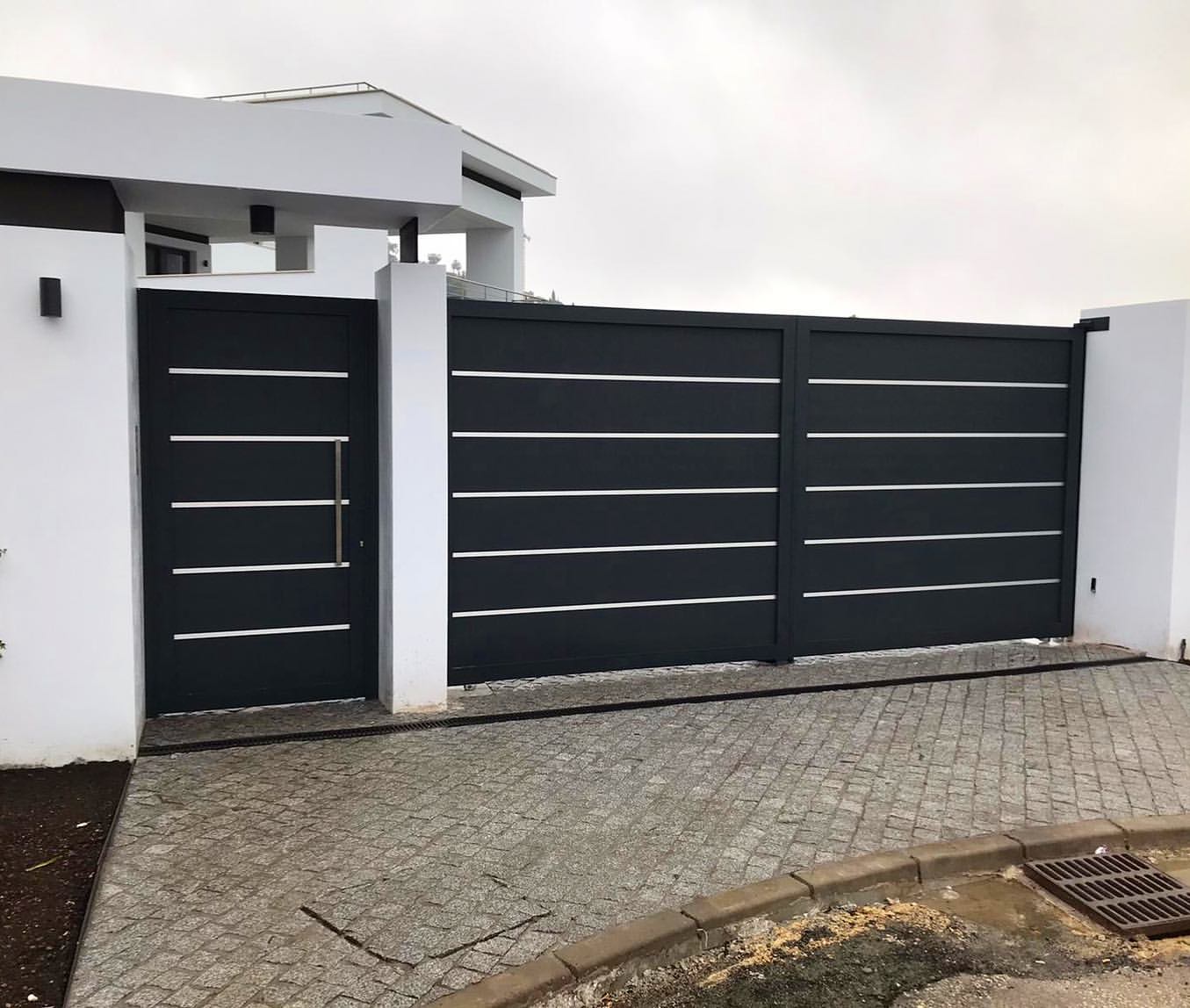
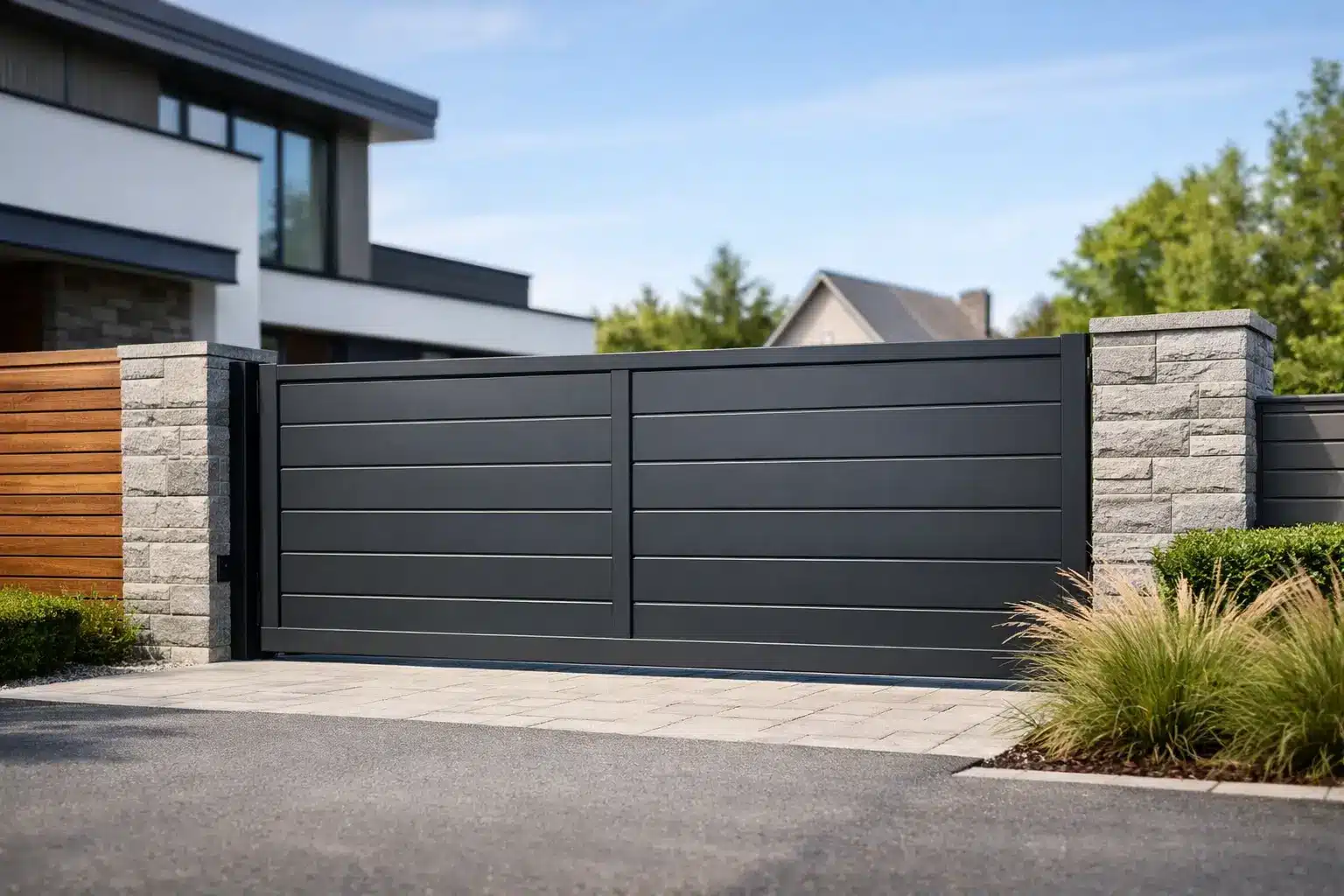
Horizontal slatted gates remain one of the most popular choices for modern homes. They create a crisp, architectural look and work particularly well with contemporary brick, render and minimalist landscaping. Slat spacing can be adjusted to change the feel of the gate. Tighter spacing increases privacy, while open spacing allows more light and visibility.

This style is especially effective when matched with aluminium fencing panels or driveway gates. The overall result looks considered rather than pieced together over time.

Vertical infill designs

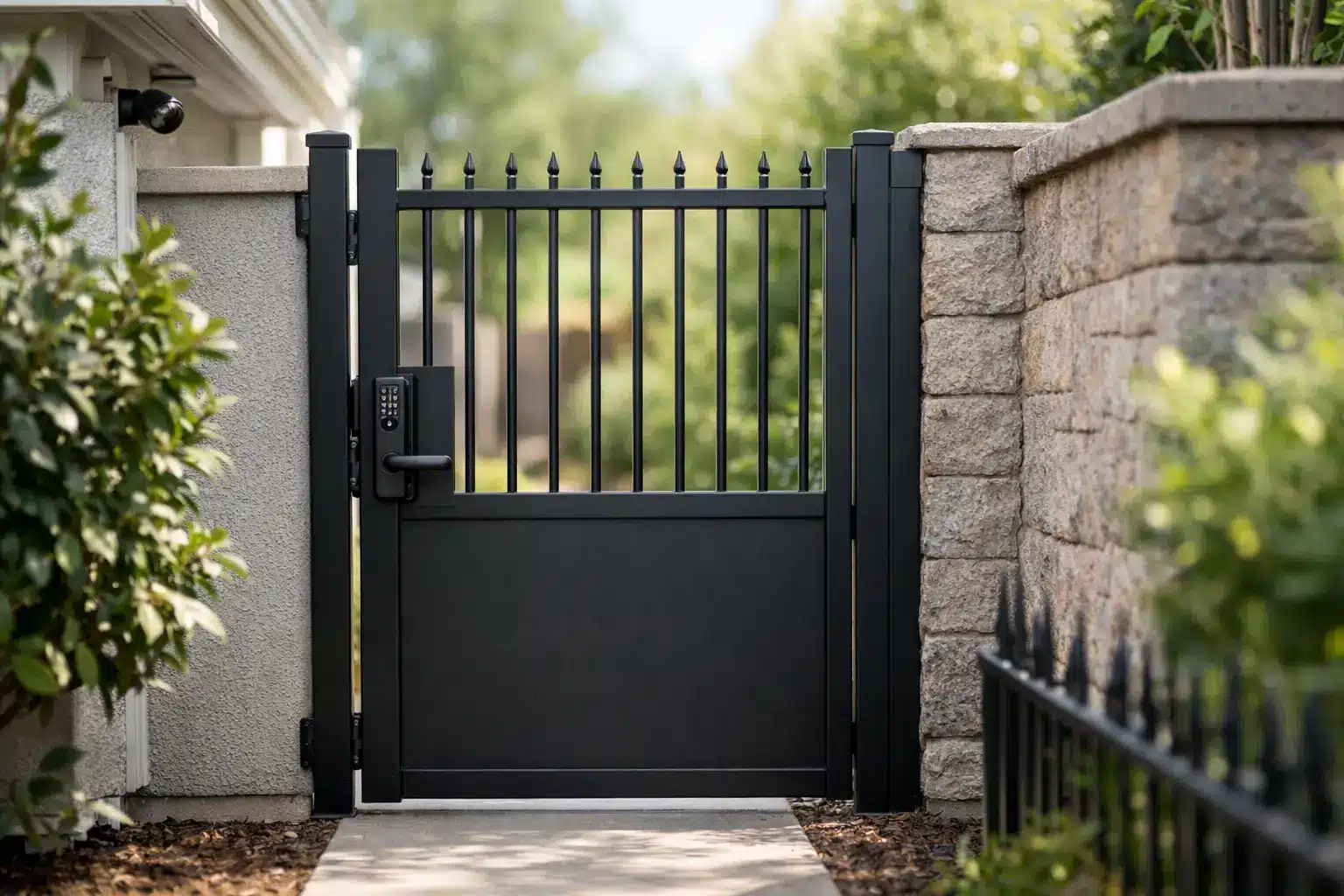
Vertical lines can make a pedestrian gate feel taller and more formal. They are often a strong fit for period-inspired properties, smart side entrances and commercial settings where a more structured appearance is preferred. Depending on the section size and spacing, vertical infill can look either understated or more security-focused.

Where privacy matters, the design can be closed up. Where visibility is useful, such as at a front path or access point near a pavement, a more open arrangement may be the better choice.

Privacy-led solid panel gates

For side passages, garden access points and boundaries that back onto public routes, solid or near-solid aluminium designs are often the most practical option. They offer a clean, premium face while screening bins, storage areas or private gardens from view.

The trade-off is that a fully closed design can appear more imposing, especially on narrower frontages. That is why proportion and colour choice matter. Dark finishes can look striking and refined, but on smaller spaces a lighter or softer tone may feel less dominant.

Aluminium pedestrian gate design and security

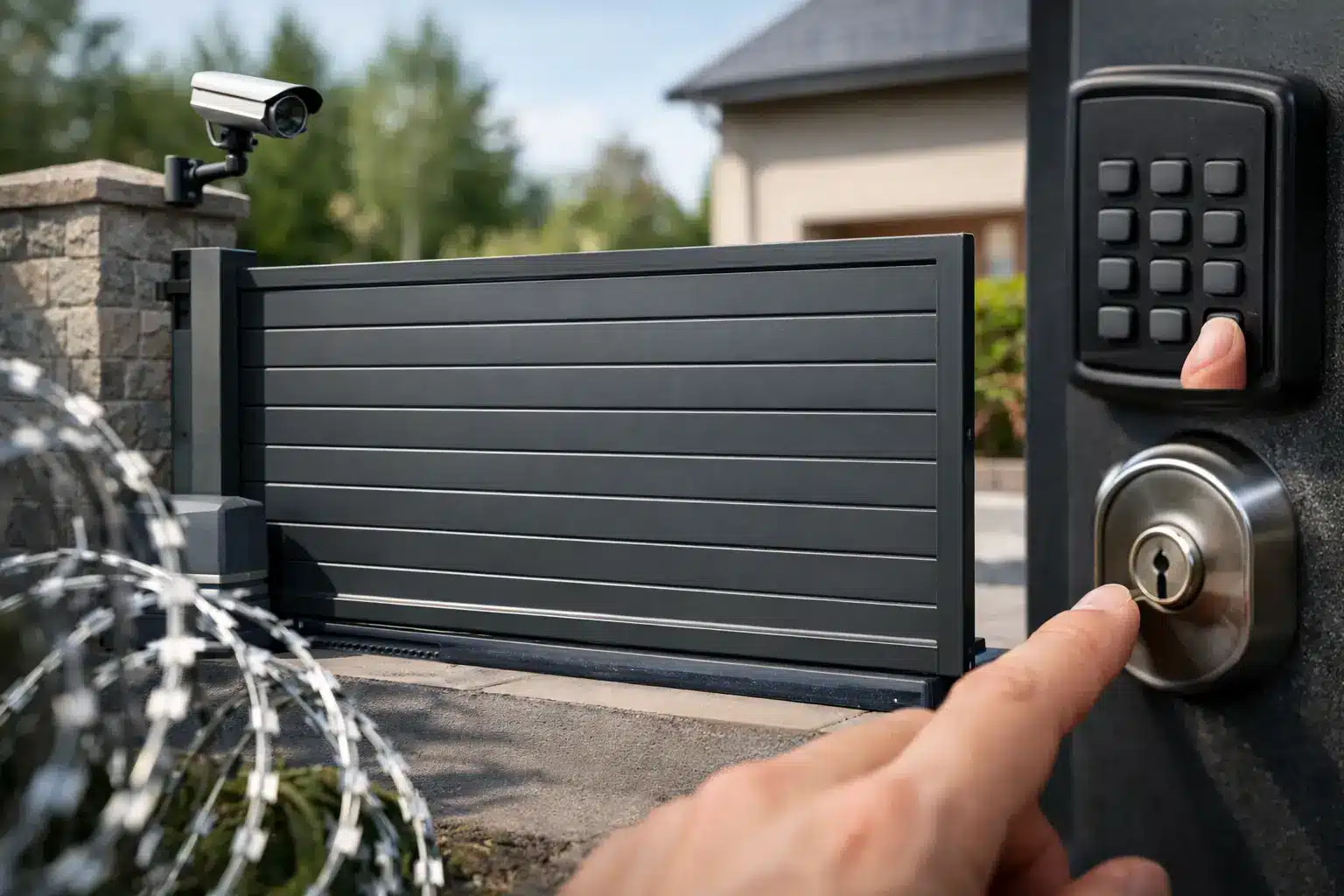
Security should be designed in from the start, not added as an afterthought. A premium pedestrian gate should deter forced access, control entry clearly and feel dependable in everyday use.

That means looking beyond the panel design alone. The hinge system, lock preparation, frame strength and post specification all influence the final performance. A gate can look impressive in a brochure but underperform if the supporting elements are not specified to the same standard.

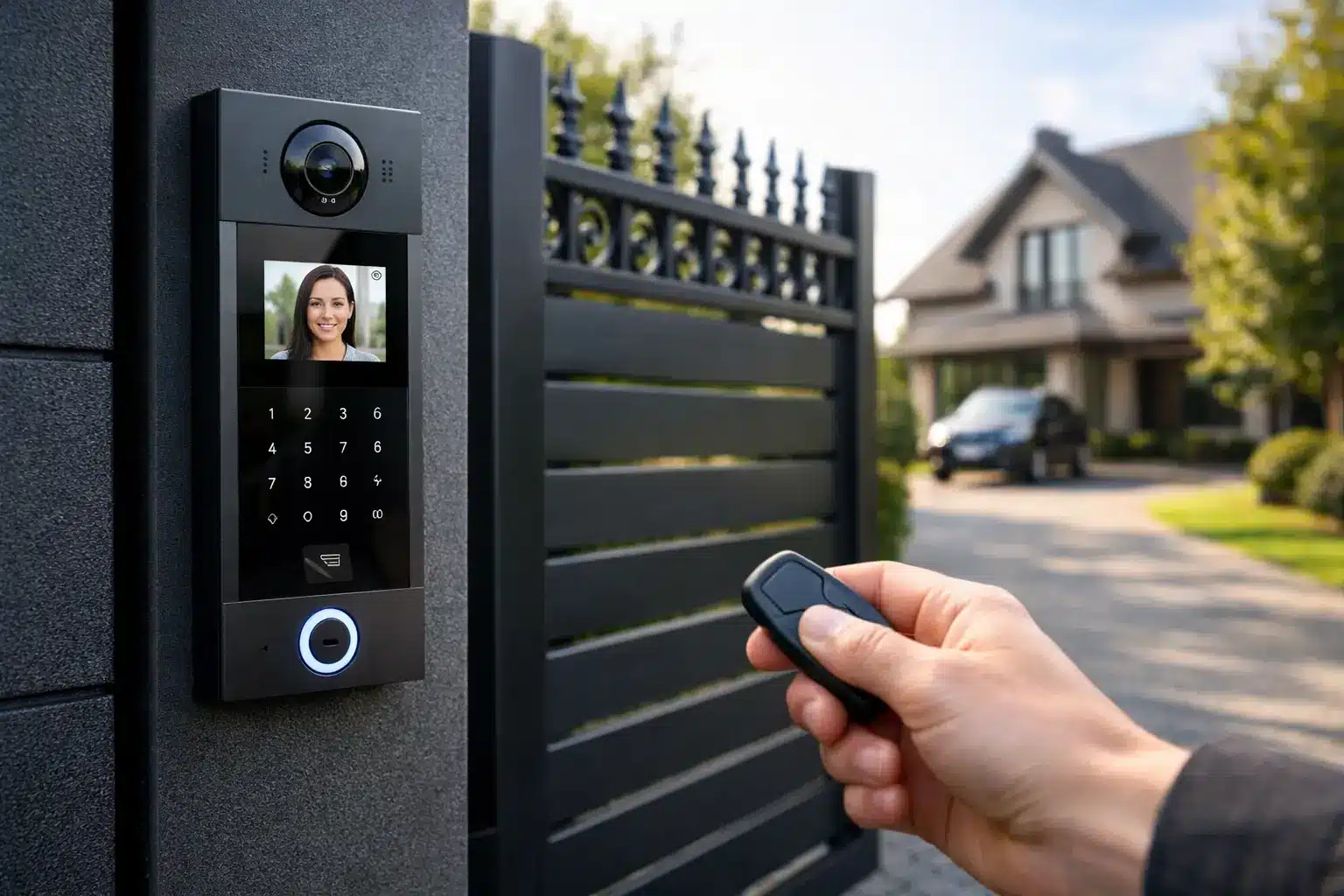
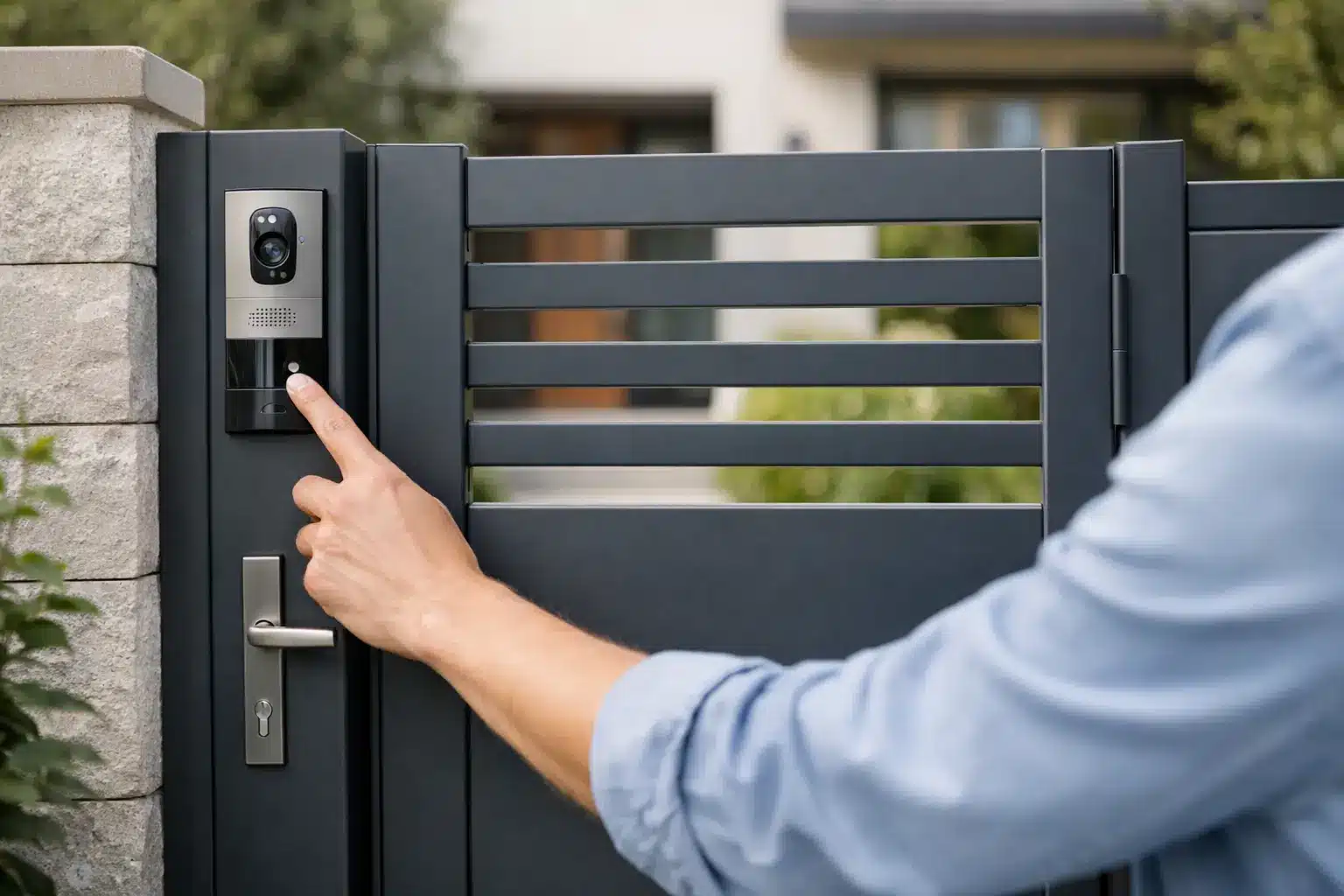
For residential properties, that may involve a secure manual latch and lockable system that works smoothly for family access. For commercial sites or higher-spec homes, the design may need to accommodate keypad access, intercom integration or coordinated entrance control. The visual style still matters, but it has to work with the access requirements rather than compete with them.

The role of colour and finish

Finish is one of the biggest factors in how bespoke a gate feels. The same frame and infill design can look sharply modern, quietly classic or distinctly bold depending on the colour chosen.

Anthracite grey remains a leading choice for good reason. It suits a wide range of UK property styles and pairs well with modern windows, doors and fencing. Black offers a stronger contrast and can give gates a more formal presence. Neutral tones and custom powder-coated finishes can soften the overall look or tie the gate into existing architectural details.

This is where low maintenance becomes a real advantage. Unlike timber, aluminium does not require regular staining or painting to keep the entrance looking smart. For busy homeowners and commercial buyers alike, that reduces both maintenance time and ongoing cost.

Made-to-measure design always looks better

A pedestrian gate is rarely judged in isolation. People see it against brickwork, paving, cladding, fencing and often a driveway gate nearby. If the proportions are wrong, the whole entrance can feel compromised.

Made-to-measure fabrication gives much more control over those visual details. Heights can align with walls and fences. Rail sizes can be adjusted to suit a larger opening. Infill choices can echo other boundary elements so the entrance feels cohesive. Even practical challenges such as sloping ground, awkward returns or tight clearances can be addressed more elegantly.

This is often the difference between a gate that simply fills a gap and one that improves the appearance of the property. Premium buyers notice that difference straight away.

Where homeowners and site managers often get it wrong

The most common mistake is choosing purely on appearance without thinking through daily use. A gate may look ideal online, but if it opens into a restricted path, lacks privacy where needed or does not match the scale of the property, the design quickly feels less convincing.

Another issue is underestimating build quality. Not all aluminium gates are made to the same standard. Section sizes, welding quality, finishing processes and hardware choices all affect longevity. A cheaper option may appear similar at first glance, but long-term performance is where the difference shows.

It is also worth thinking about future plans. If a customer expects to add matching fencing, driveway gates or access control later, the pedestrian gate should be designed as part of that wider scheme. That avoids a disjointed result and helps protect the investment.

A smarter approach to specifying your gate

The best projects begin with the opening, the property style and the practical brief. How much privacy is needed? Is the gate primarily front-facing or secondary access? Does it need to match existing aluminium features or form part of a full entrance upgrade? Those answers shape the right design much more effectively than browsing styles in isolation.

For some properties, simplicity wins. A clean vertical or slatted design in a premium finish can deliver exactly the right result. For others, a more architectural gate with integrated detailing, bespoke proportions and coordinated fencing will better suit the level of the project.

That consultative process is where a specialist manufacturer adds value. Alu-Gate, for example, focuses on bespoke aluminium entrance solutions built around made-to-measure fabrication, precision welding and long-term performance. For buyers who want the gate to feel properly resolved rather than standard, that level of specification matters.

Why aluminium continues to lead

When customers compare materials seriously, aluminium stands out because it answers several needs at once. It offers clean design freedom, strong long-term durability and very low maintenance. It also suits both contemporary and more traditional settings depending on how the gate is detailed.

That flexibility is a major strength. You are not choosing a material that forces a certain look. You are choosing one that can be shaped around the property, the security requirement and the level of finish you want to achieve.

If you are planning a new gate, start by thinking less about a product and more about the entrance you want to create. The right aluminium pedestrian gate design should look like it belongs there, work effortlessly every day and still feel like a quality decision years from now.

9 Modern Aluminium Garden Gate Ideas

9 Modern Aluminium Garden Gate Ideas

A tired side gate can quietly drag down the look of an otherwise well-finished property. It is often one of the first details visitors notice, and one of the hardest-working parts of your boundary. The best modern aluminium garden gate ideas solve more than appearance alone. They improve privacy, sharpen kerb appeal, reduce maintenance and give you a gate that still looks right years after installation.

For homeowners planning a renovation, a self-build or a full exterior upgrade, aluminium has become the material of choice for good reason. It offers clean design lines, excellent strength-to-weight performance and a premium finish without the swelling, warping and ongoing upkeep associated with timber. For commercial settings, it also brings consistency, durability and a more polished first impression.

Why modern aluminium garden gates suit contemporary properties

Modern design tends to reward simplicity. That does not mean plain. It means every detail has a job to do. A well-designed aluminium gate can frame a pathway, define a side entrance or complete a wider fencing scheme with a level of precision that older materials often struggle to match.

The appeal is practical as much as visual. Powder-coated aluminium resists corrosion, handles British weather well and requires very little ongoing care. That matters when your gate is exposed to rain, frost and day-to-day use. If you want a gate that keeps its shape, holds its finish and avoids the annual repainting cycle, aluminium is a strong long-term option.

There is also more flexibility in design than many buyers expect. Modern aluminium garden gate ideas now cover everything from minimal slatted styles to more solid privacy-led designs, with bespoke sizing, coordinated panels and access control options where needed.

9 modern aluminium garden gate ideas worth considering

1. Horizontal slatted gates for a clean architectural look

Horizontal slats remain one of the most popular choices for modern homes. The lines feel crisp and current, especially on properties with rendered walls, anthracite windows or contemporary brickwork. Spacing can be adjusted to alter the balance between openness and privacy.

This style works particularly well when you want the gate to feel light and refined rather than bulky. The trade-off is that wider gaps create more visibility, so it is worth deciding early whether your priority is style, screening or a blend of both.

2. Full privacy gates with tightly spaced boards

If the gate secures a side passage, bin storage area or garden entrance close to the pavement, privacy often matters more than visibility. A full privacy aluminium gate gives a cleaner and more permanent-looking solution than timber panels, while still keeping the finish sharp and modern.

This approach suits properties where visual clutter needs to be reduced. It can also make a narrow side access feel more intentional and secure. The key is keeping the design simple so the gate looks premium rather than heavy.

3. Wood-effect aluminium for warmth without the upkeep

Not every modern exterior suits flat monochrome finishes. Some properties benefit from a softer look, particularly where brick, stone or traditional landscaping is part of the setting. Wood-effect aluminium gives the appearance of timber grain with the durability and low-maintenance advantages of metal.

For many buyers, this is the sweet spot. You keep the warmth of natural-looking tones but avoid the fading, splitting and regular treatment that timber demands. It is especially effective on period-renovated homes that want a more contemporary gate without creating a visual clash.

4. Framed minimalist gates with concealed detailing

A minimalist gate does not need to be featureless. In fact, the best examples rely on precision. Slim frames, discreet fixings and carefully proportioned infills can make a simple design feel far more expensive.

This is where made-to-measure fabrication matters. A bespoke gate that fits the opening properly, aligns cleanly with adjacent fencing and closes with confidence will always look stronger than an off-the-shelf option trying to do the same job. Small details make the difference.

5. Matching gate and fencing combinations

One of the strongest modern aluminium garden gate ideas is to stop treating the gate as a standalone product. When the gate is designed to coordinate with fencing, privacy screens or boundary panels, the whole exterior feels more considered.

This approach works particularly well on front and side boundaries where multiple elements sit in the same sightline. Matching slat spacing, frame depth and finish colour can create a cohesive result that lifts the entire property, not just the entrance point.

6. Anthracite grey for a timeless contemporary finish

Anthracite grey remains a leading choice because it works with almost everything. It complements modern glazing, black trims, white render and traditional brick equally well. More importantly, it tends to age gracefully in design terms. It looks current now, and it is unlikely to feel dated in a few years.

That said, grey is not the only answer. Black, textured finishes and selected bespoke colours can all work beautifully depending on the architecture. The right finish should relate to the rest of the property rather than follow a trend for its own sake.

7. Gates with integrated access control

For some side entrances and pedestrian access points, especially on larger homes or mixed residential and commercial sites, a gate can do more than provide a physical barrier. Adding intercom or controlled entry creates a smarter and more secure access point.

This is particularly useful where convenience matters as much as security. If the gate is used regularly by family members, staff or visitors, planning for access control from the outset usually produces a neater result than retrofitting later.

8. Statement pedestrian gates for side access

A pedestrian gate is easy to underestimate. Yet on many properties it is used more often than the driveway gates. That makes it worth specifying with the same level of care.

A taller, design-led side gate can create a stronger sense of arrival, improve privacy and make the boundary feel more secure. It also helps tie together different parts of the exterior scheme. When designed properly, a garden gate stops feeling secondary and starts acting as part of the architecture.

9. Mixed-width slats for a bespoke design edge

For buyers who want something more distinctive, mixed-width slats can give a gate a more tailored character without becoming over-designed. Varying the rhythm of the infill adds interest while keeping the overall form clean and contemporary.

This works best when used with restraint. Too much variation can look busy. The goal is controlled detail that reinforces quality and individuality.

Choosing the right modern aluminium garden gate ideas for your property

The right design depends on how the gate will be used, where it sits and what it needs to achieve day to day. A side passage gate on a narrow urban plot has different demands from a garden gate on a detached home with open landscaping. Commercial properties may place greater emphasis on access frequency, security and coordinated perimeter systems.

Start with function. Do you need privacy, visibility, security or easy access with children, pets or deliveries in mind? Then consider style. The gate should relate to your windows, fencing, walling and overall property character. A sleek slatted design may suit one house perfectly and feel out of place on another.

Size and proportion matter as well. A beautifully finished gate will still look wrong if it is too short, too bulky or poorly aligned with the opening. This is one reason bespoke aluminium systems continue to outperform generic alternatives. Precision fit creates a cleaner appearance and better long-term performance.

What separates a premium aluminium gate from a basic one

On paper, many aluminium gates can appear similar. In reality, build quality varies significantly. Construction method, weld quality, frame strength and finish all affect how the gate feels in use and how well it stands up over time.

A fully welded gate generally offers a more solid, refined result than one built from loosely assembled sections. You notice it in the rigidity, the alignment and the overall impression of strength. Finish quality matters too. A premium powder-coated surface should look even, durable and consistent across the whole gate and any matching panels.

This is where specialist manufacturers stand apart. Consultation-led design, proper fabrication and attention to installation requirements help ensure the gate is not only attractive on day one, but dependable for years. For buyers making a long-term investment in their property, that matters more than a low upfront price.

Modern aluminium garden gate ideas that add lasting value

A garden gate is a practical feature, but it also shapes perception. The right one makes a property feel more secure, more complete and better cared for. That can enhance everyday enjoyment just as much as it supports resale value.

At Alu-Gate, we see the best results when design, durability and fit are considered together rather than in isolation. Whether you prefer bold privacy, warm wood-effect finishes or a crisp architectural slatted style, the strongest choice is the one that suits your property properly and performs without compromise.

If you are weighing up modern aluminium garden gate ideas, think beyond what looks good in a photo. Choose a design that works with your boundary, your routine and the standard of finish you want your home or site to project. A gate should do its job quietly, confidently and for the long term.

When to Choose Bifolding Gates

When to Choose Bifolding Gates

A long driveway can make almost any gate format work. A tight entrance cannot. That is usually the moment when customers start asking when to choose bifolding gates, because the space available on site often matters more than the opening width itself.

Bifolding gates are designed for properties where access needs to be quick, secure and visually refined, but where a full swing arc or long sliding run is not practical. Instead of opening as one large leaf, each side folds back on itself. The result is a gate that clears the entrance quickly while using far less depth than a traditional swing design.

For the right property, that is a major advantage. For the wrong one, another gate format may be more suitable. The key is understanding where bifolding gates genuinely add value.

When to choose bifolding gates for limited space

The clearest reason to choose a bifolding gate is restricted space behind the opening. Standard swing gates need room to travel inward, and that can be a problem if the driveway rises sharply, if vehicles park close to the entrance, or if the usable space behind the gate is shorter than ideal.

A bifolding system reduces that travel area significantly. Because the leaves fold as they open, they require less clearance depth than a conventional swing gate. On urban plots, compact frontages and properties where every metre matters, this can be the difference between a workable automated entrance and a compromise.

This is especially relevant on homes set close to the road. If you want the security and presence of a driveway gate without sacrificing too much internal parking space, bifolding can be the smarter solution.

That said, limited space does not automatically mean bifolding is the answer. If there is no room at all for leaf movement, a sliding or telescopic gate may still be the better fit. The decision depends on the exact layout, gradients and obstructions around the entrance.

Faster access where convenience matters

Bifolding gates are also chosen for speed. Because the panels fold and clear the opening quickly, they can provide noticeably faster operation than many swing systems. That matters on busy residential driveways and even more on commercial sites where regular vehicle movement is part of the day-to-day routine.

For a homeowner, faster opening can simply mean less waiting on the road. For a business, school, flat development or managed site, it can improve traffic flow and reduce hold-ups at peak times. If the entrance is used frequently, speed stops being a nice extra and becomes part of the specification.

This is one of the strongest cases for bifolding gates in commercial settings. A gate that opens efficiently while maintaining security can support a smoother arrival experience for staff, visitors and approved vehicles.

A strong fit for modern design-led properties

Practical performance matters, but so does appearance. Bifolding gates suit contemporary architecture particularly well because they tend to look precise, engineered and clean-lined. In aluminium, they can deliver a strong architectural finish without the maintenance demands that often come with timber or steel.

For design-conscious homeowners, that combination is attractive. You are not only solving an access problem. You are choosing an entrance solution that feels considered and premium from the first impression.

A made-to-measure aluminium bifolding gate can also be coordinated with fencing, pedestrian access and wider boundary design. That matters if you want the front of the property to look cohesive rather than pieced together over time.

When ground conditions make full swing difficult

Driveway gradients often shape the gate choice more than people expect. A full swing gate needs enough clearance to move cleanly across the surface. If the ground rises, drops or changes awkwardly near the entrance, that can limit the practicality of a standard swing arrangement.

Bifolding gates can help in some of these cases because the movement is more compact. They still need careful planning and precise installation allowances, but they can offer a more manageable solution where a full leaf would be restricted.

This is where consultation matters. The right gate is rarely chosen from photographs alone. Site dimensions, levels, hinge positions, vehicle turning space and automation requirements all need to be considered together.

Security without the weight and upkeep of traditional materials

Customers often assume that a secure gate must be heavy and cumbersome. In reality, well-engineered aluminium offers a different kind of advantage. It combines strength, corrosion resistance and low maintenance in a format that is well suited to automation.

That is particularly relevant for bifolding systems, where precise movement and reliable operation are essential. A gate that is excessively heavy can place more demand on components over time. Aluminium helps reduce that burden while still delivering a premium, substantial finish when it is properly fabricated.

For residential buyers replacing ageing timber gates, this can be a decisive factor. You keep the security and visual impact of a driveway gate, but avoid the regular repainting, swelling, warping or rot that often shortens the life of timber systems.

When to choose bifolding gates over swing or sliding

The best way to judge a bifolding gate is to compare it honestly with the alternatives.

Choose bifolding over swing when driveway depth is limited, when faster opening is important, or when a standard arc would interfere with parking or levels. It is often the more efficient option on compact driveways and busy entrances.

Choose bifolding over sliding when there is not enough lateral run for a gate to stack along the boundary. Sliding gates are excellent for many properties, particularly where security and larger openings are priorities, but they do need clear side space. If your boundary walls, planting, level changes or site layout do not allow that, bifolding may be the more practical route.

The trade-off is that bifolding systems are more mechanically involved than simple manual gates, so specification quality matters. The design, fabrication and automation setup all need to be right. On a premium project, that is exactly why bespoke manufacture and expert guidance are worth having from the outset.

Residential and commercial uses

At home, bifolding gates are often selected for front driveways where owners want a refined automated entrance without losing valuable parking space. They suit renovation projects, new builds and premium replacements where kerb appeal matters as much as function.

In commercial settings, the appeal is slightly different. Speed, repeat use and controlled access tend to lead the decision. A bifolding gate can support secure entry while helping sites operate more efficiently, particularly where vehicles need to move in and out regularly.

Not every commercial entrance should use bifolding. Very wide openings, heavy industrial usage or sites with specific vehicle constraints may point towards another format. But for many light commercial and mixed-use environments, bifolding offers an excellent balance of performance and presentation.

The importance of bespoke specification

A bifolding gate is not a product to choose on width alone. Dimensions, infill style, frame construction, automation, access control and finish all affect the final result. So does the quality of fabrication.

This is where premium manufacture stands apart. Fully welded aluminium construction, made-to-measure sizing and carefully specified hardware deliver a gate that feels solid, operates correctly and holds its appearance over time. For buyers investing in a long-term entrance solution, that matters far more than a short-term saving on an off-the-shelf system.

If you are comparing options, look beyond the headline style. Ask how the gate is made, how it is finished, how it is supported, and how it will perform after years of daily use. The right bifolding gate should not only look impressive on day one. It should stay dependable with minimal maintenance.

When bifolding is the right decision

If your entrance needs to open quickly, the available space is restricted, and you want a premium automated gate that complements a modern property, bifolding is often the right answer. It brings together space efficiency, strong visual impact and everyday convenience in a way few other gate formats can.

The best results come from choosing it for the right reasons, not simply because it looks distinctive. A well-specified bifolding gate should respond to the site, the architecture and the way the entrance is used. That is what turns a gate from a boundary feature into a genuine upgrade.

If you are planning a new entrance or replacing an outdated system, start with the layout and let performance lead the design. The right gate should feel effortless to use, precise in its finish and built to hold its standard for years to come.

What Is a Telescopic Gate?

What Is a Telescopic Gate?

A long driveway is useful until your gate design has to work around a short run-back space, a sloping entrance or a layout that simply will not accept a standard sliding gate. That is usually the point where people start asking, what is a telescopic gate, and whether it could solve a problem without compromising on security or appearance.

A telescopic gate is a sliding gate made from two or more panels that travel together in a coordinated motion. Rather than one full-width leaf sliding back into a clear area equal to the entire opening, the gate sections stack as they move. This allows a wide entrance to be secured where side room is limited.

For many residential and commercial properties, that is the difference between forcing a less suitable gate style into place and installing a system designed around the site. A telescopic gate is not a compromise product. When it is specified correctly, it is a precise, high-performance solution for properties where space matters.

What is a telescopic gate and how does it work?

The simplest way to understand a telescopic gate is to compare it with a standard sliding gate. A standard sliding gate uses one single leaf. If your driveway opening is 4 metres wide, you generally need just over 4 metres of space to one side for that gate to slide open.

A telescopic gate reduces that space requirement by dividing the gate into multiple panels, most commonly two. Those panels are linked mechanically so that when the lead panel moves, the second panel follows at a coordinated speed. As the gate opens, the panels gather neatly behind one another instead of requiring one uninterrupted run-back length.

This is achieved through a tracked system, guide arrangement and drive setup designed to keep both panels aligned and moving smoothly. In powered versions, the motor controls the opening and closing movement with the same principle – only the gate footprint is more compact.

The practical advantage is clear. You can secure a wider entrance even when walls, fencing, landscaping, parked vehicles or building lines restrict the available side space.

Why property owners choose telescopic gates

Most buyers are not searching for telescopic gates because they want something unusual. They choose them because the entrance demands a smarter use of space.

On a residential property, this often happens where the driveway opening is generous but the return area is shortened by a garage, boundary line or planting scheme. On commercial sites, it can be due to tighter perimeter layouts, service yards or the need to preserve manoeuvring space.

There is also a design benefit. A telescopic gate can allow you to keep the clean, contemporary look of a sliding gate where a swing gate would be impractical. That matters for homeowners investing in kerb appeal as much as security. The right gate should feel integrated with the property, not like a workaround.

Because the system is made to measure, the proportions, infill style, finish and operating method can all be aligned with the architecture of the site. That is especially important in premium schemes, where visual balance matters just as much as function.

Where telescopic gates work best

Telescopic gates are especially effective on properties with restricted run-back. That might mean a short wall return, a rising driveway edge, an awkward corner or a site where preserving usable frontage is a priority.

They are often well suited to:

  • driveways with wide openings but limited side space
  • residential entrances where swing gates would open into parked cars or a slope
  • commercial yards needing secure automated access in compact layouts
  • developments where a modern sliding gate look is preferred

That said, suitability always depends on the site. A telescopic system still needs proper structural planning, accurate measurements and a clear understanding of how the gate will travel. Ground conditions, track installation, motor positioning and daily usage levels all need to be considered early.

Telescopic gate vs standard sliding gate

If space allows, a standard sliding gate can be the simpler option. It has fewer moving sections and a more straightforward operating path. For some entrances, that is exactly the right answer.

But where side room is tight, a standard sliding gate may be ruled out immediately. That is where telescopic gates stand out. They retain the key benefits of a sliding format – efficient opening, strong perimeter control and suitability for automation – while reducing the run-back needed.

The trade-off is that a telescopic gate is a more specialised system. With additional panels and coordinated movement, the design, fabrication and installation need to be right. This is not an off-the-shelf decision. It needs proper specification.

For buyers focused on long-term value, that is not a reason to avoid the system. It is a reason to choose a gate manufacturer that understands precision engineering, fabrication quality and the realities of how the gate will perform over time.

Telescopic gate vs swing gate

Swing gates remain a strong option for many homes, particularly where there is enough clearance for the leaves to open safely and comfortably. They can be elegant, practical and highly effective.

However, they are not ideal for every entrance. If the driveway slopes upwards towards the property, inward-opening swing gates may not be suitable. If cars are parked close to the opening or the entrance sits directly off a road, the required swing arc can become a problem.

A telescopic gate removes that opening arc because it slides laterally. For properties with limited depth, awkward gradients or frequent vehicle use, that can make access easier and safer.

The right choice depends on how the entrance works day to day. A gate should not only look the part – it should suit the way you arrive, leave and manage the space around it.

Material matters as much as the mechanism

A telescopic design solves a spatial challenge, but the material determines how well the gate performs year after year. This is where aluminium has a clear advantage for many UK properties.

Aluminium offers strength without excessive weight, which is valuable in any moving gate system. It is naturally resistant to rust, requires very little ongoing maintenance and supports clean, precise fabrication. For coastal locations, exposed driveways and high-use entrances, that low-maintenance durability is a serious benefit.

It also allows for a premium finish. Whether the design leans towards contemporary slatted styles, privacy-focused infills or a more architectural look, aluminium supports a refined appearance without the movement, swelling or regular upkeep associated with timber.

For a telescopic gate in particular, build quality matters. Precision welding, accurate alignment and a properly engineered frame all play a part in reliable operation. A premium gate should feel substantial, move correctly and maintain its appearance over the long term.

Is a telescopic gate right for your property?

If your entrance is wide but the side return is limited, a telescopic gate should absolutely be considered. It can offer the security and visual impact of a sliding gate in places where a standard system simply will not fit.

It is also a strong option if you want automation, modern styling and efficient access without sacrificing driveway usability. For both domestic and commercial buyers, that combination is often the deciding factor.

Still, the answer is not always automatic. If your site has ample run-back space, a standard sliding gate may be more straightforward. If the entrance layout comfortably suits a swing gate, that could be the better route. The right gate is the one that matches the property, not just the brochure.

That is why a consultation-led approach matters. Accurate measurements, usage patterns, access needs and design preferences all need to be factored in before a system is specified. Premium entrance solutions are built around the site, not squeezed into it.

What to consider before specifying one

Before choosing a telescopic gate, it is worth looking beyond the opening width alone. Think about how often the gate will be used, whether automation is required, how much privacy you want and what visual style suits the property. You should also consider ground levels, available stacking space and whether the gate needs to integrate with intercoms or access control.

For many buyers, appearance and practicality carry equal weight. A gate is part of the property frontage every day. It needs to secure the entrance, but it also needs to complement the home or site rather than dominate it for the wrong reasons.

A well-designed telescopic gate does both. It solves a spatial problem with precision and presents the entrance properly. That is why it continues to be such a strong option for design-conscious property owners who want more from their gate than a basic barrier.

If you are weighing up gate styles and your site feels tight, the best next step is not to guess. It is to assess the layout carefully and choose a system built around how your entrance actually works.

Sliding or Swing Gate for Driveway?

Sliding or Swing Gate for Driveway?

A gate can transform the front of a property in a single decision. Get it right, and it sharpens security, improves daily access and gives the whole entrance a more considered finish. Get it wrong, and even a premium installation can feel awkward to use. If you are weighing up a sliding or swing gate for driveway access, the best option is rarely about appearance alone. It comes down to space, levels, traffic, automation and how you want the entrance to perform over time.

For some properties, a pair of swing gates is the obvious answer. For others, only a sliding system will work cleanly and reliably. The key is choosing a gate style that suits the site rather than forcing the site to suit the gate.

Sliding or swing gate for driveway – what is the difference?

A swing gate opens inwards or outwards on hinges, much like a traditional door. It can be a single leaf or, more commonly on residential driveways, a pair of gates meeting in the middle. Swing gates are familiar, elegant and often well suited to homes where there is enough clear space for the gates to open without obstruction.

A sliding gate moves sideways along the boundary line instead of opening into the driveway. Depending on the design, it may run on a track or use a cantilever system. This format is especially useful where space in front of or behind the gate is limited, or where the driveway rises sharply.

Both options can be automated, both can be made to measure, and both can deliver excellent security and visual impact. The difference lies in how they interact with the layout of your entrance.

When a swing gate is the better choice

Swing gates remain a popular choice for good reason. They suit a wide range of property styles, from contemporary builds to period homes, and they create a balanced, architectural look across the entrance. On a flat driveway with adequate clearance, they are simple, effective and visually impressive.

If your driveway has room behind the gates for the leaves to open fully, a swing system can feel natural in daily use. It also allows for a clean frontage without the side run-back area a sliding gate requires. For many homeowners, this matters because the gate becomes part of the wider landscaping rather than a purely functional barrier.

There is also a design advantage. Swing gates often lend themselves particularly well to symmetrical layouts, wider entrances and statement driveways. When made in aluminium with a fully welded construction and a premium finish, they offer the traditional appeal of hinged gates without the maintenance burden associated with timber or steel.

That said, swing gates are not right for every site. If the ground slopes up steeply behind the entrance, the gate leaves may catch or require complex adjustments. If cars regularly stop close to the gate line, opening clearance can become a practical annoyance rather than a minor detail.

Best-fit scenarios for swing gates

Swing gates tend to work best where the driveway is level, the entrance is reasonably open, and the property benefits from a classic or formal approach to design. They also suit buyers who want a strong visual statement at the front boundary without needing side space for a sliding mechanism.

When a sliding gate makes more sense

A sliding gate is often the more practical engineering solution. If your driveway climbs immediately after the entrance, a swing gate may simply not operate cleanly. A sliding gate avoids that issue because it moves laterally rather than sweeping across the ground.

It is also an excellent option where space is tight. On shorter driveways, there may be little room for a vehicle to wait while swing leaves open inwardly. If the entrance opens directly onto a road and there is no safe or compliant way for gates to open outwards, sliding can solve the problem neatly.

From a security perspective, sliding gates are often seen as a strong choice because the system is inherently harder to force at the leading edge than some lighter hinged alternatives. In high-use settings, including commercial premises or larger residential entrances, they also offer controlled, consistent operation.

A sliding gate does, however, need enough lateral space for the gate to stack when open. That side run can be overlooked at the planning stage. If there is a wall return, planting scheme, meter box or change in boundary line, the available travel distance may be reduced. This is why accurate site assessment matters so much.

Best-fit scenarios for sliding gates

If your entrance is on a slope, your driveway is short, or your property needs a more space-efficient opening method, sliding is often the stronger choice. It is particularly effective on modern properties and premium driveways where clean lines and controlled access are priorities.

Space, levels and layout matter more than style

Many buyers begin by asking which gate looks better. In practice, the better question is which gate will work properly on the site. A well-designed gate should feel effortless in use. That only happens when the layout has been considered from the beginning.

Ground levels are usually the first deciding factor. Even a modest rise across the swing arc can rule out standard hinged gates. Vehicle movement is the next. If cars need to pull off the road quickly, the opening speed and footprint of the gate become important. Then there is side clearance, boundary walls, pedestrian access and whether you want integrated controls such as an intercom or keypad.

This is where bespoke design makes the difference. A made-to-measure aluminium system allows the gate format, dimensions and detailing to be tailored to the entrance rather than selected from a limited standard range.

Automation, maintenance and long-term ownership

Automation is now expected on many premium driveway gates, but not every gate type behaves the same once motors, safety devices and access control are involved. Swing gates generally use above-ground or underground operators and need consistent opening clearance. Sliding gates rely on a different motor arrangement and are often chosen where automation needs to work efficiently in tighter spaces.

Maintenance is another point worth treating realistically. Any automated gate system benefits from servicing, adjustment and good installation practice. The gate material itself, however, has a major impact on long-term upkeep. Aluminium remains one of the strongest choices for buyers who want lasting performance without the routine sanding, painting or treatment associated with timber.

For residential and commercial properties alike, that low-maintenance ownership model is not just a convenience. It is part of the value equation. A gate should continue to look sharp and operate reliably without becoming a recurring project.

Cost versus value

There is no single answer on price because the specification drives the cost. Opening width, gate height, infill design, automation, access control and site conditions all affect the final figure. A sliding gate can involve more groundwork or a more specialised support arrangement, while a swing gate may require additional consideration on gradients or hinge loading.

The more useful comparison is value over time. A well-specified gate that suits the site, is fabricated properly and is built in a durable material will usually prove more cost-effective than a cheaper option that compromises on fit, finish or operation. Premium entrances are judged every day, both visually and practically. They need to earn that position.

Which gate gives the best kerb appeal?

Both can look exceptional when designed well. Swing gates often bring a sense of proportion and formality, especially on detached homes, country properties and wider plots. Sliding gates tend to create a more contemporary impression, with a cleaner horizontal movement and a strong architectural feel.

The best result comes from matching the gate to the property style and surrounding elements such as fencing, walls, railings and pedestrian access points. Coordination matters. A driveway gate should not feel like an isolated product dropped into place. It should look like part of a complete entrance scheme.

For that reason, many buyers now favour bespoke aluminium solutions in coordinated finishes and made-to-measure designs. It gives far more control over the final appearance, while still delivering strength, precision and long-term durability.

Making the right choice for your property

If your driveway is level and spacious, a swing gate may give you the look and operation you want with a timeless sense of arrival. If your site is constrained, sloping or focused on efficient automated access, a sliding gate may be the smarter answer.

Neither option is universally better. The right choice depends on the entrance. That is why consultation-led design is so valuable. A specialist manufacturer can assess the layout, understand how the gate will be used and recommend a system that balances style, security and practicality without compromise.

At Alu-Gate, that approach sits at the centre of every made-to-measure project. Because when a gate is designed to impress and built to last, the best decision is the one that works beautifully for years, not just the one that looked good on paper.

Best Gate for a Sloping Driveway

Best Gate for a Sloping Driveway

A sloping driveway changes everything. A gate that looks perfect on paper can scrape the ground, leave awkward gaps, or demand far more space than your entrance can realistically give. Choosing the best gate for a sloping driveway is less about picking a style you like and more about selecting a system engineered around the gradient, the opening width and how you use the entrance every day.

That is why the right answer is rarely a one-size-fits-all product. On a level driveway, you can often choose between gate types based mainly on appearance. On a slope, geometry, clearance and automation become the deciding factors. Get those right and your gate feels effortless. Get them wrong and even a premium gate will frustrate you from day one.

What makes the best gate for a sloping driveway?

The best gate for a sloping driveway is the one that opens safely, clears the ground properly and suits the way vehicles and pedestrians move through the entrance. That may sound obvious, but it rules out a surprising number of off-the-shelf solutions.

The steepness of the slope matters first. A gentle incline may still allow for a well-designed swing gate, particularly if the opening direction and hinge arrangement are carefully considered. A steeper rise often pushes the decision towards sliding, bi-folding or other specialist formats that avoid the ground clearance issue altogether.

You also need to think about the visual result. Some gate systems technically work on a slope but create large triangular gaps beneath the gate leaf. For security-conscious homeowners and commercial sites, that compromise can undermine the whole purpose of installing a gate. The best solution balances function, appearance and security rather than sacrificing one for the other.

Why standard swing gates can struggle on slopes

Traditional swing gates are usually the first option people picture for a driveway. They are classic, familiar and often well suited to period and contemporary properties alike. But on a sloping driveway, they need much more careful planning.

If a gate swings inwards and the ground rises immediately behind it, the bottom of the gate can catch on the driveway surface. To prevent that, the gate either needs additional clearance or a design adapted to the slope. More clearance can solve the operational problem, but it may also leave a larger gap underneath than many owners are comfortable with.

There is also the issue of vehicle movement. If the driveway is short or steep near the entrance, cars may not have enough waiting space for a pair of swing gates to open comfortably. Add automation into the mix and the margins become tighter. Safety edges, ram geometry and hinge positioning all need to be considered from the outset, not added as an afterthought.

That does not mean swing gates are unsuitable. It means they must be properly specified. For some properties, a made-to-measure split leaf arrangement or carefully configured hinged system is still the right answer. The detail matters.

Sliding gates are often the strongest option

For many properties, a sliding gate is the best gate for a sloping driveway because it removes the main problem entirely. Instead of swinging across a rising surface, the gate travels laterally along the boundary line. That means no scraping, no need to create exaggerated under-gate gaps, and no awkward compromise between clearance and appearance.

Sliding gates are especially effective where the driveway slope is pronounced near the entrance. They also suit wider openings and properties where security is a priority, as the gate can maintain a more consistent line at the bottom. Visually, the result is usually cleaner and more deliberate.

The trade-off is space. A sliding gate needs sufficient run-back area to one side of the entrance. If boundary walls, planting, level changes or site constraints prevent that, then another format may be better. Installation requirements are also more demanding, as the track or cantilever arrangement and supporting structure must be set up with precision.

For premium residential projects and commercial entrances, though, sliding gates often deliver the most refined combination of practicality, security and design. When fabricated in aluminium, they also avoid the maintenance burden and weight associated with traditional materials.

When bi-folding or telescopic gates make sense

Some sloping driveways have another complication: limited space. You may not have enough depth for a standard swing gate or enough lateral space for a single sliding gate. In those cases, bi-folding or telescopic systems deserve serious attention.

A bi-folding gate reduces the space needed for opening by folding its leaves as it operates. This can be particularly useful on entrances close to the road, where fast opening and compact movement are important. A telescopic gate, meanwhile, splits the sliding action across multiple gate sections, reducing the run-back length required.

These are specialist systems, and they must be manufactured and specified properly to perform reliably. But on the right site, they solve problems that a conventional gate cannot. For design-led properties where every metre counts, they can offer a premium answer without forcing compromises in style.

Material matters as much as gate type

Even the right opening method can disappoint if the material is wrong. On a sloping driveway, gate weight and structural stability have a direct impact on performance. Heavy gates place greater demand on hinges, automation and support posts. Over time, that can affect alignment and reliability.

This is where aluminium stands out. A high-quality aluminium gate offers the strength required for a secure entrance while remaining significantly lighter than many steel or timber alternatives. That lower weight helps the gate operate more efficiently and places less strain on moving parts.

For the owner, the long-term benefits are just as important. Aluminium will not warp, rot or demand the routine repainting associated with timber. For exposed UK driveways dealing with rain, frost and year-round use, low maintenance is not a luxury. It is part of the value proposition. A bespoke aluminium system also allows for cleaner detailing and more precise fabrication, which is particularly important where a gate must be tailored to a difficult gradient.

Design details that affect real-world performance

The best gate for a sloping driveway is rarely decided by gate type alone. Smaller technical details often shape whether the finished result feels premium or problematic.

The gradient profile matters more than many people expect. A driveway may appear to have a simple rise, but changes in pitch near the threshold can alter the available clearance dramatically. The width of the opening matters too, because wider gates create different loading and movement demands. Then there is the question of how the gate will be used. A family home with a few daily movements has different priorities from a commercial entrance with regular traffic and controlled access.

Automation should be considered early. On a slope, motors, safety systems and opening speeds all need to suit the gate format and site layout. Intercoms, access control and vehicle entry planning should work with the gate system rather than being bolted on later. This is one reason a consultation-led approach tends to produce better results than choosing a gate from standard dimensions and hoping it will fit.

How to choose the right solution for your property

If you are deciding on the best gate for a sloping driveway, start by looking at the site honestly rather than starting with a preferred style. Measure the opening, identify where the slope begins and note how much space exists behind and to the side of the entrance. Think about whether vehicles need to stop close to the gate, whether pedestrians use the entrance separately, and how important a flush visual line is at the base of the gate.

From there, the decision usually becomes clearer. If the slope is mild and space allows, a properly designed swing gate may still work very well. If the incline is more severe, a sliding gate is often the stronger choice. If space is restricted in every direction, bi-folding or telescopic formats may offer the best answer.

The crucial point is that sloping driveways reward bespoke design. A premium entrance should be designed around the property, not forced onto it. At Alu-Gate, that means considering the gradient, the structure, the finish and the access requirements as part of one complete specification rather than a series of disconnected choices.

A gate on a slope should not look like a compromise. With the right system, it can feel just as precise, secure and impressive as any entrance on level ground – and often more so, because it has been designed with real intent.