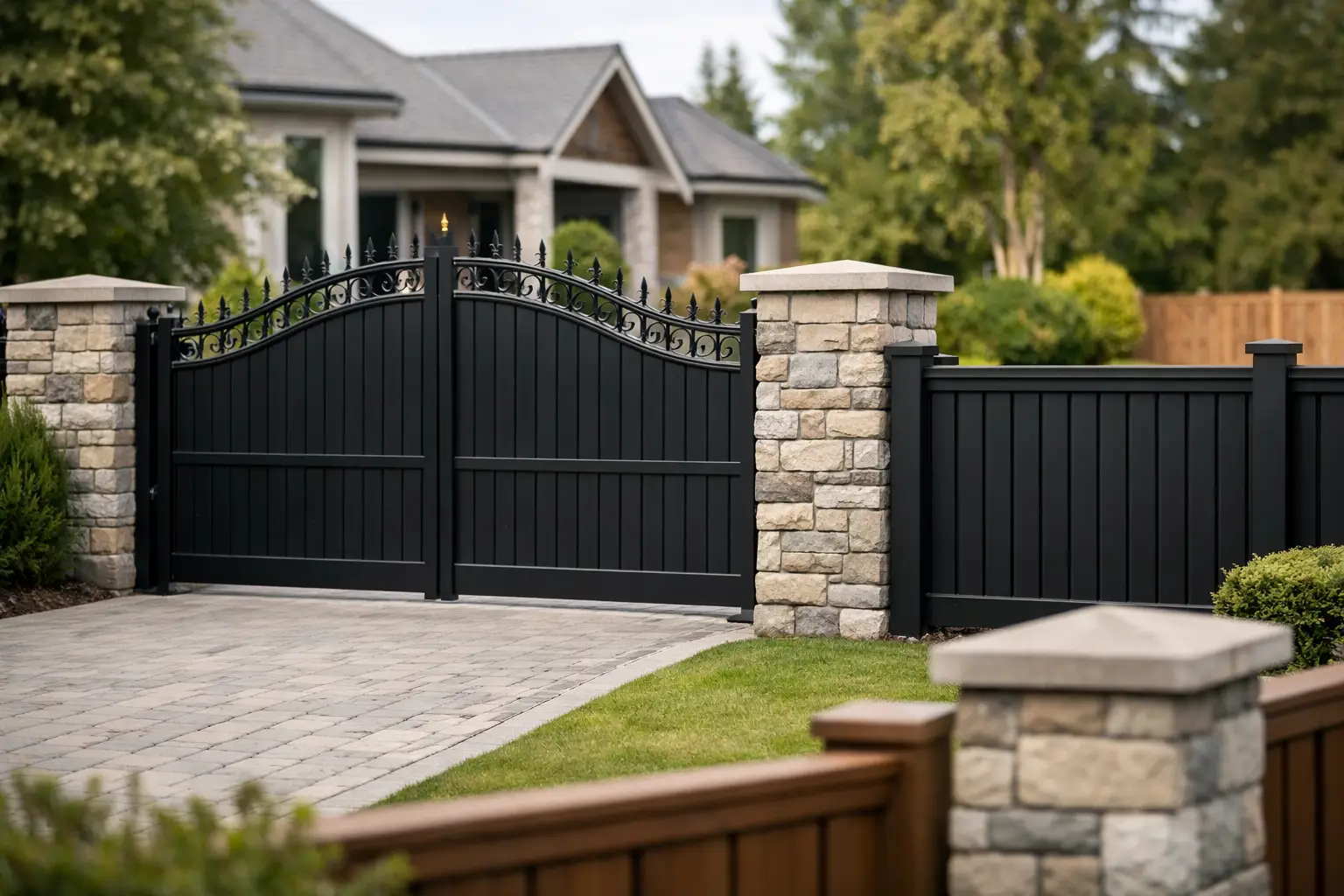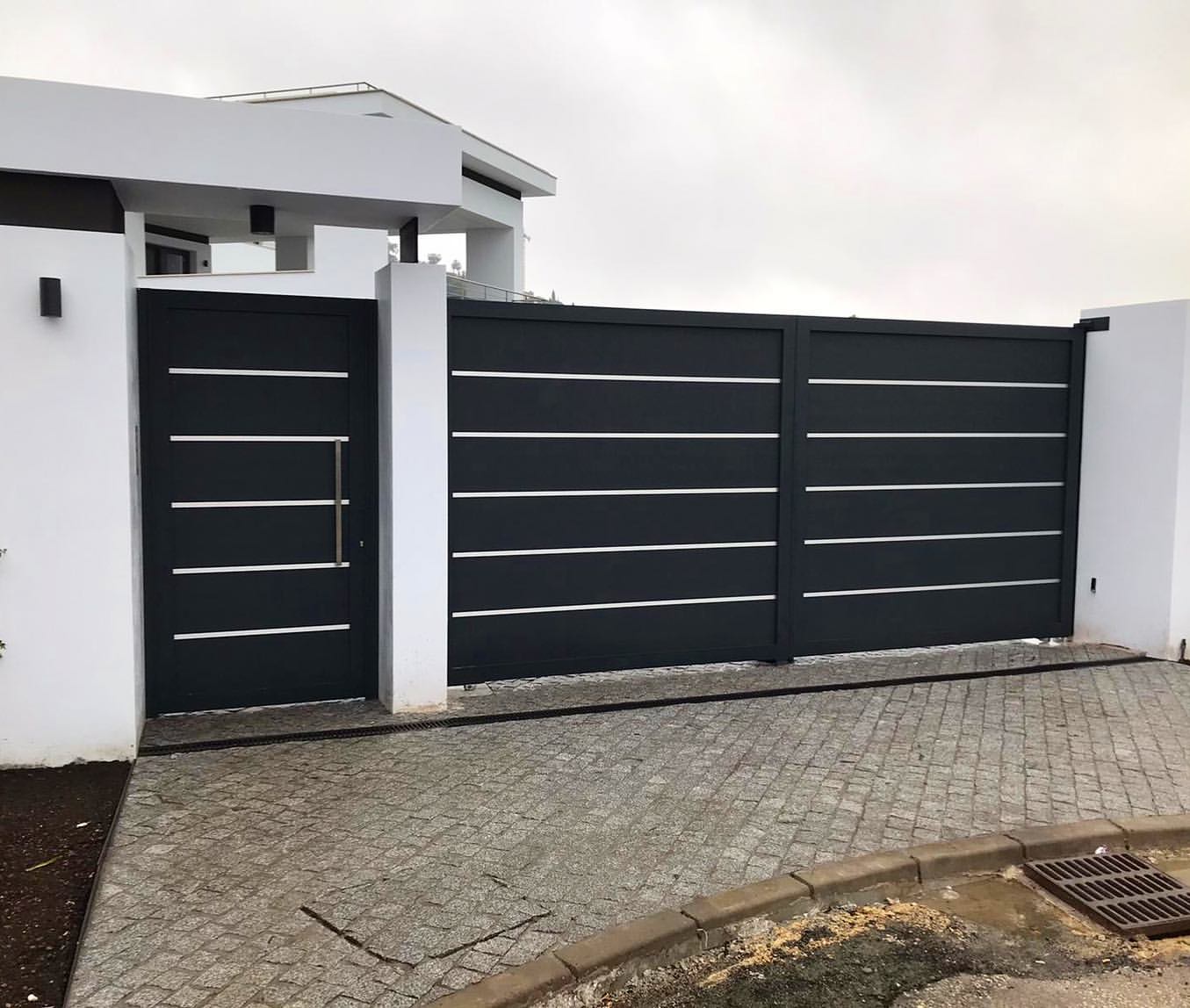

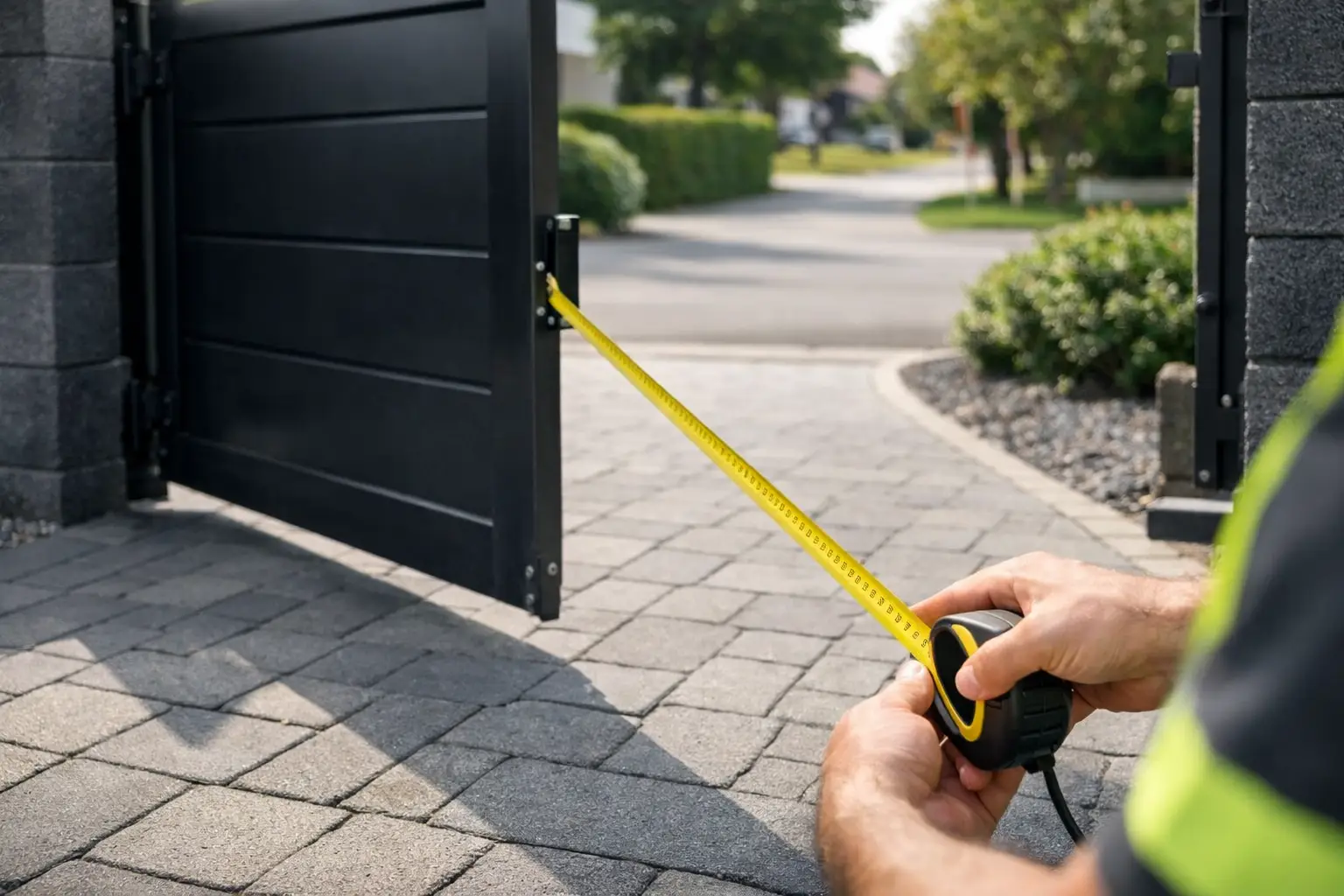
Made to Measure Gate Guide for UK Buyers

Made to Measure Gate Guide for UK Buyers

A gate can look impressive in a brochure and still be completely wrong for your property. The width may be off by a few millimetres, the opening style may clash with a slope, or the finish may work against the house rather than with it. That is why a made to measure gate guide matters. When you are investing in a new entrance, bespoke sizing and specification are not extras – they are what make the gate perform properly and look like it belongs.

Why a made to measure gate guide matters

Most gate problems start long before installation. They begin at specification stage, when buyers are forced to choose from standard sizes or generic designs that do not reflect the layout of the opening, the level of privacy required or the way the entrance is actually used.

A made-to-measure gate is built around the property, not the other way round. That means the dimensions are exact, the proportions are balanced and the operation suits the available space. On a narrow urban driveway, for example, a sliding or bi-folding format may be the smart choice. On a wider opening with good clearance, a pair of swing gates may create a more classic entrance. There is no single right answer. The right answer depends on access, gradients, vehicle movement and the overall design brief.

For many buyers, the appeal is not just fit. It is finish. A bespoke gate should strengthen kerb appeal, improve security and reduce maintenance over the long term. If you are replacing tired timber or dated steel, the difference is usually immediate. The entrance feels sharper, cleaner and more considered.

Getting the specification right from the start

Choosing a gate begins with measurements, but it should not end there. Width and height are only part of the picture. A well-specified gate also accounts for ground levels, hinge positions, posts, automation allowances and how much space the leaves or track need to operate safely.

This is where many off-the-shelf solutions fall short. A standard gate may be close to the right size, but close is not good enough when dealing with driveways, walls and pillars that are already fixed. Even a small compromise can affect the way the gate hangs, closes and aligns.

A consultation-led approach avoids that problem. Rather than asking which gate looks best in isolation, it asks a better question: what will work best on this exact opening, for this exact property, over the next 10 or 20 years?

Width, height and proportion

A gate should feel substantial, but not oversized. If the height is too low, security and privacy can suffer. If it is too high, the entrance may feel heavy or out of scale with the house. Proportion matters just as much as measurement.

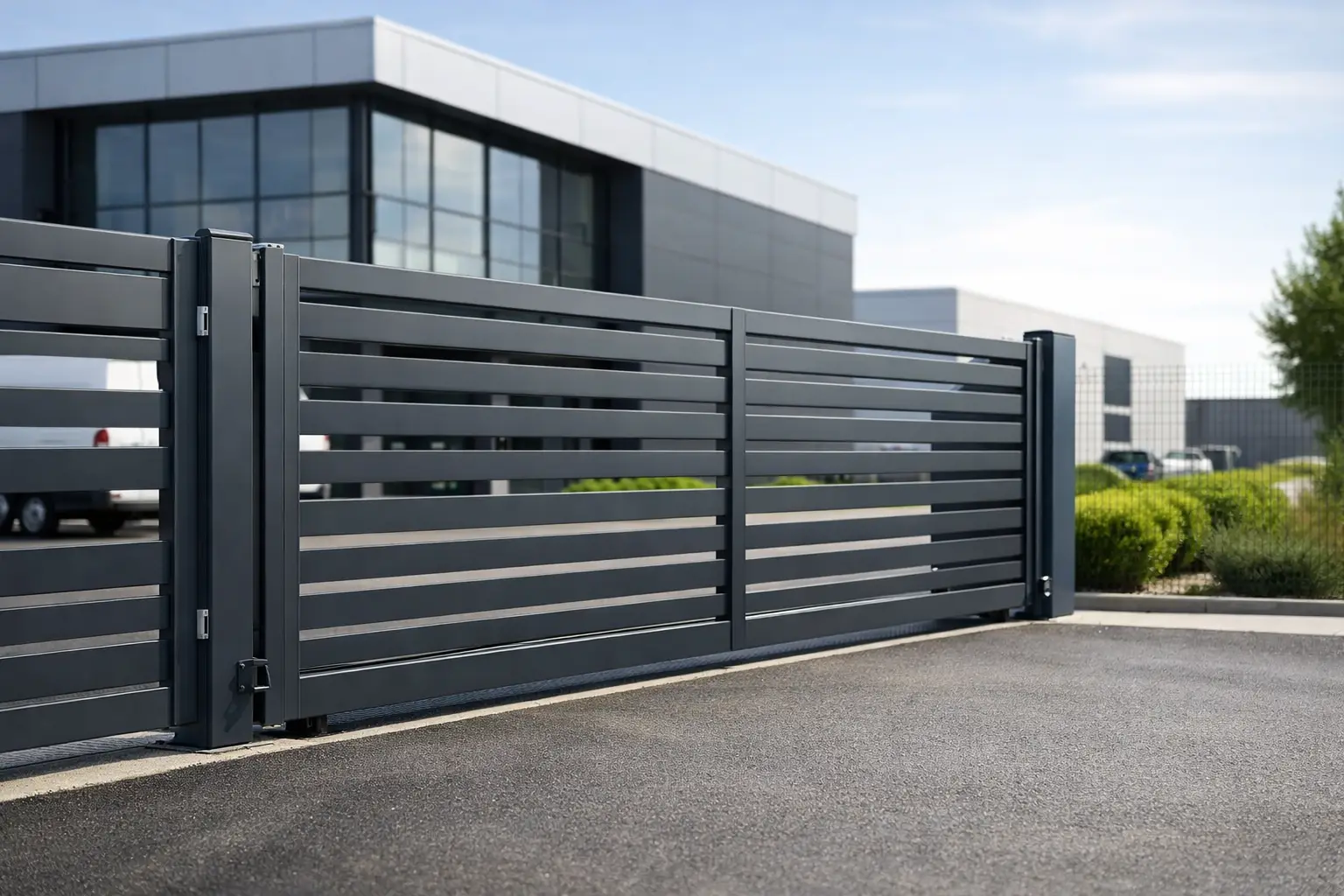
On residential projects, the best results usually come from balancing privacy with lightness. Slatted aluminium designs are a strong example. They can provide screening without creating a solid visual block, and they suit both contemporary and more traditional settings when the detailing is right.

Opening style and site conditions

Swing gates remain a popular choice because they are elegant and straightforward, but they need room to open. If your driveway rises sharply behind the gate line, inward opening leaves may not be practical. If space is tight near the pavement or entrance, outward opening may also be unsuitable.

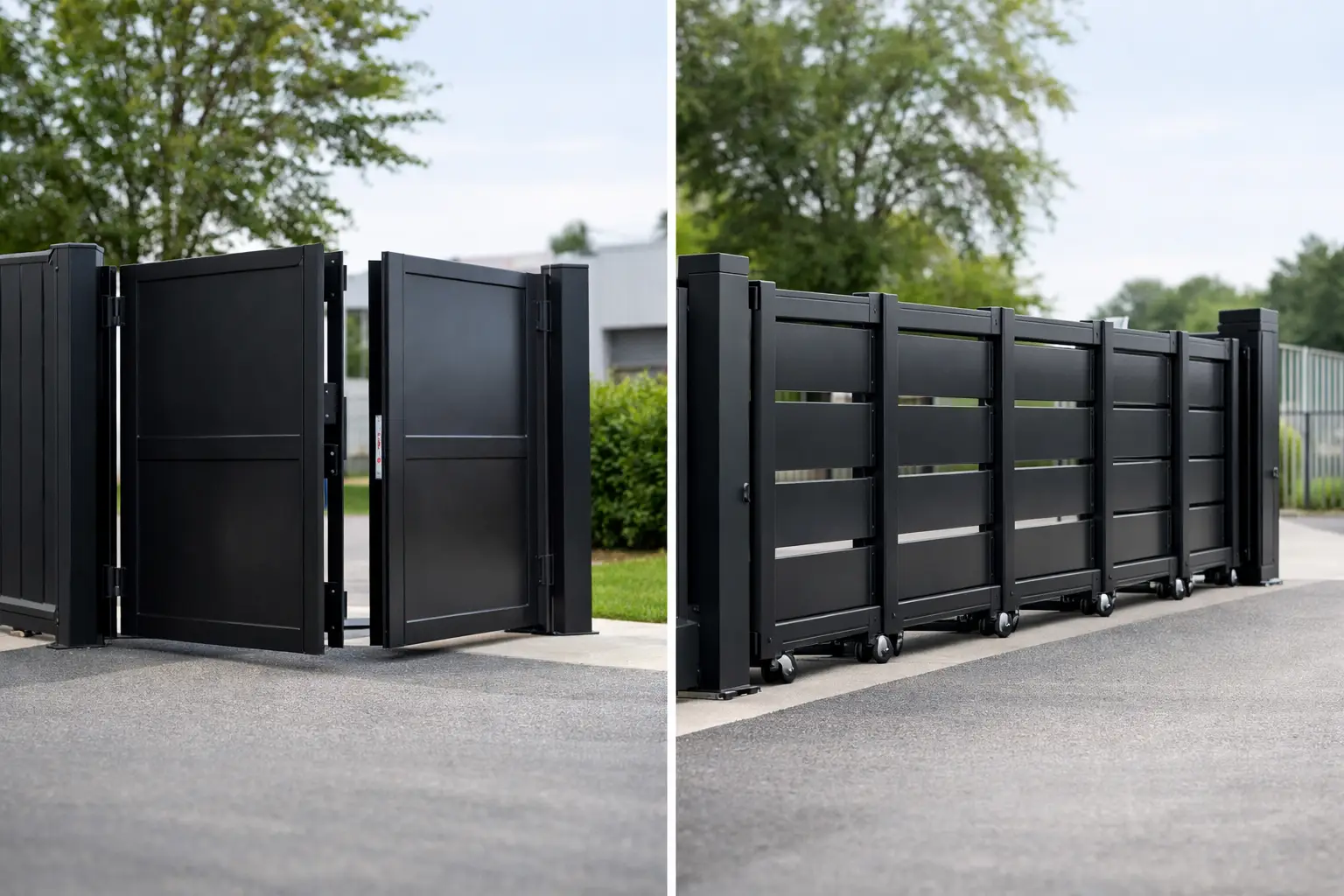
That is where sliding, telescopic or bi-folding systems come into their own. They can solve access constraints that would make a swing gate awkward or impossible. The trade-off is that they often require more technical planning, particularly around tracking, stacking space or automation. Better performance usually comes from matching the format to the site rather than forcing a preferred style to fit.

Choosing materials that justify the investment

Material choice shapes everything from maintenance to lifespan. Timber can look attractive at first, but it needs regular upkeep and can move over time with moisture and temperature changes. Steel is strong, but without the right treatment it can become vulnerable to corrosion.

Aluminium has become a leading choice for premium residential and commercial gates because it offers a strong balance of appearance, durability and low-maintenance ownership. It does not rust, it holds finish well and it suits modern fabrication methods that support clean lines and precise detailing.

Not all aluminium gates are built to the same standard, though. Construction quality matters. Fully welded fabrication provides a more solid, refined result than mechanically assembled systems that rely heavily on fixings. It is the difference between a gate that feels engineered as one complete product and one that feels pieced together.

For buyers focused on long-term value, this is a major part of the decision. A gate should not just look good on day one. It should retain its structure, finish and ease of use year after year, with minimal intervention.

A made to measure gate guide to design choices

Design is often where buyers narrow their thinking too quickly. They focus on whether they want a modern gate or a traditional one, when the more useful question is how they want the entrance to behave visually.

Do you want full privacy from the road, or filtered visibility? Should the gate feel bold and architectural, or understated and in keeping with existing boundary lines? Does it need to coordinate with fencing, pedestrian access and intercom systems, or is it a standalone replacement?

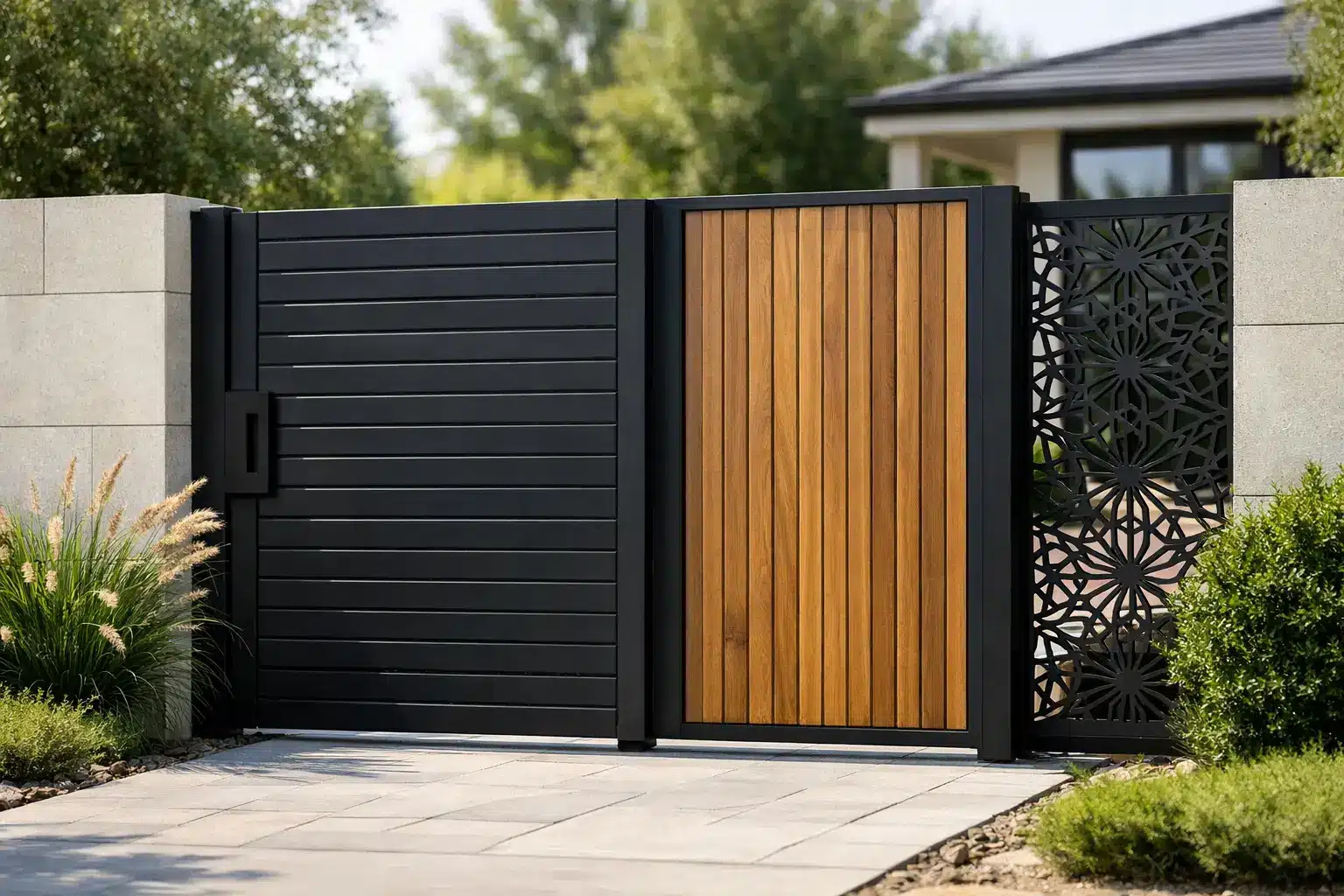
These decisions affect the finished result more than many people expect. A coordinated entrance usually feels more premium because everything has been considered together. The gate, infill pattern, side panels, fencing and access control should speak the same design language.

Privacy, security and appearance

There is always a balance to strike. A very open design can feel lighter and more welcoming, but it may offer less screening. A solid design can increase privacy, yet if handled poorly it may look too severe for the property.

This is where tailored fabrication has a clear advantage. The spacing of slats, the profile depth, the frame detail and the finish can all be adjusted to create the right effect. Premium design is rarely about adding more. It is about refining the details until the entrance feels resolved.

Finish and colour selection

Finish has a practical role as well as an aesthetic one. A quality powder-coated finish supports longevity and helps the gate resist weathering. In the UK climate, that matters.

Colour choice should work with the architecture, not compete with it. Anthracite grey and black remain popular because they deliver a crisp, contemporary look, but they are not the only strong options. Softer neutral shades can suit stone, brick and rendered properties beautifully. The best finish is usually the one that complements the house and boundary treatment as a whole.

Automation and access control

A premium entrance is not only about the gate leaf itself. It is also about how you use it every day. Manual operation may be perfectly suitable for some pedestrian gates or lower-traffic settings, but driveway entrances increasingly benefit from automation.

The convenience is obvious, especially in poor weather or on busy roads, but automation also adds control. It allows the entrance to feel more secure, more deliberate and easier to manage. For commercial sites, that can be essential. For private homes, it can simply make the property feel better considered.

Intercoms, keypads and other access solutions should be planned alongside the gate, not added as an afterthought. The cleaner the integration, the stronger the final result. A bespoke system should feel cohesive in operation as well as appearance.

What UK buyers should ask before ordering

Before committing to any gate, it is worth asking a few direct questions. Is the gate genuinely made to measure, or are you choosing from adjusted standard sizes? How is it constructed? What guarantee supports it? What finish is applied, and how is long-term durability addressed?

You should also ask how the supplier approaches specification. A serious specialist will want to understand the site, the property style, the required opening method and the way the entrance is used day to day. If the process feels rushed, the product may be too.

This is one area where expertise pays for itself. A gate is a visible, functional part of the property. It has to operate reliably, contribute to security and justify its place architecturally. Getting all three right requires more than a price list.

For buyers who want an entrance that looks bespoke because it actually is bespoke, that difference is significant. Companies such as Alu-Gate build their offer around that principle – precision fabrication, design-led specification and long-term performance rather than one-size-fits-all supply.

The best gate is rarely the cheapest or the fastest to order. It is the one that fits the opening perfectly, suits the property completely and continues to perform without becoming a maintenance burden. When you approach the project with that standard in mind, the decision becomes much clearer.

How to Secure a Gated Entrance Properly

How to Secure a Gated Entrance Properly

A gated entrance can look impressive from the road and still leave obvious weaknesses once you start assessing how it actually performs. The difference between a gate that simply marks a boundary and one that genuinely protects it comes down to specification. If you are working out how to secure a gated entrance, the answer is rarely one product. It is a combination of gate design, materials, access control, installation quality and the way the whole entrance is planned.

For most properties, security and appearance should not compete. A well-designed entrance should do both – present the property properly and make unauthorised access far more difficult. The best results come from treating the gate as part of a complete entrance system rather than a standalone feature.

How to secure a gated entrance from the ground up

The first decision is the gate itself. Security starts with structure, and this is where many entrances fall short. A lightweight gate with visible movement in the frame, weak fixings or poor alignment may look acceptable when new, but it gives up its strength quickly under daily use.

A made-to-measure aluminium gate offers a strong balance of security, low maintenance and long-term reliability. The benefit is not simply the material. It is how that material is fabricated. A fully welded construction creates far more rigidity than gates assembled from multiple bolted sections, and that matters when the gate is taking repeated use, wind loading and the pressure that comes with attempted forced entry.

Design also affects security more than many buyers expect. A gate with generous gaps may suit an open frontage, but it reduces privacy and visibility control. If your priority is a more secure perimeter, a design with reduced spacing or solid infill panels gives fewer sightlines into the property and makes it harder to assess what is behind the entrance. That can be particularly valuable on detached homes, side entrances and commercial sites where equipment or vehicles are kept within the boundary.

Height matters too, but only up to a point. A taller gate can improve deterrence, yet height alone does not make an entrance secure if the frame, posts and locking setup are under-specified. Security should feel integrated, not added on afterwards.

The frame, posts and hinges matter as much as the gate leaf

It is easy to focus on the gate leaf because that is the visible element, but the supporting structure does much of the real work. If the posts are not appropriate for the gate size and weight, or if the hinges and anchor points are poor, the entrance becomes vulnerable through movement, sagging or fixings working loose over time.

For residential driveways, this often shows up as gates that no longer close cleanly after a few seasons. For commercial use, the issue can become more serious because opening cycles are higher and wear appears faster. A secure entrance depends on precise fabrication and installation tolerances. The gate should close squarely, the hardware should operate consistently and the whole assembly should feel solid rather than flexible.

This is one of the clearest differences between a bespoke system and an off-the-shelf option. A gate built around the actual opening, gradient and access requirements will generally perform better than one adapted to fit later. When every element is specified together, you reduce weak points.

Access control is what turns a gate into a secure entrance

A locked gate is better than an unlocked one, but proper access control is what gives you control over who enters, when they enter and how the gate is operated. For many properties, this is the step that changes the entrance from basic boundary security into something much more effective.

Intercom systems are often the most practical starting point. They allow visitors to request access without compromising the security of the property, and they are particularly useful on longer driveways or sites where the front entrance is set back from the house or building. A quality intercom setup adds convenience, but more importantly, it reduces the habit of leaving gates open or relying on manual access arrangements that weaken security.

Keypads, fobs and app-based entry can also work well, depending on the property type. A private home may prioritise convenience for family access and deliveries, while a commercial premises may need controlled entry for multiple users across the day. There is no universal answer here. The right setup depends on traffic levels, user numbers and whether the entrance needs to stay secure outside working hours or overnight.

Automation adds another layer. An automated gate can improve security by reducing the time the entrance is left open and by ensuring controlled opening and closing each time it is used. However, automation must be properly matched to the gate type, usage and site conditions. A high-quality sliding gate may be the right choice where space behind the entrance is tight or where wind exposure makes large swing gates less practical. On wider driveways with sufficient clearance, swing gates can deliver a strong visual statement and secure closure. The point is not that one format is always superior. It depends on how the site works in daily life.

Layout can strengthen or weaken the whole entrance

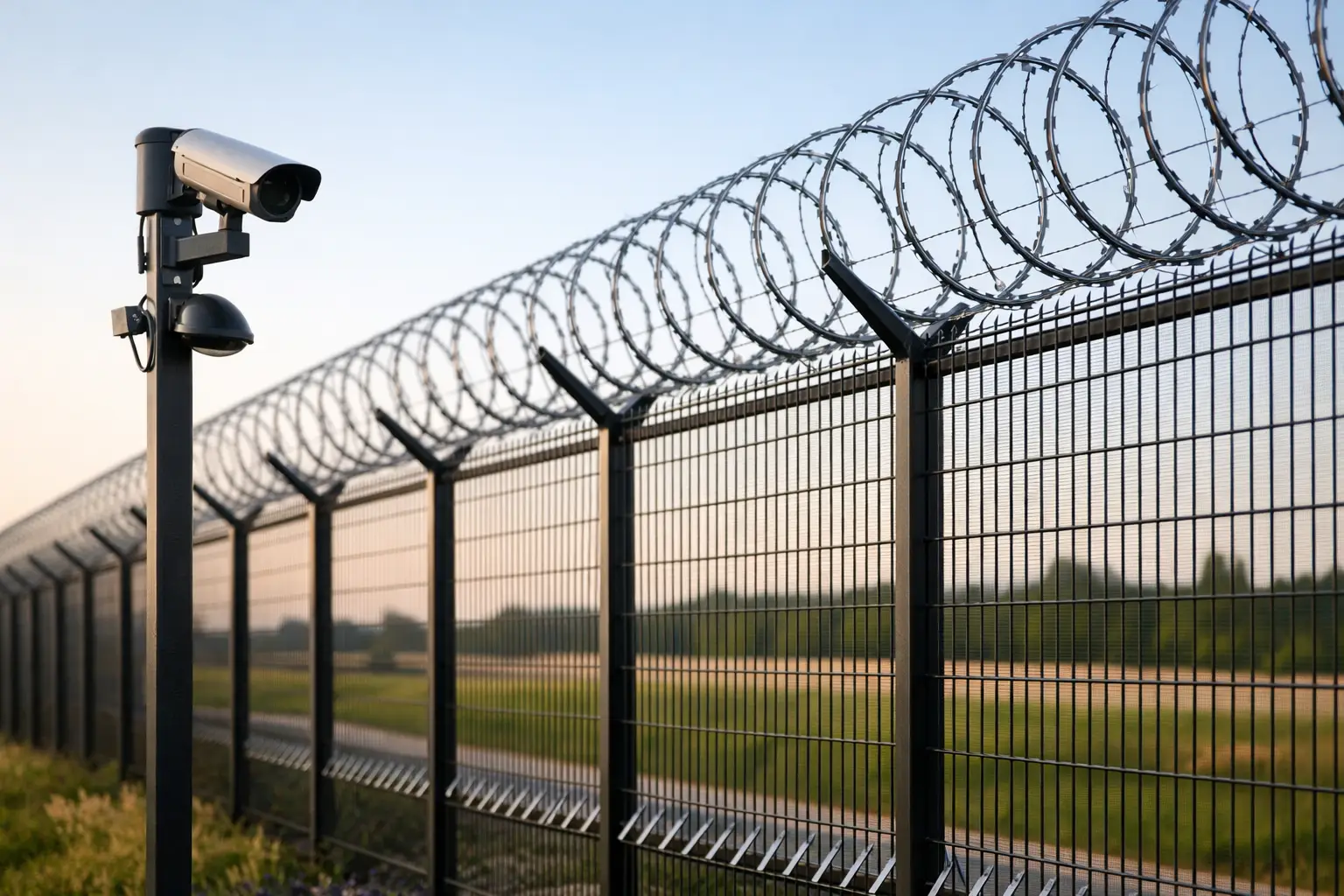
When people ask how to secure a gated entrance, they often focus on the gate and ignore the surrounding boundary. That creates avoidable weaknesses. A secure gate is only as effective as the perimeter around it.

If fencing, walls or side panels are low, damaged or easy to bypass, the gate becomes more symbolic than protective. The entrance should be considered as one continuous boundary line. Coordinated fencing and side infill panels can remove access gaps and create a cleaner, more complete frontage. This matters for both security and appearance. A disjointed entrance can look like it has been pieced together over time, while a well-integrated scheme feels intentional and harder to exploit.

The driveway layout also deserves attention. Long, open approaches can give vehicles room to accelerate towards a gate. Narrower entrance planning, well-positioned piers and sensible setbacks can help control movement and improve visibility for users entering and leaving the property. On commercial sites, traffic flow becomes even more important because poor layout can create pressure to prop gates open during busy periods, undermining the very security they are meant to provide.

Lighting should not be overlooked either. Good entrance lighting improves visibility for cameras, intercom use and vehicle access, while also increasing deterrence. It does not need to be overdone. Clean, well-placed lighting around the gate, posts and approach is usually more effective than harsh floodlighting that creates glare and shadow.

Choosing the right gate type for better security

Different gate formats solve different problems. Sliding gates are often chosen where security and space efficiency need to work together. Because they open laterally, they suit driveways with limited depth and can be a very strong option for high-use entrances. Telescopic and bi-folding gate systems can also help where opening speed or restricted space is a factor.

Swing gates remain a popular choice for premium residential properties because they offer a balanced, architectural look. When designed and installed correctly, they can be highly secure. Their suitability depends on available swing clearance, levels across the driveway and how the entrance is used day to day.

Pedestrian access should be thought through separately. If people regularly enter on foot, adding a dedicated pedestrian gate can reduce wear on the main entrance and improve control. It is a practical detail that often makes the whole setup safer and more convenient.

Security without constant maintenance

A secure entrance should stay secure without becoming a maintenance burden. That is one reason aluminium has become such a strong choice for quality gate systems. It offers excellent resistance to rust, does not require the regular treatment associated with timber and holds its finish well when manufactured to a high standard.

Low maintenance is not just about convenience. It protects performance. Gates that are easier to maintain are more likely to remain aligned, presentable and fully operational over the long term. For homeowners and commercial buyers alike, that supports better value over the life of the installation.

This is where premium fabrication matters. Precision welding, quality finishes and accurate specification reduce the chance of early deterioration or operational problems. A gate should not only look the part on installation day. It should continue to perform years later with minimal intervention. That long-term thinking sits behind the strongest entrance solutions, and it is why many buyers choose specialist manufacturers such as Alu-Gate when security, style and durability all matter.

The strongest gated entrances are never accidental. They are planned carefully, built properly and tailored to the property they protect. If you want an entrance that feels secure every day, start by asking not just how the gate looks, but how every part of the system works together.

Do Aluminium Gates Rust or Corrode?

Do Aluminium Gates Rust or Corrode?

A gate at the front of a property has a hard life. It deals with rain, frost, road salt, airborne pollution and daily use, all while being expected to look sharp and operate smoothly for years. That is why one of the first questions buyers ask is simple and sensible: do aluminium gates rust?

The short answer is no – aluminium gates do not rust in the way steel or iron does. Rust is a specific form of corrosion that affects iron-based metals. Aluminium contains no iron, so it cannot produce the reddish-brown rust that flakes, stains surfaces and gradually weakens traditional metal gates. For homeowners and commercial buyers looking for long-term performance with less upkeep, that is one of aluminium’s biggest advantages.

Do aluminium gates rust in UK conditions?

Not even in a British climate. Wet winters, coastal air and frequent temperature changes can be unforgiving, but aluminium remains one of the most reliable materials for external gates because it forms its own protective oxide layer. When aluminium is exposed to air, the surface reacts with oxygen and creates a thin barrier that helps protect the metal underneath.

That does not mean aluminium is indestructible. It means its response to the elements is very different from mild steel or wrought iron. Instead of developing rust that spreads and flakes, aluminium is far more resistant to ongoing corrosion. In practical terms, that usually means a cleaner appearance, less remedial work and a longer service life when the gate is properly designed and finished.

For most buyers, the real question is not whether aluminium will rust, but how well it will hold its appearance and structural integrity over time. That comes down to material grade, fabrication quality, coating system and installation environment.

Why aluminium does not rust

Rust happens when iron reacts with oxygen and moisture. Because aluminium is a different metal, it does not go through that same process. What it does form is aluminium oxide, which acts as a protective skin rather than a destructive one.

This matters for gate manufacture because external entrance products need a material that can tolerate repeated exposure to water without constant intervention. Timber can swell, crack or rot if neglected. Steel can be extremely strong, but if the protective coating is breached, corrosion can begin. Aluminium offers a strong balance of durability, lower maintenance and modern appearance, which is why it has become a leading choice for premium driveway and pedestrian gates.

That advantage is especially clear in made-to-measure systems where buyers want a bespoke design without taking on a heavy maintenance burden. A well-manufactured aluminium gate is built for long-term ownership, not for regular repainting cycles.

If aluminium does not rust, can it still corrode?

Yes, but the distinction matters. Aluminium can corrode under certain conditions, particularly if the surface finish is poor, if incompatible metals are used together, or if the gate is exposed to harsh coastal or industrial environments without the right specification.

In most residential settings, this is not a major concern when the gate has been manufactured and finished correctly. Powder coating adds another layer of protection and gives the gate its final colour and appearance. Precision welding and proper fabrication also play a part, because weak joints, trapped moisture and inconsistent finishing can all shorten the life of any external product.

This is where quality separates premium systems from cheaper alternatives. A low-cost aluminium gate may still avoid rust, but that does not automatically mean it will age well. Poor coating adhesion, thin sections and inferior assembly can lead to cosmetic deterioration, movement or avoidable wear. Buyers investing in a front entrance feature usually want more than a material that simply avoids rust – they want a gate that stays straight, secure and visually impressive.

What affects the lifespan of aluminium gates?

The environment matters, but build quality matters just as much. A gate fitted inland in a sheltered setting will generally have an easier life than one installed near the coast, where salt in the air places greater demands on any exterior finish.

Design also plays a role. Drainage, panel construction, hinge positioning and frame strength all affect how well the gate performs over time. Fully welded construction, for example, creates a stronger and more stable structure than mechanically assembled alternatives, particularly on larger driveway gates where rigidity is essential.

Surface finishing is another key factor. A premium powder-coated finish does more than improve appearance. It helps protect the aluminium from weathering, UV exposure and day-to-day wear. If that finish is applied to a properly prepared surface, it contributes significantly to long-term durability.

Maintenance habits should not be ignored either. Aluminium is low maintenance, not no maintenance. A simple clean with mild soapy water from time to time helps remove dirt, traffic film and salt deposits. In harsher locations, more frequent washing is sensible. This is still a very different ownership experience from sanding, priming and repainting a rust-prone metal gate.

Aluminium vs steel and timber

For buyers comparing materials, the appeal of aluminium usually comes down to three things: corrosion resistance, lower maintenance and contemporary design flexibility.

Steel gates can deliver strength and a traditional appearance, but they need careful protection against rust. Once paint or coating is damaged, corrosion can start, especially around joints, edges and fixing points. That often leads to an ongoing maintenance cycle.

Timber has natural character and warmth, but it needs regular treatment to preserve its condition. Exposure to moisture and sunlight can lead to fading, warping and surface breakdown. Some owners are happy to accept that as part of timber’s character. Others want a cleaner, more consistent finish with less effort.

Aluminium sits in a strong middle ground. It offers excellent durability without the rust risk of iron-based metals, and it can be fabricated into sleek, modern styles or more classic designs depending on the property. For design-conscious buyers who want kerb appeal without a demanding maintenance schedule, that balance is hard to ignore.

Do powder-coated aluminium gates need much maintenance?

Very little, provided they are manufactured to a high standard and cared for properly. Routine cleaning is usually enough to keep them looking their best. In many cases, that means washing the gate down periodically with warm water and a mild detergent, then rinsing it clean.

The frequency depends on the setting. A gate on a quiet inland property may only need occasional attention. A gate beside a busy road or in a coastal location should be cleaned more often to remove salt and airborne contaminants.

It is also worth checking moving parts, access control components and hinges as part of general maintenance. Even the best gate system is a working product, not just an architectural feature. Reliability comes from both good manufacture and sensible aftercare.

When should buyers be cautious?

If you are comparing quotes, be wary of products that rely on aluminium as a headline selling point without giving much detail about fabrication, finish or guarantee. Aluminium itself is a strong material choice, but it is not a shortcut to quality.

Ask how the gate is constructed, what finish is applied, whether the system is made to measure, and how it is suited to your location. If your property is exposed, sloping, wide-fronted or automation-ready, those details matter. The right gate should be specified for the site, not pulled from a generic catalogue.

That is particularly relevant for larger driveway gates, sliding systems and premium entrance designs where precision and structural integrity are essential. A bespoke gate should feel engineered for the property, not merely sized to fit the opening.

So, do aluminium gates rust – and are they worth it?

They do not rust, and that is a major reason they are such a strong long-term investment. Aluminium offers a practical advantage in British weather, but the real value goes beyond that. It gives buyers the chance to combine security, style and lower maintenance in one tailored entrance solution.

For homeowners improving kerb appeal, replacing ageing timber or steel, or specifying a smarter access point for a renovation or self-build, aluminium is often the material that makes the most sense. For commercial sites, it brings the same benefit – durability without the constant upkeep burden that can come with traditional metals.

At Alu-Gate, that is why premium aluminium remains central to a gate system designed to impress and built to last. The material itself is only part of the story. The finish, the welding, the design and the specification are what turn a gate into a lasting feature of the property.

If you want an entrance that looks refined in year one and still performs years later, aluminium is not just the safer answer to rust – it is usually the smarter answer to ownership.

Aluminium Gate Buying Guide for UK Homes

Aluminium Gate Buying Guide for UK Homes

A gate can sharpen the entire front of a property – or quietly let it down. If you are comparing materials, layouts and automation options, this aluminium gate buying guide is designed to help you choose with confidence and avoid expensive compromises later.

For most buyers, the decision is not simply about opening and closing a driveway. It is about security, kerb appeal, privacy, ease of use and how the entrance feels every day. A well-specified gate should suit the property, cope with the available space and continue to perform without becoming a maintenance burden.

Why aluminium has become the premium choice

Timber has warmth, and steel has weight, but both come with trade-offs that many property owners would rather avoid. Timber requires regular upkeep to stay looking smart and structurally sound. Steel is strong, yet it can be vulnerable to corrosion if the finish is damaged or the environment is harsh.

Aluminium offers a cleaner long-term proposition. It is lightweight, resistant to rust and well suited to made-to-measure fabrication. For residential driveways and commercial entrances alike, that usually means smoother operation, less strain on motors and hinges, and a finish that keeps its appearance with minimal attention. For buyers investing in a premium exterior upgrade, those practical advantages matter just as much as the look.

That said, not all aluminium gates are equal. Material quality, frame design, welding standards and finishing all affect how the gate feels, how long it lasts and how convincingly it elevates the property.

Aluminium gate buying guide: start with the opening

Before choosing a style, focus on the site itself. The opening width, ground levels, side clearance and approach all influence which gate type will work best. This is often where a good-looking idea becomes either a well-engineered solution or a frustrating mistake.

Swing gates are a popular choice for homes because they create a classic, balanced entrance and suit a wide range of designs. They do, however, need clear space for the leaves to open. If the driveway rises sharply, or cars are regularly parked close behind the gate line, swing may not be ideal.

Sliding gates are often the stronger answer where space is tight behind the entrance. They can deliver excellent security and a clean, contemporary appearance, but they require lateral run-back space and careful planning around track or cantilever arrangements.

Bi-folding and telescopic systems come into their own when openings are wide but space is restricted. They are more specialised and need precise specification, yet they can solve difficult access challenges without sacrificing style.

A pedestrian gate should not be treated as an afterthought. If regular foot access is needed, a coordinated side or garden gate can improve convenience, protect the main driveway system from unnecessary use and create a more cohesive boundary design.

Choosing the right design for the property

The most successful gates look as though they belong to the building. On a contemporary home, sleek horizontal lines, minimal detailing and a refined finish often feel right. On a more traditional property, a vertical board effect, softer proportions or understated decorative elements may sit more naturally.

Privacy is another key design decision. Open-bar styles can feel lighter and allow visibility outwards, which some buyers prefer for security and a less enclosed frontage. More solid infill designs offer greater screening and a stronger architectural statement, though they can appear heavier if the proportions are not carefully handled.

This is where bespoke manufacture has a clear advantage. Instead of forcing a standard design into an awkward opening, a made-to-measure gate can be scaled properly to the property, aligned with walls and fencing, and finished to complement windows, doors and other exterior details.

Construction quality matters more than brochures

A premium gate should look impressive in photographs, but the real measure is how it is built. Ask how the frame is constructed, whether the gate is fully welded and what grade of aluminium is being used. These points affect rigidity, durability and the overall quality of the finished product.

Fully welded construction usually gives a stronger, more refined result than mechanically joined alternatives. It helps maintain structural integrity, reduces movement over time and supports a cleaner appearance. Precision in fabrication also matters. Uneven sections, poor alignment or weak joints are often signs that the gate may not wear well.

Finish quality deserves equal attention. A gate is exposed to weather all year, so the coating needs to do more than look attractive on day one. Premium powder-coated finishes provide durability and colour consistency, but preparation standards and application quality make a significant difference.

Guarantees can be revealing. A serious long-term guarantee suggests confidence in both materials and workmanship, especially when backed by a specialist focused on bespoke aluminium systems rather than general garden products.

Aluminium gate buying guide: think beyond the gate leaf

Buyers often focus on the gate itself and overlook the wider system around it. Posts, hinges, latches, tracking, automation, intercoms and access control all contribute to daily performance. A beautiful gate with weak supporting hardware is not a premium solution.

If you are considering automation, think about how the gate will be used in practice. A family home may need fast, reliable access for multiple users, safe obstacle detection and a simple way to manage deliveries or visitors. A commercial property may require more frequent cycles, tighter access control and greater integration with existing security arrangements.

Intercoms, keypads, fobs and app-based access can all improve convenience, but only if they are matched properly to the site and the people using them. Overcomplicating the system can be as unhelpful as under-specifying it. The right setup is the one that feels effortless day to day while maintaining the level of security the property needs.

Power supply, cabling routes and groundworks should also be considered early. It is far easier to plan these at the specification stage than to retrofit around finished paving or landscaping.

How to balance aesthetics, security and maintenance

The best gate is rarely the one that maximises just one feature. A very open design may preserve sightlines and feel elegant, but it may offer less privacy than the client wants. A highly solid gate can improve screening, but it may require careful design to avoid looking too imposing.

Security is not only about how difficult the gate is to force. It also includes the quality of locking, the strength of posts, the reliability of automation and how well the entrance works as a complete perimeter solution. Coordinated fencing and matching pedestrian access can strengthen both appearance and security.

Maintenance is where aluminium continues to justify its premium position. Compared with timber, ownership is far less demanding. You are not signing up to frequent sanding, staining or repainting simply to keep the entrance presentable. For many buyers, that lower maintenance requirement is not a secondary benefit – it is one of the main reasons to choose aluminium in the first place.

Questions worth asking before you buy

A good supplier should be able to guide you clearly through specification, not simply quote a price and leave the details vague. Ask whether the gate is made to measure, how the construction is engineered, what finish options are available and how the system will be tailored to your opening.

It is also worth asking who the gate is really designed for. Some products are built for cost-first purchasing and broad appeal. Others are fabricated for buyers who want a more exact fit, stronger construction and a higher standard of finish. If you are making a visible investment in your property, that distinction matters.

Lead times, installation requirements and aftercare should be discussed openly. Premium products often involve more consultation and fabrication time, but that usually reflects a more considered result rather than a standard item pulled from stock.

For design-conscious homeowners and commercial buyers, this is where a specialist approach stands apart. Companies such as Alu-Gate focus on the details that shape long-term satisfaction – bespoke sizing, premium finishes, precision welding and entrance systems that are designed to impress and built to last.

Making the right choice for long-term value

Price always matters, but gate buying is a classic case of short-term savings versus long-term value. A cheaper gate may look acceptable initially, yet if it lacks structural quality, finish durability or proper design support, the cost difference can disappear quickly in maintenance, repairs or early replacement.

A well-made aluminium gate should add more than security. It should improve the frontage, complement the architecture and make daily access easier. It should feel substantial without being cumbersome, and refined without being fragile.

If you are choosing carefully, trust the option that solves the practical demands of the site while still raising the standard of the property. The right gate should not feel like a compromise. It should feel like part of the home from the moment it is installed.

Why Choose Fully Welded Aluminium Gates?

Why Choose Fully Welded Aluminium Gates?

A gate can look impressive on day one and still become a disappointment within a few winters. That usually comes down to how it was built. Fully welded aluminium gates stand apart because the strength is engineered into the frame itself, not reliant on fixings, brackets or sectional assembly that can work loose over time.

For homeowners investing in kerb appeal and security, and for commercial buyers who need reliability without constant upkeep, construction quality is not a detail. It is the difference between a gate that simply fills an opening and one that performs properly for years. If you are comparing options, understanding what fully welded construction actually means will help you make a far better decision.

What fully welded aluminium gates actually are

A fully welded gate is fabricated as a complete structure, with the frame and key joints welded together to create a rigid, unified build. Instead of being bolted or mechanically joined in sections, the gate is made as one engineered piece.

That matters because gates are not static products. They open, close, carry their own weight, face wind loading and deal with repeated use every day. On a driveway entrance or commercial access point, those demands soon expose weaker construction methods. A welded frame is designed to manage those stresses with greater consistency.

The result is a gate that feels more substantial, holds its alignment more effectively and presents a cleaner, more premium finish. For design-led projects, that visual difference is just as important as the structural one.

Why fully welded aluminium gates outperform sectional designs

The main advantage is rigidity. When a gate is assembled from separate sections, each fixing point has the potential to shift slightly over time. Even small movement can affect how the gate hangs, closes and wears. With fully welded aluminium gates, the core structure is fixed at fabrication stage, which helps preserve stability across long-term use.

There is also a finish advantage. A welded gate tends to have sharper lines and a more refined look because the design is not broken up by visible mechanical joints in the same way. For contemporary properties, premium driveways and coordinated fencing schemes, that cleaner appearance makes a real difference.

Maintenance is another factor. Aluminium is already valued because it does not rot like timber or suffer rust in the way steel can. Combine that with a fully welded structure and you reduce more of the common failure points that lead to adjustment, repair or replacement. That does not mean no maintenance at all – hinges, automation and access control components still need appropriate care – but it does mean the gate itself is built for dependable long-term ownership.

Strength without the weight penalty

One of aluminium’s biggest advantages is its strength-to-weight ratio. A well-designed aluminium gate can deliver the solidity buyers expect without the unnecessary mass that can place greater strain on posts, hinges and motors.

That lighter overall weight is especially useful when the gate is automated. Swing gates, sliding gates, bi-folding gates and telescopic systems all benefit from a structure that is strong but not excessively heavy. It can support smoother operation and reduce wear on moving parts when specified correctly.

Of course, lighter does not automatically mean better in every scenario. Very large openings, high-wind locations or intensive commercial use may demand specific reinforcement, different infill choices or a particular gate format. That is why proper specification matters just as much as material choice.

A better fit for modern design

Premium entrance design is rarely just about security. Buyers want an entrance that complements the architecture, improves the frontage and feels intentional rather than added as an afterthought. Fully welded aluminium gates suit that expectation because they support crisp detailing, made-to-measure proportions and a more polished overall finish.

Whether the brief is minimal and contemporary or more traditional in style, bespoke fabrication gives far greater control over spacing, layout, privacy levels and coordinated features. You are not limited to an off-the-shelf size or compromise design. The gate can be designed around the property instead of forcing the property to work around the gate.

This is particularly valuable where the gate needs to align with fencing, side gates, boundary treatments or integrated access systems. A tailored approach produces a stronger visual result and a more coherent entrance scheme.

Security is only as good as the structure behind it

Security conversations often focus on locks, motors and intercoms. Those elements matter, but they only perform properly when the gate itself is built to a high standard. A premium access control setup is less effective if the gate frame lacks long-term structural integrity.

Fully welded construction provides a stronger foundation for secure operation. A rigid, accurately fabricated gate supports better installation, more reliable movement and more consistent alignment at closing points. That is particularly important where automation or controlled access is involved, because precision affects day-to-day performance.

For residential properties, that means confidence in both appearance and protection. For commercial sites, where use can be heavier and operational reliability is critical, build quality becomes even more important.

Low maintenance does not mean low specification

There is a reason more buyers are moving away from timber for driveway and entrance gates. Timber can look excellent, but it usually demands regular attention to preserve its finish and condition. Exposure to rain, frost and sun gradually takes its toll. That upkeep becomes part of the ownership cost.

Aluminium offers a far easier alternative, particularly when paired with quality finishing and precise fabrication. Fully welded aluminium gates are built for outdoor performance and visual longevity, with none of the routine sanding, staining or repainting associated with timber.

That said, not all aluminium gates are equal. The quality of the alloy, the fabrication process, the coating system and the design detailing all influence how well the final product performs. If you want the maintenance benefits aluminium promises, the gate still needs to be made properly.

Where fully welded aluminium gates make the most sense

They are an excellent choice for driveway entrances, side access gates, pedestrian gates and coordinated frontages where appearance matters as much as performance. They are also well suited to properties where owners want automation, integrated access control and a premium finish that continues to look right over time.

For commercial applications, they make sense where durability, repeat use and a professional appearance are all priorities. Office developments, flat schemes, schools and private sites can all benefit from a made-to-measure aluminium system, particularly when the opening configuration needs to be tailored to traffic flow and access requirements.

The right format still depends on the site. Swing gates suit many domestic driveways, but they need space to open safely. Sliding gates are often better where depth is limited, though they need room to travel. Bi-folding and telescopic designs can solve more complex access constraints. The construction quality should remain high whatever the operating style.

What to look for before you buy

If you are comparing suppliers, ask how the gate is fabricated, not just what it looks like in photographs. Terms such as bespoke and premium are easy to use in marketing, but they should be backed by real manufacturing detail.

Look for made-to-measure production, fully welded frames, quality finishing and a clear understanding of how the gate will be used. A good supplier should ask about opening width, ground levels, privacy, automation, access control, wind exposure and the overall look you want to achieve. That consultative process is usually a sign that the product is being properly specified rather than simply sold.

Guarantees matter too. They show how much confidence a manufacturer has in its materials and workmanship. A long guarantee will not compensate for poor specification, but it does reflect the level of commitment behind the product.

For buyers who want a premium result, this is not an area where the cheapest route tends to offer the best value. A gate is a highly visible, functional part of the property. When it is designed well and built properly, it improves security, elevates the exterior and avoids the frustration of early problems.

Alu-Gate focuses on exactly that standard of outcome – bespoke entrance solutions that combine precision welding, tailored design and long-term reliability.

A well-made gate should do more than close an opening. It should enhance the property every time you arrive, operate with confidence and still look right years down the line. That is why fully welded construction is worth your attention from the very start.

Gate Intercom Systems for Homes Explained

Gate Intercom Systems for Homes Explained

A delivery arrives early. The school run is running late. Someone you were not expecting is at the gate. These are the moments when gate intercom systems for homes stop feeling like an added extra and start feeling essential.

For many homeowners, the gate itself gets most of the attention – style, finish, privacy, automation. Yet the intercom is what turns a boundary into a controlled entrance. It gives you visibility, verification and a practical way to manage access without leaving the house or handing over security to chance. When chosen well, it also complements the quality of the gate rather than feeling like an afterthought fixed to the wall.

Why gate intercom systems for homes matter

A gate creates a physical barrier. An intercom adds decision-making. That distinction matters.

Without an intercom, access often depends on keys, codes shared too widely, or walking to the entrance every time a visitor arrives. With an intercom, you can speak to callers, see who is there if video is included, and grant or deny access from a handset, monitor or mobile app depending on the system. That is not just more convenient. It is more controlled.

For design-conscious homeowners, there is another point worth making. A premium entrance should work as well as it looks. A made-to-measure aluminium gate with a poor-quality intercom or awkward access setup can undermine the whole experience. The best systems feel integrated from the start, both visually and functionally.

Choosing the right gate intercom system for your home

There is no single best option for every property. The right specification depends on how you use the entrance, who needs access and how much control you want day to day.

Audio only or video intercom

Audio intercoms still suit some properties, particularly where simplicity is the priority and the entrance is clearly visible from the house. They can be effective, reliable and more cost-conscious.

Video intercoms, however, have become the preferred choice for many modern homes. Being able to see who is calling removes uncertainty. That matters if couriers arrive frequently, if children may answer inside the house, or if the gate sits some distance from the front elevation. For larger driveways and screened entrances, video quickly becomes the more practical option.

Wired or wireless setup

Wired systems are typically the stronger long-term solution for new builds, major renovations and planned gate replacements. They offer stable performance and a cleaner, more permanent installation when the cabling is considered early.

Wireless systems can work well where retrofitting cable routes would be disruptive, but they are more dependent on signal strength, local conditions and power planning. In some homes they perform very well. In others, thick walls, long distances and poor Wi-Fi coverage can create frustration. This is one of those areas where convenience at installation stage needs to be weighed against reliability over time.

Keypad, fob, app or monitor access

Most homeowners now want more than one way to control entry. A keypad is useful for family access and trusted visitors. Fobs are convenient but can be misplaced. Internal monitors give a fixed control point inside the property. App-based control is increasingly popular because it allows you to answer the gate even when you are away.

The right answer often combines methods rather than relying on one. A family home with regular visitors, tradespeople and deliveries usually benefits from layered access rather than a single point of control.

What to look for in a premium residential system

A gate intercom should match the standard of the entrance it serves. If you are investing in a bespoke gate, look beyond the basic headline features.

Build quality matters first. External entrance equipment needs to cope with British weather, frequent use and temperature changes. A unit that looks smart on day one but deteriorates quickly will affect both appearance and performance.

Ease of use matters just as much. A system packed with functions is of little value if the interface is clumsy or the app is unreliable. The better systems are intuitive. They do the job clearly and consistently, whether you are answering from an indoor screen or opening the gate remotely.

Integration is another key point. The intercom should work properly with the gate automation, locking setup and access controls you intend to use. Compatibility problems are avoidable, but only if they are addressed at specification stage.

Then there is appearance. This is often underestimated. On a high-end property, the intercom panel is part of the entrance design. It should sit comfortably alongside the gate, posts, fencing and finishes, not look like a generic add-on.

The role of intercoms in security and daily convenience

Security is the obvious benefit, but convenience is what homeowners notice every day.

An intercom reduces unnecessary trips to the gate, especially on long driveways or during poor weather. It allows you to manage expected and unexpected visitors with more confidence. If the system includes camera functionality and mobile access, it can also give reassurance when you are away from home.

That said, convenience should not come at the cost of poor access discipline. For example, app control is useful, but it should be paired with sensible permissions and secure setup. The same applies to keypads. They are practical, but not if the code is shared endlessly and never changed.

The strongest setup balances quick entry for authorised users with clear control for everyone else.

Planning gate intercom systems for homes properly

The best results usually come from treating the gate, automation and intercom as one entrance system rather than separate purchases.

That affects everything from cable routes and power supply to post sizes, mounting positions and the user experience from inside the property. An intercom placed too low, too far from the vehicle, or in a poor line of sight can make even a premium system feel awkward. Equally, a beautifully fabricated gate deserves an access solution that feels equally considered.

This is why consultation matters. Entrance design is rarely just about opening and closing a gate. It is about how residents enter, how visitors call, how deliveries are handled and how the whole frontage looks when finished. A tailored approach avoids compromises that become irritating later.

For example, a busy family home may need app access, internal monitors and a keypad for regular visitors. A private rural property may prioritise video clarity, long-distance performance and strong perimeter control. A commercial entrance attached to a residential property may need yet another specification. It depends on the site and the way the property is used.

Common mistakes to avoid

One of the most common mistakes is choosing the intercom too late. By that point, the gate design may already be fixed, the power arrangements may be less than ideal and the most elegant installation options may have been lost.

Another is buying on features alone. More functions do not automatically mean a better system. Reliability, compatibility and ease of use are often more valuable than a long specification sheet.

There is also a tendency to under-specify for future use. If you are already investing in a new gate, it makes sense to think ahead. Will you want remote access later? Will family members need separate entry methods? Could deliveries be handled more efficiently with video verification? Planning for these now is usually easier than retrofitting later.

A design-led approach pays off

At the premium end of the market, homeowners are not just buying access control. They are investing in a better arrival experience.

That means the gate should look refined, operate smoothly and feel secure. The intercom should support that standard at every touchpoint, from the first call button press to the moment the gate opens. When all the elements are specified together, the result feels deliberate, not pieced together.

This is where a specialist approach makes a visible difference. A bespoke aluminium gate paired with a high-quality intercom system creates an entrance that performs well, presents well and stands up to daily use. For homeowners who value low maintenance, long-term reliability and a smarter frontage, that combination makes sense.

At Alu-Gate, that thinking sits at the heart of a well-planned entrance – designed to suit the property, built to last and specified with the right access control from the outset.

If you are considering a new entrance, think beyond the gate leaf and the finish. The real test is how the whole system works when someone arrives at your boundary and you decide what happens next.