Aluminium Fencing vs Composite for UK Homes

Aluminium Fencing vs Composite for UK Homes

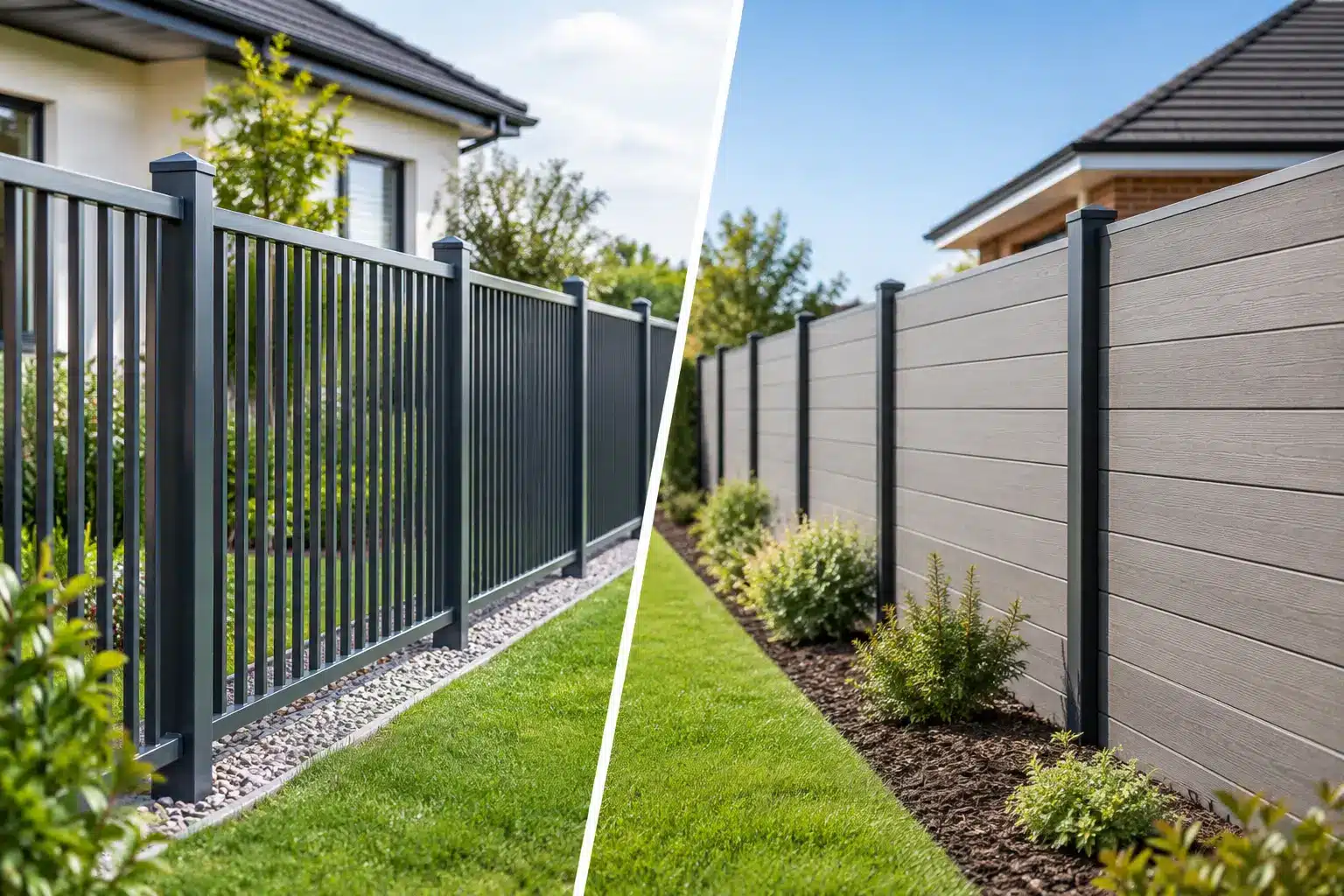
A boundary fence has to do more than fill a gap between posts. It frames the property, affects privacy, withstands British weather and should feel consistent with the quality of the home behind it. When weighing up aluminium fencing vs composite, the right answer depends on what you expect from the boundary over the next 10, 15 or 20 years – not simply what looks most appealing on day one.

Both materials offer a contemporary alternative to timber and both can be used to create a smart, low-maintenance perimeter. Yet they perform very differently in areas such as structural strength, fade resistance, bespoke design and long-term ownership. For a premium driveway, garden or commercial frontage, those differences matter.

Aluminium fencing vs composite: the key difference

Aluminium fencing is fabricated from metal sections, often powder coated in a chosen colour and configured as horizontal slats, vertical bars, privacy panels or architectural screens. It has a crisp, precise appearance and can be made to suit exact dimensions, gradients and boundary layouts.

Composite fencing boards are generally made from a blend of recycled wood fibres and plastic polymers. They are fitted into a frame system to create a solid or near-solid screen. Their appeal is clear: a timber-inspired finish without the recurring staining, painting and rot associated with natural wood.

Composite is often selected for a softer, more textured garden setting. Aluminium suits homeowners and commercial buyers looking for sharper lines, a more architectural finish and a boundary that can be coordinated closely with gates, railings and access control.

Appearance and design freedom

The visual result is usually the first decision point. Composite boards commonly come in a set range of colours, grain effects and board sizes. These can look effective around patios and gardens, particularly where a warm, timber-like style is the aim. However, the repeating boards, posts and caps can make the system feel more modular on a large or prominent frontage.

Aluminium offers greater scope to design around the property rather than work around standard board dimensions. Slat spacing can be adjusted to balance privacy with light and airflow. Panels can be specified in horizontal or vertical arrangements, with solid sections where screening is needed and more open sections where sightlines are useful.

This flexibility is especially valuable at the front of a property. A driveway gate and fence should read as one considered entrance system, not as separate products installed at different times. Aluminium makes it easier to match profiles, colours and detailing across pedestrian gates, driveway gates and fencing.

Powder coating also provides a broad choice of refined finishes. Anthracite grey remains popular, but black, white, bronze and bespoke RAL colours can be selected to complement window frames, brickwork or cladding. The finish is consistent across the installation, helping the boundary retain a premium, cohesive appearance.

Privacy without closing in the garden

A solid composite fence gives immediate screening, which is useful where neighbouring windows overlook a seating area. The trade-off is that it can reduce light and air movement, particularly in narrower gardens.

Aluminium slatted fencing gives more control. Narrow gaps can obscure direct views while still allowing daylight through, and wider spacing can create a lighter boundary where privacy is less critical. This is not always the best choice for a completely private boundary, but it is often the more elegant one where the aim is to screen without creating a wall.

Durability in UK weather

The British climate is demanding on external materials. Rain, frost, coastal air, urban pollution and strong sunlight all take their toll over time.

Quality aluminium does not rust. A properly prepared and powder-coated aluminium fence is highly resistant to corrosion, which makes it a strong choice for exposed sites and coastal locations. It will not absorb water, swell, split or rot. Its dimensional stability also helps it keep clean lines through changes in temperature and moisture.

Composite does not rot in the same way as timber, but it is not entirely maintenance-free or unaffected by weather. The exact performance varies considerably between products and their composition. Lower-quality boards may be more prone to fading, surface staining, scratching or movement as temperatures change. In shaded or damp areas, surface mould and algae can still develop and require cleaning.

A further consideration is impact resistance. Composite boards can mark or chip if struck by garden equipment, bicycles or careless deliveries. Individual boards may be replaceable, but achieving a perfect colour match after several years of weathering is not always straightforward. Aluminium is also capable of being dented by a severe impact, yet a premium, well-engineered system offers a more rigid and secure-feeling perimeter.

Maintenance: low effort is not no effort

Neither aluminium nor composite should demand the cycle of sanding, painting and treating associated with timber. That is a major advantage for busy homeowners and property managers.

Aluminium fencing normally needs little more than a wash with warm water and a mild detergent to remove dirt and atmospheric deposits. On coastal properties or beside busy roads, more frequent rinsing is sensible to keep the coating looking its best. Avoid abrasive pads and aggressive cleaners, as these can dull the surface.

Composite fencing also benefits from routine washing. Textured wood-grain finishes can hold dust, pollen and organic debris more readily than a smooth metal surface. Depending on the product, a soft brush may be needed for stubborn marks. It is a manageable task, but it should be allowed for when comparing the two materials.

For owners who want a crisp, uniform finish with minimal seasonal attention, aluminium usually has the edge. Its smooth powder-coated surface is simple to clean and does not rely on a wood-effect texture to create its appearance.

Strength, security and fixing details

A fence is only as dependable as its posts, foundations and fixings. Material choice matters, but specification matters just as much. A lightweight panel fitted to shallow posts will not provide the reassurance expected around a valuable home or commercial site.

Aluminium fencing can be designed as part of a substantial perimeter system, with engineered posts, secure fixings and purpose-made panels. It is particularly suited to integrating with entrance gates, intercoms and controlled access points. Where a boundary must direct visitors, protect a driveway or form part of a wider security strategy, this joined-up approach is valuable.

Composite fencing is primarily a privacy solution rather than a security barrier. Its boards and frame systems are well suited to a garden division, but they may be less appropriate where the fence is expected to deter climbing, resist force or match the presence of a premium metal gate.

For either material, discuss ground conditions, wind exposure, fence height and local planning requirements before finalising a design. Taller, more solid runs catch more wind, while slatted aluminium can reduce wind loading depending on the spacing. A good specification considers the site rather than applying the same panel everywhere.

Cost and long-term value

Composite fencing can have a lower initial price in some standard installations, especially when comparing basic modular panels with made-to-measure aluminium. That can make it an attractive choice for a large rear garden where privacy is the main priority and the visual connection to the entrance is less important.

However, purchase price is only one part of the decision. Aluminium can offer stronger long-term value when its lifespan, low upkeep and retained appearance are considered. It is also less likely to require the periodic refinishing associated with timber or the board-by-board replacement that can arise with damaged composite systems.

The premium becomes easier to justify on highly visible boundaries. The front elevation, driveway and main approach influence kerb appeal every day. A precisely fabricated aluminium fence that matches the gate can elevate the whole property and create a clear sense of quality before anyone reaches the door.

At Alu-Gate, bespoke aluminium systems are designed around the property, with precision-welded construction, premium finishes and a 20-year guarantee. This is a different proposition from choosing a generic panel from a shelf: the aim is a boundary solution that fits, performs and looks intentional for years to come.

Which fencing material is right for your project?

Choose composite fencing when you want a warm timber-style look, high privacy and a practical solution for a garden boundary. It can work well behind the property, around a patio or where a softer visual finish is more important than matching a metal entrance system.

Choose aluminium fencing when clean contemporary design, strength, colour consistency and long-term appearance lead the brief. It is particularly effective for front boundaries, driveways, commercial approaches and properties where gates, fencing and access control need to work together visually and practically.

There is also room for a considered combination. Composite may suit a secluded rear boundary, while aluminium can define the front elevation and entrance. What matters is specifying each area for its purpose rather than treating every side of the plot the same.

The best boundary should feel like part of the architecture, not an afterthought. Start with how you want the property to look, how private it needs to be and how the fence must perform over time – then choose the material that meets that standard with confidence.
7 Commercial Entrance Gate Examples for UK Sites

7 Commercial Entrance Gate Examples for UK Sites

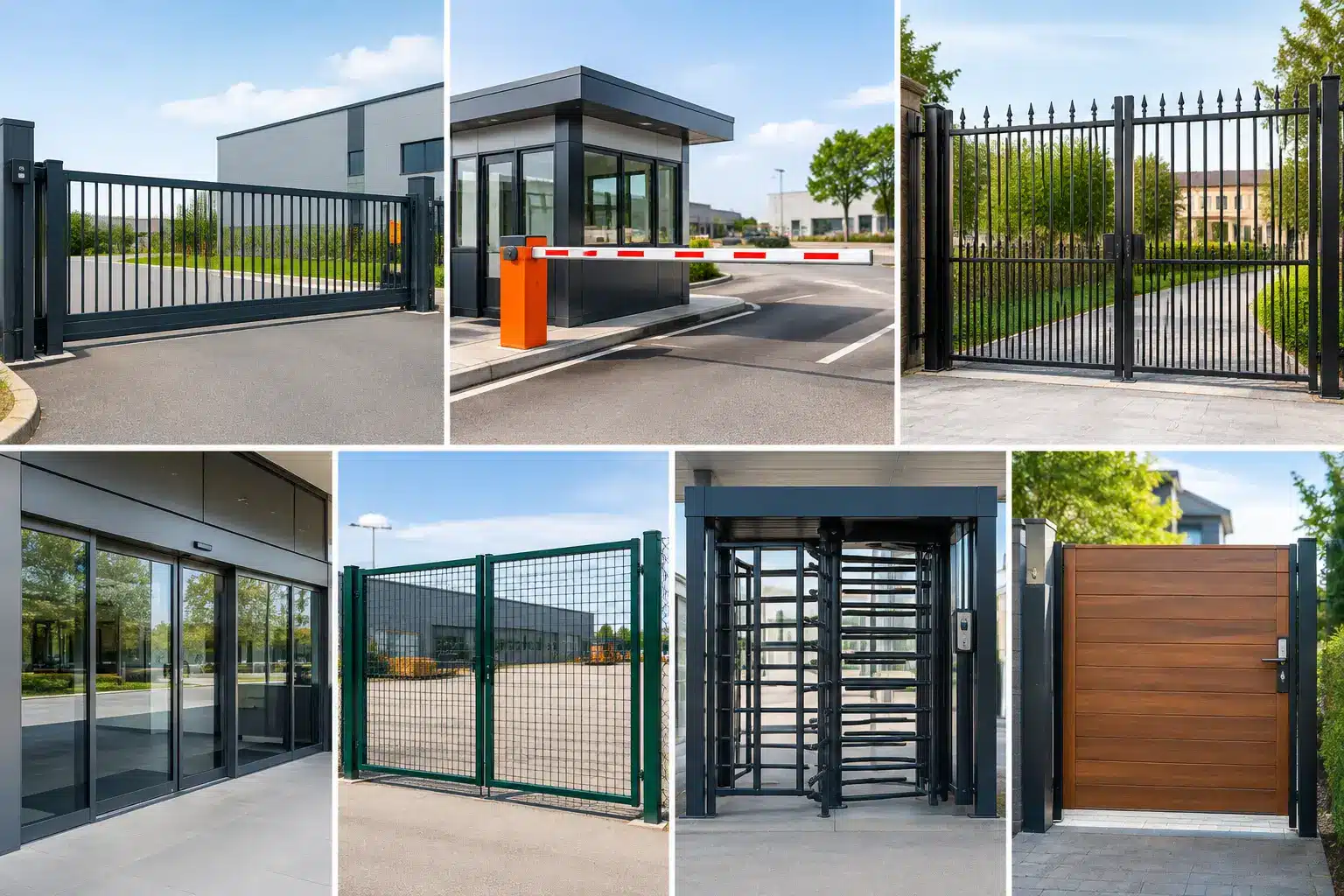
A commercial entrance does more than mark a boundary. It controls who enters, protects people and assets, and sets expectations before a visitor reaches reception. The right commercial entrance gate examples show how security, traffic flow and architectural character can work together rather than compete.

For business parks, schools, distribution yards, flat developments and private estates, a gate should be specified around the site’s real conditions. Vehicle volume, available opening space, pedestrian movements, visibility requirements and access-control needs all affect the best choice. A made-to-measure aluminium system gives you the freedom to address each of them without settling for an off-the-shelf appearance.

1. Sliding gate for a busy business park

A cantilever sliding gate is often the strongest choice for a business park or managed commercial premises with regular vehicle traffic. The gate travels sideways along the fence line, leaving the driveway clear and avoiding the arc required by a swing gate.

This format suits entrances where vehicles arrive throughout the day, including staff, visitors, service engineers and deliveries. It can be paired with an intercom, keypad, fob access or number-plate recognition, allowing the entrance to operate efficiently without leaving the site exposed.

Aluminium is particularly well suited to larger sliding gates because it delivers substantial visual presence without unnecessary weight. A fully welded frame and precision fabrication help the gate retain its alignment through repeated use, while a premium powder-coated finish keeps maintenance demands low. Horizontal aluminium infill creates a clean, contemporary frontage; slatted designs can also provide privacy while allowing some airflow.

The trade-off is the need for sufficient run-back space beside the opening. Where that space is unavailable, another operating style may be more practical.

2. Automated swing gates for professional premises

For offices, clinics, smaller commercial yards and prestige developments, automated swing gates create a composed, welcoming entrance. A pair of equal leaves can frame a broad driveway beautifully, while an asymmetrical configuration can suit tighter access points or a separate pedestrian route.

Swing gates work best where the driveway is level and there is room inside the boundary for the leaves to open safely. They offer a strong sense of arrival, particularly when matched with aluminium fencing, pedestrian gates and coordinated entrance panels.

A solid-panel design provides more privacy for staff parking or service areas. Open slats, decorative cut-outs or a combination of solid and spaced sections can make the gate feel lighter and improve sightlines. The best design depends on whether the priority is discretion, visibility from the road or a more architectural statement.

For sites with frequent traffic, automation should be specified carefully. Safety edges, photocells and appropriate controls are essential, while a reliable manual-release arrangement is worth considering for power interruptions or maintenance access.

3. Telescopic gates where frontage space is limited

Some commercial sites have a wide entrance but very little room alongside it. A telescopic gate provides an intelligent answer. Instead of one long gate leaf travelling the full width of the opening, two or more leaves slide and stack behind one another.

This makes telescopic systems particularly effective for urban developments, compact depots and sites with buildings or parking bays close to the entrance. They can secure a generous access width without demanding an equally generous return area.

A telescopic gate needs accurate engineering and installation because multiple leaves must move in sequence and close precisely. This is not a place to compromise on fabrication quality. Bespoke aluminium construction allows the frame, infill pattern and finish to be designed around the exact opening, with a consistent visual line once closed.

4. Bi-folding gates for rapid access

Where opening speed matters, bi-folding gates are among the most practical commercial entrance gate examples. Their leaves fold back as they open, reducing the operating footprint and allowing vehicles through quickly. This can be valuable at high-turnover sites such as logistics facilities, vehicle compounds, emergency-service access points and service yards.

The principal benefit is speed, but the visual result can still be refined. Aluminium bi-folding gates can be fabricated with horizontal slats, vertical bars or more enclosed infill to reflect the building’s exterior. A powder-coated colour chosen to complement signage, windows or perimeter fencing brings the full frontage together.

Bi-folding gates involve more moving parts than a conventional sliding gate, so component quality and planned servicing matter. They are an excellent solution when speed and restricted space are genuine priorities, not simply because they look technically impressive.

5. Pedestrian entrance gates with controlled access

A secure vehicle gate is only part of the solution. Staff, residents, contractors and visitors need a clear pedestrian route that does not encourage people to follow vehicles through the main entrance. A coordinated aluminium pedestrian gate creates that separation while maintaining a polished appearance.

At a commercial property, this might be a lockable side gate beside a sliding driveway gate, or a dedicated entrance integrated into fencing and brickwork. An Akuvox intercom can provide video verification and remote release, giving reception staff or property managers greater control over who enters.

The design should make the intended route obvious. Good visibility, sensible handle placement, appropriate lighting and a durable threshold all improve daily use. If the site needs step-free access, gate width and ground conditions must also be considered from the outset.

6. Privacy-led gates for service yards and storage areas

Not every commercial entrance needs to be open to public view. Storage yards, waste-management areas, maintenance compounds and trade premises often benefit from a more enclosed gate design that limits visibility from the street.

Solid aluminium panels or closely spaced slats can screen equipment, vehicles and stock without relying on timber that may warp, fade or require regular treatment. The result is a clean boundary that looks considered from the road and remains dependable through British weather.

Privacy does not have to mean an imposing blank wall. A stepped slat pattern, narrow reveal lines or a contrasting frame colour can add depth without revealing what is behind the gate. Where surveillance is a priority, the level of screening should be balanced against the need for cameras and staff to maintain clear views around the entrance.

7. Estate and multi-occupancy entrances

For flat schemes, private estates and mixed-use developments, the entrance gate has a dual role: it must provide dependable access control while contributing to the value and character of the whole development. This is where a coordinated approach delivers the strongest result.

A sliding or swing gate can be designed alongside matching pedestrian gates, aluminium fencing, letterbox panels and intercom posts. Repeating the same slat width, frame detail and powder-coated finish across the frontage makes a large site feel intentional rather than assembled from separate products.

Because different users have different needs, access control should be planned early. Residents may use fobs, keypads or app-based access; visitors may call through an intercom; service providers may need timed or managed entry. The gate design and control system should support these routines without making day-to-day access difficult.

Choosing the right entrance format

The most successful commercial gate starts with the opening, not a catalogue image. Measure the driveway width, approach angle, ground levels and room available behind or beside the gate. Then consider how many vehicles use the entrance, whether lorries need to turn, who needs pedestrian access and how the site is managed outside normal hours.

Material and construction deserve equal attention. Premium aluminium offers corrosion resistance, low maintenance and a refined finish, but the quality of the frame, welds, hinges, tracks and automation will determine how the system performs over time. A fully welded, made-to-measure gate is built for the opening it will serve, rather than adapted to fit at the last moment.

At Alu-Gate, each commercial entrance can be specified around the property, operational demands and desired visual impact, with a 20-year guarantee providing confidence in the investment. The most effective choice is rarely the biggest or most complex gate. It is the one that makes access feel controlled, secure and effortless every day.

Best Gates for Rural Properties and Driveways

Best Gates for Rural Properties and Driveways

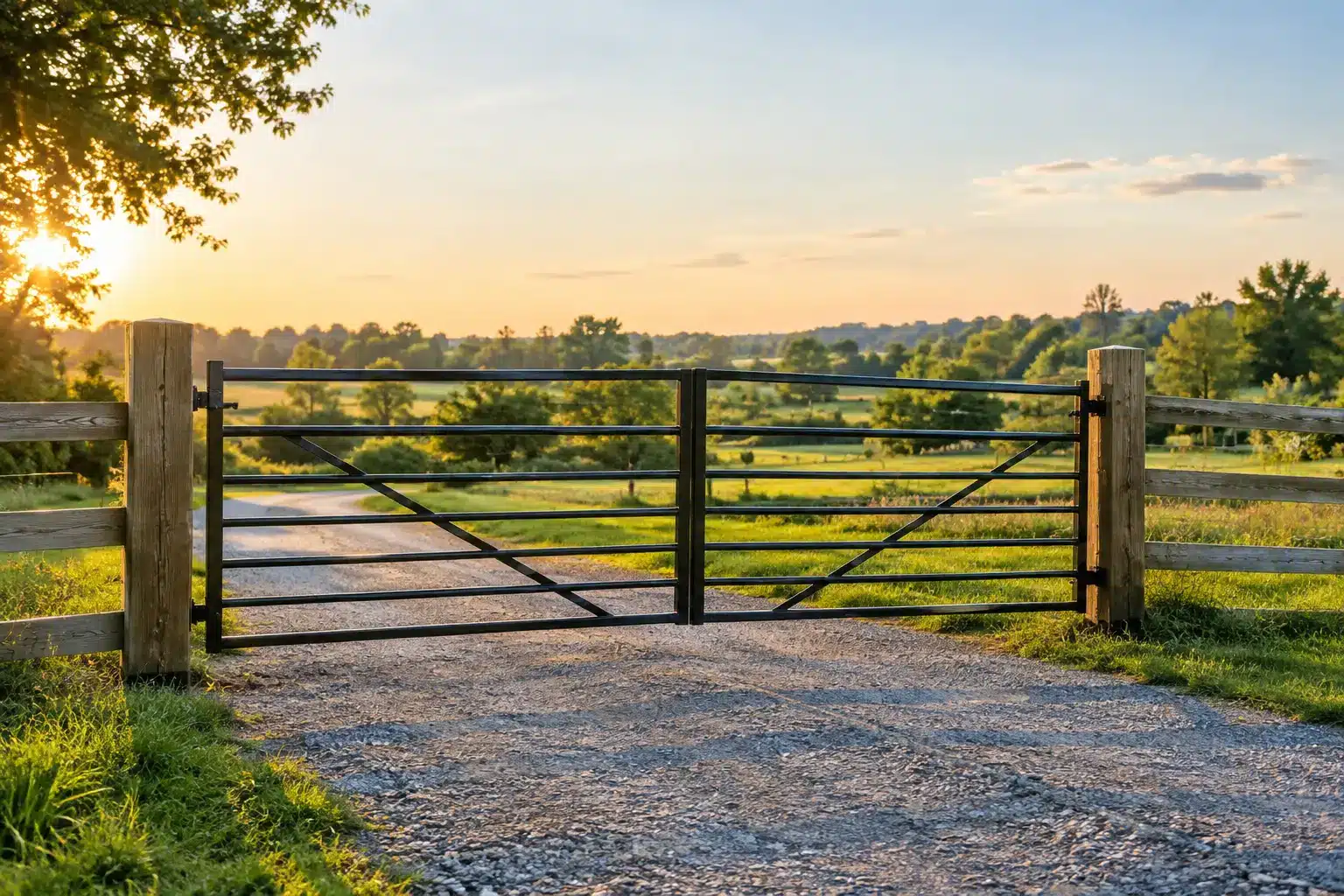
A rural entrance has to work harder than a town driveway. It may face wind, rain, mud, uneven ground, long approach roads and wider vehicles, while still setting the tone for the property beyond it. The best gates for rural properties balance practical access, dependable security and a design that belongs in its setting – without creating another maintenance job.

For many country homes, farms and private estates, a made-to-measure aluminium gate system offers that balance. It delivers the strength and clean finish expected at a premium entrance, while avoiding the regular painting, swelling and eventual decay associated with timber.

Start with how the entrance is used

The right gate is not defined by appearance alone. Before choosing a style, consider who uses the entrance, how often it opens and the vehicles that need to pass through. A family home with daily car movements has different requirements from a working smallholding, an estate entrance or a property accessed by delivery lorries and contractors.

Measure the clear opening, rather than relying on an approximate driveway width. Account for gate posts, hinges, the turning circle from the road and room for vehicles to wait safely while the gate opens. On rural lanes, where visibility can be limited, this detail matters. A gate positioned well back from the carriageway gives visitors space to pull in without obstructing traffic.

Ground conditions deserve equal attention. Sloping drives, loose surfaces and drainage channels can influence the most suitable operating system. A carefully specified gate should suit the site as it is, not demand compromises from it.

Best gates for rural properties: choose the format first

Swing gates for traditional driveways

Swing gates remain a natural choice for many rural homes. Their familiar movement suits country entrances, period properties and long driveways, and they can be designed in anything from an open, estate-inspired layout to a more private contemporary profile.

A pair of aluminium swing gates creates a strong sense of arrival and can be tailored to wide openings. They are particularly effective where there is level ground behind the gates and enough space for the leaves to open without blocking vehicles, paths or planting.

The trade-off is clearance. Inward-opening gates need room on the driveway, while outward-opening gates may not be appropriate where they could move towards a public road or footway. Strong posts, correctly engineered hinges and professional automation specification are essential on exposed sites, especially where wind loading is a concern.

Sliding gates for restricted or sloping sites

Where a driveway rises immediately behind the entrance, or there is insufficient room for swinging leaves, a sliding gate is often the more practical answer. It travels sideways along the boundary, keeping the approach clear and giving a crisp, modern finish to a rural property.

Sliding systems can work particularly well for wider openings and entrances used frequently. They are also a considered choice where an automated gate needs to open quickly and consistently during poor weather. However, the gate requires adequate run-back space along the fence line, and the track or cantilever arrangement must be designed around the ground, drainage and surrounding landscape.

A sliding gate should never feel like an industrial afterthought. With bespoke aluminium fabrication, the profile, colour and infill can be selected to complement stone walls, timber cladding, brickwork or a more contemporary rural build.

Pedestrian gates that complete the entrance

A separate pedestrian gate is easy to overlook, but it can prevent unnecessary operation of the main driveway gates and give visitors a clear, secure route to the property. It is useful for dog walkers, postal deliveries, gardeners and guests arriving on foot.

Matching the pedestrian gate to the driveway gates and fencing creates a coordinated boundary rather than a collection of unrelated elements. For properties with frequent callers, an integrated intercom and controlled release system adds welcome convenience without weakening security.

Material matters in the countryside

Timber has undeniable character, and it can suit certain heritage settings. Yet exposed rural locations are demanding. Rain, frost, UV exposure and changing temperatures can lead to warping, cracking, peeling finishes and a regular cycle of sanding and repainting. Steel can provide strength but may require vigilant protection against corrosion, particularly where the coating is damaged.

Premium aluminium is a compelling long-term alternative. It does not rot or rust, is comparatively light for its strength and can be finished in a wide range of durable powder-coated colours. That lower weight also places less strain on moving components than many heavier gate materials, which is valuable for automated systems.

Construction quality is what separates a gate that merely looks good on installation day from one built for years of service. Fully welded aluminium frames offer a clean, precise appearance and avoid the movement that can develop in poorly assembled systems. At Alu-Gate, bespoke gates are fabricated to the individual opening and backed by a 20-year guarantee, giving owners confidence in both the finish and the structure behind it.

Match privacy and security to the property

Rural properties do not all need the same degree of privacy. An isolated home may benefit from a more enclosed gate design that limits views from the lane. A house with open countryside beyond it may prefer spaced vertical or horizontal infills that retain sightlines and allow the entrance to feel connected to its surroundings.

Security is not simply about selecting the tallest, most solid gate. A well-designed entrance considers the entire boundary, the strength of posts and fixings, safe locking, lighting and how people gain access. A low, open-style gate with a reliable automated lock and video intercom may be more suitable than an imposing solid gate that feels out of place.

For commercial yards, private estates or properties storing valuable equipment, controlled access becomes more significant. Automated opening, keypad entry, fob control and intercom verification can be specified around the level of oversight required. The aim is controlled access that remains straightforward for residents, staff and trusted visitors.

Design for the landscape, not against it

The best rural gates have presence without looking imported from an urban development. Proportion is central. A very tall gate can overwhelm a modest cottage, while a narrow or lightweight-looking design may be lost at the entrance to a substantial house or estate.

Consider the materials already visible from the road. Black, anthracite and deep green aluminium finishes often sit comfortably beside hedging, stone and traditional brick, while warmer neutral tones can soften a contemporary elevation. The design does not need to imitate timber to feel appropriate in the countryside. Clean aluminium lines can provide a thoughtful contrast, particularly when paired with natural boundary materials.

Coordinated fencing and side panels are worth considering where the entrance includes uneven returns, existing walls or changes in level. They close off awkward gaps, improve security and give the whole frontage a deliberate, finished appearance.

Do not treat automation as an add-on

An automated rural gate should be specified from the start, not attached to a gate selected solely for its looks. The weight, width, opening method, wind exposure and expected daily use all affect the motor and safety equipment required.

Power supply is another practical question. A long drive may require trenching and cable installation, while solar-powered options can be suitable in the right location. Solar is not a universal answer: dense tree cover, persistent shade and frequent operation can limit performance. A proper site assessment will establish what is realistic.

Safety features are fundamental. Photocells, obstacle detection, safe force settings and a manual release for power cuts should all form part of the conversation. A well-specified system feels effortless in daily use because the engineering has been considered before installation.

A better way to choose your rural gate

Avoid choosing from a photograph alone. A rural gate should be designed around the opening, ground conditions, architecture and the way the property operates every day. Ask to see how the frame is constructed, how the finish is protected, what is included in the specification and how automation will be accommodated.

The most successful entrances do more than mark a boundary. They make arrivals easier, improve confidence in the security of the property and give the approach a considered sense of quality. Choose a gate system that earns its place in the landscape – designed to impress, and built to last.

Smart Gates: Security That Works Around You

Smart Gates: Security That Works Around You

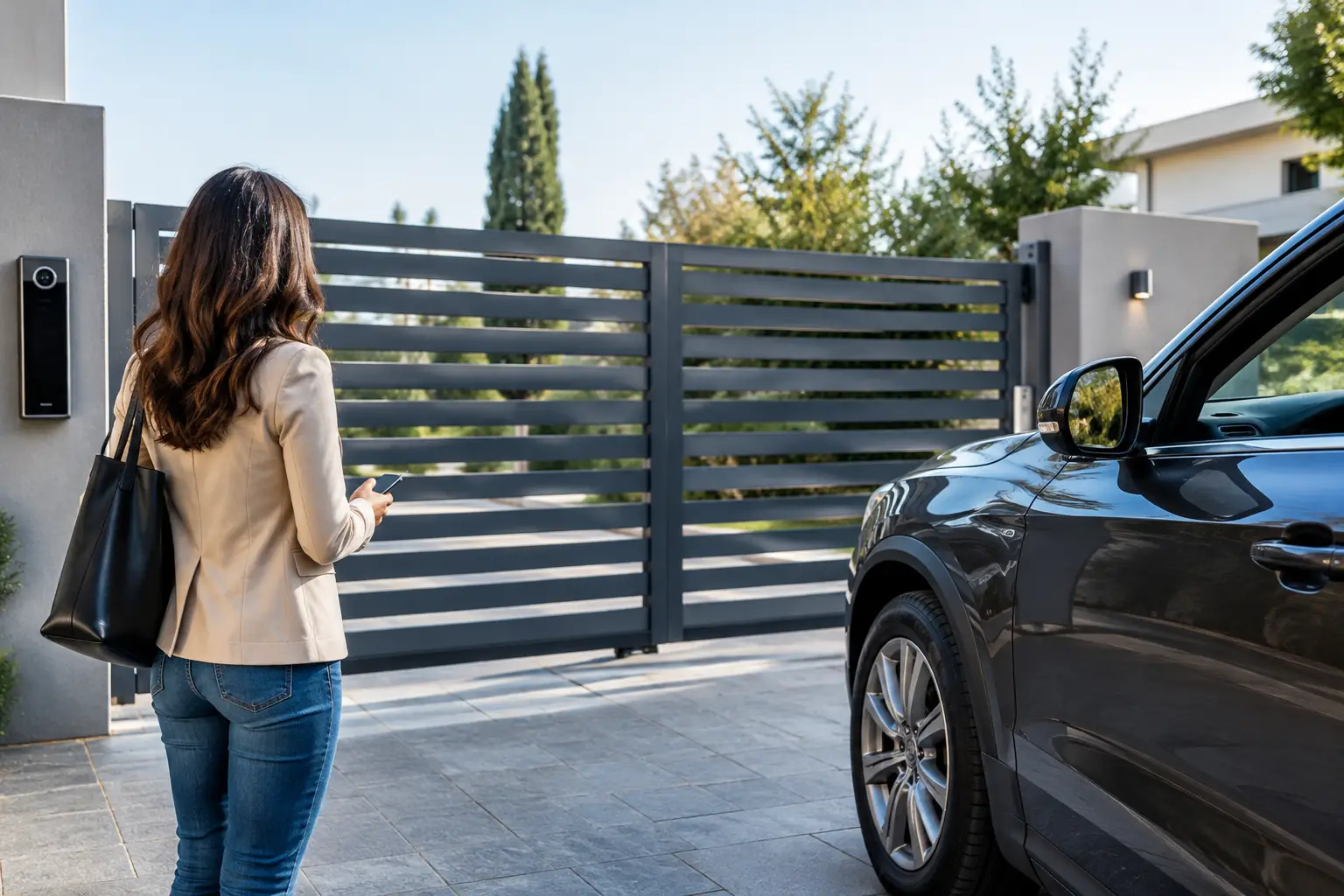
A gate should never make arriving home feel like a task. Smart gates bring together automated opening, controlled entry and made-to-measure aluminium design, giving your property a more secure, considered entrance from the moment you approach it.

For homeowners, that may mean opening the driveway gate from the comfort of the car, checking a visitor before granting access, or setting clear boundaries around a busy family home. For commercial sites, it can mean better control of vehicle movements and a more professional first impression. The right system does both without compromising the appearance of the property.

What are smart gates?

Smart gates are automated gates connected to an access control method that allows authorised people to enter safely and conveniently. Depending on the specification, access can be managed using remote controls, keypads, proximity tags, intercoms, mobile apps or video calling systems.

The word “smart” should not be confused with unnecessary complexity. A well-designed system is intuitive in daily use. It combines a correctly engineered gate, reliable automation and access controls suited to the people who will use it. The technology should support the entrance, not distract from it.

At its best, a smart gate system gives you greater control over who enters your property, when they enter and how easily you can respond. It also removes many of the frustrations associated with manual gates, particularly in poor weather, after dark or on a busy road.

Why smart gates are a worthwhile investment

Security is often the starting point, but it is rarely the only reason to automate an entrance. A substantial aluminium gate already creates a clear physical boundary. When paired with controlled access, it becomes an active part of your property’s security plan.

A video intercom, for example, lets you see and speak to callers before opening the gate. This is particularly valuable where the front door is set back from the road, where deliveries are frequent or where children and pets use the driveway. An Akuvox intercom system can provide a refined, practical way to manage visitors without needing to walk to the entrance.

Convenience matters just as much. A gate that opens on command avoids the need to leave the vehicle, while timed closing can prevent the entrance being left open accidentally. For properties with several residents, staff or regular visitors, access credentials can be organised around real use rather than relying on a single key.

There is also a visual benefit. Premium gates make a strong statement at the boundary of a home or business. Choosing a system designed as one complete entrance – gate, posts, fencing, finish and access control – creates a more intentional result than adding automation to an unsuitable existing gate.

Choosing the right smart gate format

The best gate configuration depends on the available space, the gradient of the driveway, the level of privacy required and how the entrance is used. There is no single format that suits every property.

Sliding gates for limited driveway depth

Sliding gates are often an excellent choice where a driveway rises behind the entrance or where there is insufficient room for leaves to swing inward. They travel horizontally along the boundary, making them well suited to busy driveways and more compact sites.

Cantilever sliding gates are particularly effective where a clear track across the driveway would be impractical. The gate is supported from one side and glides above ground level, reducing issues caused by leaves, grit or surface debris. However, this option needs sufficient run-back space alongside the opening.

Swing gates for a classic entrance

Automated swing gates suit many traditional and contemporary homes. They can be configured as a single leaf or as matching double gates, creating a balanced, architectural entrance. Their movement needs careful planning: the driveway must have enough clear space, and any slope must be assessed before finalising the design.

For some properties, outward-opening gates may appear to solve a space problem. In practice, this can be restricted where the leaves would open across a public pavement or highway. A professional survey is essential before selecting the operating direction.

Bi-folding and telescopic gates where speed matters

Bi-folding and telescopic gates are designed for sites where opening space is restricted but rapid access is useful. They are popular for commercial premises, flat developments and driveways with particular layout constraints.

These systems involve more moving components than a conventional swing gate. That does not make them unsuitable, but it does make precision fabrication, correctly specified automation and ongoing servicing especially important.

Aluminium makes smart gate ownership simpler

Automation places demands on a gate. It must be straight, stable and built to work consistently over many years. This is where aluminium has a clear advantage over timber and many steel alternatives.

Premium aluminium gates are lightweight relative to their strength, helping automation systems operate efficiently. They will not rot, warp or absorb moisture in the way timber can, and they do not require regular painting to maintain their finish. For a busy household or managed commercial site, lower maintenance is a genuine long-term benefit.

Construction quality still matters. A lightweight gate is not the same as a flimsy one. Fully welded aluminium frames provide the structural integrity needed for repeated powered operation, while powder-coated finishes offer a durable, refined surface in a wide choice of colours.

The design itself can be tailored to the setting. Horizontal slats offer a clean contemporary look, while privacy infills, open spacing and coordinated fencing can be selected to balance screening, airflow and visibility. A smart entrance should be secure, but it should also look right for the building behind it.

Access control should match how you live or work

The most advanced access system is not always the most useful one. Start with the everyday journey: who arrives, how often, in which vehicles and at what times?

A remote control may be ideal for a private driveway with one or two regular drivers. A keypad is useful for trusted tradespeople or staff who need access without carrying a fob. Video intercoms offer reassurance for homes with frequent deliveries, while app-based controls can suit owners who want to manage entry while away from the property.

Commercial sites may need a more structured approach, with different access arrangements for employees, visitors, contractors and delivery drivers. In these cases, the gate should be specified around operational needs, not simply chosen for its appearance.

It is also worth considering pedestrian access separately. A matching pedestrian gate with its own lock, keypad or intercom can reduce unnecessary use of the main driveway gate. This is more convenient for callers and may reduce wear on the automated system.

Safety is part of a premium specification

An automated gate must be designed with safety at its core. Properly installed systems use safety devices such as photocells, pressure protection and controlled force settings to help prevent contact with people, vehicles and obstacles.

The final specification should account for children, pets, public access and the gate’s position in relation to roads or footpaths. Safety features are not optional extras to consider later. They are integral to a dependable automated entrance.

Regular servicing also protects performance. Sensors can become obstructed, moving parts need inspection and automation settings may require adjustment over time. Choosing durable materials reduces maintenance demands, but every powered gate system benefits from professional checks.

Plan the entrance as a complete system

The strongest results come from considering the whole frontage before fabrication begins. Gate width and height, post positions, ground levels, cabling, drainage, fencing, lighting and access controls all influence the final installation.

This is particularly important when replacing older timber gates. The existing posts, hinges and driveway surface may not be suitable for a new automated aluminium system. Addressing those details at the design stage avoids compromises later and ensures the gate looks as good from inside the property as it does from the road.

At Alu-Gate, bespoke aluminium gates are fabricated around the exact requirements of the site, rather than adapted from standard sizes. That approach allows the design, opening method and access control to work together with confidence, supported by a 20-year guarantee.

A smart entrance is most valuable when it feels effortless: secure when it needs to be, welcoming when you arrive, and dependable every day in between. Begin with how you want the property to work, then choose a gate system built precisely to deliver it.

Driveway Entrance Planning Guide for UK Homes

Driveway Entrance Planning Guide for UK Homes

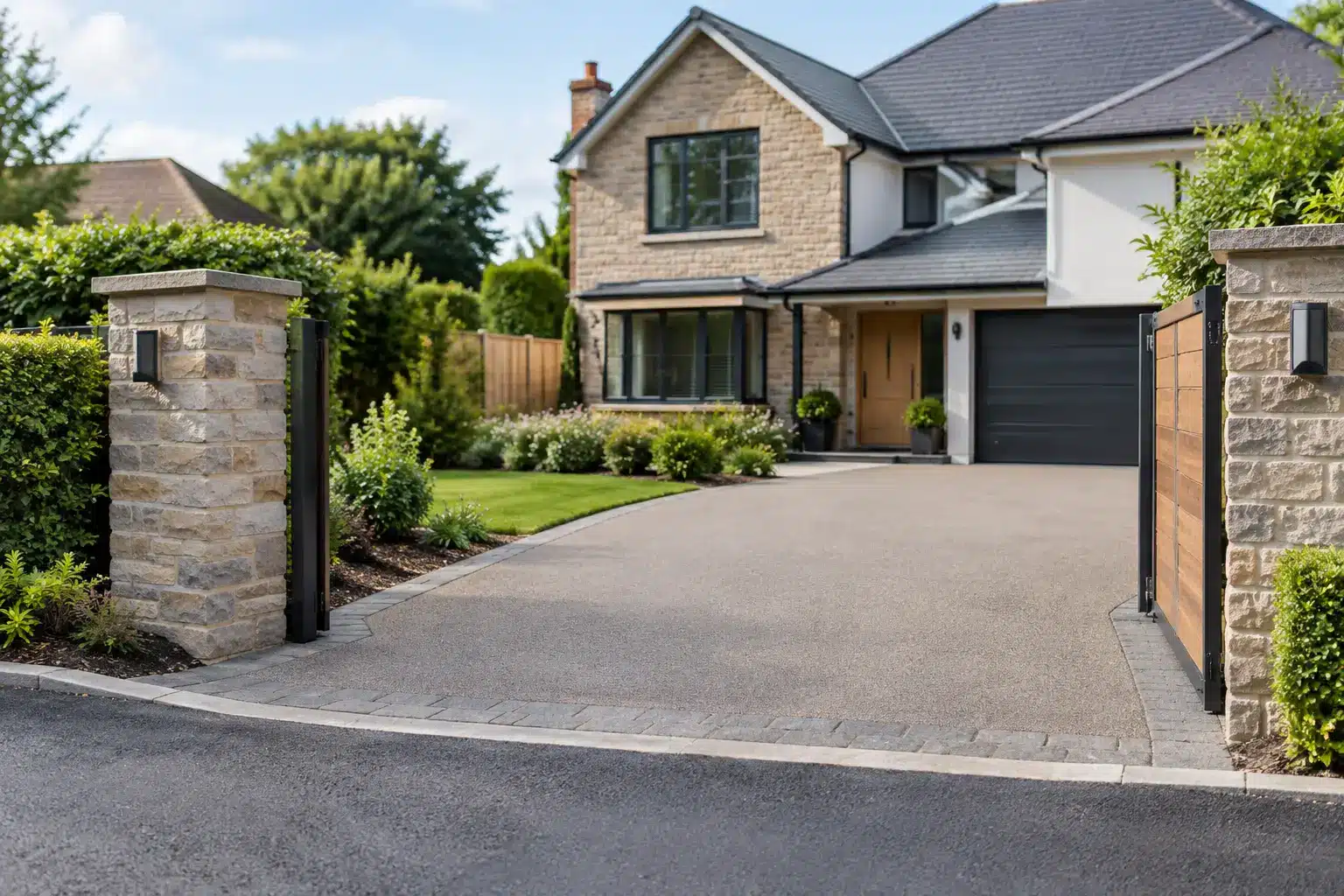
A driveway entrance has one job before anyone reaches the front door: it should make the property feel considered, secure and unmistakably yours. A successful driveway entrance planning guide begins with the practical realities of access, but it should end with an entrance that adds genuine presence and long-term value to the property.

The strongest schemes do not start with a gate style alone. They consider how vehicles arrive, how people enter on foot, where services sit, what the boundary can support and how the finish will sit against the architecture. Get those details right early and the final result will look purposeful rather than added on.

Start with how the entrance needs to work

Before choosing between sliding or swing gates, assess the daily movement through the entrance. Consider the number and type of vehicles using the drive, whether visitors need a separate pedestrian route, and whether deliveries or refuse collections require wider access. A gate that looks exceptional but creates an awkward turning manoeuvre will quickly become a frustration.

Measure the clear opening at the narrowest point, not simply the distance between existing posts. Account for kerbs, walls, slopes, drainage channels and the vehicle turning circle inside the boundary. If a family car can clear the opening comfortably but a larger SUV, van or occasional delivery vehicle cannot, the entrance may need a different configuration.

It is also worth deciding how the entrance will be used in five or ten years. A growing household, a new electric vehicle, regular trades access or a change in mobility needs can all affect the right specification. Bespoke planning gives you room to design for the property you will own, not only the one you use today.

Choose a gate format to suit the site

Every driveway places different demands on its gate system. The available depth, gradient and width will often determine the best format as much as visual preference.

Swing gates

Swing gates suit many traditional and contemporary homes, creating a balanced, substantial entrance. They require clear space for the leaves to open, either inward or outward, although inward opening is generally preferable where the gate meets a public highway. A level driveway immediately behind the gates makes operation simpler and helps create a clean, reliable installation.

Single-leaf swing gates can work well for narrower entrances, while double-leaf designs provide an elegant solution for wider openings. Their visual symmetry is particularly effective where the gate is framed by masonry piers or coordinated aluminium fencing.

Sliding gates

A sliding gate is often the practical choice for shallow driveways, sloping approaches or busy entrances where swing clearance is limited. It travels parallel to the boundary, preserving valuable parking space behind the entrance. This makes it especially suitable for commercial premises and contemporary residential projects with tight site constraints.

The trade-off is that a sliding system needs adequate run-back space along the fence line. Cantilever sliding gates also require carefully engineered foundations and a longer structural section than the clear opening alone. These are details best resolved before landscaping, paving and services are finalised.

Bi-folding and telescopic gates

Where space is limited but a fast opening cycle matters, bi-folding or telescopic gates can be an excellent answer. Their leaves fold or stack as they move, reducing the required run-back area and allowing wider openings to be secured efficiently. They are particularly useful for commercial access points, compact urban plots and driveways where every metre matters.

Plan security as part of the design

A premium entrance should feel welcoming to invited visitors and uncompromising to everyone else. Gate height, infill design, locking, automation and access control should be specified together, rather than treated as separate upgrades.

Solid or closely spaced aluminium infill provides increased privacy and reduces views into the drive. More open designs can maintain sightlines and a lighter architectural feel, but they should be considered alongside the wider boundary treatment. Matching fencing panels and pedestrian gates create a more secure perimeter while giving the property a calm, coherent appearance.

For automated gates, establish who needs access and how they should receive it. Key fobs, keypad entry, video intercoms and smartphone-controlled systems each serve different households and sites. A video intercom, such as an Akuvox system, offers particular reassurance where callers need to be identified before access is granted.

Safety is equally essential. Automated gates need correctly specified safety devices, including photocells and safety edges where appropriate, to detect people, pets and vehicles in the operating area. A professional design should also include manual release provision for power failures and a sensible arrangement for pedestrian entry, so people are not tempted to pass through a vehicle gate.

Get measurements, levels and groundworks right

This is where an impressive concept becomes a dependable installation. Accurate site measurement should capture opening width, post or pier dimensions, available hinge or track positions, driveway gradient, finished ground levels and the location of utilities.

A small fall across the entrance can affect ground clearance significantly, particularly with swing gates. Raising the gate to clear a slope may leave an undesirable gap beneath it; following the slope may require a more tailored fabrication approach. There is no universal answer, which is why made-to-measure gates offer a clear advantage over standard sizes.

Groundworks deserve the same attention as the gate itself. Posts, piers and sliding gate foundations must be capable of supporting the system over many years of use. Drainage should direct water away from moving parts and prevent pooling at the threshold. If automation is planned, arrange power and suitable cable routes before new paving is laid. Retrofitting them later can disrupt finished surfaces and add unnecessary cost.

Consider planning rules and highway safety early

Planning requirements vary according to the property, location and proposed boundary treatment. In many cases, gates and fences can be installed without a formal application, but there are important exceptions. Listed buildings, conservation areas, restrictive covenants and properties near certain roads may be subject to additional controls.

Height is a key consideration, especially where an entrance borders a highway used by vehicles. Visibility splays also matter. High solid gates, walls or planting positioned too close to a junction can obstruct drivers’ views and create a safety concern. Your local planning authority can clarify the rules that apply to a specific site.

Avoid allowing an automated gate to open across a public pavement or carriageway. Beyond the practical risk to passers-by, this can create compliance and safety issues. Where space is tight, a sliding, bi-folding or telescopic system may offer a more suitable solution than outward-opening swing gates.

Select materials for long-term ownership

A driveway gate is exposed to rain, frost, wind, road dirt and repeated daily operation. Material choice therefore affects not only the appearance on installation day, but the amount of maintenance and cost the entrance demands over its lifetime.

Timber offers warmth but usually requires regular treatment and can move as moisture levels change. Steel is strong, yet needs effective corrosion protection and ongoing inspection to prevent rust. Aluminium offers a compelling balance for premium entrances: it is naturally corrosion-resistant, stable, lightweight and well suited to precision fabrication.

The quality of construction matters as much as the base material. Fully welded aluminium frames deliver a cleaner, stronger structure than systems reliant on visible mechanical joints. A durable powder-coated finish in a carefully selected colour provides the final layer of protection, while allowing the gate to complement window frames, cladding, brickwork and fencing.

For design-conscious properties, think beyond the gate alone. Repeating the same profile, colour and spacing across driveway gates, pedestrian gates and fencing creates a tailored frontage with far greater impact than a standalone gate ever could.

Decide where to invest

Budgets should reflect the parts of the entrance that are hardest to alter later. Foundations, structural posts, quality fabrication, automation infrastructure and drainage are worth getting right from the outset. Decorative features can be adjusted more easily than a gate that is poorly proportioned, unsupported or unsuitable for the site.

A lower-maintenance material can also represent better value over time. The initial cost of a bespoke aluminium system may be higher than a basic timber or steel alternative, but reduced maintenance, lasting finish quality and dependable operation can make it the more considered investment.

At Alu-Gate, every entrance is approached as a complete system, balancing proportion, security, access and finish before fabrication begins. The aim is simple: a made-to-measure solution that looks right on day one and continues to perform for years.

The most successful driveway entrance is not defined by a single feature. It is the result of careful decisions made before the gate is manufactured – decisions that turn a boundary into a confident, secure and enduring first impression.

Cantilever Gate Buying Guide for UK Properties

Cantilever Gate Buying Guide for UK Properties

A sliding gate should make arrival feel effortless, not create another maintenance task at the entrance. This cantilever gate buying guide is designed for property owners and commercial buyers who want a clean, secure, made-to-measure solution without a track set into the driveway.

Cantilever gates are a particularly strong choice where ground levels are uneven, gravel is present, or leaves, mud and winter debris would compromise a conventional tracked sliding gate. The right system can deliver an impressive wide opening, precise movement and a more refined frontage. It does, however, need careful planning from the outset.

What is a cantilever gate?

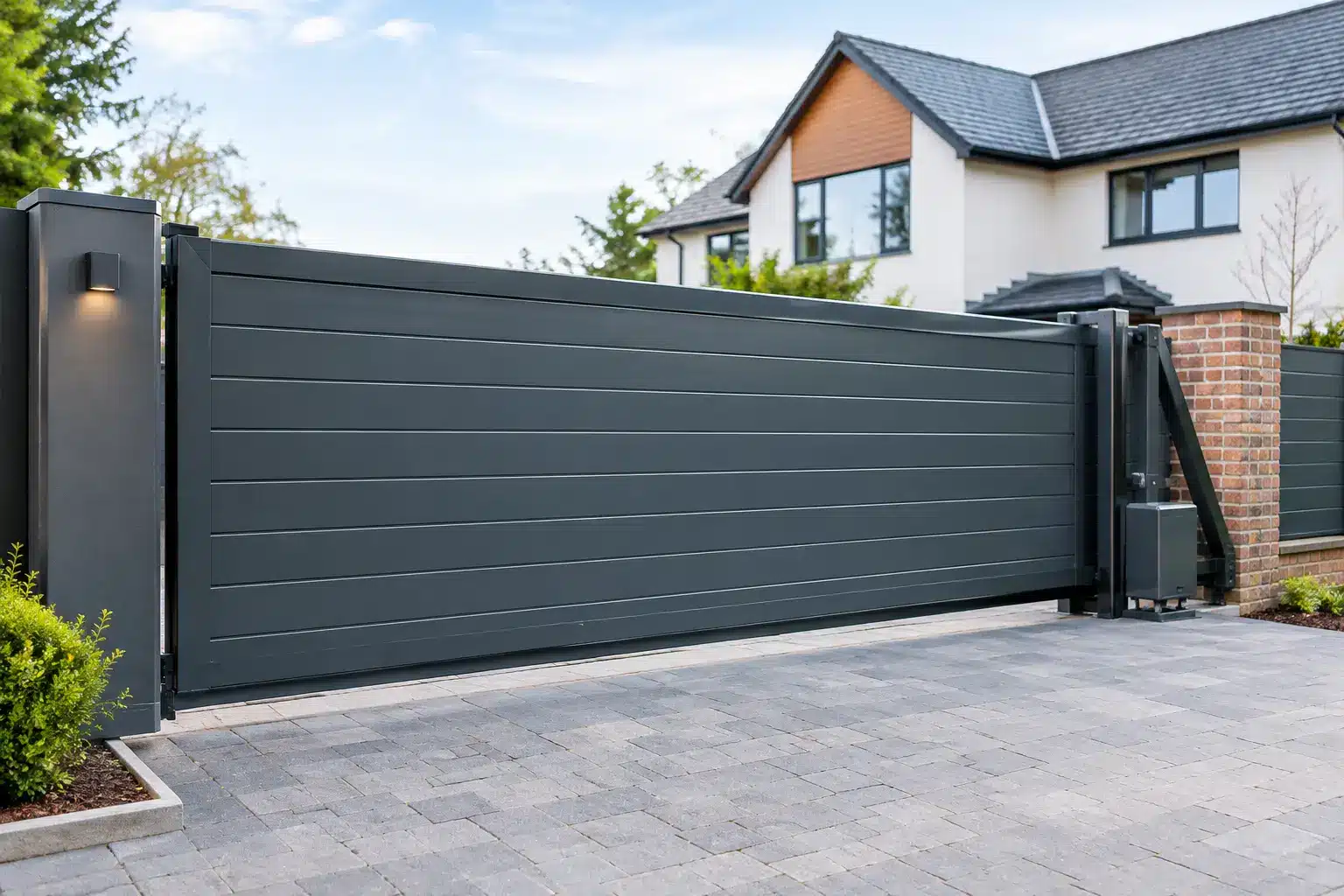
A cantilever gate slides horizontally across an opening but does not run on a ground track. Instead, the gate is supported above ground by roller carriages fixed to a substantial foundation on one side of the entrance. A counterbalance section, often called the tail or run-back, extends beyond the clear opening to keep the gate stable while it moves.

This trackless design is its defining advantage. There is no channel in the drive to fill with grit, stones or standing water, and no rail for tyres, heels or delivery trolleys to cross. For homes with gravel drives and commercial sites with regular vehicle movements, that can mean more dependable day-to-day operation.

The trade-off is space. A cantilever gate needs room beside the opening for the gate leaf and its counterbalance section when fully open. As a rule, the run-back length is greater than the driveway opening itself. The exact requirement depends on the system, opening width, gate weight and engineering specification, so it should be confirmed during the design stage rather than estimated from a photograph.

Cantilever gate buying guide: start with the site

The best gate design begins with measurements, levels and how the entrance is actually used. Width is only one part of the brief. Consider the driveway gradient, turning space, existing walls or pillars, nearby planting, overhead services and the position of incoming vehicles.

For a residential driveway, the clear opening must accommodate family cars, visitors, delivery vehicles and any future change in vehicle size. On commercial premises, consider vans, refuse collections, emergency access and peak-time traffic. A gate that looks proportionate but forces a driver to make an awkward turn will quickly become frustrating.

Ground conditions matter just as much. Cantilever systems place considerable forces into their support foundation, particularly on wide or solid-panel designs. The foundation needs to be designed for the gate, the soil conditions and local exposure, not treated as a minor preparatory job. A professional survey will identify whether existing hardstanding can be retained and where excavation, drainage or cable routes are needed.

It is also worth checking sightlines before choosing a solid infill. Privacy may be the priority, but a perforated, slatted or partially open design can improve visibility at the exit and reduce wind loading. There is no single right answer. A sheltered urban driveway has different demands from an exposed rural entrance.

Choose a material that suits the gate format

The material affects appearance, maintenance, weight and the long-term demands placed on the sliding hardware. Timber offers natural warmth but requires ongoing finishing and can move with weather. Steel can provide strength, although corrosion protection and weight must be managed carefully.

Premium aluminium is especially well suited to bespoke cantilever gates. It is naturally corrosion-resistant, considerably lighter than many steel alternatives and capable of carrying crisp contemporary detailing. Lower gate weight can support more efficient operation while reducing strain on moving components, provided the frame and hardware are correctly engineered.

Construction quality remains essential. Look beyond the surface finish to the gate frame, corner joints, internal reinforcement and method of fabrication. Fully welded aluminium construction provides a more substantial, permanent structure than a gate assembled from multiple loose sections. It is a sensible investment for a large moving gate exposed to wind, rain and daily use.

Powder-coated finishes offer extensive choice, from understated blacks and greys to colours selected to complement window frames, cladding or brickwork. Ask how the finish is prepared and applied, and whether the gate, posts and coordinated fencing will be matched as part of one exterior scheme.

Balance design, privacy and wind loading

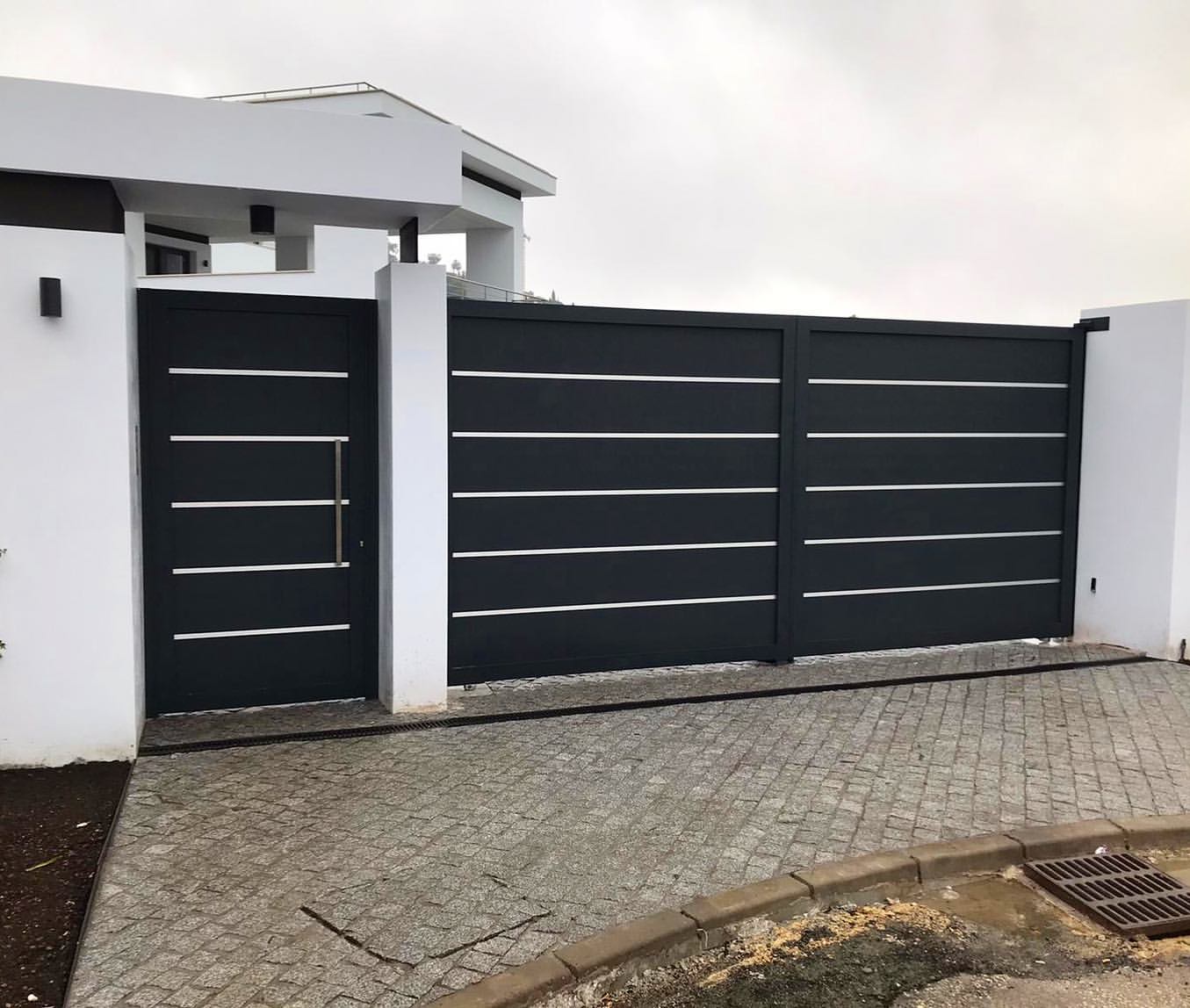
Cantilever gates are often chosen for their architectural impact. Horizontal aluminium slats create a contemporary, linear appearance, while vertical profiles can add height and definition to a narrow frontage. Flush panels provide strong privacy, and decorative screens can introduce pattern without compromising the overall design language.

Yet the most private design is not always the most practical. A solid gate catches more wind than an open slatted gate, which affects the required engineering, foundation and automation specification. In exposed locations, spacing between slats or a perforated pattern may be a better balance between privacy, strength and reliable movement.

Consider the view from both sides. From the street, the gate should give the property a clear sense of arrival. From inside, it should feel proportionate to the house and landscape rather than becoming an oversized barrier. Bespoke fabrication gives greater freedom to align rails, slat spacing and heights with adjacent fencing, pedestrian gates and boundary features.

Specify automation around real use

Most cantilever gates are automated, and the operator should be selected for the size, weight and usage of the gate. A lightly used domestic entrance and a busy commercial site do not need the same duty rating. Choosing an underspecified motor to reduce the initial cost is a false economy.

Think through the arrival sequence. You may want remote controls for household vehicles, keypad access for visitors, an intercom at the entrance and app-based control for greater flexibility. Video intercom systems, including options such as Akuvox, can make it easier to identify callers before granting access.

Safety is not an optional extra. A correctly specified automated gate system should include suitable safety devices, obstruction detection and a clear manual release arrangement for power failures. The exact configuration depends on the gate and site, but it should be planned as an integrated system rather than added after installation.

Do not overlook power and cabling. Bringing electrical supply, communications cables and conduits into the groundwork phase is cleaner and usually more cost-effective than lifting finished surfaces later. If mains power is impractical, solar may be considered in suitable locations, although performance depends on light levels, gate usage and the equipment fitted.

Understand the security details

A tall, well-made gate is a visible deterrent, but security comes from the whole entrance system. The gate should close accurately into a secure receiving post, with hardware that resists lifting and forced movement. Side gaps, climbing opportunities and the arrangement of nearby walls or fences all deserve attention.

For commercial buyers, access permissions and audit requirements may shape the specification. For homeowners, the priority may be keeping children and pets safely within the boundary while controlling visitor access. Both benefit from a gate system designed around the property rather than adapted from standard stock sizes.

If the entrance opens directly onto a public road, the gate must not swing outwards across the pavement or carriageway. Cantilever gates avoid that particular issue because they slide parallel with the boundary, but vehicle waiting space, visibility and safe operation still need to be considered.

Budget for the complete system, not just the gate leaf

A cantilever gate is a complete engineered installation. The headline price should account for the bespoke gate, support posts, cantilever hardware, foundations, groundworks, automation, safety equipment, access control, electrical works and commissioning. Removal of an existing gate, drainage adjustments and reinstatement of paving may also be relevant.

It is sensible to compare quotations on specification rather than price alone. Check the gate dimensions, material thickness, weld quality, finish, hardware capacity, automation brand, safety devices and warranty terms. A lower figure can conceal omissions that emerge once work is underway.

The value of aluminium is often clearest over time. It avoids the regular staining, repainting and rot repair associated with many timber gates, while a quality powder-coated finish is straightforward to clean. Periodic checks of rollers, safety devices and automation are still advisable, but low-maintenance should mean fewer avoidable chores, not no care at all.

Questions to settle before ordering

Before approving the design, make sure you can answer the practical questions: Is there enough run-back space? Has the foundation been engineered for the gate and site? Will the selected design suit wind exposure? Where will power, controls and safety devices sit? Who is responsible for groundworks, installation and commissioning? And what guarantee covers the gate structure and finish?

At Alu-Gate, made-to-measure aluminium gates are developed around these decisions, combining precision-welded construction with a tailored design and a 20-year guarantee. That level of specification gives an entrance the presence it deserves, while keeping ownership refreshingly straightforward.

A cantilever gate should not be chosen from dimensions alone. Give the site, the daily routine and the finish equal weight, and the result will feel less like a barrier at the edge of the drive and more like a confident first statement about the property.